Reshaping the Digital Battlefield: Research on Future Development Trends of Tank Simulators
Abstract
Modern ground combat is rapidly transforming toward informatization, intelligence and all-domain joint operations. As the core assault asset of ground forces, tanks rely heavily on simulation systems for training, equipment research and development, as well as combat deduction. Conventional tank simulators suffer from inherent drawbacks including simplistic scenarios, fragmented interaction, exclusive single-soldier training modes, and disconnection from actual equipment systems, making them unable to meet emerging combat demands such as urban street fighting, multi-domain confrontation, unmanned vehicle coordination and complex electromagnetic environments. With the maturity and large-scale application of technologies including VR/AR, digital twin, artificial intelligence, LVC distributed simulation, six-degree-of-freedom motion platforms and brain-computer interfaces, tank simulators are evolving from standalone skill-training tools into integrated digital combat platforms covering the full equipment lifecycle, supporting multi-service arms systematic confrontation, and featuring autonomous deduction and intelligent assessment capabilities. Based on the current application status of tank simulation technologies, this paper systematically analyzes the core development trends of tank simulators from eight dimensions: immersive multi-sensory simulation, full-lifecycle digital twin management, AI adaptive training, LVC cross-regional networked coordination, modular lightweight deployment, embedded simulation on physical tanks, joint simulation of unmanned equipment, and industrial standardization with reduced operational risks and costs. It also assesses technology implementation paths and industrial transformation directions, providing theoretical references for upgrading armored troop simulation training systems and simulation-based R&D of next-generation main battle tanks. The full text contains approximately 3,000 words.
I. Introduction: The Transformative Demands of the Tank Simulator Era
Since the launch of the SIMNET distributed simulation network, tank simulators have undergone three generations of iteration: static screen simulation, semi-physical cockpit simulation, and six-degree-of-freedom motion platforms. They have become core training equipment for armored troops of armies worldwide. Physical tank training carries unavoidable innate limitations. First, operational costs remain exorbitant: fuel consumption per hundred kilometers, ammunition expenditure, and wear on tracks and power systems generate massive maintenance costs, making large-scale live-fire and high-intensity off-road training difficult to normalize. Second, safety risks are prominent. High-risk scenarios such as nuclear, biological and chemical (NBC) contamination, close-quarters urban assault, minefield traversal, and anti-tank ambushes cannot be repeatedly practiced with real tanks. Third, training is constrained by venues and natural conditions. Resources for extreme-environment training on plateaus, frozen ground, deserts, heavy rain zones and electromagnetic interference zones are scarce, limiting regular drills to sharpen crew emergency response capabilities. Fourth, training efficiency is low. Traditional post-drill reviews rely on manual records, failing to fully collect multi-dimensional data on crew operations, equipment working conditions and battlefield situations. Weakness identification is vague, lacking quantitative support for training optimization.
As global armored equipment upgrades accelerate, unmanned combat vehicles, loitering munitions, intelligent anti-tank ammunition, full-spectrum electromagnetic countermeasures, and integrated infantry-tank-air coordination have become mainstream modes of ground combat. Tank crews are now required to master composite capabilities covering driving, observation and sighting, fire control, command and control, coordinated operations, field maintenance, and electronic countermeasures. Traditional simulators only support individual training modules such as driving and artillery firing, failing to replicate complex battlefields intertwined with multi-service arms, unmanned platforms and multi-dimensional domains, and lacking authenticity and combat-oriented training value.
Military training regulations issued domestically in 2026 mandate that simulation training account for no less than 40% of all troop training hours by 2027. Armies across the globe have simultaneously increased procurement budgets for simulation training equipment, ushering the tank simulator market into a rapid upgrading cycle. Deep integration of cutting-edge technologies including artificial intelligence, real-time rendering, digital twin and high-speed communication with armored simulation is transforming tank simulators from auxiliary training tools into digital twin combat laboratories. A new system covering the full chain of equipment demonstration, crew training, tactical deduction, equipment maintenance and warfare validation has taken shape, bringing comprehensive technological restructuring and application innovation to the sector over the next decade.
II. Trend 1: Immersive Multi-Sensory VR/AR Simulation to Achieve Physics-Level Battlefield Recreation
Multi-modal sensory integration of vision, tactile feedback, audio, vibration, recoil, sand and smoke effects represents the most intuitive upgrade direction for next-generation tank simulators, with the core objective of eliminating perceptual gaps between virtual and physical reality.
2.1 Popularization of Ultra-Realistic Real-Time Visual Rendering
Conventional simulators mostly adopt narrow flat screens, leading to blind observation zones, rigid lighting and distorted material textures. Future systems will widely adopt two technical routes: 4K curved panoramic screens and split VR panoramic headsets, powered by Unreal Engine 5 with Nanite virtual geometry, real-time ray tracing and PBR physical rendering pipelines. Terrain reconstruction precision will be controlled within 0.5 meters, supporting real-time simulation of sunrise, sunset, dense fog, heavy rain, sandstorms, low-light night vision and infrared thermal imaging. Dynamic generation of details including smoke from artillery explosions, dust kicked up by tank hulls, smoke obscuring sighting lenses, and armor deformation from shell impacts addresses the pain points of static visuals and monotonous environments in legacy simulators. AR augmented reality technology will be extensively deployed in semi-physical cockpits, overlaying virtual enemy targets, ballistic trajectories and electromagnetic interference markers onto physical tank control panels and periscopes. This hybrid training mode combining physical cockpits and virtual battlefields balances authentic operating feel and complex battlefield scenarios.
2.2 Iteration of Full-Dimension Force-Feedback Motion Systems
Six-degree-of-freedom motion platforms will become standard configuration, gradually upgrading to eight-degree-of-freedom variants to accurately replicate physical movements including bumpiness across varied terrain, side tilt during high-speed turning, massive recoil upon artillery firing, blast shockwaves from landmines, hull tilt after being hit by enemy fire, and weight loss from track slippage. Tactile feedback will cover seats, control levers, artillery grips and hatch switches, paired with directional sound fields simulating distant artillery fire, unmanned aerial vehicle roars, enemy infantry footsteps and communication static noise. Integrated temperature and humidity simulation modules will recreate frigid, high-temperature and stuffy enclosed cockpit environments, forming a complete closed-loop multi-sensory experience. Industry data shows that the interaction latency of new-generation simulators launched in 2026 has been compressed to under 17 milliseconds, with sensory authenticity improved by over 30% compared to 2024 models, drastically shortening crew adaptation cycles from virtual training to physical tank operation.
2.3 Deployment of Physiology-Linked Training Systems
Future simulators will integrate heart rate, eye-tracking, blood pressure and respiration sensors to capture real-time physiological signals reflecting crew stress, fatigue and distracted attention, dynamically adjusting battlefield difficulty accordingly. If crew members display excessive panic or frequent aiming errors, the system automatically reduces the intensity of enemy raids; if crews maintain stable status and sound tactical responses, high-pressure scenarios such as multi-directional ambushes, electromagnetic suppression and simultaneous attacks from multiple targets are superimposed to replicate the psychological strain of actual combat. Physiological data is archived to build psychological stress resistance training profiles, filling the gap of traditional training lacking quantitative metrics for mental state assessment.
III. Trend 2: In-Depth Empowerment via Digital Twin to Build a Full-Lifecycle Digital Tank Management System
Digital twin constitutes the core architectural transformation underlying tank simulators. A 1:1 fully parameterized digital mirror is built for each main battle tank model, opening data links covering equipment R&D, crew training, field maintenance and battle damage assessment across the full equipment lifecycle, enabling multi-scenario reuse of a unified digital model.
3.1 Virtual Validation During Equipment Research and Development
Multiple rounds of physical prototypes for new tank power systems, armor plating, fire control, vehicle-mounted radar and active protection systems will no longer be required. Tens of thousands of extreme operating condition simulations can be completed within digital twin simulators: power attenuation under high-altitude oxygen deficiency, track wear in desert heat, anti-penetration testing of armor plating, terrain trafficability analysis, and electromagnetic compatibility interference testing are all conducted in virtual space, cutting R&D cycles by 40% and physical prototype manufacturing costs by 60%. Digital twin technology simultaneously verifies compatibility of unmanned coordination interfaces, inter-vehicle data links and vehicle-mounted AI combat auxiliary modules to avoid design flaws in physical equipment at an early stage.
3.2 Integrated Simulation of Training and Maintenance
Digital twin models fully replicate internal tank circuits, oil pipelines, transmission systems and weapon pipelines, spawning virtual maintenance simulators. Crews can simulate emergency field repairs, replacement of battle-damaged components, oil circuit troubleshooting and fire control system calibration without disassembling physical tanks, with intuitive visualization of inaccessible internal wiring and equipment. This eliminates the high attrition and irreversible disassembly processes associated with physical maintenance training. Training data is synchronized back to the core digital twin model, comparing deviations between crew operations and standard procedures to automatically generate skill improvement plans for maintenance tasks.
3.3 Digital Review of Battle Damage and Tactics Post-Drill
Upon conclusion of confrontation exercises, the digital twin system fully reconstructs every artillery shell trajectory, hull impact location, armor damage severity, chronological sequence of crew operations, enemy-friend maneuver routes and the full spectrum of electromagnetic countermeasures. Commanders may freely switch perspectives between tank commanders, gunners, drivers and UAV observers during post-action reviews to quantitatively evaluate the effectiveness of armor assault, infantry-tank coordination and concealed ambush tactics, providing data support for tactical iteration. This fundamentally overcomes the limitations of traditional sand-table reviews, which lack clear quantitative evidence and comprehensive situational reconstruction.
IV. Trend 3: Deep Integration of Large Language Model AI to Realize Adaptive Intelligent Training and Autonomous Opposing Forces
Artificial intelligence will restructure the training logic of tank simulators, shifting from fixed-script scenario drills to dynamic human-machine game theory and personalized targeted instruction. Its core applications fall into three categories: intelligent teaching, autonomous opposing force simulation and combat auxiliary decision-making.
4.1 AI Adaptive Personalized Teaching Systems
Traditional simulators adopt uniform training workflows, unable to deliver targeted instruction addressing individual crew weaknesses. After embedding military-specific large language models, the system automatically identifies operational deficiencies: gunners with slow aiming speeds receive customized long-range moving target drills; drivers lacking stable off-road control practice extensive training on steep slopes, muddy ground and gullies; tank commanders with weak coordination awareness face intensified multi-service arms joint tasks. The AI provides real-time voice corrections for operational errors, dynamically adjusts training difficulty gradients and generates exclusive personalized curricula for each crew member, shortening skill mastery cycles by 30% and significantly improving operational accuracy. Explainable Artificial Intelligence (XAI) will also be deployed to clearly mark tactical logical flaws behind every error, avoiding opaque black-box assessment mechanisms.
4.2 Autonomous Opposing Force Ecosystem Based on Multi-Agent Reinforcement Learning
Multi-Agent Deep Deterministic Policy Gradient (MADDPG) algorithms power intelligent opposing forces, replacing legacy AI with rigid pre-programmed movement paths. Virtual enemy tanks, anti-tank infantry, loitering munitions and unmanned combat vehicles possess autonomous tactical judgment capabilities: they can execute flanking maneuvers, take cover behind buildings, launch electromagnetic jamming, conduct coordinated ambushes and actively evade friendly fire, dynamically adjusting combat strategies based on trainee tactics to generate infinitely variable confrontation scenarios. A single simulator can spawn hundreds of combat agents simultaneously to simulate battalion-scale full-domain confrontations, eliminating the labor costs of assigning dedicated personnel to role-play enemy units. Generative AI enables rapid custom battlefield construction via text commands: when a commander inputs parameters such as “urban ruin street fighting, enemy forces equipped with suicide UAVs, strong electromagnetic interference”, the system generates a complete combat environment within seconds, boosting scenario setup efficiency by a hundredfold.
4.3 Simulation Pre-Drills for Vehicle-Mounted Combat AI
Next-generation main battle tanks will be equipped with vehicle-mounted auxiliary decision-making AI. Digital twin models within simulators synchronously replicate these intelligent systems, training tank commanders to leverage AI situational awareness, automatic target recognition, optimal firing trajectory recommendations and coordinated assault scheme planning for command operations. This allows crews to adapt to the operating logic of intelligent equipment in advance, enabling seamless alignment between virtual simulation training and physical tank intelligent systems.
V. Trend 4: LVC Distributed Cross-Regional Networking to Support Multi-Service Arms Joint Combat Simulation
Standalone single-cabin training modes will be phased out, with the LVC (Live, Virtual, Constructive) distributed simulation architecture established as the industry standard. Leveraging 5G networks, military encrypted private lines and HLA high-level architecture protocols, the system interconnects geographically dispersed simulators, physical tanks, infantry simulators, UAV simulation terminals and artillery simulation nodes to construct a unified full-domain digital battlefield.
5.1 Synchronized Cluster Confrontations Across Geographic Locations
Tank simulators deployed at armored brigades and combined arms battalions across different garrisons can simultaneously access the same virtual battlefield, supporting company- and battalion-level armored cluster drills involving dozens or hundreds of simulators. Integration with infantry fighting vehicle simulators, individual VR training modules, long-range artillery and UAV simulation nodes reconstructs complete combat chains of infantry-tank-artillery-unmanned system coordination, resolving practical difficulties in organizing cross-regional multi-service arms joint exercises and reducing deployment and mobilization costs.
5.2 Embedded Simulation Integrating Virtual and Live Assets
Embedded simulation represents a core breakthrough in the long term. Future main battle tanks will integrate built-in simulation modules within onboard computing units, eliminating reliance on dedicated simulation cockpits. Crews may activate virtual confrontation modes directly within physical tank hulls: surrounding terrain and real vehicles serve as the physical environment, overlaid with virtual enemy targets, fire strikes and electromagnetic interference. This enables crews to operate real tanks while engaging virtual adversaries, supporting short-duration intensive training during transit or vehicle staging at garrisons. The spatial separation between simulators and physical tanks is eliminated, truly realizing training that mirrors actual combat conditions.
5.3 Popularization of Cloud-Based Lightweight Simulation Architectures
Secure military cloud platforms will host simulation computing power, spawning containerized and vehicle-mounted mobile lightweight simulators. Traditional fixed computer room large-scale platforms occupy extensive floor space and are difficult to relocate. Cloud-based architectures centralize computing resources, with terminals retaining only cockpits, displays and motion mechanisms. The footprint of individual units is reduced by 20%, enabling rapid deployment to forward training grounds and field bivouacs to accompany mobile troop training demands. Multiple military units share cloud-hosted scenario libraries and AI models to cut redundant development costs. Industry forecasts predict large-scale deployment of cloud-based simulation systems by 2032.
VI. Trend 5: Modular Universal Design Compatible with Diverse Equipment and Tiered Training Requirements
Amid accelerated equipment iteration, dedicated single-model simulators deliver declining cost-performance ratios, making modular universal design the mainstream industrial development approach. At the hardware layer, systems are divided into three interchangeable components: general motion bases, rapidly replaceable cockpit modules and swappable fire control operating kits. A single motion platform can simulate various tonnage main battle tanks, infantry fighting vehicles and wheeled assault vehicles by replacing cockpit interiors, control panels and software models, with full conversion completed within 30 minutes and drastically reducing procurement expenditures for multiple equipment variants.
Software adopts a layered modular scenario library, divided into eight mission modules selectable on demand: basic driving, artillery firing, single-vehicle tactics, formation assault, urban street fighting, NBC response, electromagnetic countermeasures and unmanned system coordination. Tiered training packages are developed for new recruits, crew specialists, tank commanders and operational commanders. New recruits only access basic operational modules, while commanders unlock full-domain deduction and multi-service arms scheduling functionality to accommodate training demands for personnel at all proficiency levels. Standardized data interfaces are reserved to enable interconnection with combat command systems, equipment maintenance platforms and training assessment databases, realizing cross-system data compatibility and unifying industrial simulation protocol standards.
VII. Trend 6: Co-Simulation of Manned-Unmanned Armored Formations to Adapt to Future Unmanned Ground Combat Systems
Large-scale deployment of unmanned combat vehicles, loitering munitions and remote-controlled anti-tank platforms drives the integration of unmanned coordination simulation modules into tank simulators, filling critical gaps within current simulation systems and representing a core growth direction over the next five years.
Systems will simulate the full workflow of tank commanders controlling accompanying unmanned assault vehicles, launching loitering munitions for forward reconnaissance, guiding UAV precision strikes on concealed targets, and countering enemy suicide unmanned assets. They replicate emerging confrontation scenarios including variable data link latency between vehicles and unmanned systems, loss of unmanned equipment connectivity under electromagnetic jamming, and electronic countermeasures deployed by hostile forces to neutralize UAVs. Crews must simultaneously execute composite operations including tank maneuvering, unmanned platform scheduling and multi-target fire allocation, cultivating a combat mindset centered on manned-unmanned coordination to align with next-generation integrated manned-unmanned ground combat systems. Damage models for unmanned assets are integrated to simulate emergency response protocols following UAV shootdowns or data link disconnection, compensating for training blind spots related to unmanned combat in legacy curricula.
VIII. Trend 7: Formation of a Low-Cost, High-Safety, Standardized Industrial Ecosystem
From an industrial implementation perspective, three fundamental transformations support widespread simulator deployment:
First, continuous reduction in comprehensive operational costs. Domestic substitution of VR hardware, motion platform servo motors and universal simulation engines has matured, breaking reliance on foreign technologies. Cloud-shared computing power and modular multi-purpose designs cut annual per-crew simulation training expenses by over 50%, replacing massive expenditures on fuel, ammunition and physical equipment wear with long-term high returns on investment.
Second, zero-risk training for extreme high-hazard scenarios. All high-risk training subjects including NBC contamination response, minefield navigation, close-range anti-tank ambushes and large-caliber live firing are transferred to virtual environments to eliminate training casualties, while allowing unlimited repeated drills to improve emergency response proficiency.
Third, maturation of standardized military simulation industry systems. National standards unify HLA distributed interaction, multi-agent AI modeling, digital twin equipment parameterization and quantitative training assessment metrics. Standardized hardware and software interfaces, scenario data formats and post-drill evaluation reports enable cross-vendor equipment interconnection, eliminating data silos between simulation systems deployed across military units and advancing the integration of army-wide simulation training frameworks.
IX. Core Challenges and Long-Term Development Outlook
9.1 Key Existing Technical Barriers
First, insufficient simulation precision for complex electromagnetic and multi-spectral environments; virtual emulation of infrared, radar and photoelectric sensors deviates from physical tank hardware.
Second, stringent latency control challenges for large-scale LVC networking; situational synchronization discrepancies emerge during parallel confrontation exercises involving thousands of simulated entities.
Third, high costs for cutting-edge technologies including brain-computer interfaces and physiology-linked sensors, limiting full troop deployment in the short term.
Fourth, the tactical logic of autonomous opposing force AI requires continuous training with massive real combat datasets to achieve higher alignment with actual battlefield conditions.
9.2 Medium- and Long-Term Development Projections
Short term (1–3 years): Mass procurement and deployment of modular six-degree-of-freedom immersive VR/AR simulators; widespread rollout of AI adaptive teaching and intelligent opposing force modules supporting single-tank and platoon-scale small-unit confrontations; initial application of digital twin technology for equipment maintenance and post-drill reviews.
Medium term (3–8 years): Full coverage of LVC cloud-based distributed simulation frameworks; containerized mobile simulators issued as standard equipment for mobile troops; small-scale pilot deployment of embedded physical tank simulation; mature unmanned-manned coordination simulation enabling regular combined-arms battalion cross-domain joint training.
Long term (8–15 years): Commercialization of brain-computer interfaces and holographic projection cockpits, forming fully integrated virtual-live combat simulation; digital twin technology spanning the full tank lifecycle from R&D to decommissioning; autonomous AI conducting theater-level combat deduction. Simulators will evolve into core combat laboratories for armored troops, thoroughly reshaping training and warfare development models for ground armored formations.
X. Conclusion
A new round of technological revolution drives profound transformation in ground combat doctrines and operational modes. Tank simulators have evolved beyond simple operational training equipment into digital combat infrastructure integrating immersive perception, digital twin, artificial intelligence, full-domain distributed networking and virtual-live fusion. High-fidelity multi-sensory simulation delivers combat-realistic training experiences; digital twin technology unifies data chains across the full equipment lifecycle; artificial intelligence enables personalized instruction and infinitely variable autonomous opposing force confrontations; LVC distributed architectures support cross-regional multi-service arms joint drills; modular, cloud-based and embedded designs adapt to diversified troop deployment requirements; and dedicated unmanned coordination simulation modules fill training gaps for future intelligent ground combat.
Armies worldwide are accelerating upgrades to their simulation training frameworks. Domestic tank simulators feature fully independent controllable simulation engines, domestically manufactured motion hardware and localized battlefield scenario databases, laying a solid foundation for iterative technical upgrades and large-scale military procurement. Moving forward, only by advancing deep integration of VR/AR, large-model AI, digital twin and distributed simulation technologies, overcoming core bottlenecks in high-precision multi-domain environment simulation, cross-platform data interconnection and embedded physical tank simulation, and building a standardized, intelligent, full-domain and low-cost simulation training ecosystem can tank simulators fully leverage their core advantages: reduced operational costs, zero training casualties, high efficiency and combat authenticity. This delivers robust digital support for armored troop combat capability generation, R&D of next-generation main battle tanks and future intelligent joint combat operations.
RELATED POSTS
Breaking Through the Fog to Explore the Deep-sea Mystery — Experience Review of VR Large-Space Bermuda Adventure
Precautions for Export Trade of Automotive Driving Simulators
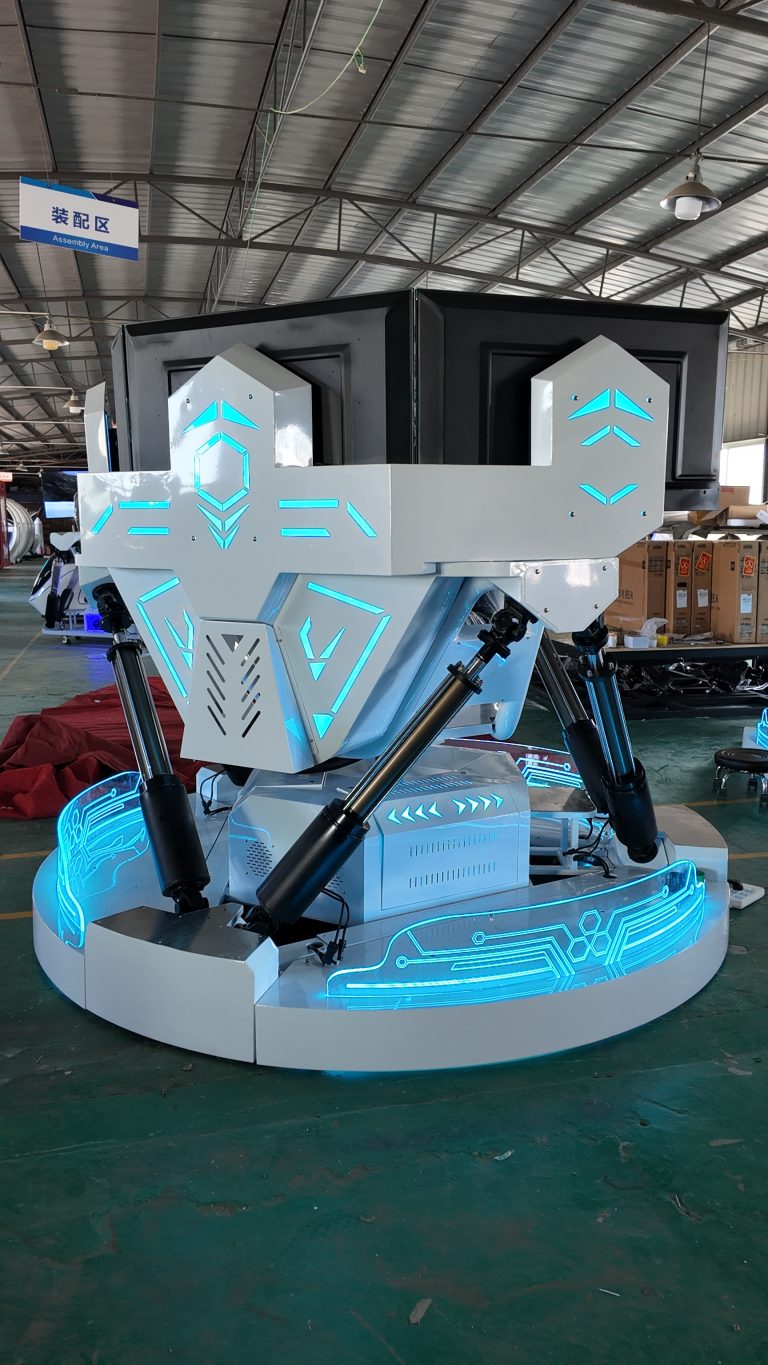
A New Benchmark in Immersive Racing: Versatile Functions and Application Values of Three-Screen Six-Axis Racing Simulator
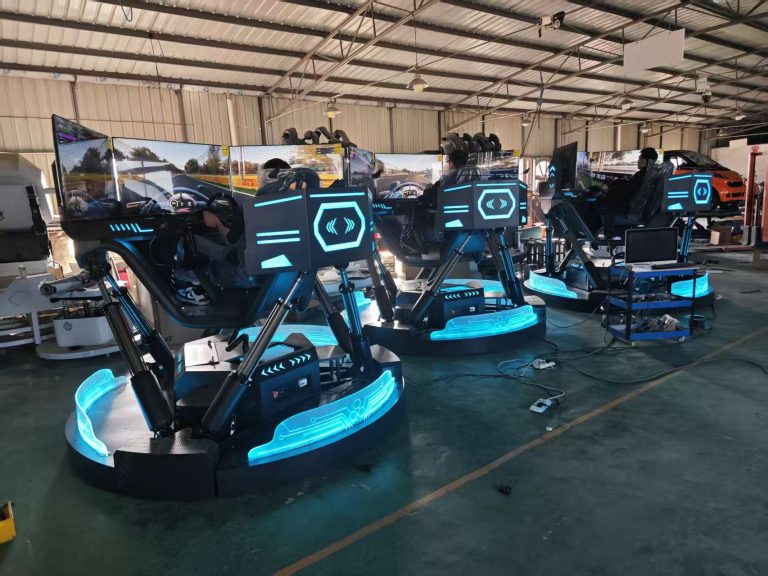
The Application of Racing Simulators in Malls: Unlocking a New Track for Commercial Entertainment
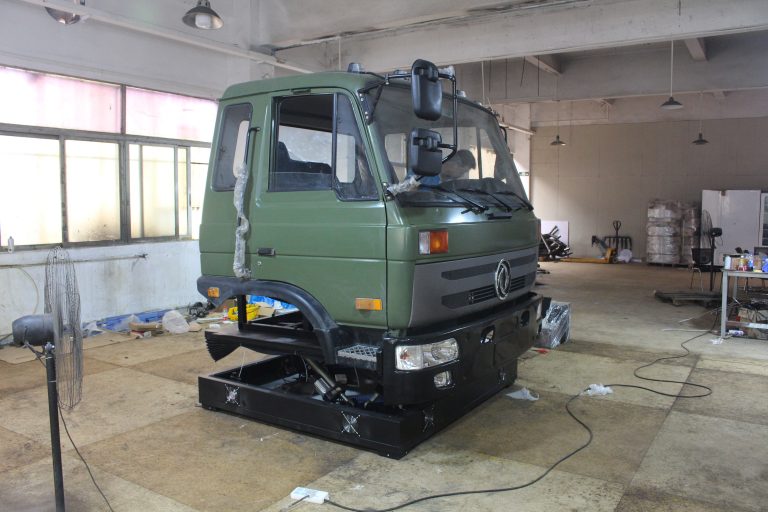
Full-Scenario Application Analysis of Truck Cab Simulators: Covering Commercial Entertainment, Vocational Training, Research & Training Multiple Fields