Application Scenarios and Practical Value Analysis of VR Construction Safety Experience Hall
In the construction of various engineering projects such as architectural engineering, municipal infrastructure, water conservancy and wind power, construction safety has always been the core bottom line of project management. Traditional construction safety education has long relied on passive modes including oral preaching, graphic display, video playback and paper-based examinations, which are plagued by rigid forms, weak immersion, insufficient risk visualization and poor practicality. Construction workers passively receive safety knowledge and lack intuitive cognition of high-risk hazards such as falls from heights, electric shocks, collapses and mechanical injuries. The resulting weak safety awareness and frequent irregular operations constitute the core causes of construction safety accidents.
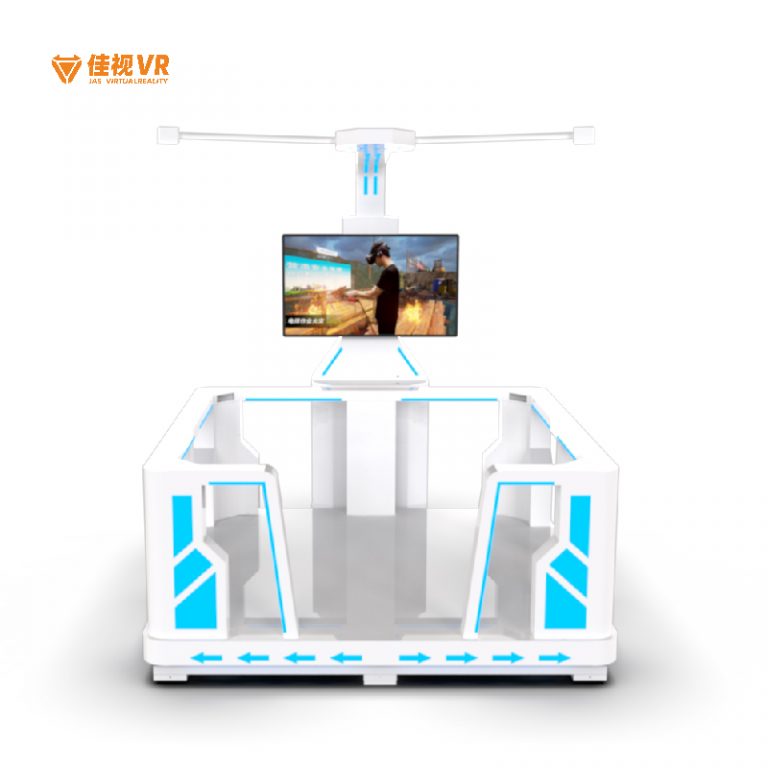
With the comprehensive advancement of smart construction site development, virtual reality (VR) technology has been deeply integrated into construction safety management, and the VR construction safety experience hall has become a core carrier to innovate construction safety education modes and consolidate the safety production line. Adopting 3D simulation modeling, dynamic interactive simulation and somatosensory feedback technology, it restores various high-risk construction operation scenarios and potential safety hazards in a 1:1 scale. It enables construction workers to intuitively experience the severe consequences of irregular operations from a first-person perspective, realizing a transformation from passive knowledge reception to active experience and risk avoidance. Featuring high safety, wide coverage, repeatable training and quantifiable assessment, VR construction safety experience halls have been widely applied in housing construction, municipal engineering, water conservancy, wind power, tunnel and other engineering fields, covering diverse scenarios including pre-job training, special practical training, emergency drills, skill assessment and science popularization. Combining practical engineering practices, this paper systematically analyzes the various application scenarios of VR construction safety experience halls and explores their industrial practical value.
I. Pre-job Three-level Safety Education for New Employees to Consolidate Basic Safety Foundations
The three-level safety education for new construction workers is the first barrier for engineering project safety production and a mandatory training procedure in the industry. Traditional pre-job training suffers from serious homogenization, focusing on the reading of safety regulations and memorization of safety knowledge. New employees struggle to understand complex safety specifications and lack awe of potential construction site risks, leading to formalistic and ineffective training. New employees, as a high-risk group for construction safety accidents, frequently commit operational errors and irregular behaviors after taking up their posts.
The VR construction safety experience hall fully adapts to standardized pre-job training scenarios for new employees, effectively replacing inefficient traditional education modes and realizing standardized, scenario-based and normalized pre-job safety education. For new construction employees, the experience hall is equipped with a complete set of basic safety training modules, covering correct wearing of labor protection supplies, identification of construction site restricted areas, warning of basic irregular operations, and standardized site traffic rules. In the labor protection experience module, through the combination of VR simulation and physical somatosensory experience, employees can intuitively perceive the protective effects of safety helmets against impact and safety belts against falls. They can clearly understand the fatal risks of not wearing protective equipment, non-standard wearing, and working at heights without safety belts, completely eliminating fluke psychology.
Meanwhile, the experience hall provides differentiated training content for new employees of different types of work. Specialized pre-job safety courses are tailored for carpenters, steel bar workers, electricians, tower crane operators and other posts, accurately covering basic post risk points. During training, the system automatically records employees’ operation tracks, answer results and scenario response correctness, and generates assessment scores and training reports upon completion. Only qualified employees are allowed to take up their posts, which improves the project safety training archives and solves the industry pain points of unrecorded, unassessed and undocumented traditional pre-job training. At present, most engineering projects have incorporated VR pre-job experience into compulsory induction training for new employees. The immersive experience enables new workers to quickly grasp construction site risks and establish basic safety awareness, fundamentally reducing the accident rate of new employees.
II. Special Practical Training for High-frequency and High-risk Operations to Accurately Avoid Post Risks
The five major construction hazards – falls from heights, object strikes, collapse accidents, mechanical injuries and electric shocks – account for more than 90% of all construction safety accidents and are the top priority of project safety management and control. These high-risk operations are characterized by concealed risks, high suddenness and severe consequences. Traditional training cannot truly restore accident scenarios, making it difficult for construction workers to fully perceive the hazards of irregular operations and resulting in weak special risk prevention and control capabilities. Relying on high-precision scenario modeling, the VR construction safety experience hall fully covers all types of high-frequency and high-risk operation scenarios, carrying out targeted immersive special training for different posts and construction links to solve the difficulties in high-risk operation training.
Working at heights is the most frequent high-risk scenario on construction sites. The experience hall simulates typical scenarios including edge and opening falls, scaffold collapses, falling objects from heights and irregular high-altitude operations. Wearing VR devices, construction workers can immerse themselves in the whole process of accidents caused by unprotected edges and openings, unclosed floor holes, non-standard scaffold erection and high-altitude object throwing. Combined with somatosensory feedback such as vibration, weightlessness and sound effects, the system truly restores the impact and danger of accidents, enabling workers to firmly remember high-altitude operation specifications and consciously abide by protection requirements. Practical data from a housing construction project of China Construction Third Engineering Bureau shows that after VR special training for high-altitude operations, the violation rate of high-altitude operations dropped significantly from 31%, and the incidence of minor injuries decreased greatly, verifying the remarkable training effect.
In the temporary power consumption and electric shock safety training module, the system accurately simulates common on-site hidden dangers such as random wiring, aging circuits, illegal switch closing and operations in humid environments, and restores accident scenarios including electric shock short circuits, electrical fires and equipment burnout. Electricians and front-line construction workers can learn standardized operations such as hazard troubleshooting, power-off risk avoidance and emergency fire extinguishing in the virtual environment, mastering key points of temporary power safety management to prevent electrical accidents. For mechanical operation risks, the hall simulates tower crane hoisting errors, construction elevator failures, irregular cutter operations and collision accidents caused by excavator blind spots. It helps mechanical operators intuitively recognize the severe consequences of irregular operations, faulty equipment operation and incorrect command, and strengthen awareness of equipment pre-inspection, standardized operation and special-person command.
In addition, aiming at collapse risks such as foundation pit collapse, formwork support instability and wall collapse, the hall builds dynamic simulation scenarios to restore accidents caused by inadequate foundation pit support, excessive slope stacking and non-standard formwork erection. It teaches construction workers to identify early warning signals such as foundation pit settlement and cracks, and master standardized operation and risk avoidance methods. This special high-risk training requires no real equipment or dangerous on-site operation, realizing normalized zero-risk drills for high-risk operations and greatly improving workers’ post risk prevention and control capabilities.
III. Customized Experience Scenarios for Complex Projects to Adapt to Diverse Engineering Types
In addition to conventional housing construction projects, special engineering projects such as municipal roads, water conservancy, wind power and tunnel projects feature complex construction environments, prominent exclusive risks and special operation standards. Traditional generalized safety training cannot meet their special safety management and control needs. Supporting modular customized development, the VR construction safety experience hall can build exclusive simulation scenarios according to the construction characteristics of different engineering types, realizing accurate and customized safety training for various complex projects.
For water conservancy and water network projects, the hall develops exclusive modules including tunnel collapse, piping and water leakage, confined space operation, underwater construction hazards and flood season construction risk avoidance. Water conservancy construction workers can immerse themselves in emergency risks such as tunnel surrounding rock collapse, oxygen deficiency and poisoning in confined spaces, and flood invasion during flood seasons. They learn standard procedures for risk prediction, emergency evacuation and self-rescue and mutual rescue, adapting to the special safety requirements of open-air, waterside and underground operations in water conservancy projects. Multiple project departments of Sinohydro Bureau 1 have effectively improved construction workers’ ability to respond to complex hydrological and geological risks through VR special drills.
For new energy wind power projects, customized VR training content is developed for exclusive operations such as wind turbine tower hoisting, cabin electrical operation and maintenance, high-altitude wind turbine maintenance and wind power equipment hoisting. The system simulates accidents including tower hoisting command errors, heavy object swinging and falling caused by equipment faults, cabin circuit short circuits and high-altitude maintenance falls. It strengthens wind power workers’ awareness of equipment pre-inspection, standardized command, high-altitude protection and electrical operation and maintenance, filling the gap in special safety training for new energy projects. The Yulin Wind Power Smart Construction Site Safety Experience Center has realized the standardized implementation of high-risk operation safety training for wind power through customized VR modules.
For municipal road and bridge projects, the hall focuses on restoring risk scenarios such as foundation pit excavation, pipe network laying, road occupation construction, hoisting anti-collision and underground pipeline damage and leakage, adapting to the characteristics of urban construction, underground operation and cross-operation in municipal projects. It helps construction workers avoid potential safety hazards such as pipeline damage, pedestrian collision and foundation pit collapse in urban construction. For underground projects such as tunnels and subways, special scenarios including tunnel collapse, working face hazards, ventilation failure, dust explosion and escape and evacuation are built to simulate various sudden underground construction risks. The training improves workers’ ability of rapid risk avoidance, orderly escape and emergency disposal, effectively solving the problems of concealed risks and difficult drilling in underground projects.
IV. Practical Emergency Drill Scenarios to Improve Sudden Risk Disposal Capabilities
Sudden construction site accidents are unpredictable, abrupt and highly destructive. Traditional emergency drills are mostly formal desktop deductions or on-site rehearsals with single scenario simulation and insufficient immersion. Construction workers cannot truly perceive emergency tension, resulting in poor emergency response, self-rescue and mutual rescue capabilities. They are prone to panic, improper disposal and escape errors when real accidents occur. The VR construction safety experience hall can fully simulate various sudden safety accidents to build immersive and practical emergency drill scenarios, comprehensively improving the emergency disposal level of projects.
The hall covers a full range of emergency drill modules including fire emergency, collapse emergency, electric shock emergency, confined space rescue, high-altitude fall rescue and sudden risk escape. In the virtual accident scenarios, the system dynamically triggers hazard sound effects, environmental changes and vibration feedback to create a real emergency atmosphere. Workers are required to complete a series of standardized operations including hazard disposal, alarm application, safety evacuation, casualty first aid and hazard isolation within the specified time. For example, in the construction fire emergency drill, participants need to accurately identify fire types, select matching fire extinguishers and complete standardized fire extinguishing operations, while mastering correct fire escape and personnel evacuation procedures. In confined space accident drills, oxygen deficiency and poisoning risks are simulated to train workers to follow the standard procedure of “ventilation first, detection second, operation last” and master rescue and risk avoidance methods for sudden poisoning accidents.
Compared with traditional drills, VR emergency drills are not restricted by site, weather, equipment and personnel quantity, and can be carried out repeatedly at any time. They avoid potential safety risks in real drills and enable all construction workers to participate in whole-process practical exercises, completely changing the traditional mode where only a few workers participate while most observe. Meanwhile, the system records each worker’s emergency operation process, disposal duration and error points, and conducts automatic review and analysis after drills. It accurately identifies disposal loopholes, helps projects optimize emergency plans, improves the overall emergency practical ability of all staff, and ensures rapid, standardized and efficient disposal of sudden accidents to minimize property and personal losses.
V. Regular Safety Warning Education Scenarios to Build Long-term Safety Awareness
Construction safety education is not a one-time training but requires continuous and normalized implementation to constantly strengthen workers’ sense of awe for safety. Traditional warning education relies on picture and video display of accident cases with insufficient impact, leading to educational fatigue, relaxed safety awareness and repeated habitual irregular operations among workers. Centering on immersive experience, the VR construction safety experience hall builds normalized safety warning education scenarios to realize sustainable, long-term and high-impact safety education.
The hall is embedded with a large number of simulated scenarios of real construction safety accidents, transforming flat case materials into 3D immersive experiences. It restores the whole process of accidents caused by irregular operations from a first-person perspective, intuitively demonstrating the severe impacts of accidents on personal safety, family happiness, project progress and enterprise reputation. Compared with pictures and videos, immersive accident scenarios deliver stronger impact and deeper memory. They enable workers to truly understand the painful consequence of “one violation leads to lifelong regret”, eliminate fluke psychology fundamentally, and establish the core safety concept of “safety first, prevention first”.
Meanwhile, projects can organize workers to participate in regular VR experience during pre-shift meetings, monthly safety meetings and special safety activities to continuously learn various risk scenarios and standardized operations. Some projects set up mobile VR experience stations at construction site entrances and dormitory areas to carry out fragmented safety training in ten-minute pre-shift sessions, integrating safety education into daily construction work and consolidating training effects continuously. For workers with repeated irregular operations, special warning education re-training is arranged through immersive experience to strengthen their awareness of rectification, completely eliminate habitual violations and consolidate the long-term safety defense line of projects.
VI. School-Enterprise Training and Industry Science Popularization Scenarios to Cultivate Professional Safety Talents
Beyond on-site engineering project management, VR construction safety experience halls are also widely applied in vocational college construction major teaching and industrial safety science popularization, serving as an important carrier for cultivating construction safety talents and popularizing public safety knowledge. At present, the practical teaching of construction majors in most vocational colleges faces problems such as inaccessible high-risk scenario operation, insufficient practical training equipment and outdated teaching scenarios compared with real construction sites. Students lack on-site safety practical experience during school, resulting in insufficient post competency after employment and poor adaptability to construction site safety management requirements.
By building VR construction safety training halls, vocational colleges can fully replicate real construction site environments and cover all types of post safety training scenarios. Students can complete pre-job safety training, high-risk operation simulation and emergency disposal drills on campus, familiarizing themselves with construction safety specifications and risk avoidance points in advance. This realizes seamless connection between campus training and on-site construction work and greatly improves the safety practical ability of construction professionals. In addition, VR safety experience halls can carry out construction safety science popularization activities for the public, helping the public understand construction site risks, popularize construction safety knowledge and improve national safety production awareness.
VII. Conclusion
In summary, with the core advantages of immersion, interactivity, zero risk and quantifiable assessment, VR construction safety experience halls cover full-dimensional application scenarios including pre-job safety education, special high-risk operation training, customized training for complex projects, practical emergency drills, normalized safety warning education, school-enterprise talent training and industrial safety popularization, completely eliminating the drawbacks of traditional construction safety education. From basic induction training for new employees and targeted post risk prevention and control to sudden emergency disposal and long-term safety awareness cultivation, the technology covers the whole process, all posts and all stages of engineering project safety production.
Against the background of the comprehensive popularization of smart construction sites, VR safety experience technology has transformed construction safety education from paper-based preaching to real-scene experience and from passive indoctrination to active practice. It effectively reduces the incidence of construction safety accidents, improves the standardized level of project safety management, and builds a technological safety barrier for the safety production of construction, municipal, water conservancy, wind power and other engineering industries. In the future, with the in-depth integration of virtual reality, artificial intelligence and big data technology, the scenarios of VR construction safety experience halls will become more refined, intelligent and personalized. They will serve as core infrastructure for the normalization, standardization and digitalization of engineering safety production, continuously empowering the high-quality and safe development of the construction industry.
RELATED POSTS
Analysis on Application Scenarios of Automobile Driving Simulators
Future Market Analysis Report on Driving Simulators for Driving Schools
The Applications of Racing Simulators: A Comprehensive Analysis
Analysis on the Multi-dimensional Applications and Industrial Value of Six-axis Racing Simulators
VR Shenzhou Spacecraft Simulator: Innovative Practice and Educational Value of Immersive Aerospace Popular‑Science Education