
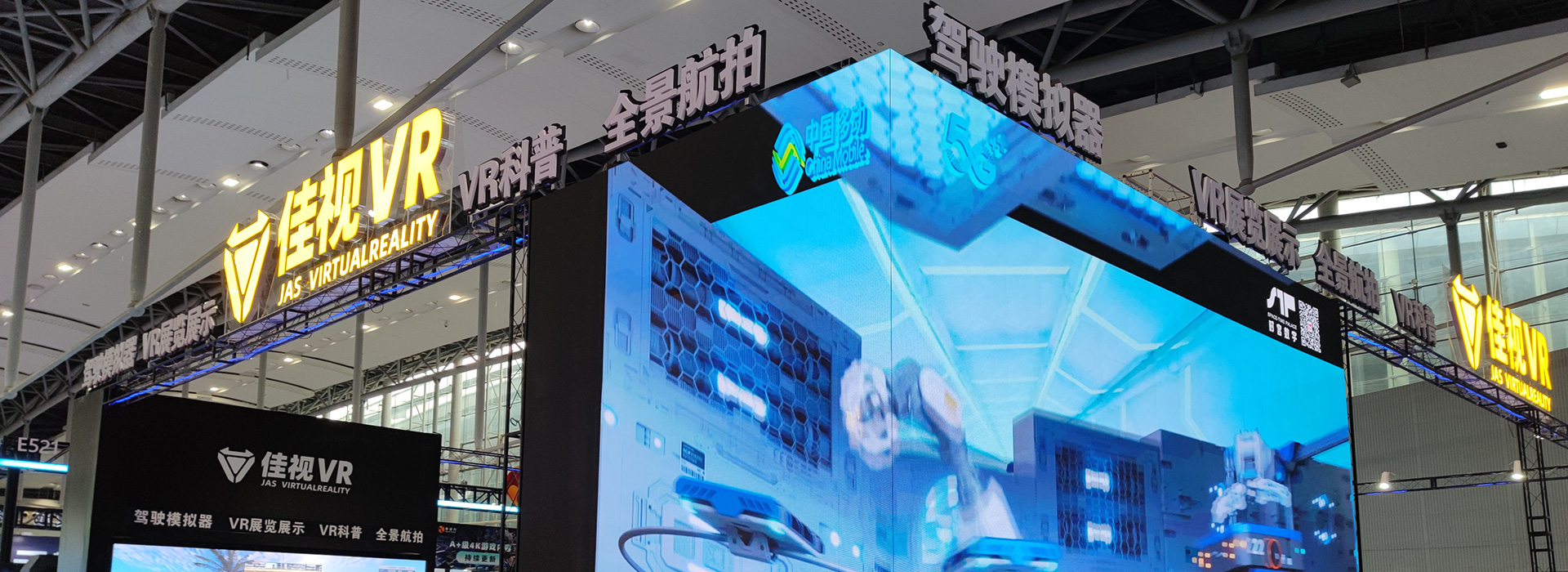
The New Immersive Digital Ecosystem: An In-depth Analysis of Diverse Application Scenarios of Large-Space VR
With the continuous implementation of metaverse technologies and the iterative upgrading of digital immersive experiences, large-space VR technology has overcome the limitations of traditional VR devices, including confined operation space, single-user experience, and monotonous interaction modes. Featuring core advantages such as free roaming in large spaces, multi-person real-time collaboration, 1:1 real-scene reproduction, and multi-sensory immersive interaction, it has become a core carrier for offline digital experiences. Different from traditional desktop VR and portable wearable VR, large-space VR adopts core technologies including spatial positioning, dynamic tracking, digital twin, and real-time rendering to construct a virtual three-dimensional space that allows multiple users to move freely, interact in real time, and explore immersively, breaking the boundary between virtuality and reality. Today, large-space VR is no longer limited to niche entertainment. It has been fully applied in various fields such as cultural tourism, pan-entertainment, industrial education, emergency training, and commercial socializing, reshaping the experience modes and operational forms of various industries and serving as a key driver for the implementation of the digital economy. This paper comprehensively analyzes the core application scenarios of large-space VR and discusses its industrial value and development prospects combined with practical landing cases.
I. Immersive Cultural Tourism: Pioneering a New Paradigm for Cultural Communication
The cultural tourism industry boasts the most mature and widely adopted application scenarios for large-space VR. The traditional cultural tourism model generally suffers from fixed scenarios, weak interactivity, seasonal restrictions, and difficulties in the protective opening of cultural relics and historic sites. Through digital twin technology that reproduces historical relics, humanistic scenes and natural landscapes at a 1:1 scale, large-space VR creates a brand-new immersive and interactive cultural tourism experience, realizing the industrial innovation of “revitalizing cultural relics, making history tangible, and enabling people to traverse scenic spots”. Compared with traditional sightseeing tourism, large-space VR cultural tourism breaks temporal and spatial constraints. Tourists are no longer passive spectators but active participants and immersive explorers, enabling them to deeply perceive the core of culture.
A number of benchmark projects have been scaled up in the field of historical and cultural reproduction, setting new benchmarks for cultural tourism. TheDreaming of Old Summer Palace large-space VR project, developed through official cooperation, accurately reproduces the landscape, architectural pattern and detailed scenery of the Old Summer Palace in its prime. Equipped with VR devices, tourists can step into the virtual royal garden, wander freely among pavilions, terraces, towers and lakes, and immerse themselves in the grandeur of the royal gardens of the Qing Dynasty. It compensates for the viewing deficiencies of the physical ruins and realizes the digital protection and permanent inheritance of cultural relic sites. In addition, national-style large-space VR projects including The Secret of Qin Mausoleum and Night Banquet in Tang Dynasty Palace innovatively integrate historical plots with immersive interaction. Tourists can travel through time and space with the plots, witness grand historical events such as the coronation of the First Emperor of Qin and literati gatherings in the prosperous Tang Dynasty, and understand the cultural heritage of the Qin, Han and Tang dynasties through interactive experiences. Furthermore, Blue and White Porcelain Reimagined: Immersive Experience of the Maritime Silk Road takes the Maritime Silk Road as the background, allowing users to play the role of blue and white porcelain spirits and sail with ancient fleets to immerse themselves in the historical context of Sino-foreign cultural integration, making the inheritance of intangible cultural heritage more interesting.
In the field of IP-themed cultural tourism, large-space VR realizes the physical implementation of film and animation IPs. The first Nezha IP-based Nezha 5D VR large-space project has been launched in multiple cities including Shenzhen and Xi’an. Breaking the limitations of screens, it allows users to immerse themselves in the fantasy world of Nezha, interact with classic characters such as Nezha and Ao Bing in real time, and independently participate in plot development, subverting the traditional IP viewing mode. Meanwhile, natural landscape and sci-fi cultural tourism scenarios continue to iterate. The Journey to the Center of the Earth large-space VR project accurately restores the fantasy scenes of the classic sci-fi novel, enabling users to explore the virtual underground world and experience immersive sci-fi adventures without traveling far.
Large-space VR has reconstructed the business model of the cultural tourism industry. It not only enriches the forms of cultural tourism products and solves problems such as insufficient off-season passenger flow and weak communication of niche cultures, but also expands revenue channels through the integrated model of “experience + cultural and creative products”. Data shows that in some VR cultural tourism projects, the revenue ratio of experience tickets to cultural and creative products reaches 1:1, fully demonstrating the commercial potential and cultural value of technology-enabled cultural tourism.
II. Pan-Entertainment Consumption: Reshaping the Offline Immersive Entertainment Ecosystem
Against the backdrop of consumption upgrading, young people’s demand for offline entertainment has shifted from simple leisure to immersive, social and personalized experiences. With the characteristics of multi-person collaboration, free exploration and plot interaction, large-space VR has comprehensively innovated traditional offline entertainment forms and become a core drainage business in shopping malls, theme parks and entertainment venues, covering diverse scenarios such as immersive script killing, virtual e-sports, holographic performances and parent-child interaction.
Immersive real-scene interactive entertainment is the most popular landing form at present. Different from traditional script killing with fixed scenes and rigid lines, large-space VR immersive script killing builds a fully virtual plot scenario. Players can walk freely, collaborate in real time, trigger hidden plots, and complete puzzle-solving, adventure and competitive interactions through physical movements, which greatly improves scene freedom, plot richness and experience authenticity. Meanwhile, supported by its multi-person adaptation capability, it allows teams of multiple people to experience simultaneously, strengthens offline social attributes, and has become a mainstream choice for young people’s gatherings and group leisure activities.
Large-space VR zones in theme parks and commercial complexes are reshaping the offline entertainment landscape. Traditional theme parks suffer from single equipment types, long queuing time and homogeneous experiences. In contrast, large-space VR can quickly switch between diverse themed scenarios including sci-fi, ancient style, adventure and competition, and continuously update experience content without large-scale hardware renovation, greatly reducing operating costs. Major commercial complexes have successively built large-space VR experience halls to create Internet-famous check-in spots, make up for the shortcomings of indoor commercial entertainment scenarios, and effectively increase mall passenger flow and consumption conversion rate. In addition, new business forms such as large-space VR virtual concerts, immersive light and shadow performances and multi-person VR competitions have developed rapidly, breaking the stage limitations of traditional performances and allowing audiences to stay in the core of the performance scene for an all-round immersive audio-visual experience.
Parent-child immersive interaction is also an important segmented scenario. With well-designed interesting virtual scenes and safe free walking space, large-space VR develops popular science, adventure and puzzle-based parent-child experience projects, avoiding potential safety hazards of traditional amusement facilities while balancing fun and education, making it a new hotspot for family parent-child consumption. Overall, large-space VR has transformed offline entertainment from “passive viewing” to “active participation” and from “single-user experience” to “group social interaction”, building a brand-new offline pan-entertainment consumption ecosystem.
III. Industrial and Vocational Education: Building an Efficient and Safe Training System
Vocational education and industrial training have long been plagued by high practical operation costs, large equipment wear and tear, inaccessible high-risk scenario simulation and low teaching efficiency. With the advantages of full-scene simulation, zero-risk trial and error and multi-person collaborative training, large-space VR is perfectly adapted to industrial training, vocational teaching and skill assessment scenarios. As a core tool for the digital transformation of vocational education, it has been widely applied in multiple industries including intelligent manufacturing, architectural engineering, power operation and maintenance, and aerospace.
In the field of industrial training, large-space VR builds a full-scale virtual training scenario by reproducing factory workshops, production equipment and operation processes at a 1:1 scale via digital twin technology. Traditional industrial training consumes a large amount of materials and wears precision equipment, and operational errors made by novices may easily cause equipment failures and safety accidents. In the virtual large-space VR scenario, trainees can conduct equipment assembly, production line operation, fault troubleshooting and remote operation and maintenance training freely, with repeated trial and error and full-process review available. It generates no material consumption and poses no safety risks, greatly reducing enterprise training costs. Meanwhile, the multi-person collaboration function enables multiple trainees to conduct synchronous training and division-of-labor operations, simulating real industrial team work scenarios and improving trainees’ team cooperation ability and operational proficiency. For complex posts involving large-scale equipment operation and maintenance, precision instrument operation and assembly line commissioning, large-space VR can restore extreme working conditions and sudden faults, making up for the deficiency that traditional training cannot simulate special working scenarios.
In institutional vocational teaching, large-space VR training bases have become an important part of the standardized construction of vocational colleges. Majors such as architecture, electromechanics, automobile maintenance and rail transit can build virtual training classrooms based on large-space VR, allowing students to learn construction processes, equipment structures and operation specifications in immersive scenarios. This solves the teaching problems of insufficient training venues, outdated equipment and limited practical operation opportunities in vocational colleges. In addition, the system can record students’ operation data in real time, intelligently analyze operational flaws and assess training results, realizing the integration of teaching, training and assessment and significantly improving the accuracy and efficiency of vocational teaching. Compared with the traditional model of theoretical teaching plus simple practical operation, large-space VR immersive training visualizes abstract professional knowledge and effectively improves students’ practical ability and post adaptability.
IV. Emergency Safety Drills: Constructing Zero-Risk Emergency Training Scenarios
Emergency safety drills for fire, earthquakes, floods, traffic accidents, anti-terrorism and other incidents are crucial to improving public safety awareness and practitioners’ emergency response capabilities. However, traditional on-site drills suffer from high costs, difficult scene reproduction, high risks, low public participation and limited training effects. Large-space VR technology can highly restore the real scenarios and dynamic processes of various sudden disasters and safety accidents, building an immersive, interactive and repeatable emergency drill system widely used in public safety education, enterprise safety training and professional emergency team training.
Public safety science education is the core landing scenario. For mass safety training targeting campuses, communities and enterprises, large-space VR can simulate high-frequency safety scenarios including fire escape, earthquake risk avoidance, elevator failures, drowning rescue and traffic accident disposal. In a realistic disaster atmosphere, users independently complete fire judgment, route selection, self-rescue operation and personnel evacuation, and learn safety risk avoidance knowledge immersively. It eliminates the drawbacks of boring and shallow traditional safety lectures and graphic publicity, enabling safety knowledge to be truly internalized. Compared with traditional drills, large-space VR drills have no potential safety hazards, support batch and repeated training, and adapt to the needs of regular public safety education.
In terms of professional emergency team training, large-space VR can restore complex high-risk scenarios to meet the advanced training needs of professionals. For example, it can simulate extreme scenarios such as high-rise building fires, chemical park leakage, urban waterlogging, mountain landslides and sudden anti-terrorism incidents, and restore dynamic details including disaster spread, environmental changes and equipment failures. It allows practitioners in fire protection, emergency response, security and chemical industries to carry out special training such as rescue and relief, emergency disposal and collaborative operations in virtual scenarios. Meanwhile, the system can simulate different disaster levels and unexpected situations to temper practitioners’ emergency response ability, on-site disposal ability and team collaboration ability, effectively making up for the inability of on-site drills to reproduce extreme disasters and greatly improving the practical combat capability of emergency teams.
V. Commercial Socializing and Digital Exhibition: Expanding the New Boundaries of Digital Business
In the digital era, the forms of commercial exhibition and social activities are constantly innovating. Featuring immersive display, long-distance collaboration and multi-person real-time interaction, large-space VR breaks the spatial limitations of traditional offline exhibitions, commercial activities and social scenarios, empowers diverse scenarios such as commercial exhibition, enterprise team building and digital socializing, and creates a lightweight, efficient and immersive new digital business model.
In the field of digital exhibition and display, large-space VR has subverted the model of traditional offline exhibitions and physical exhibition halls. Traditional physical exhibitions are restricted by venue, time and region, with high construction costs, short cycles and limited coverage. In contrast, large-space VR can build permanent virtual exhibition halls and digital pavilions, reproducing products, engineering cases and corporate culture scenarios at a 1:1 scale, supporting customers’ remote immersive visits, close-up viewing of product details and real-time interactive consultation. It can realize immersive presentation of industrial product displays, urban cultural tourism promotion, corporate brand exhibitions and art paintings, allowing multiple people to visit exhibitions, communicate and interact online simultaneously, which greatly improves the display effect and communication scope. In addition, virtual exhibition halls can be permanently retained and continuously updated without repeated construction, effectively reducing corporate display costs.
Large-space VR has become a new offline social carrier for enterprise team building and commercial socializing. Traditional enterprise team building activities have single forms and insufficient fun, making it difficult to mobilize employees’ enthusiasm. Large-space VR can customize immersive team building projects such as team competition, collaborative adventure and interesting challenges, enabling employees to enhance team cohesion through multi-person collaborative interaction and innovate team building forms. Meanwhile, large-space VR can undertake themed salons, digital press conferences and online-offline integrated exchange meetings, breaking geographical restrictions to realize immersive synchronous interaction of remote personnel and build a new digital social scenario. In addition, many commercial complexes build characteristic immersive experience scenarios based on large-space VR as a core means of brand drainage and commercial marketing, effectively enhancing the competitiveness and passenger flow conversion rate of commercial spaces.
VI. Summary and Development Prospects
The core value of diverse large-space VR application scenarios lies in breaking temporal and spatial constraints, reconstructing interaction modes and empowering industrial upgrading. From the immersive communication of cultural tourism and the innovation of offline entertainment experience, to the digital transformation of vocational education training, zero-risk emergency drills, and the innovation of commercial social models, large-space VR deeply empowers various industries with its unique immersive, collaborative and digital advantages. It realizes multiple values including experience upgrading, efficiency improvement, cost reduction and safety guarantee, serving as an important link for the integration of digital economy and real economy.
RELATED POSTS
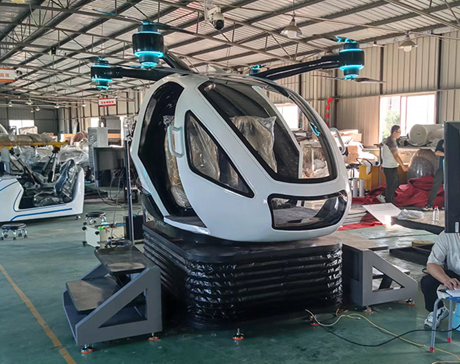
The Significance of eVTOL Simulators in Science Education and Research
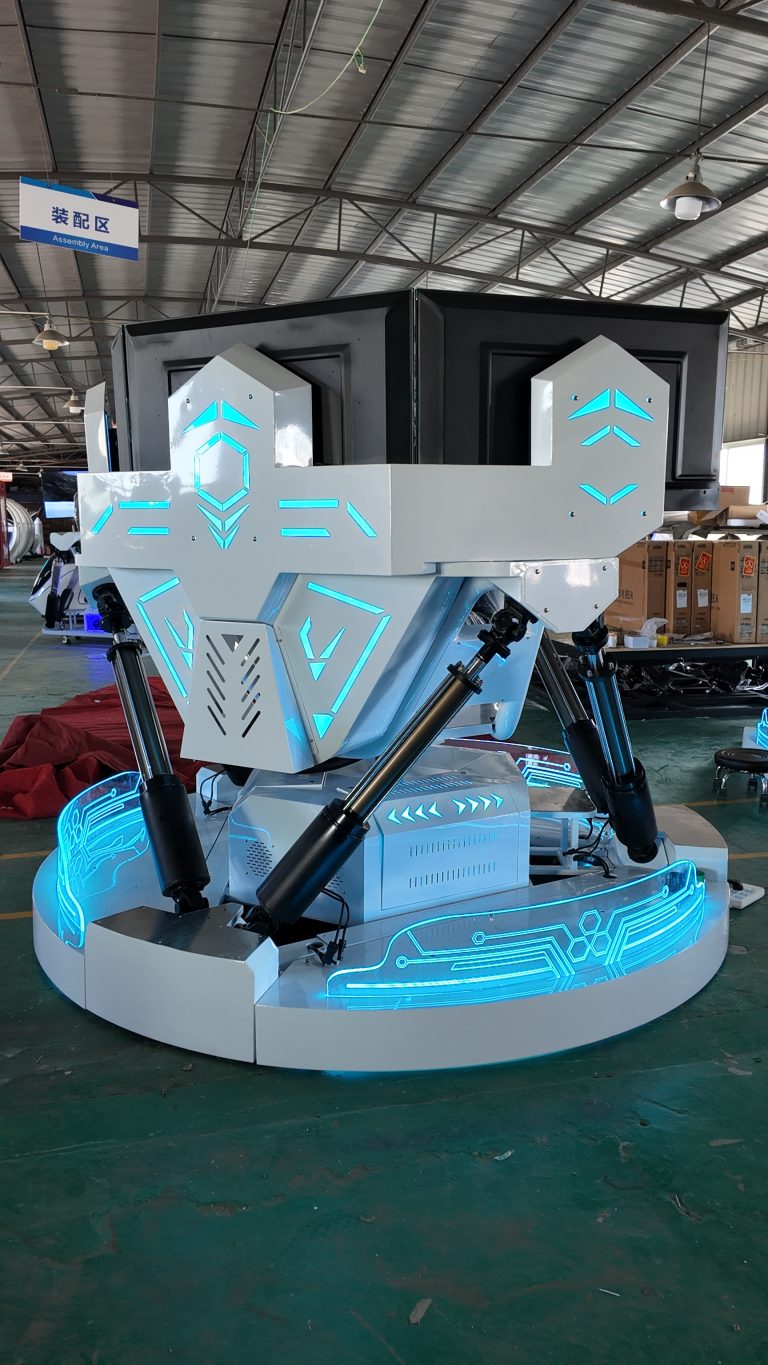
A New Benchmark in Immersive Racing: Versatile Functions and Application Values of Three-Screen Six-Axis Racing Simulator
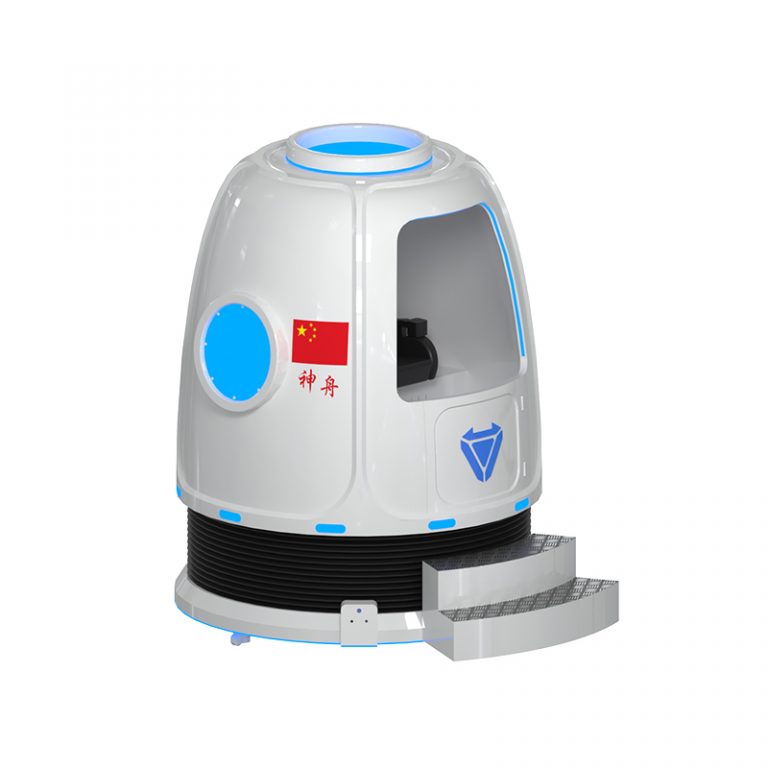
Revenue and Profit‑making Solutions for VR Shenzhou Spacecraft Simulator
Intelligent Driving Integration, Track Expansion – Analysis of the Future Market Development of Racing Simulators (English Version)

Technological Empowerment and Scenario Innovation: An Analysis of the Future Development Trends of VR Full-Sense Theaters
