Research on Diverse Applications of Compact Automobile Driving Simulators
Abstract
With the continuous development of the modern automotive industry, vocational education, public safety publicity, as well as the cultural tourism experience sector, the mode of automobile driver training is undergoing digital transformation and upgrading. Relying on its lightweight structure, low procurement cost, flexible deployment features and simulation interaction capabilities, the compact automobile driving simulator breaks the constraints of traditional real-vehicle training imposed by venues, fuel consumption, weather conditions and safety risks. Different from high-end 6-degree-of-freedom dynamic racing simulators, the compact automobile driving simulator focuses on restoring basic driving logic, reproducing operating components and supporting teaching software. It has been widely deployed in motor vehicle driving schools, automotive major teaching in secondary and vocational colleges, traffic safety science exhibition halls, employee safety training for enterprises, cultural tourism popular science experience halls and other scenarios. This paper discusses the product positioning, technical characteristics, full-scenario application scenarios, application value, existing limitations and future development directions of compact automobile driving simulators, and comprehensively analyzes their practical significance and development potential in modern society. The full text is approximately 3,000 words.
Keywords: Compact Automobile Driving Simulator; Driving Training; Traffic Safety Education; Vocational Education; Simulation Teaching
- Introduction
Motor vehicles have become the most common transportation tool for public travel. The domestic ownership of motor vehicles keeps rising year by year, followed by growing demand for driver training and mounting pressure on road traffic safety publicity. The traditional real-vehicle teaching model has many drawbacks: the construction of training grounds for driving schools requires heavy investment, and continuous costs are incurred in vehicle wear and fuel consumption. Novice drivers lack proficiency in operation, which may easily lead to scratches and collisions and bring obvious potential safety hazards. Real-vehicle teaching cannot proceed normally in severe weather such as rain, snow and heavy fog. It is impossible to reproduce and drill dangerous road conditions and sudden emergency scenarios in real vehicles, leaving learners without experience in emergency disposal.
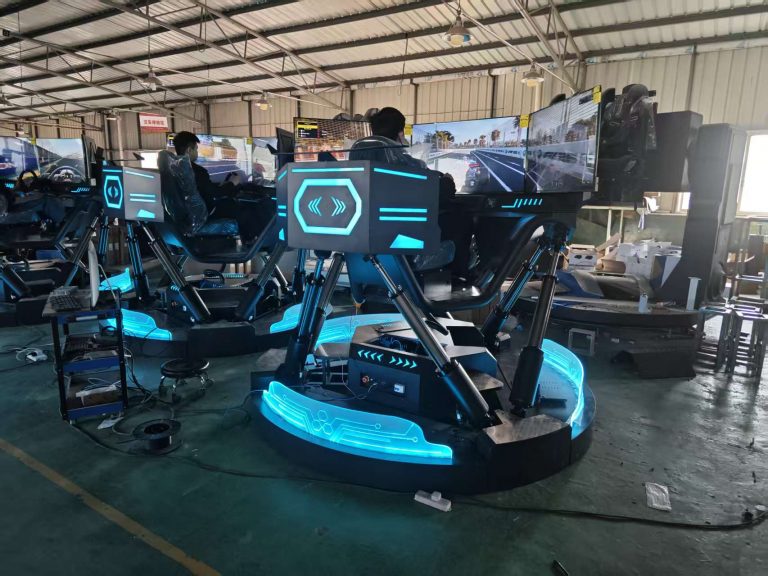
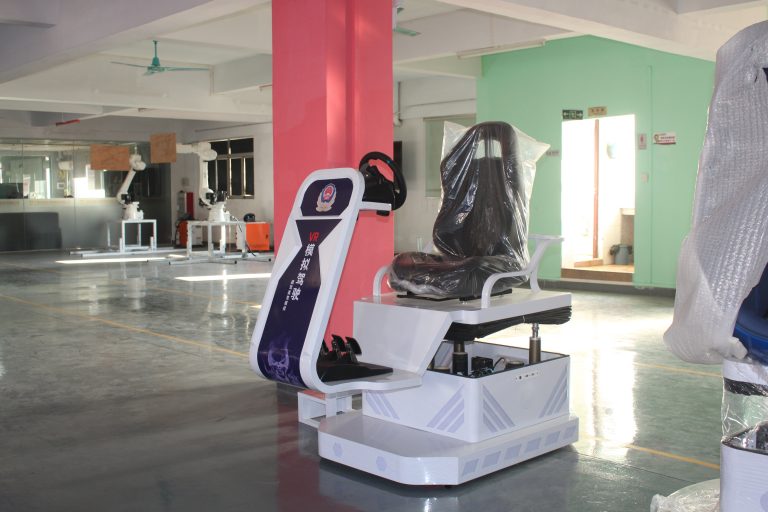
Against the backdrop of the popularization of digital simulation technology, automobile driving simulators have been widely adopted. Simulator products in the market are divided into two major categories: one refers to multi-screen 6-degree-of-freedom dynamic simulators for commercial experience halls and high-end training bases, which feature high procurement costs and large floor areas and are suitable for high-end immersive experience. The other category discussed in this paper is the compact automobile driving simulator. Equipped with core automobile operating components including a steering wheel, clutch pedal, brake pedal, accelerator pedal, gear lever and instrument panel, as well as display screens and simulation teaching software, the compact automobile driving simulator can fully restore basic driving operations such as starting, gear shifting, turning, reverse parking into garages and parallel parking. Featuring a compact footprint, convenient installation and outstanding cost performance, it can be used right after power-on without dedicated large venues. It is perfectly applicable to scenarios with limited budgets, narrow spaces and demands centered on basic teaching and popular science publicity.
For a long time, there has been a misunderstanding in the industry that compact simulators are only used for pre-training warming-up for driving school learners. In fact, after years of iteration and continuous improvement of supporting teaching software, compact automobile driving simulators have expanded to diversified application scenarios, covering vocational training, public safety popular science, enterprise safety management, youth research study, cultural tourism interactive experience and many other fields. Sorting out their application scenarios in depth and tapping into their application value can help purchasers and equipment manufacturers identify positioning accurately, promote the standardized implementation of compact simulation equipment in all walks of life, and facilitate the digital reform of domestic driver training and traffic safety publicity. - Core Characteristics of Compact Automobile Driving Simulators
The reason why compact automobile driving simulators can be popularized in multiple scenarios lies in their differentiated product features, which complement high-end dynamic simulators and real-vehicle teaching. The main characteristics are as follows:
First, lightweight hardware and flexible deployment. The complete set of equipment consists of a simulation operation suite, a display screen and a simple bracket. Some integrated compact models can be disassembled, carried and installed by a single person, covering a floor area of usually less than 2 square meters. It can be placed in ordinary classrooms, exhibition halls and offices without hardened large training venues, and can be deployed both indoors and outdoors, adapting to mobile popular science tours and temporary research study activities.
Second, low procurement and operation & maintenance costs. Compared with high-end dynamic simulators costing tens of thousands to over 100,000 yuan, compact automobile driving simulators have a lower purchase price. There is almost no continuous expenditure such as fuel consumption, vehicle sheet metal maintenance and tire replacement in later stages. Only regular inspection of operating component wear is required, with a low maintenance threshold, making them suitable for bulk procurement and configuration.
Third, highly restored basic driving logic. The equipment strictly reproduces the operation logic of real manual or automatic household vehicles. The steering damping of the steering wheel, pedal travel and gear shifting feel are close to those of real family cars. The supporting software includes the complete driving test teaching process for Subject 2 and Subject 3, and can set various virtual road conditions such as night driving, rainy days, foggy days and steep slopes to meet the needs of basic operation teaching.
Fourth, zero safety risks and repeatable drills. All operations are completed in a virtual environment with no risk of collision or rollover. Learners can repeatedly practice error-prone operations such as engine stalling, vehicle rolling and emergency braking without worrying about equipment damage, reducing the psychological pressure of novice practitioners.
Fifth, modular software adaptable to different user groups. The supporting simulation software can switch modes as needed: driving test training mode, traffic safety popular science mode, basic operation mode for trucks, buses and special vehicles, and traffic safety enlightenment mode for teenagers, adapting to different groups including learners, primary and secondary school students and enterprise drivers.
Of course, compact automobile driving simulators also have objective limitations. Without a dynamic platform, they cannot restore physical feedback such as high-speed bumps and body shaking during hard braking, resulting in lower immersion compared with multi-degree-of-freedom dynamic simulators. The simplified hardware structure makes them unsuitable for advanced driving technology and extreme emergency scenario training. Therefore, compact simulators are positioned for basic teaching, entry-level training and popular science publicity, forming a layered matching with real-vehicle teaching and high-end dynamic simulators to build a complete driver training system. - Main Application Scenarios of Compact Automobile Driving Simulators
3.1 Motor Vehicle Driving Schools: Pre-entry Training for Driving Tests
This is the most fundamental and widely adopted scenario for compact automobile driving simulators. Traditional driving schools generally adopt the mode of “direct hands-on practice with real vehicles”. Zero-basis learners tend to feel nervous when they first contact vehicles, resulting in unstable clutch control, frequent engine stalling and confusion about rearview mirror vision. This not only accelerates vehicle wear but also occupies a large amount of real-vehicle teaching hours, keeping fuel and maintenance costs of driving schools high.
After introducing compact automobile driving simulators, driving schools can build a pre-training session. After registration, learners first complete 10 to 20 class hours of basic training on the simulator to get familiar with the coordination logic of the steering wheel, three major pedals and gears, memorize key points for operations of Subject 2 items such as reverse parking and curve driving, and master basic specifications for Subject 3 including light simulation, road courtesy and gear shifting. After forming basic muscle memory and eliminating driving tension, learners will be arranged for real-vehicle road practice.
This model can significantly improve the teaching efficiency of driving schools: shorten the real-vehicle practice cycle, reduce coach car wear and fuel expenditure, mitigate real-vehicle scratch accidents of novice drivers and avoid teaching safety risks. Meanwhile, it diverts learners and eases queuing problems during peak hours at training grounds. Traffic management departments in some regions also encourage driving schools to adopt simulation equipment for auxiliary teaching and incorporate simulator training into the auxiliary teaching system for driver training. For small and medium-sized driving schools, compact simulators feature outstanding cost performance and are suitable for bulk procurement to build simulation teaching areas.
3.2 Secondary and Vocational Colleges: Classroom Teaching for Automobile-related Majors
Domestic secondary and vocational colleges generally offer majors such as Automobile Application and Maintenance, New Energy Vehicle Technology, Transportation Management, Urban Rail Transit and Logistics Management. The professional courses include automobile structure, basic driving and traffic safety regulations. In the past, classroom teaching mostly relied on PPT courseware and static vehicle teaching aids. Students could only observe static components and failed to understand the linkage logic of various parts.
Compact automobile driving simulators perfectly fill the gap between theoretical knowledge and practical operation. In class, teachers can use simulators to demonstrate power transmission logic: how stepping on the clutch cuts off power, how the accelerator opening controls rotating speed, and how steering operation changes the vehicle trajectory, intuitively displaying abstract automobile principles. Students take turns to operate on the machine to understand the oil-clutch coordination principle of manual transmission and distinguish operation differences between automatic and manual transmission vehicles.
In addition to automobile maintenance majors, students majoring in logistics and urban passenger transport can also learn basic driving specifications for trucks with compact simulators and establish awareness of blind spots for large vehicles. Meanwhile, schools have limited training funds and can hardly purchase a large number of real vehicles for students’ basic practice. Compact simulators can be used to build an on-campus simulation training classroom at low cost to ensure sufficient machine practice time for every student. Moreover, in campus training programs for students applying for motor vehicle driving licenses, simulators can serve as supporting equipment for on-campus training to enrich the practical training curriculum system of vocational colleges.
3.3 Traffic Safety Science Exhibition Halls and Government Publicity & Education Positions
Traffic police brigades across the country, traffic safety education bases, youth rule-of-law education bases and disaster prevention & mitigation experience halls undertake public legal publicity of traffic safety for the whole society. Traditional publicity modes mainly include display boards and promotional videos, featuring a single form and low visitor participation, making it difficult to leave a deep impression. Interactive experience equipment has become standard in modern science exhibition halls. Thanks to the small footprint and low operation threshold, compact automobile driving simulators are widely deployed in publicity and education venues.
In popular science scenarios, the supporting software of simulators is no longer limited to driving test training. Instead, it carries more traffic safety case scenarios: simulating the consequences of traffic accidents caused by dangerous driving behaviors such as drunk driving, speeding, running red lights, fatigued driving and distracted driving with mobile phones. Visitors operate by themselves to intuitively experience collisions and extended braking distances triggered by irregular operations, which deliver a stronger warning effect compared with verbal preaching.
At the same time, compact simulators support mobile touring exhibitions. When carrying out community popular science, campus lectures and public welfare promotion activities in squares, traffic police departments can transport compact simulators to build temporary experience areas to popularize safe travel knowledge for citizens and primary and secondary school students. Some youth activity centers and children’s palaces are specially equipped with compact simulators to carry out traffic safety research courses for primary and secondary school students, guide minors to establish awareness of road safety and understand basic traffic rules such as blind spots of motor vehicles and yielding to pedestrians, so as to cultivate good traffic travel concepts from the source.
3.4 Enterprises and Public Institutions: Internal Safety Training for Drivers
Logistics enterprises, sanitation companies, public transport groups, engineering construction enterprises and government official fleets employ a large number of full-time drivers. Enterprises need to organize regular safety refresher training to standardize drivers’ operating habits, reduce traffic accidents and avoid operational risks. However, organizing centralized full-staff real-vehicle training requires coordinating vehicles and venues, and shutdown training will affect normal business operation, resulting in high organization difficulty and costs.
Compact automobile driving simulators are suitable for normalized safety training within enterprises. Enterprises can place the equipment in staff training rooms and organize drivers to conduct safety refresher training using fragmented time such as pre-shift meetings and breaks. The software can customize enterprise-specific scenarios: driving of muck trucks in factory areas, passage of logistics trucks in loading and unloading zones and speed limit specifications in factory areas, carrying out simulation drills for high-frequency risk scenarios in enterprise operation. Meanwhile, simulators can record driver operation data and count irregular operations such as hard braking, speeding and irregular steering, facilitating safety officers to carry out targeted teaching and correction.
For newly recruited full-time drivers, enterprises can use simulators to conduct pre-job basic assessments to screen employees with standardized operation habits and reduce the probability of road operation accidents. For long-distance freight drivers, simulators can also be used to carry out simulation teaching on the hazards of fatigued driving, strengthen drivers’ awareness of safety responsibility and lower the risk of compensation for traffic accidents of enterprises.
3.5 Research Study Bases, Cultural Tourism Experience Halls and Youth Quality Education Bases
With the rapid development of the research travel industry, research study bases and labor education practice bases have been continuously constructed across the country, requiring a large number of interactive science and education equipment to enrich experience courses. Compact automobile driving simulators feature simple operation, balanced fun and education, suitable for teenagers over 6 years old, and are widely used in traffic safety research courses and labor practice courses.
Research instructors can design complete courses around simulators: explain traffic lights and road signs, demonstrate correct driving operations, arrange group experience for students, and organize traffic safety knowledge quizzes after class to realize the combination of experience and teaching. Different from high-end dynamic simulators focusing on entertainment competition, compact simulators lay emphasis on popular science education, which is more in line with the construction goal of fostering virtue through education for research study bases. They require lower procurement budgets, simple maintenance and are suitable for long-term opening to the public for experience.
In addition, some rural cultural tourism parks and comprehensive children’s experience halls are equipped with compact driving simulators to build experience areas of traffic towns, enrich interactive projects in parks, extend tourists’ staying time and serve as supporting equipment for cultural tourism formats to create additional service income. - Application Value of Compact Automobile Driving Simulators
First, reduce costs and improve efficiency to build a green teaching model. For driving schools, colleges and enterprises, compact simulators replace a large number of basic real-vehicle practices, cutting fuel consumption and vehicle wear, reducing carbon emissions, conforming to the concept of green low-carbon development, compressing training costs and improving the utilization efficiency of teachers.
Second, ensure training safety and eliminate drill risks. All dangerous operations are completed in a virtual environment, eliminating collisions and personal injury accidents in real-vehicle practice, lowering the safety management pressure of training organizers, and allowing learners to practice error-prone operations boldly without psychological burden.
Third, break the limitations of time, space and environment to realize all-weather teaching. Training can be carried out indoors at any time without being affected by rain, snow, foggy weather or day and night hours. Virtual software can easily reproduce special road conditions that are difficult to encounter in reality such as heavy rain, fog, night and icy roads to enrich training scenarios.
Fourth, promote innovation in traffic safety publicity and improve the effect of legal popularization. Immersive interactive experience changes the traditional static preaching mode and enhances audience engagement. Especially for teenagers, intuitive simulation experience can retain safety awareness for a long time and help improve the traffic safety literacy of the whole people.
Fifth, realize standardized teaching and unify training assessment standards. The supporting software of simulators comes with standardized teaching processes and an automatic scoring assessment system, reducing subjective teaching differences among different instructors, standardizing teaching procedures and facilitating managers to assess learners’ mastery uniformly. - Existing Application Problems and Optimization Directions
At present, there are still some problems in the implementation of compact automobile driving simulators in various scenarios. Firstly, product quality in the market varies greatly. Some low-cost compact simulators feature rough operation hand feel, crude software pictures and low simulation fidelity, failing to meet teaching needs and affecting user experience. Secondly, many purchasers have unclear understanding of equipment positioning and blindly use compact simulators to replace all real-vehicle teaching, ignoring the capability boundary of the equipment itself. Thirdly, the development of supporting teaching software is insufficient. Some software only supports training for driving test subjects, lacking customized scenarios for enterprise and youth popular science, restricting the extended application of equipment. Fourthly, some users lack supporting teaching plans. After procurement, the equipment is left idle for a long time and only used as display ornaments, failing to give play to the value of practical training and teaching.
In response to the above problems, the industry can optimize in multiple directions in the future: equipment manufacturers shall strictly control hardware hand feel, continuously iterate simulation software, open software customization interfaces and develop exclusive teaching scenarios for different industries for compact automobile driving simulators; purchasers shall clarify usage requirements, distinguish the division of labor among compact simulators, high-end dynamic simulators and real-vehicle teaching to build a layered teaching system; industry associations and equipment manufacturers shall output standardized teaching courseware and practical training plans to guide driving schools, colleges and exhibition halls to use equipment rationally; competent departments in all regions shall improve relevant specifications for simulation teaching, promote the standardized recognition of simulator training results and further release the application potential of equipment. - Conclusion
As lightweight simulation teaching equipment, compact automobile driving simulators have long broken through the original positioning of single driving school training, and have been widely applied in many fields including motor vehicle driver training, vocational college teaching, public traffic safety popular science, safety refresher training for enterprise drivers and youth research & cultural tourism experience, thanks to their core advantages of high cost performance, flexible deployment and safe repeatable drills. Against the backdrop of digital education transformation and the improvement of national traffic safety literacy, compact automobile driving simulators undertake important functions of basic operation teaching and safety warning education. They complement high-end dynamic simulators and real-vehicle teaching to improve the complete driving simulation training system.
We must also objectively recognize the capability boundary of compact automobile driving simulators. Their core value lies in entry-level teaching, basic operation training and popular science publicity, and they cannot completely replace real-vehicle road teaching. In the future, with the continuous upgrading of simulation software and human-computer interaction technology combined with big data teaching management systems, compact automobile driving simulators will expand more innovative application scenarios, continuously empower the reform of the driver training industry, facilitate the high-quality development of domestic road traffic safety publicity, and provide digital equipment support for improving the public awareness of safe travel and reducing the incidence of road traffic accidents.
RELATED POSTS
Driving Simulators Unveiled: The Ultimate Co-Pilot for Driver Training
Research on Technical Advantages and Practical Training Applications of 6-DOF Full-Scenario Automobile Driving Simulator
Research on the Future Development Trends of VR Drug-impaired Driving Simulator
The Advantages of a Six-Axis Motion Car Simulator Platform
The future development and application prospects of automobile driving simulators