Diversified Application Scenarios and Practical Value Analysis of Simple Car Driving Simulators
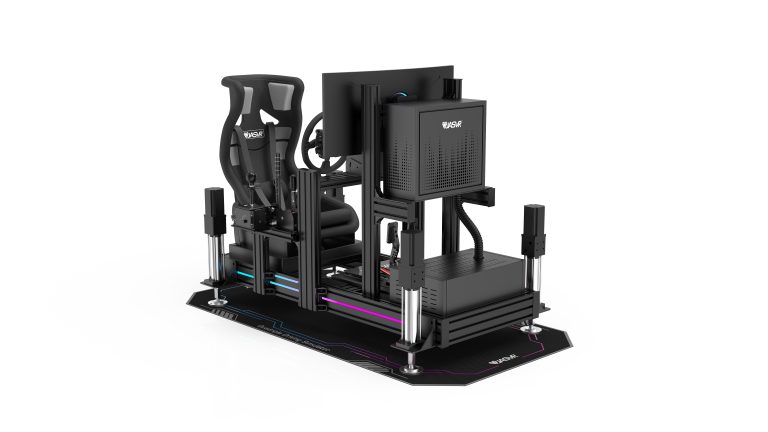
With the popularization of intelligent simulation technology and the continuous improvement of the traffic safety system, car driving simulation equipment has gradually expanded from professional competition and high-end scientific research fields to civilian and lightweight applications. As a popularized and simplified version of traditional professional simulation equipment, the simple car driving simulator eliminates complex mechanical structures and high costs while retaining core functions such as authentic driving logic, traffic scenario simulation, and real-time operation error feedback. It features compact size, simple operation, high cost performance and strong adaptability. Unlike large-scale professional driving simulators, the lightweight version requires no fixed venue or professional operation and maintenance, and can flexibly adapt to diverse scenarios with balanced practicality and popularity. It is widely applied in driving training and teaching, traffic safety popularization, commercial leisure experience, campus research and study, and special post training. Against the backdrop of universal traffic safety education, lightweight driving skill training and booming experience-oriented leisure economy, the practical value of simple car driving simulators keeps emerging, serving as a vital carrier for standardized driving teaching, normalized safety education and diversified public experience. This paper comprehensively analyzes the core application scenarios of simple car driving simulators and explores their industrial value and development significance based on practical application effects.
I. Motor Vehicle Driving Training: The Core Scenario for Lightweight Driving Learning
Driving training is the most fundamental and prevalent application scenario of simple car driving simulators. It effectively makes up for numerous shortcomings of traditional real-vehicle teaching and serves as an important auxiliary tool for standardized teaching in driving schools and independent personalized practice for learners. Traditional driver license training relies heavily on real-vehicle exercises, which are plagued by high training costs, site restrictions, low fault tolerance and inability to conduct high-risk scenario drills. In addition, novice learners tend to feel nervous and scared when operating real vehicles for the first time, easily resulting in operational errors, fuel waste and vehicle wear. In contrast, simple car driving simulators are perfectly adapted to driving test training requirements. Based on real examination site data modeling, they accurately restore the full-process test scenarios of Subject 2 and Subject 3, covering all mandatory items such as reverse parking, parallel parking, ramp fixed-point parking, straight-line driving, lane changing and overtaking, and intersection passage, providing learners with a high-frequency and low-cost special training channel.
For large-scale standardized teaching in driving schools, simple driving simulators optimize teaching modes and reduce operating costs. Driving schools can deploy a batch of desktop simple simulators to build indoor simulation training areas, which do not occupy outdoor practice sites and support all-weather teaching regardless of adverse weather such as rain, snow, strong wind, high temperature and severe cold. With the intelligent statistical function of the simulator system, coaches can view learners’ operation data in real time, accurately identify common problems including unstable clutch control, improper speed control, line-crossing violations and insufficient observation, and conduct targeted error correction teaching. This mode greatly improves teaching accuracy and efficiency compared with traditional visual observation teaching. Meanwhile, simulation training significantly reduces real-vehicle training time, cutting fuel consumption and vehicle wear and lowering the overall operating costs of driving schools. According to industry statistics, auxiliary teaching with simple simulators can reduce learners’ real-vehicle training costs by more than 80% and increase the pass rate of driving tests by 15% to 20%.
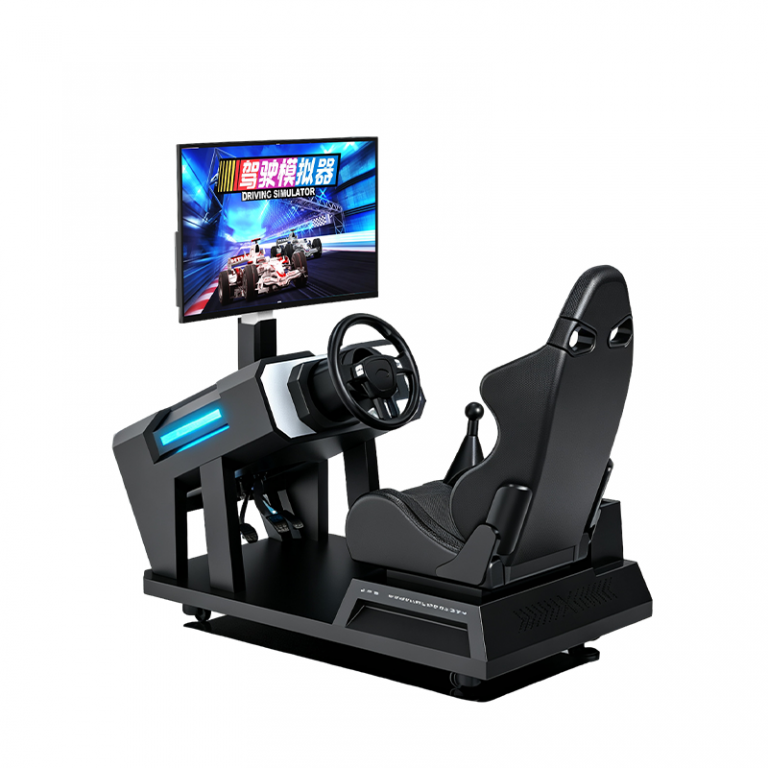
For individual driving learners, simple driving simulators realize normalized and flexible training. Most learners only have limited real-vehicle practice time in driving schools, making it difficult for them to master proficient operational skills and prone to forgetting knowledge and unfamiliar operation after intervals. Small desktop simulators are portable and suitable for home placement, allowing learners to practice basic operations repeatedly in fragmented time. Learners can get familiar with the whole process of vehicle ignition and start, clutch and brake coordination, gear shifting and steering wheel control, quickly eliminating strangeness and tension in driving. Furthermore, the simulator can simulate special driving conditions including night driving, rainy and foggy days, and braking on slippery roads, enabling learners to master driving skills for extreme conditions in a zero-risk environment and fill the gap that traditional real-vehicle teaching cannot cover high-risk scenario training. This low-cost and high-frequency training mode helps learners lay a solid foundation before operating real vehicles, greatly improving learning efficiency and meeting the needs of office workers, students and other groups with fragmented time.
II. Traffic Safety Popularization: An Immersive Carrier for National Safety Education
Traffic safety publicity and education is a key link in building a solid line of defense for road travel safety. Traditional traffic safety education mainly adopts passive indoctrination methods such as lectures, picture and text exhibitions, and video playback. The single and boring forms lead to low public acceptance and poor memory effect, making it hard to internalize traffic rules and safety awareness into people’s minds. Featuring immersive and interactive experience, simple car driving simulators have become core equipment for traffic management departments, popular science bases and emergency education institutions to carry out national traffic safety publicity. They thoroughly reverse the traditional education drawback of “emphasizing indoctrination over experience” and realize an upgrade from passive listening to active experiencing.
Traffic safety education bases, legal popular science experience halls and youth research and practice bases across the country generally take simple driving simulators as core experience projects to carry out normalized national traffic safety popularization. Targeting common traffic violations such as running red lights, speeding, arbitrary lane changing, drunk driving and distracted driving, the simulator constructs realistic scenarios including urban roads, rural roads and highway intersections, and simulates rear-end collisions, crashes, rollovers and other accident consequences caused by illegal driving. It allows experiencers to intuitively perceive the hazards of traffic violations. Compared with text and picture warnings, immersive simulation experience delivers a stronger sensory impact, effectively strengthening the public’s awareness of traffic rules and risk prevention, and doubling the effectiveness of safety education.
Simple driving simulators are highly adaptable to traffic safety enlightenment education for teenagers. In primary and secondary school traffic safety classes and campus safety education activities, simplified simulators paired with cartoon virtual road scenarios eliminate complex operation thresholds and adapt to teenagers’ cognitive characteristics. They enable students to intuitively learn basic traffic knowledge such as traffic light identification, yielding to pedestrians, intersection passage and avoiding non-motor vehicles. By operating the simulator personally and experiencing the differences between standardized driving and irregular operation in an immersive way, students can develop good habits of abiding by traffic rules from an early age, effectively reducing the occurrence of road traffic accidents among minors. In addition, the vivid and interesting experiential teaching breaks the dullness of traditional lecture-based classroom teaching and greatly improves teenagers’ learning enthusiasm and participation.
III. Commercial Leisure Experience: A Value-Added Traffic Project for Consumer Scenarios
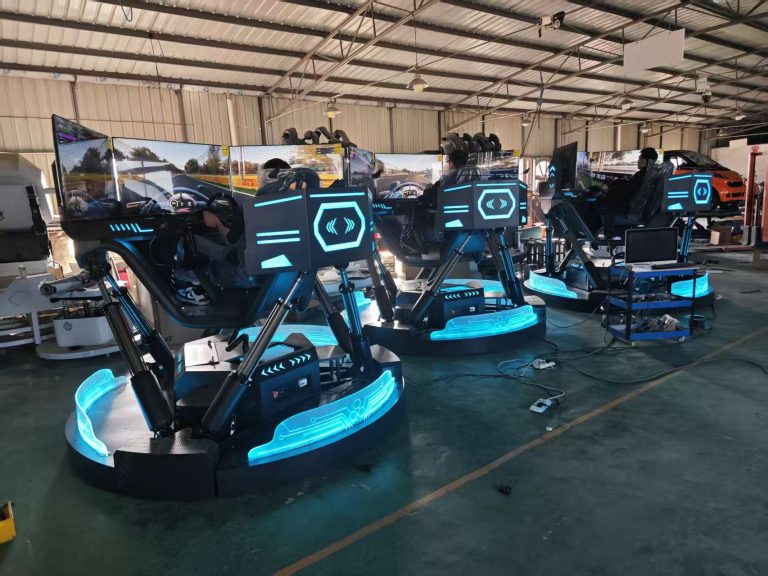
In public leisure places such as shopping malls, video game cities and cultural tourism experience halls, simple driving simulators focus on popular entertainment experience, covering ordinary road driving, racing simulation, simulation breakthroughs and other fun modes suitable for consumers of all ages. For young consumers, the highly realistic racing experience meets their needs of entertainment decompression and competitive interaction, and the multi-player online battle mode creates interesting competitive scenarios to enhance user stickiness. For parent-child families, the gentle basic driving experience supports parent-child interactive entertainment, allowing children to learn basic traffic knowledge in entertainment and balance fun and education. Different from traditional video game equipment, such immersive experience projects are novel and widely popular, effectively attracting passenger flow, extending consumers’ staying time, creating stable incremental benefits for merchants and enriching the business formats of commercial complexes.
In addition, simple driving simulators are commonly used in commercial event warm-ups, auto shows, competitions and shopping mall theme activities. Through interactive forms such as interesting driving experience and racing competitions, they enliven the event atmosphere, attract public participation and serve as an effective means of passenger flow attraction for commercial activities.
In the field of vocational education and campus research and study, simple car driving simulators have become important teaching equipment for auto repair majors in secondary vocational schools, transportation colleges and primary and secondary school research activities by virtue of low cost, standardization and high safety. They effectively make up for the shortcomings of campus practical teaching and support the training of transportation professionals and youth popular science research.
RELATED POSTS
Analysis on the Future Development Trends of the VR 3-Meter Large Space Simulator
Experience of Basic Operation Skills of Automobile Driving Simulator
Site Planning Design and Practical Scheme for Automobile Driving Simulators
Technology Empowerment and Scenario Innovation: An Analysis of the Future Development Trends of Truck Cab Simulators
The Application of Racing Simulators in Malls: Unlocking a New Track for Commercial Entertainment