Research on the Future Development Trends of VR Drug-impaired Driving Simulator
Introduction
Drug-impaired driving is a serious illegal act that threatens road traffic safety and triggers vicious traffic accidents second only to drunk driving. Drugs act on the human central nervous system, which easily causes visual distortion, perceptual confusion, slow reaction speed and loss of judgment among drivers, often leading to chain collisions and resulting in heavy casualties and property losses. For a long time, China’s anti-drug and traffic safety publicity and education mostly adopt traditional modes such as poster presentations, warning educational videos and classroom lectures, which belong to one-way passive knowledge output. It is difficult for audiences to intuitively understand the physiological loss of control after drug use while driving, and many people hold the fluke mentality that “driving after occasional drug taking will not cause accidents”. Accordingly, the warning effect of publicity has obvious deficiencies.
With the continuous maturity of virtual reality technology, multi-degree-of-freedom dynamic simulation, artificial intelligence and digital twin technology, the VR drug-impaired driving simulator has emerged as the times require. Equipped with a simulated driving cockpit, VR panoramic imaging, dynamic motion platform and multi-sensory special effect system, the device highly restores physiological symptoms experienced by drivers after taking different types of drugs, such as double vision, distorted vision, limb dysfunction and disordered direction perception within an absolutely safe virtual environment. It fully simulates the whole process of loss of vehicle control and collision accidents caused by drug-impaired driving on urban roads, highways, tunnels and roads under rain and snow conditions, transforming abstract legal provisions and hazard warnings into immersive personal experiences. At present, VR drug-impaired driving simulators have been widely deployed in anti-drug education bases, traffic safety experience halls, driving schools, campus rule-of-law exhibition halls, community publicity and education centers, and compulsory drug rehabilitation centers, becoming core equipment for digital publicity of smart anti-drug campaigns and traffic safety.
Against the policy backdrop of China continuously advancing the national anti-drug program, promoting digital upgrading of anti-drug education bases and implementing comprehensive management of road traffic safety, coupled with multiple factors including iteration of XR hardware, implementation of AI large models and evolving new types of drug threats, the industry of VR drug-impaired driving simulators has reached a critical window period for transformation and upgrading. Based on the current industrial application status, this paper systematically studies and judges the core future development trends of VR drug-impaired driving simulators from six dimensions: scientific refinement of simulation technology, full coverage of application scenarios, AI intelligent empowerment, dynamic iteration of content systems, inclusive upgrading of modular hardware, and standardized and compliant sustainable development. It provides references for equipment research and development, project implementation, venue construction and market operation.
I. Simulation Technology Developing toward Medical-grade Precision to Build a Multi-dimensional Physiological Sensory Simulation System
Simulation accuracy constitutes the core competitiveness of VR drug-impaired driving simulators. At present, most VR drug-impaired driving equipment only achieves basic effects such as blurred pictures and seat vibration, lacking sufficient restoration of differentiated physiological symptoms induced by various drugs. Homogenized simulation is prominent, failing to meet the high-standard publicity and education demands of public security, judicial authorities and professional anti-drug bases. In the future, VR drug-impaired driving simulators will drive simulation effects to shift from entertaining visual special effects to medical-grade precise simulation, realizing in-depth integration of neuropharmacological characteristics and driving behavior simulation.
R&D teams will carry out in-depth cooperation with disciplines including addiction medicine, traffic psychology and vehicle dynamics to establish differentiated simulation algorithms targeting various drugs such as synthetic cannabinoids, methamphetamine, psychotropic substances and new types of disguised drugs. For instance, stimulant drugs are simulated to trigger excitement, line-of-sight drift and distance misjudgment; hallucinogenic drugs are set to cause distorted object outlines, phantom flashes and distorted road boundaries; sedative drugs lead to scattered consciousness, delayed responses and slow operations. The system can quantitatively simulate indicators such as control delay, visual field contraction, depth perception deviation and color vision distortion, distinguish driving conditions under mild, moderate and severe drug influence, and realize hierarchical experience modes.
In terms of sensory interaction, single visual simulation will be upgraded into a collaborative full-sensory simulation covering vision, hearing, somatosense and tactile sensation. In addition to 360° panoramic distortion effects realized by VR headsets, the dynamic platform adopts refined pitching, rolling and jitter algorithms to simulate vehicle skidding, loss of control and impact during collisions. Spatial sound effects are added with noise interference and misplaced sound sources. Supporting special effects including air blowing, vibrating seats and safety belt impact feedback are equipped synchronously. Meanwhile, physiological feedback interfaces will be introduced to connect heart rate collection modules and monitor users’ physical status in real time and prevent discomfort caused by high-intensity simulation. Continuous optimization of vehicle dynamic models can accurately reproduce physical phenomena such as brake failure, steering out of control and road skidding, narrowing the behavioral gap between virtual scenarios and real drug-impaired driving accidents and greatly improving the authenticity of experience and the persuasiveness of warnings.
Furthermore, low-latency interaction will become standard configuration. By optimizing rendering pipelines and upgrading wireless VR transmission schemes, the synchronous delay between pictures and dynamic seat movements will be compressed to the millisecond level, solving dizziness caused by desynchronization between visuals and seat motions. While ensuring simulation authenticity and experience comfort, the scope of applicable groups including teenagers and drug rehabilitators can be further expanded.
II. Full Penetration of Application Scenarios: Upgrading from Single Warning Equipment to Comprehensive Training Carriers for Multiple Industries
Currently, VR drug-impaired driving simulators are mainly applied in two scenarios: anti-drug exhibition halls and traffic safety exhibition halls, and market potential has not been fully unleashed. In the future, the industry will break scenario boundaries to realize full coverage of key groups and coordinated cross-field application. The positioning of the equipment will shift from simple popular science experience devices to an integrated digital training platform covering drug prevention, traffic law popularization, drug rehabilitation and vocational access training.
For youth anti-drug education on campus, exclusive lightweight versions for teenagers will be launched. Violent and bloody accident scenes will be weakened, with emphasis placed on popularizing the identification of disguised drugs and the legal consequences of drug-impaired driving, matched with scenario guidance. Moderate yet impactful warning scenarios will be constructed in line with minors’ cognitive characteristics, and the equipment will be widely deployed in rule-of-law classrooms of primary and secondary schools, youth activity centers and research and study bases to foster drug prevention awareness from the source.
In the transportation industry, VR drug-impaired driving simulators will be incorporated into regular safety education at driving schools, pre-job warning training for drivers of freight and logistics enterprises, online car-hailing and passenger transport companies. Special training modules will be developed for professional drivers to simulate dual risks arising from long-distance driving combined with drug use, implementing regular risk education for key drivers. Meanwhile, the equipment can be combined with drunk driving and fatigue driving simulation systems to build an integrated training center for dangerous driving simulation.
In public security and judicial drug rehabilitation fields, equipment functions will extend to professional training. Grassroots police will receive training on identifying behavioral characteristics of drug-impaired driving; for people under compulsory isolated drug rehabilitation, targeted warning courses will be developed to help them intuitively understand severe consequences of driving after relapse, reducing overlapping risks of relapse and drug-impaired driving. Lightweight mobile VR drug-impaired driving simulation units will be promoted for community publicity, township mobile anti-drug campaigns, realizing dual deployment via fixed exhibition halls and mobile publicity vehicles and addressing insufficient anti-drug publicity resources in counties and rural areas.
In the long run, VR drug-impaired driving simulators will connect the integrated chain of “drug-impaired driving simulation + drug identification + anti-drug law popularization”. Instead of operating independently, the equipment will be linked with AR drug identification systems, anti-drug legal knowledge databases and typical case databases, forming a closed loop of publicity and education: experiencing hazards of drug-impaired driving, identifying new types of drugs, and learning relevant legal provisions, and establishing a one-stop anti-drug solution.
III. In-depth AI Empowerment: Realizing Personalized Experience, Intelligent Data Analysis and Dynamic Content Generation
The integration of artificial intelligence technology will completely change the traditional mode of fixed processes and unified storylines adopted by VR drug-impaired driving simulators, promoting the transformation of equipment from passive playback systems to intelligent interactive education terminals. AI empowerment is mainly reflected in three directions: adaptive personalized experience, quantifiable assessment of education effects and rapid iteration of content via AIGC.
First of all, AI enables adaptive experience for different groups. After collecting basic information, the system distinguishes teenagers, professional drivers, drug rehabilitators and ordinary citizens, and automatically matches corresponding experience intensity, picture scale and scenario difficulty. The impact intensity of special effects will be reduced automatically for people with low psychological endurance; a complete heavy simulation mode will be activated for professional drivers and high-risk drug-related groups to realize targeted hierarchical education.
Secondly, AI big data analysis enables quantifiable publicity and education effects. The simulator collects driving data in real time including steering wheel operation, braking timing, reaction time and collision frequency. Combined with anti-drug knowledge quiz results before and after experience, personal assessment reports will be generated automatically to visually compare driving capabilities under normal driving and drug-impaired conditions. Venue managers can aggregate massive experience data through cloud backends to analyze weak points of different groups in understanding drug-impaired driving risks, providing data support for optimizing anti-drug publicity plans and solving the long-standing pain point that traditional publicity cannot evaluate education outcomes.
Thirdly, AIGC technology supports rapid generation of new scenarios and cases. As new types of drugs continue to emerge and new typical cases of drug-impaired driving keep updating, traditional content production relying on manual modeling suffers from long cycles and high costs. AIGC can rapidly generate scenarios covering different road conditions and weather, as well as new drug-related situations, and automatically update the latest domestic judicial precedents concerning drug-impaired driving, shortening the content iteration cycle. Operators no longer need to rely on manufacturers for customized content for a long time, and can quickly adjust experience storylines according to local drug situations and seasonal publicity themes to meet differentiated anti-drug publicity demands across regions.
Meanwhile, AI intelligent operation and maintenance modules will be widely popularized to monitor equipment operating status in real time, conduct remote fault diagnosis and automatic early warning, lowering the maintenance threshold for venue equipment, reducing downtime and ensuring regular anti-drug publicity and education activities.
IV. Continuous Iteration of Content Ecosystem: Keeping Pace with Evolving Drug Threats and Promoting Regular Updates of Law Popularization Content
Drug forms keep evolving, and new disguised drugs such as “milk tea drugs” and “stamp drugs” as well as psychotropic medicines continue to appear, bringing new characteristics to drug-impaired driving crimes. In contrast, content on a large number of existing VR drug-impaired driving simulators remains unchanged for years, failing to match current demands of anti-drug publicity work. In the future, the construction of a dynamic, localized and law-based content ecosystem will become the key to industrial competition.
The content system will combine standardized templates with localized customization. National anti-drug related laws, regulations and general drug knowledge serve as basic standardized content; manufacturers can customize localized virtual scenarios based on real local drug-impaired driving cases provided by public security authorities. Warning education adopting local cases is more likely to arouse audiences’ emotional resonance. Scenarios will be continuously enriched beyond single urban road models, expanding to expressways, rural roads, night driving, travel under rain, fog, ice and snow, tunnel passage and other diverse road conditions to fully restore risks of drug-impaired driving under real driving environments.
In terms of content scale, unified norms will gradually take shape within the industry. Adhering to the principle of “warning-oriented with appropriate restraint”, the design idea of pursuing excessive bloody impacts will be abandoned. Following the laws of cognitive education, a complete narrative chain will be constructed covering simulation of drug inducement, perception of physiological changes, process of driving loss of control, display of accident consequences and interpretation of legal liabilities. The logical relationship between drug use, illegal acts and traffic accidents will be clarified to guide audiences to rationally understand risks and avoid psychological discomfort caused by mere sensory stimulation.
Cloud-based content distribution will become mainstream. Manufacturers will build anti-drug content cloud platforms to continuously update drug categories, cases, test questions and publicity videos via cloud push, enabling equipment to upgrade resources online. In the future, interconnection of content across multiple terminals will be realized, with resource sharing among VR drug-impaired driving simulators, anti-drug interactive large screens and mobile H5 experience programs, connecting online and offline anti-drug publicity channels.
V. Hardware Developing toward Modularization and Lightweight Diversification to Meet Demands of Large Exhibition Halls and Sinking Markets
Optimization of hardware structures focuses on two main lines: modular assembly, lightweight portability and hierarchical development of high and low configurations, adapting to project demands with different budgets and site conditions and overcoming drawbacks of traditional equipment such as large occupation area, immobility and difficult upgrading.
The product system will be divided into two tracks: high-end integrated dynamic models and lightweight portable models. High-end versions equipped with multi-degree-of-freedom dynamic platforms and full-simulation driving cockpits target provincial and municipal large-scale anti-drug education bases and traffic safety experience halls to pursue ultimate immersive experience. Lightweight models adopt simplified integrated cockpits to reduce floor space and procurement costs, suitable for scenarios with limited space such as community service centers, primary and secondary schools and mobile publicity vehicles. They support rapid disassembly, assembly and transportation to expand sinking county markets.
Modular design will become standard. Dynamic platforms, VR display systems, special effect modules and control cockpits are independent modules that customers can select and combine as needed. Subsequent hardware upgrading does not require complete machine replacement; only corresponding modules need to be updated, effectively extending the equipment life cycle and lowering customers’ secondary investment costs. Hardware compatibility will be greatly improved to support mainstream wireless VR headsets, as well as free switching between VR immersive mode and naked-eye large-screen mode. When groups of visitors arrive, the large-screen mode can be activated for collective observation, improving venue reception efficiency.
Green and low-carbon design also represents an important development direction. New-generation hardware is equipped with intelligent power management systems that automatically reduce power consumption during standby and adjust power dynamically during operation. A large amount of lightweight environmentally friendly materials are adopted to cut transportation costs. As industrial chains mature, mass production of core components drives steady decline in overall equipment costs, accelerating the popularization of VR drug-impaired driving simulators in grassroots public cultural positions and promoting inclusive immersive anti-drug education.
VI. Gradual Improvement of Industrial Standards to Promote Standardized, Compliant and Sustainable Industrial Development
The industry of VR anti-drug simulation equipment is undergoing rapid development, yet unified industrial technical specifications and content review standards have not been formulated, leading to uneven product quality across the market. Some low-end products suffer from rough simulation, uncontrolled content scale and insufficient equipment safety protection, hindering long-term sound industrial development. In the future, the industry will embrace transformation toward standardization and compliance and bid farewell to extensive expansion.
On the one hand, equipment safety standards will be continuously improved. As manned dynamic simulation equipment, VR drug-impaired driving simulators will have clear specifications for mechanical safety protection, emergency braking mechanisms, electrical safety and load-bearing standards. New-generation equipment will be equipped with multi-layer safety protection functions including one-key emergency stop, overload protection and heart rate monitoring early warning. Access prompts will be set for children and people suffering from hypertension and cardiovascular and cerebrovascular diseases, forming complete standardized experience specifications.
On the other hand, content review mechanisms will be continuously improved. Content evaluation criteria will be formulated jointly with anti-drug, public security and education competent authorities to regulate scene pictures and narrative orientation, preventing dissemination of inappropriate images and false drug-related information. All content must conform to policy orientation of anti-drug publicity and adhere to positive value guidance. With the growth of government procurement projects, bidding activities will attach more importance to product qualifications, content compliance and sustainable service capacity. Low-cost manufacturers producing shoddy products relying merely on price competition will be gradually eliminated, and market share will concentrate among leading enterprises with independent R&D capabilities and sustainable content updating capacity.
Business models will also keep iterating, transforming from single hardware sales to integrated solutions of “hardware equipment + continuous content update + cloud platform + operation guidance”. Suppliers evolve from pure equipment manufacturers into comprehensive service providers of digital anti-drug publicity and education, offering value-added services such as long-term content upgrading, equipment operation and maintenance training and publicity plan design for venues to build a stable and sustainable industrial service ecosystem.
Conclusion
In summary, against the backdrop of deepening national anti-drug campaigns, continuous advancement of comprehensive traffic safety governance and rapid iteration of digital simulation technology, VR drug-impaired driving simulators are evolving from niche popular science equipment into an indispensable digital publicity carrier within the smart anti-drug system. In the future, the industry will continue to advance along six major trends: medical precision of simulation, full coverage of application scenarios, AI intelligent empowerment, dynamic content iteration, inclusive modular hardware and standardized industrial compliance.
Compared with traditional publicity and education methods, the greatest value of VR drug-impaired driving simulators lies in realizing “first-hand experience of risks within a safe environment”, breaking the barrier between knowledge cognition and psychological warning, and enhancing public awareness to resist drug-impaired driving fundamentally. With continuous deployment of equipment on campuses, communities, enterprises and drug rehabilitation institutions, VR drug-impaired driving simulators will continuously play a warning role, helping the whole society reach a consensus of “cherishing life, staying away from drugs and rejecting drug-impaired driving”, and providing strong technological support for building safe traffic and drug-free communities. Under the general trend of deep integration between digital technology and anti-drug work, the VR drug-impaired driving simulator industry boasts broad room for growth and will continuously release tremendous social value in national drug prevention education and road safety publicity.
RELATED POSTS
Analysis on the Future Development Trends of Six-Person VR Spaceship Simulators
Research on Diverse Applications of Compact Automobile Driving Simulators
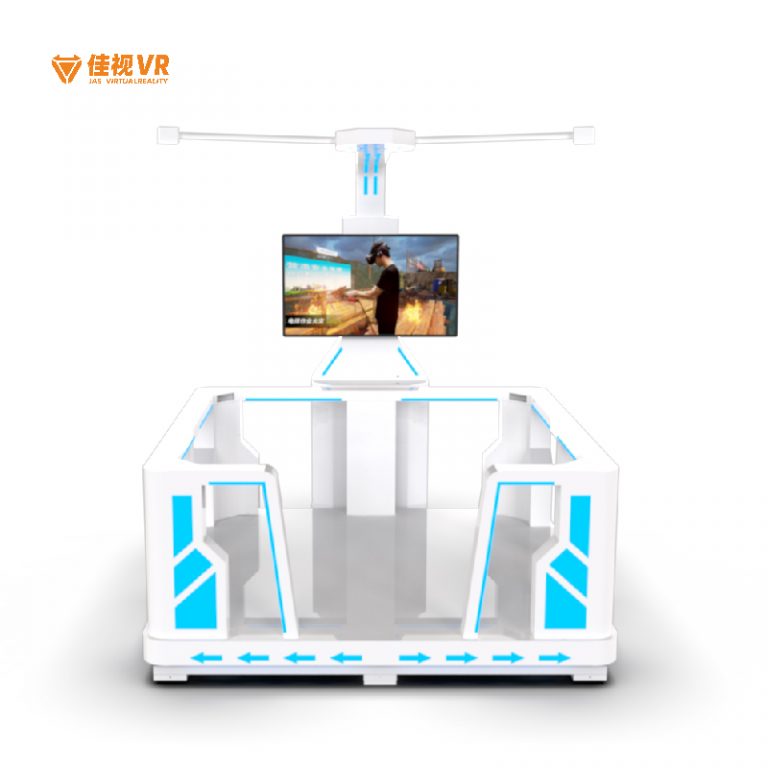
Characteristics and Multi-field Application Analysis of VR Construction Safety Lifting Walking Platform Simulator

The Application Market of eVTOL Simulators
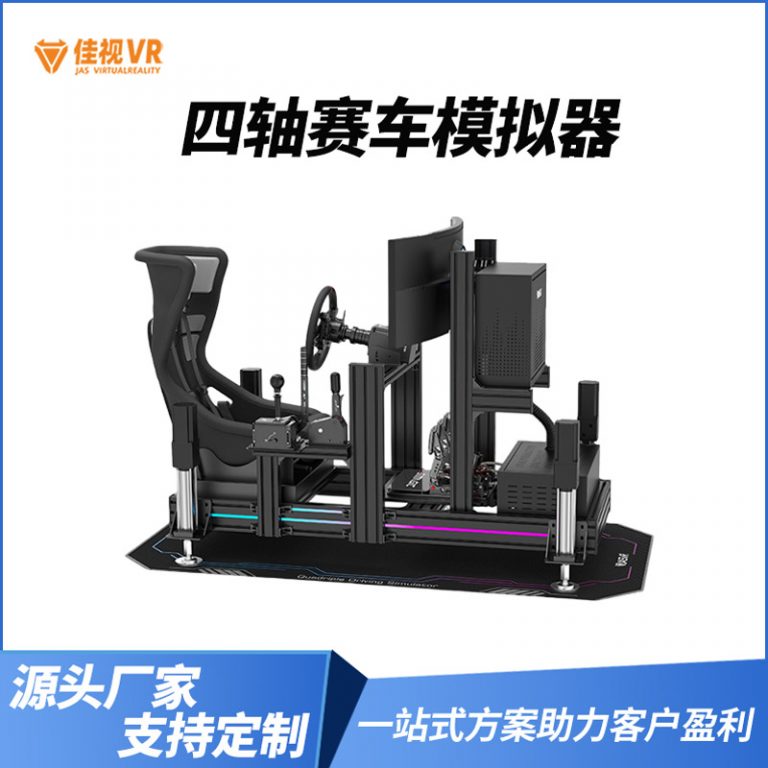
Research on Technical Characteristics and Multi-field Applications of 4-Axis Dynamic Simulators