What Can VR/XR Full‑Sensory Large‑Scale Spaces Achieve?
An Analysis of Application Value of Immersive Technology in Diverse Scenarios
The rapid advancement of digital technology has driven the immersive‑experience economy into a high‑growth cycle. As a new‑generation offline immersive carrier, VR/XR full‑sensory large‑scale spaces (Location‑Based Experience, LBE) differ from traditional egg‑shaped VR chairs, fixed‑point VR devices and ordinary dome‑screen cinemas. Supported by millimeter‑level spatial tracking, wireless XR headsets, multi‑user synchronous interaction and multi‑sensory environmental special‑effect systems, they realize a 1‑to‑1 mapping between physical venues and the virtual digital world. Multiple participants are allowed to walk freely, run, crouch and interact collaboratively within real‑world premises. Combined with full‑sensory feedback including wind effects, water spray, vibration, light and shadow as well as scent, participants truly transform from viewers into direct experiencers of storylines. Many practitioners and investors may wonder: what exactly can VR/XR full‑sensory large‑scale spaces deliver? Rather than a single gaming device, they represent a customizable and expandable digital‑space solution covering cultural‑tourism entertainment, cultural‑relic popular‑science education, patriotic national‑defense education, industrial safety training, commercial exhibitions and corporate team‑building. This paper elaborates on the technical core, major real‑world application scenarios, commercial value, key implementation points and future development directions, systematically analyzing the capability boundaries of VR/XR full‑sensory large‑scale spaces. The full text totals approximately 3,000 words.
The core capabilities of VR/XR full‑sensory large‑scale spaces are built upon a mature underlying technical system. In conventional fixed‑point VR experiences, users can only turn their bodies on‑the‑spot and rely on controller teleportation for displacement, resulting in limited interaction, weak social engagement and prominent vertigo. By contrast, full‑sensory large‑scale spaces adopt multi‑sensor fusion positioning including optical tracking and LiDAR to achieve millimeter‑level motion capture. Movements such as walking, turning around and raising hands in physical space are synchronously reproduced in virtual environments. Free from cable restraints, multiple users wearing headsets can see one another’s digital avatars and enter the identical virtual scenario to carry out collaboration, puzzle‑solving and confrontation. Equipped with physical props and environmental‑effect systems, they convert virtual phenomena such as wind‑rain, explosions and heat waves into real sensory stimulation. Leveraging edge computing and local rendering architecture, the solution guarantees smooth visuals and ultra‑low latency during multi‑user sessions and minimizes VR‑induced vertigo. Physical venues can be flexibly configured, ranging from 60‑80 m² up to thousands of square meters, supporting 8‑30 simultaneous participants. Deployment is feasible for enclosed theaters or semi‑virtual‑real projects combined with real‑site environments. The modular framework enables fast content replacement; one set of hardware can run multiple digital programs of different themes, laying the foundation for its adaptability across diverse industries.
In the sectors of digital cultural‑tourism and commercial complexes, VR/XR full‑sensory large‑scale spaces have become phenomenal new‑business formats for attracting foot traffic. Today’s shopping malls are generally plagued by homogenized business formats. Traditional retail outlets, ordinary cinemas and amusement arcades struggle to retain young consumers, with short visitor dwell‑time. There is strong demand for topical, photo‑worthy new‑experience projects to drive passenger flow and boost secondary consumption in catering and retail sectors. Deployable adjacent to cinema zones or entertainment floors in shopping malls, VR/XR full‑sensory large‑scale spaces require no large‑scale civil reconstruction and can be implemented within venues of 50‑150 m². Operating on a rolling‑session basis, they improve venue turnover. A wide range of themes can be realized, including sci‑fi adventures, mystery puzzle‑solving, fantasy expeditions and parent‑child fairy‑tale scenarios. Young visitors may team up to complete challenges such as virtual escape‑room missions; families can join fairy‑tale‑themed tasks with parents and children cooperating to achieve edutainment. Multi‑player social interaction constitutes its biggest advantage: participants can view each other’s avatars and cooperate to finish quests. Naturally suited for short‑video viral dissemination, it generates internet‑famous check‑in effects and delivers sustained foot traffic for shopping malls.
For cultural‑tourism scenic spots, VR/XR full‑sensory large‑scale spaces can remedy shortcomings of conventional tourism. Many historical relics and grottoes cannot be accessed closely by tourists due to cultural‑relic‑protection requirements. Some ancient sites have long vanished, forcing visitors to imagine historical scenes merely from display panels and texts. With large‑space technology, long‑lost ancient cities, grotto murals and heritage sites can be digitally reconstructed at 1‑to‑1 precision. Without time‑travel, visitors can wander through millennium‑old ancient capitals and grottoes, interact with virtual cultural relics and engage in simulated ancient‑city‑street activities. Many domestic scenic spots have launched mature projects: after touring physical sites, visitors enter VR large‑space environments to experience digitally‑restored historical scenes. This effectively extends tourist dwell‑time and increases secondary consumption, solving the pain point of superficial “sight‑seeing‑only” tourism. Furthermore, original IP content tailored for scenic spots can be developed by converting local intangible‑cultural heritage and historical legends into interactive narratives. Regional culture is no longer confined to explanatory boards; visitors personally participate in storylines and deepen their understanding of local heritage. For outdoor scenic spots severely affected by weather, indoor VR full‑sensory large‑space projects operate independent of seasons and climate, serving as critical revenue supplements during off‑peak seasons.
Museums, science‑and‑technology exhibition halls and research‑study bases represent another core application field for VR/XR full‑sensory large‑scale spaces. The core objective of museums and science venues is knowledge dissemination. Nevertheless, traditional exhibitions mostly rely on physical displays, graphic panels and video playback. Visitors passively receive information, and teenagers are prone to boredom with limited knowledge absorption efficiency. VR/XR full‑sensory large‑scale spaces transform knowledge into immersive interactive experiences, turning static science content into enterable and operable virtual environments. For aerospace‑science themes, participants may walk inside rocket launch towers, complete spacecraft docking and conduct space‑walk simulations to intuitively understand aerospace‑engineering principles. Within archaeology‑science scenarios, students may simulate archaeological excavation and cultural‑relic restoration and observe artifact details closely, compensating for scarce real‑world archaeological‑practice opportunities. Natural‑science programs reconstruct pre‑historic geological environments and display pre‑historic creature evolution for immersive geography and biology learning.
Research‑study groups may enter large‑space venues as teams and complete missions through division‑of‑labor collaboration. Knowledge acquisition is achieved amid interaction, breaking the conventional “lecture‑only” educational mode. For museums, precious cultural relics that cannot be permanently exhibited can be digitized and imported into VR large‑space environments. While safeguarding physical artifacts, museums allow audiences to inspect relic details comprehensively and expand exhibition boundaries. Many red‑culture and patriotic‑education initiatives leverage full‑sensory large‑space technologies for innovative presentation. Major historical events such as the Long March and War of Resistance against Japanese Aggression are adapted into progressive immersive content. Instead of merely watching documentaries, participants experience key historical moments from a first‑person perspective and take part in simulated marching, collaboration and rescue missions. This delivers an innovative medium for Party‑building education and youth ideological‑and‑political instruction.
Emergency‑safety training constitutes a highly practical implementation direction for VR/XR full‑sensory large‑scale spaces. Conventional safety training largely depends on PPT lectures, video materials and poster displays. Trainees rarely develop genuine risk perception; when real disasters strike, panic and improper responses frequently occur. Meanwhile, real‑world drills simulating fires, earthquakes, building collapses and subway accidents incur extremely high costs and carry substantial safety risks. Many high‑hazard scenarios are impossible for physical simulation. VR/XR full‑sensory large‑scale spaces construct highly‑simulated disaster‑scenario virtual environments. Within absolutely safe physical premises, participants face simulated fires, earthquakes, tunnel collapses and construction‑site accidents, completing full sets of practical operations including evacuation, alarm triggering and rescue. In virtual‑fire scenarios, participants identify fire sources, select escape routes and operate fire‑extinguishers; earthquake‑simulation modules teach hazard‑avoidance essentials. Within construction‑safety large‑space environments, workers simulate high‑altitude operations and mechanical handling to directly perceive severe consequences caused by irregular practices.
Multi‑user modes support team‑based drills: group members cooperate to handle emergency responses. The system records each participant’s operations in full and generates post‑exercise assessment reports highlighting operational errors. Compared with traditional safety training, large‑space‑based simulation drills are repeatable with zero physical risk. Scenarios can be switched flexibly, covering fire protection, earthquake emergency response, construction‑site safety, chemical‑industry safety and public‑subway safety. Suitable for enterprises, schools, emergency‑science museums and construction‑site‑safety‑education pavilions, they realize the goal: “Conduct drills without real danger; avoid dangerous real‑world drills.”
National‑defense education and military simulation training also fully exploit the technical strengths of VR/XR full‑sensory large‑scale spaces. Traditional national‑defense education mostly relies on physical exhibits and picture explanations. Real‑military‑training grounds involve high construction costs; ammunition supply, venue availability and weather constrain exercises. Certain high‑risk subjects cannot be practiced frequently. VR/XR full‑sensory large‑scale spaces build virtual battlefield environments for simulating tactical coordination, team confrontation, field rescue and equipment operation. Trainees run, crawl and take cover in physical space, while virtual environments replicate tactical actions synchronously. Team members cooperate in simulated combat for tactical deduction and collaborative training. The system can deliver popular‑science‑oriented military‑experience programs for national‑defense‑education bases and primary‑secondary schools, as well as non‑live‑fire tactical‑simulation training for professional trainees. It lowers training costs and avoids safety hazards from live‑force exercises. The whole system supports iterative scenario updates and simulates diverse complex combat environments including mountain terrain and urban street‑fighting to satisfy varied training requirements.
Beyond the above‑mentioned scenarios, VR/XR full‑sensory large‑scale spaces can serve commercial exhibitions, corporate team‑building and immersive‑theater performances. Expos and industry exhibitions demand fast setup for short‑term events. Modular‑deployed full‑sensory large‑scale spaces allow quick construction of immersive digital exhibition halls. Enterprise products, engineering solutions and future‑planning projects are reconstructed 1‑to‑1 within virtual environments. Clients may walk inside virtual factories and virtual buildings and inspect product details intuitively, achieving display effects impossible for conventional display boards. For corporate team‑building, large‑space venues deliver collaborative puzzle‑solving, cooperative challenges and virtual‑confrontation activities, surpassing limitations of ordinary team‑building games and strengthening team cohesion for trade‑unions and group events. Additionally, they function as immersive theaters hosting performing‑arts content. Storylines are transferred into virtual worlds, where audiences become performers driving plot development. A new form of immersive performance is created. Unlike conventional script‑driven murder‑mystery games and physical escape‑rooms, virtual environments realize fantasy scenes difficult or impossible to build physically, free from constraints of real‑world set construction.
Nevertheless, VR/XR full‑sensory large‑scale spaces are not omnipotent. To realize their full potential, practitioners must recognize their limitations. They operate as a combined platform of “hardware plus content”. After hardware installation, content quality directly determines project outcomes. Poorly‑produced content with superficial interaction will fail to deliver satisfying user experience regardless of high‑end hardware specifications. During project implementation, pre‑planning must cover venue clear‑height, floor‑loading capacity, power supply, network infrastructure, positioning‑obstacle risks and fire‑safety standards, so as to prevent positioning drift, stuttering and other experience defects in later phases. User‑experience management should also be implemented: experience reminders shall be configured for the elderly, children and participants susceptible to VR vertigo. Complete workflows for pre‑show waiting, safety briefings, headset disinfection and operation‑maintenance should be established to guarantee sustainable commercial operations.
Reviewing the industry landscape, VR/XR full‑sensory large‑scale spaces are shedding the narrow label of “VR gaming equipment” and evolving into highly versatile digital‑space tools. They deliver commercial‑entertainment projects that boost foot traffic and generate revenue for shopping malls and scenic spots; they enable cultural‑relic popular‑science to revitalize heritage and innovate educational modes; they support safety‑training simulations for high‑risk scenarios; and they serve national‑defense programs, exhibitions and team‑building across diverse sectors. Their essential value lies in breaking physical constraints of reality: pre‑historic relics inaccessible in real life, unrepeatable disaster scenarios and high‑cost training environments can all be fully reconstructed virtually for people to enter and participate.
With continuous iteration of spatial‑computing and AI‑generated‑content technologies, VR/XR full‑sensory large‑scale spaces will unlock further possibilities in future. AI enables intelligent‑NPC interaction, where plot developments vary according to participant behaviors in each session. Advancements in virtual‑real‑fusion technologies will make interactions between physical props and virtual scenes more natural. Maturity of cloud‑rendering will further reduce deployment costs and popularize large‑space solutions for county‑level exhibition halls, campuses and small‑and‑medium‑sized enterprises. For immersive industries, hardware itself is never the core; value originates from stories, knowledge and training objectives embedded within virtual spaces. What VR/XR full‑sensory large‑scale spaces can accomplish depends on what narratives, knowledge and training goals we place inside virtual realms. Ranging from entertainment consumption and cultural communication to popular‑science education and practical training, VR/XR full‑sensory large‑scale spaces keep empowering diverse industries and stand as important carriers for immersive‑digital industries in the digital era.
RELATED POSTS
All-Dimensional Immersive Racing Experience: In-Depth Analysis of Professional Sheet Metal Racing Simulator
Application and Industrial Value Analysis of VR Full‑Sensation Large‑Space Cinema
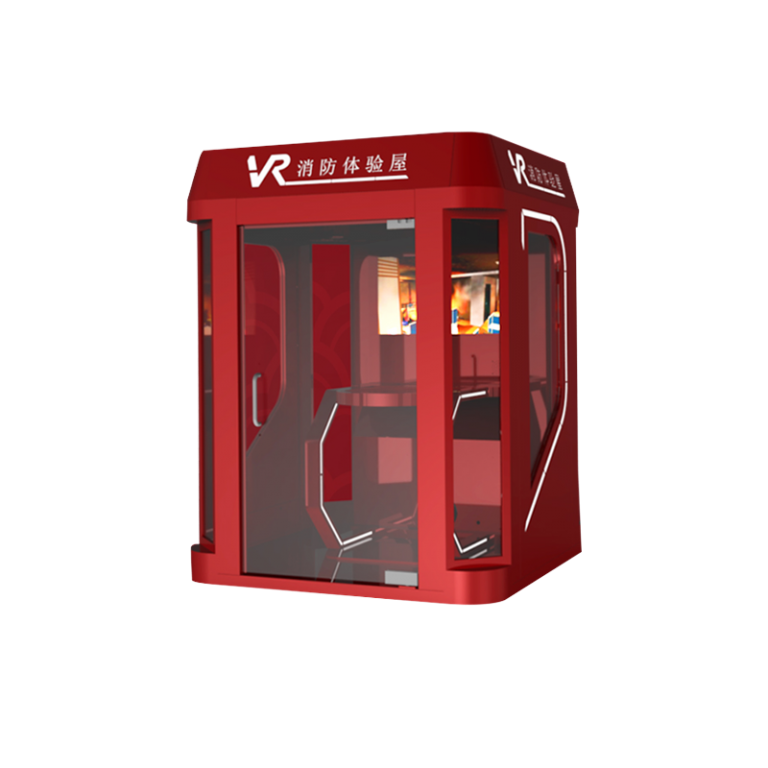
Technology Empowers Fire Safety Education: Immersive Protection for Life Safety — Application Practice and Development Prospect of VR Fire Experience Halls
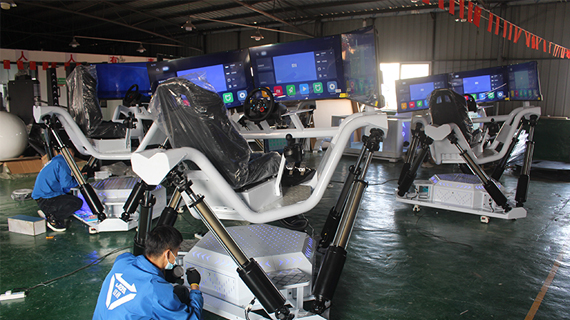
Three-Screen 6-Axis Racing Simulator: Profit Generation and Customer Acquisition Strategy
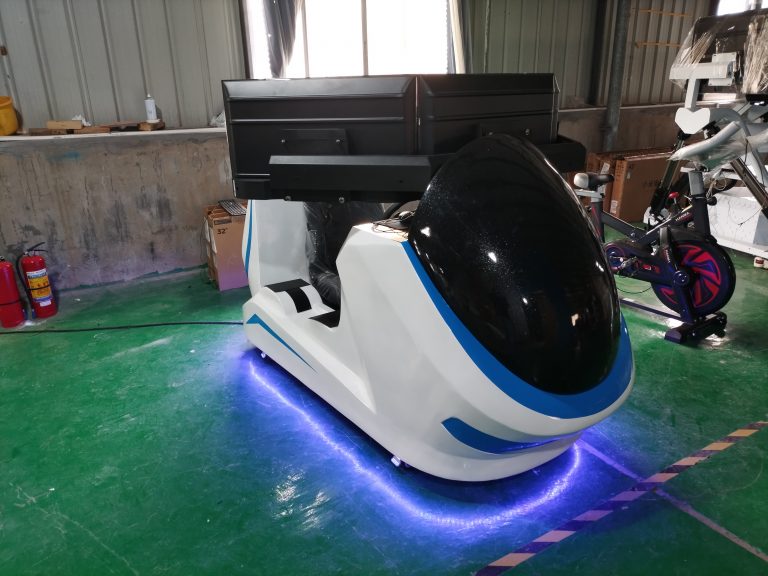
Technology Empowers Driving Training Innovation – Application and Development of Driving Simulators in Driving Schools