Research on Technical Characteristics and Multi-field Applications of 4-Axis Dynamic Simulators
With the in-depth integration of digital simulation technology, virtual reality technology and intelligent manufacturing industry, dynamic simulation equipment has evolved from a single entertainment device into a core intelligent equipment covering industrial research and development, vocational education, commercial entertainment, special training and other fields. As a mainstream category of multi-degree-of-freedom simulation equipment, the 4-axis dynamic simulator fills the market gap between insufficient simulation effect of traditional fixed simulators and the high cost of high-end 6-axis simulators by virtue of its balanced simulation performance, cost advantages, lightweight structural design and low operation and maintenance costs. It has become a preferred device for digital simulation upgrading in various industries. This paper systematically expounds the core technical principles of 4-axis dynamic simulators, deeply analyzes their specific application scenarios and application values in various fields, summarizes the existing problems in industrial development, and prospects its future development trends, providing references for the equipment application and industrial upgrading of related industries.
- Overview of Core Technologies of 4-Axis Dynamic Simulators
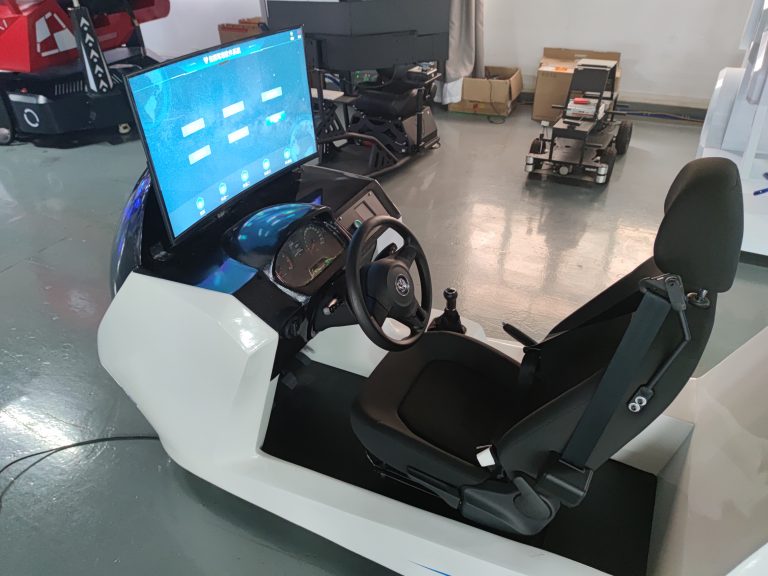
A 4-axis dynamic simulator is a dynamic simulation device centered on a 4-degree-of-freedom (4DOF) motion platform. Different from the simple motion mode of 2-axis basic simulators and the full-dimensional simulation architecture of high-end 6-axis simulators, it realizes four core dynamic motions: lifting, pitching forward and backward, rolling left and right, and horizontal deflection. It can completely restore the attitude changes and dynamic senses during equipment operation, perfectly meeting the needs of most civil and commercial simulation scenarios. The complete equipment integrates five core modules: servo motion mechanism, high-definition visual simulation system, dynamic simulation software, force feedback operating system and multi-modal audio sensing system, constructing an all-round immersive simulation system of “vision + hearing + touch + dynamic sensation”.
In terms of working principles, the 4-axis dynamic simulator relies on a built-in high-precision inertial measurement unit to collect real-time user operation data and platform motion parameters. Through a real-time operating system and professional dynamic algorithms, it quickly calculates dynamic response data based on preset scene parameters and equipment operating conditions, and synchronously drives the 4-axis servo mechanism to complete accurate motion feedback. Its millisecond-level response speed can highly restore real motion states. Compared with high-end 6-axis simulators, the 4-axis equipment eliminates redundant micro-angle floating dimensions and optimizes the mechanical structure design. While ensuring core simulation capabilities, it reduces equipment procurement, installation and operation and maintenance costs by 40%–60%. Meanwhile, it has the advantages of small floor area, convenient installation, low failure rate and wide adaptability, which is suitable for large-scale and popular scenario implementation and serves as the most cost-effective mass-produced dynamic simulation equipment.
With differentiated technical and cost advantages, 4-axis dynamic simulators not only avoid the shortcomings of traditional fixed simulators such as lack of dynamic feedback and poor simulation experience, but also solve the pain points of high-end multi-axis simulators including high price, complicated operation and maintenance and difficult popularization. They have formed unique market competitiveness and laid a solid foundation for large-scale multi-field applications. - Core Multi-field Applications of 4-Axis Dynamic Simulators
2.1 Automotive Industry: Dual Empowerment of R&D Testing and Driving Training
The automotive industry is the most mature and largest market for 4-axis dynamic simulators, mainly covering three core scenarios: new vehicle R&D and testing, autonomous driving algorithm verification, and driver skill training, which effectively solves the industrial pain points of high testing costs, high training risks and incomplete scenario coverage in the traditional automotive industry.
In the field of automotive R&D and autonomous driving testing, the rapid iteration of new energy vehicles and intelligent driving technology has made virtual simulation testing a core link in vehicle development. Traditional real vehicle road tests suffer from limited scenarios, long cycles, inability to reproduce high-risk working conditions and high testing costs. In contrast, 4-axis dynamic simulators can perfectly replace repetitive and low-risk real vehicle testing links. For small and medium-sized vehicle enterprises and auto parts manufacturers that cannot afford large-scale procurement of expensive 6-axis simulators, cost-effective 4-axis simulators are the optimal choice. They are widely used in basic R&D work such as automotive chassis calibration, braking system performance testing, suspension adaptation debugging and cockpit human-computer interaction optimization, greatly shortening the new vehicle R&D cycle and reducing R&D investment. Meanwhile, equipped with a virtual simulation test platform, the equipment can simulate a large number of complex traffic scenarios such as rain and snow weather, crosswind, sudden obstacles and congested road conditions, completing the full-process testing of perception, decision-making and execution of L2–L3 level advanced driving assistance systems. It effectively makes up for the insufficient scenario coverage of real vehicle road tests and provides efficient data support for the iteration of autonomous driving algorithms.
In the field of driving training, 4-axis dynamic simulators have completely innovated the traditional driving training model. Traditional real vehicle training in driving schools has many problems such as high fuel consumption, serious vehicle wear, site limitations, inability to train in bad weather and potential safety accidents caused by novice operation. With the introduction of 4-axis dynamic simulators, driving schools can realize an integrated teaching mode of “simulation training + real vehicle operation”. Relying on the dynamic simulation capability, the equipment restores real working conditions such as vehicle acceleration, braking, cornering, bumpy driving and emergency avoidance, covering special assessment scenarios including night driving, rain, snow and fog, and steep road sections. Novice trainees can first familiarize themselves with vehicle operation logic and driving sensation through simulators to consolidate basic operational abilities before real vehicle training, greatly reducing teaching risks and the operating costs of driving schools. In addition, for professional drivers engaged in freight and passenger transportation, 4-axis simulators can be used for regular safety retraining to simulate high-risk scenarios such as fatigue driving and sudden road conditions, strengthen drivers’ emergency response capabilities, and effectively reduce the incidence of road traffic accidents.
2.2 Commercial Cultural and Entertainment Industry: Building Immersive Experience Scenarios
Against the background of consumption upgrading and the rapid development of experience economy, immersive entertainment has become the core trend of cultural tourism, commerce and leisure consumption. With the advantages of lightweight design, high experience quality and easy operation, 4-axis dynamic simulators have become popular equipment in commercial and entertainment scenarios, widely deployed in commercial complexes, VR experience halls, video game cities, cultural tourism scenic spots, theme parks, auto shows and exhibitions.
Compared with traditional static entertainment equipment, 4-axis dynamic simulators support diversified immersive experiences such as racing car competition, yacht drifting, off-road exploration, flight simulation and track sightseeing, with highly synchronized dynamic sensation and virtual pictures, bringing highly shocking immersive experiences to consumers. In response to the core needs of commercial operation scenarios, 4-axis simulators feature compact structure, small floor area and simple installation and commissioning, adapting to high-frequency operation in high passenger flow scenarios such as shopping malls and venues. Meanwhile, the equipment has a low failure rate and extremely low operation and maintenance costs, requiring no full-time professional staff on duty, which perfectly fits the lightweight operation and high passenger flow monetization needs of commercial projects. At present, most mainstream VR racing simulators, virtual yacht drifting equipment and dynamic flight experience equipment in the market adopt the 4-axis motion platform architecture, balancing experience effect and commercial profitability, and have become core projects for attracting customers and increasing revenue in major commercial venues.
In addition to conventional entertainment experiences, 4-axis dynamic simulators are also widely used in commercial marketing and brand display scenarios. Automobile dealers and vehicle enterprises can restore the power parameters and chassis performance of their models through simulators, allowing consumers to experience the handling advantages and driving texture of the models in an immersive manner, improving brand promotion effects and customer transaction rates. In industrial exhibitions and science and technology expos, 4-axis dynamic simulators serve as science and technology experience carriers to intuitively display the technical advantages of simulation technology and intelligent equipment, acting as important tools for enterprise brand display and business drainage, realizing the integration of entertainment value and commercial value.
2.3 Education and Scientific Research Industry: Intelligent Teaching and Scientific Research
Featuring customizable scenarios, monitorable data, reproducible processes and avoidable risks, 4-axis dynamic simulators have high application value in vocational education, university scientific research and popular science education, promoting the intelligent, digital and safe upgrading of traditional teaching and research modes.
In the field of vocational education, transportation and electromechanical vocational colleges can carry out professional teaching with 4-axis dynamic simulators, covering teaching contents such as automotive structure, vehicle driving principles, driving control technology and vehicle fault emergency disposal. The equipment can record trainees’ operation data, driving posture and error nodes in real time. Teachers can accurately analyze students’ learning weaknesses through background data and carry out targeted teaching, greatly improving teaching efficiency and quality. At the same time, the simulator can reproduce various complex working conditions infinitely for students to practice high-risk and high-difficulty operations repeatedly, completely solving the problems of high loss of traditional training equipment, high practical operation risks and single teaching scenarios, helping vocational colleges cultivate high-quality skilled talents.
In the field of popular science education, science and technology museums, youth activity centers and research and study bases can carry out popular science teaching on traffic safety, mechanical principles and fluid mechanics with 4-axis dynamic simulators. Through immersive dynamic experience, teenagers can intuitively perceive the mechanical principles of vehicle driving, water navigation and air flight, transforming abstract theoretical knowledge into concrete sensory cognition, effectively improving the fun and effectiveness of popular science teaching and enhancing teenagers’ scientific literacy.
In the field of scientific research, 4-axis dynamic simulators can be used as scientific research carriers for ergonomics, traffic engineering, kinematics and other disciplines. Researchers can control variables through simulators to simulate the influence of different road conditions, operating habits and environmental factors on driving safety and equipment operating state, collect accurate experimental data, and provide scientific data support for the optimization of traffic regulations, road infrastructure construction, intelligent equipment iteration and human-computer interaction system optimization.
2.4 Special Industry Field: Expanding Diversified Training Scenarios
With stable dynamic simulation capability and flexible scenario adaptability, 4-axis dynamic simulators have been gradually extended to special fields such as military training, emergency training and rehabilitation medical treatment, filling the popularization gap of simulation training equipment in special industries.
In the field of military training, 4-axis dynamic simulators can be used for driver training of military transport vehicles, special operation vehicles and light navigation equipment. By simulating complex wild road conditions, sudden battlefield interference and harsh weather environments, soldiers can carry out repeated practical training in a safe environment, proficiently mastering the operation skills and emergency disposal capabilities of special equipment. Meanwhile, it greatly reduces the loss of military physical equipment, cuts military training costs, and improves training efficiency and practical combat adaptability.
In the field of emergency safety training, the simulator can reproduce emergency scenarios such as vehicle runaway, water distress and road sudden faults, which is used for regular training of drivers, safety officers and emergency operators to strengthen the emergency response capabilities of practitioners and improve the overall safety prevention and control level of the industry.
In the field of rehabilitation medicine, 4-axis dynamic simulators can assist in limb function rehabilitation and driving psychological rehabilitation training. Through controllable dynamic scenario stimulation, it helps special crowds restore limb coordination ability and improve spatial perception ability, while providing a safe, controllable and quantifiable training environment for rehabilitation training, boosting the intelligent upgrading of the rehabilitation medical industry. - Existing Pain Points in the Application and Development of 4-Axis Dynamic Simulators
Despite the wide application scenarios and significant market advantages of 4-axis dynamic simulators, there are still many shortcomings in industrial development and scenario implementation, restricting the high-quality development of the industry. Technically, limited by motion dimensions, 4-axis simulators cannot completely reproduce extreme working conditions such as high-speed drifting, continuous large-angle bumping and extreme sideslip. Their simulation upper limit is lower than that of high-end 6-axis equipment, making them unable to meet the needs of high-end scenarios such as high-level autonomous driving R&D and professional racing training. At the same time, some small and medium-sized domestic manufacturers lack core algorithm R&D capabilities, and generalized dynamic models cannot adapt to the differentiated simulation needs of different equipment and scenarios, resulting in serious product homogeneity and uneven simulation accuracy.
In terms of market and application, the industry has low entry barriers, attracting a large number of small and medium-sized manufacturers to gather in the low-to-medium-end market. Some enterprises reduce costs by cutting production expenses, leading to the proliferation of low-quality and low-price products and disrupting the normal industrial competition order. In addition, there are deviations in market cognition. Some institutions only regard simulators as basic auxiliary equipment and ignore their core value in emergency training, scientific research testing and professional training, resulting in the underutilization of equipment application value. Furthermore, there are no unified industrial standards for product production, simulation accuracy and data interconnection. Equipment parameters of different manufacturers vary greatly, making data sharing and standardized application impossible, which restricts the large-scale popularization of equipment in fields such as driving training and scientific research. - Future Development Trends and Application Prospects of the Industry
Driven by iterative digital technology, industrial policy support and escalating market demand, the 4-axis dynamic simulator industry will embrace a new stage of high-quality development, evolving towards intelligent technology, refined application, standardized industry and diversified scenarios.
Technically, 4-axis dynamic simulators will be deeply integrated with artificial intelligence, big data, VR panoramic simulation and multi-modal sensing technology, continuously optimizing dynamic simulation algorithms to narrow the simulation gap with high-end 6-axis simulators. AI algorithms can generate massive extreme scenarios independently to improve scenario adaptability and simulation accuracy, while optimizing the dynamic response speed of equipment to control the delay within millisecond levels and further enhance immersive experience. At the same time, the equipment will develop towards lightweight, modular and localized production, breaking through the technical barriers of core components, reducing production costs and improving equipment cost performance and stability.
In terms of application, the industry will enter a stage of refined in-depth development, launching customized special equipment for different fields, such as special teaching models for driving training, lightweight drainage models for commercial entertainment, high-precision models for vehicle enterprise testing, and simple models for popular science training, accurately matching the differentiated needs of different scenarios. Meanwhile, equipment application scenarios will continue to expand, deeply integrating into emerging industries such as smart transportation, digital cultural tourism, vocational education and special training to realize cross-field integrated development. The business model will also expand from single equipment sales to diversified value-added services including equipment leasing, scenario hosting, data services and curriculum supporting, meeting the asset-light operation needs of small and medium-sized customers.
Industrially, with the gradual maturity of the industry, unified standards for product quality, simulation parameters, data interconnection and training assessment will be gradually implemented, standardizing the industrial competition order, eliminating low-quality production capacity, and promoting the industry to shift from price competition to technology and quality competition. At the same time, the upstream and downstream industrial chain collaboration will be closer, forming a complete industrial chain covering core component R&D, complete machine manufacturing, scenario application and data services, and increasing industrial concentration. - Conclusion
As a key equipment in the digital simulation industry, 4-axis dynamic simulators deeply empower multiple fields including automotive R&D, vocational education, commercial entertainment and special training by virtue of their core advantages of high cost performance, wide adaptability, convenient operation and maintenance and balanced simulation effects. They effectively solve the pain points of high cost, high risk, limited scenarios and insufficient experience in traditional industrial models, serving as an important carrier for the digital and intelligent upgrading of industries. Despite the current problems such as limited simulation upper limit, product homogeneity and imperfect standard system, the application value of 4-axis dynamic simulators will be further released with the continuous iteration of core technologies, gradual improvement of industrial standards and deepening market application. In the future, 4-axis dynamic simulators will continue to deepen segmented tracks and expand emerging scenarios, evolving into cross-field platform-type simulation equipment. They will provide strong support for the high-quality development of China’s smart transportation, digital cultural tourism, vocational education and intelligent manufacturing industries, with broad market prospects and development potential.
RELATED POSTS
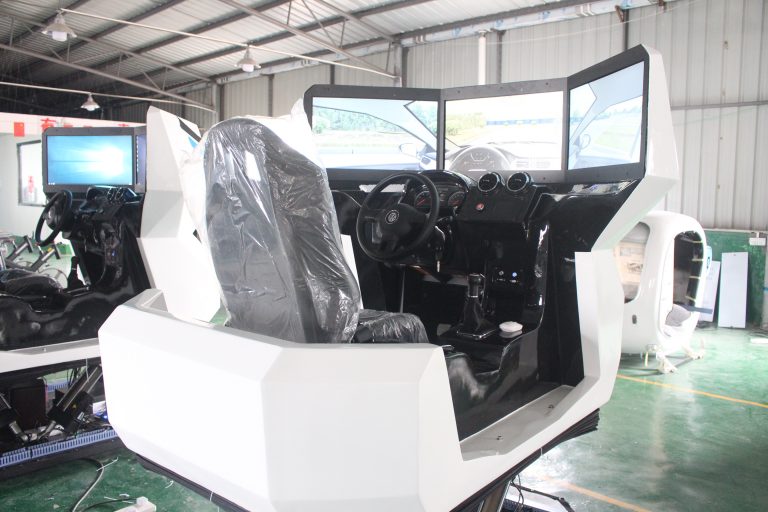
Dynamic Military Battlefield Driving Simulator – Application Overview of Training Equipment for New Recruit Tank, Airship and Heavy Truck Training
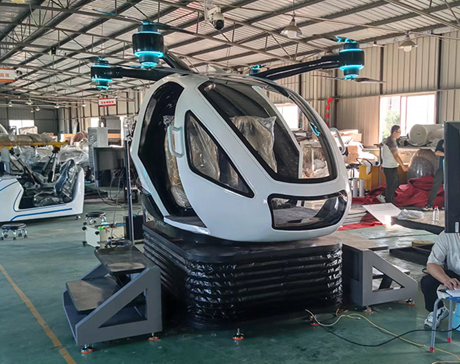
The Significance of eVTOL Simulators in Science Education and Research
Technology Empowers Fire Safety Education: Immersive Protection for Life Safety — Application Practice and Development Prospect of VR Fire Experience Halls
Research on the Future Development Trends of VR Rotating Egg Chair Simulator
Analysis on Multi-scenario Application Value and Practice of the 4-player VR Red-Blue Confrontation Simulator