VR Large-Space Full-Sensory Cinema: Breaking the Boundaries of Virtual and Reality, Reshaping a New Ecosystem of Immersive Movie Viewing
With the rapid iteration of digital technology, fundamental disruptive changes are taking place in cultural and entertainment consumption scenarios. The traditional cinema model, which features fixed screens and passive viewing, can no longer meet the public’s escalating demand for immersive and interactive entertainment experiences. As a core practical form of offline metaverse, the VR large-space full-sensory cinema integrates cutting-edge technologies such as spatial computing, virtual reality, multi-sensory simulation, and real-time interaction. It thoroughly breaks the temporal and spatial constraints as well as sensory limitations of traditional movie watching, transforming one-way film and television viewing into an all-round, participatory and interactive immersive experience. Serving as an innovative benchmark in cultural tourism entertainment, digital entertainment and popular science education, it has ushered in a brand-new era of film experience.
Compared with traditional cinemas and ordinary VR viewing devices, the VR large-space full-sensory cinema achieves dimensional upgrading. Traditional movie viewing is a passive experience where audiences sit quietly and watch the screen. Spectators remain outsiders to the plot, with their sensory experience limited only to vision and hearing. Early standalone VR devices suffer from prominent industry pain points including severe dizziness, cramped experience space, single-user access, monotonous sensory feedback and the lack of multi-person interaction, making it impossible to form large-scale and scenario-based cultural and entertainment experiences. Adopting the Location-Based Entertainment (LBE) technical framework, coupled with exclusive spatial redirection algorithms and centimeter-level digital twin positioning technology, the VR large-space full-sensory cinema builds infinitely extended virtual scenes within a limited physical space. It truly realizes an immersive viewing experience characterized by “users moving with scenes, scenes changing with plots, and the integration of virtual and reality”, redefining the experience standards and consumption patterns of offline film and television entertainment.
I. Core Technology System: Integrated Multi-Dimensional Technologies Underpinning Full-Sensory Experiences
The core competitiveness of VR large-space full-sensory cinemas stems from a deeply integrated software and hardware technology system. Each technological breakthrough precisely solves the pain points of traditional movie watching and ordinary VR experiences, constructing a fully covered, high-precision and ultra-smooth experience system that forms a core barrier distinguishing it from traditional cultural and entertainment devices.
Large-space free-roaming positioning technology serves as the fundamental core. Different from the fixed-point experience mode of traditional VR devices, the cinema relies on a high-precision spatial computing system to capture all human movements including walking, running, turning and jumping in real time, with a positioning accuracy up to the centimeter level, completely freeing users from cable constraints and site limitations. Through the intelligent control of spatial redirection algorithms, a standard physical space of 50 to 60 square meters can create an ultra-large virtual scene equivalent to thousands of square meters. It realizes the accurate mapping between physical and virtual spaces, which not only greatly reduces site operation costs but also breaks the extension limitations of physical space. Users can explore freely in the virtual world without restraint, completely getting rid of the spatial confinement of traditional VR devices.
The full-sensory simulation effect system is the key support for experience upgrading. Traditional films only provide visual and auditory experiences, while the VR large-space full-sensory cinema constructs a five-dimensional integrated sensory system covering vision, hearing, touch, smell and physical sensation. In terms of vision, it adopts 16K panoramic high-definition shooting and real-time rendering technology with a high frame rate of 72 FPS, delivering clear, smooth and highly detailed images. It completely eliminates screen stuttering, blurriness and delay, and effectively avoids the dizziness caused by traditional VR devices. In terms of hearing, it is equipped with a 360° panoramic surround sound field, which dynamically adjusts the orientation and volume of sound effects according to the spatial position and sound source distance of virtual scenes, achieving accurate spatial sound field restoration and strengthening scene immersion.
On this basis, the device is equipped with a six-degree-of-freedom dynamic platform that can accurately simulate more than 30 dynamic physical sensations such as diving, falling, bumping, accelerating and weightlessness. Combined with physical special effects including wind blowing, vibration, leg sweeping, back thumping and water mist, it converts the dynamic changes of virtual scenes into real physical perceptions. Meanwhile, the customized olfactory system releases exclusive scents synchronously with the plot and scenes, such as fresh mountain breeze, cold interstellar air, warm fireworks and ancient ink fragrance. Every virtual scene is endowed with complete sensory memory points, thoroughly breaking the monotony of audio-visual experience and realizing all-round sensory immersion.
Multi-person real-time interaction technology endows movie viewing with social attributes. Traditional movie watching and standalone VR experiences are single-person or one-way activities lacking interactive fun. In contrast, the VR large-space full-sensory cinema supports 6 to 20 people to experience simultaneously. Users can team up in real time, interact and collaborate with each other, and jointly promote plot development in the virtual scene. The system adopts independent accounts and scene permission division to ensure the independence of each user’s experience while realizing real-time multi-person motion synchronization and scene sharing. It upgrades movie watching from personal entertainment to social collective experience, conforming to the current consumption trend of group entertainment and interactive leisure.
II. Experience Innovation: From Passive Viewing to Active Immersion
The emergence of VR large-space full-sensory cinemas has completely subverted the century-old viewing logic of the film and television industry, realizing a fundamental transformation from “watching a movie” to “stepping into a movie”, and achieving all-round innovation in viewing modes, plot experience and sensory perception.
In terms of viewing modes, it realizes the breakthrough from fixed sitting viewing to free roaming experience. Audiences in traditional cinemas are fixed on seats with viewing angles and horizons completely limited by the screen, and the plot progresses entirely according to preset film rhythms, leaving audiences with no sense of participation at all. The VR large-space full-sensory cinema eliminates fixed seat restraints, allowing users to walk freely, stop to observe and explore scene details following the plot rhythm. In sci-fi scenes, users can wander in interstellar warships and land on the lunar surface; in historical scenes, they can stroll through ancient streets and witness historical scenes; in adventure scenes, they can explore secret jungles and traverse fantasy landforms. Every walk and every pause unlocks unique scene details. Movie viewing is no longer passive information reception but active exploration of the unknown, greatly improving the autonomy and fun of the experience.
In terms of plot experience, it upgrades from linear narration to interactive narration. Traditional films feature fixed and single plots with unchangeable segments and endings, allowing audiences to only passively accept preset storylines with little difference in repeated viewing experiences. In contrast, the VR large-space full-sensory cinema adopts interactive plot design, where users’ behavioral choices and operations directly affect the development and ending of the plot. During the experience, users can trigger plot easter eggs, unlock hidden scenes and complete task challenges through physical movements, and different operations bring differentiated experience results. Taking the popular IP Prosperity of the Song Dynasty: Manjianghong as an example, users can not only immerse themselves in the urban style of the Song Dynasty and the patriotism of the times but also trigger exclusive landmark easter eggs through interactive operations. Each experience is unique, significantly improving the re-watching value of the content.
In terms of immersive perception, it achieves the leap from superficial sensory immersion to comprehensive physical and mental immersion. The immersion of traditional films relies solely on the visual impact of pictures and sound effects, and audiences can always clearly distinguish reality and film scenes with an obvious sense of detachment. Supported by full-sensory technology, the VR large-space full-sensory cinema builds a completely enclosed virtual time and space that accurately reproduces the physical characteristics and atmospheric environment of scenes. When entering an interstellar scene, weightlessness, deep space sound effects and cold wind feedback are linked synchronously; when wandering in ancient scenes, the atmosphere of street fireworks, ancient fragrance and crowd noise wraps around users in all directions. Users’ vision, hearing, touch, smell and physical sensation are fully integrated into the virtual world, completely eliminating the boundary between virtuality and reality and achieving in-depth physical and mental immersion.
III. Scenario Application: Diversified Adaptation to Build a New All-Purpose Entertainment Carrier
With the core advantages of lightweight implementation, high space efficiency, strong adaptability and high repurchase rate, VR large-space full-sensory cinemas break the scenario limitations of traditional cinemas. They can be flexibly applied to diverse scenarios including commercial shopping centers, cultural tourism scenic spots, science popularization venues, rural cultural and entertainment spaces, as well as team building and research bases, becoming a popular traffic attraction and experience upgrading carrier in various fields.
Commercial shopping centers serve as its core application scenarios. The homogenization of cultural and entertainment formats in traditional business districts has led to declining attractiveness of ordinary movies, video games and board games. In contrast, VR large-space full-sensory cinemas feature high appearance, strong interactivity and high topic popularity, which can quickly attract young consumers to check in and experience, becoming a core traffic-inducing format for shopping malls. It can be implemented in a standard space of only 50 square meters, accommodating multiple users simultaneously. Its operational efficiency is far higher than that of traditional entertainment projects, while the operating cost is only one-third of traditional cinema halls. With high commercial cost performance and quick return on investment, it perfectly adapts to the high-frequency, high-traffic and diversified consumption needs of shopping malls.
Cultural tourism scenic spots are its innovative empowerment scenarios. The cultural tourism industry is currently transforming from “sightseeing tourism” to “experiential tourism”, and the single sightseeing mode of traditional scenic spots fails to retain tourists and improve consumption added value. VR large-space full-sensory cinemas can customize exclusive experience content based on the regional culture, historical heritage and characteristic IPs of scenic spots, transforming static cultural landscapes into dynamic immersive story experiences. Scenic spots can rely on this device to reproduce historical allusions, restore natural wonders and create characteristic fantasy scenes. Beyond ordinary sightseeing, tourists can deeply perceive the connotation of regional culture, enrich scenic spot business formats, extend tourists’ staying time, improve the quality of cultural tourism consumption, and solve the industry pain points of homogenization and low revisit rate in cultural tourism.
Science and technology museums, research bases and campus popular science venues are its value-extension scenarios. Different from the rigid and boring mode of graphic popular science and video explanation, VR large-space full-sensory cinemas can develop popular science content covering aerospace, natural science, human history and safety education, allowing learners to immerse themselves in scientific scenes, witness historical events and perceive the mysteries of nature. In lunar exploration popular science experiences, users can intuitively experience the whole process of rocket launch, lunar walking and space exploration; in historical popular science experiences, they can travel through ancient and modern times to directly perceive the changes of eras and cultural evolution. The immersive and interactive popular science mode greatly enhances the fun of learning and the efficiency of knowledge absorption, serving as an innovative carrier for youth research and science education.
In addition, the device can be flexibly deployed in rural cultural and entertainment spaces, community activity centers and team building experience halls. It fills the gap of high-quality cultural and entertainment formats at the grassroots level, meets the diverse needs of public leisure, corporate team building and group entertainment, and boasts strong scenario adaptability and market promotion value.
IV. Industrial Value: Reshaping the Cultural and Entertainment Industry and Activating New Drivers of the Digital Economy
As a core product of digital entertainment and metaverse implementation, the VR large-space full-sensory cinema is not merely a single experience device, but an important carrier for promoting the upgrading of the cultural and entertainment industry, the implementation of digital technology and the innovation of cultural tourism formats, with profound industrial and social value.
For the film and television industry, it breaks the creation and communication boundaries of traditional films and televisions, and reconstructs the production and consumption modes of film and television content. Restricted by screens, viewing angles and narrative modes, traditional film and television creation is relatively single-dimensional. In contrast, VR full-sensory film and television content supports all-round narration based on three-dimensional space, expanding film and television creation from two-dimensional pictures to three-dimensional space and providing more creative possibilities for the industry. At the same time, it changes the traditional consumption mode of one-time production and repeated playback of film and television content. Relying on interactive plot design, it realizes long-term reuse and continuous attraction of content, extends the life cycle of film and television IPs, and opens up a new monetization track for the film and television industry.
For the cultural tourism industry, it acts as a core starting point for the digital transformation of cultural tourism. Amid the wave of digital cultural tourism, traditional cultural tourism formats are in urgent need of digital and intelligent upgrading. With the advantages of lightweight deployment, low cost and high efficiency, VR large-space full-sensory cinemas help scenic spots and shopping malls complete the upgrading of digital business formats efficiently. Through the integration of virtual and reality, it presents traditional culture and regional resources in a younger and more technological form, realizing the innovative inheritance and communication of traditional culture. It also enriches cultural tourism consumption scenarios, improves the technological added value and core competitiveness of the cultural tourism industry, and promotes the transformation of cultural tourism from traffic-oriented economy to experience-oriented economy.
For the digital entertainment industry, it solves long-standing experience pain points and promotes the upgrading of the VR industry from “standalone experience” to “spatial experience” and “full-sensory experience”. Early VR devices are plagued by strong dizziness, monotonous experience, weak interaction and lack of social attributes, restricting the large-scale development of the industry. Through technological iteration, VR large-space full-sensory cinemas completely optimize traditional experience defects, achieving non-dizzy experience, free roaming, multi-person social interaction and in-depth full-sensory immersion. It promotes VR technology from niche technological products to mass consumer markets, accelerates the implementation and popularization of offline metaverse scenarios, and injects new vitality into the development of the digital entertainment industry.
V. Future Prospects: Deepening Technological Innovation and Expanding the New Frontier of Virtual-Real Integration
With the continuous iteration of artificial intelligence, metaverse, digital twin and real-time rendering technologies, VR large-space full-sensory cinemas will embrace broader development space and gradually upgrade towards intelligence, scenario diversification, IP specialization and popularization.
At the technological level, in-depth integration of AI intelligent interaction will be realized in the future. Relying on artificial intelligence algorithms, the system can identify users’ experience habits and movement preferences in real time, intelligently adjust plot rhythms, scene difficulty and special effect parameters, and provide personalized experiences tailored to each user. Meanwhile, digital twin technology will be further upgraded to realize high-precision real-time linkage between physical reality and virtual scenes, making virtual content more consistent with real physical logic, further blurring the boundary between virtuality and reality and enhancing the authenticity of experiences.
At the content level, a diversified and high-quality IP content ecosystem will be built. The industry has initially formed a diverse content matrix covering science fiction, history, adventure, popular science and fairy tales. In the future, we will further focus on high-quality IP incubation, develop exclusive premium content combining traditional Chinese style culture, local characteristics and trending themes, and build a regular content iteration system to solve the problems of homogenization and slow update of industry content, continuously improving users’ willingness of repeated consumption.
At the scenario level, comprehensive and refined popularization and application will be realized. With the lightweight and cost reduction of equipment, VR large-space full-sensory cinemas will no longer be limited to commercial and cultural tourism scenarios. They will gradually penetrate into rural cultural entertainment, campus education, public cultural services, corporate training, emergency drills and other fields, becoming a normalized carrier of public cultural services and mass entertainment consumption, enabling cutting-edge digital technology to benefit more people.
From the perspective of overall industrial development, the VR large-space full-sensory cinema represents not only an innovation in viewing modes but also an inevitable trend of cultural and entertainment consumption upgrading in the digital era. Driven by core technology, supported by immersive experience and empowered by diverse scenarios, it breaks the barriers between virtual and real worlds, reshapes the new form of mass cultural and entertainment consumption, and empowers the high-quality development of film and television, cultural tourism, popular science and digital economy industries. In the future, with continuous technological breakthroughs and improved content ecology, VR large-space full-sensory cinemas will continuously release innovative vitality, serve as a core benchmark for offline metaverse implementation, and lead the immersive cultural and entertainment industry into a new era of development.
RELATED POSTS
Diverse Applications and Educational Value of VR Campus Safety Experience Halls in Schools
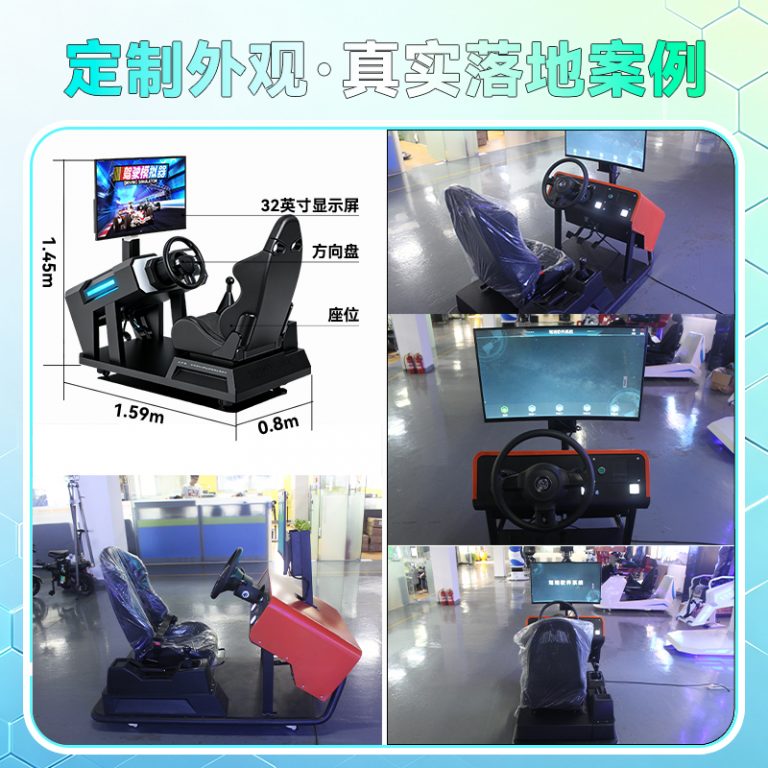
Diversified Application Scenarios and Practical Value Analysis of Simple Car Driving Simulators
Six-Axis Dynamic Attitude Simulation Technology: Redefining New Experiences of UAV Aerial Photography and eVTOL Flight Simulation
Analysis on Application Scenarios of Automobile Driving Simulators
Diverse Applications and Practical Values of Simple Driving Training Simulators