Application Scenarios for VR Bermuda Full-Sensory Theaters: Immersive Experience Deployment from Theme Parks to Urban Public Spaces
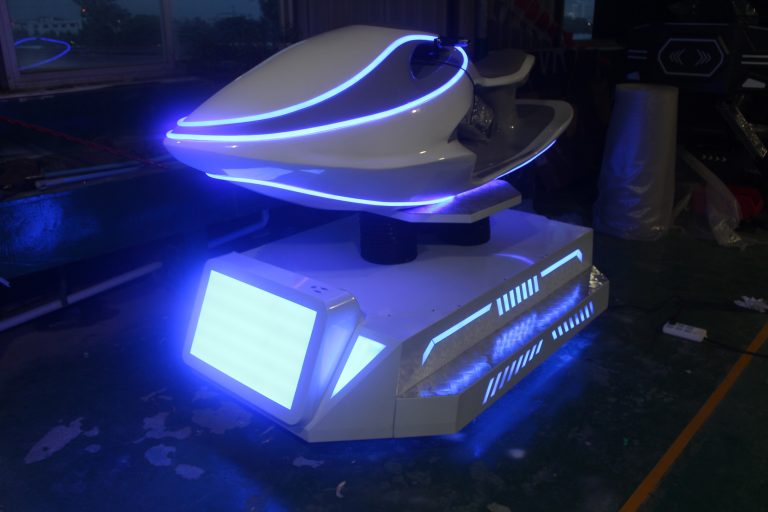
A VR Bermuda full-sensory theater is not an isolated piece of equipment, but a complete immersive experience system composed of dome or curved-screen projection, a multi-degree-of-freedom motion platform, VR headsets (some configurations are naked-eye 3D), environmental effects (wind, water mist, vibration, sound), and content films. “Bermuda” as a content theme points to high-tension narrative scenarios such as maritime adventure, storms, shipwrecks, and mysterious waters; “full-sensory” means the experience does not stop at vision and hearing, but also engages the vestibular and tactile senses through seat motion and environmental effects. The application scenarios for this system depend on where it can operate stably, which audiences it can serve, and what kind of commercial or educational process it can be embedded into. The following explores six directions.
I. Theme Parks and Tourist Attractions: The Most Mature Main Battleground
Theme parks and scenic areas are the most natural deployment scenario for VR Bermuda full-sensory theaters. These spaces already have a consumption logic of “paying for experience,” and visitors have clear expectations for motion theaters, flying theaters, and dome theaters—no market education is needed.
From a product-form perspective, the Bermuda theme fits scenic area scenarios very well. Some domestic manufacturers have already turned “Bermuda Adventure” into a flying theater product with a 180° curved screen and a 6-DOF motion platform, featuring naked-eye 3D effects. Chimelong Universe’s “Bermuda Adventure” is a large-scale project with a curved dome screen and a motion simulation platform, capable of accommodating hundreds of people, and has won an award from the International Association of Amusement Parks and Attractions (IAAPA). This shows that the “Bermuda” content theme has already been validated in scenic area scenarios and has audience appeal.
In terms of deployment methods, this type of theater can be built as a fixed venue embedded in a theme park’s indoor amusement area or a scenic area’s visitor center; it can also be made into a containerized mobile version serving seasonal scenic areas, temporary events, or sites that have not yet completed fixed-building approval. For small and medium-sized scenic areas, the container version lowers the initial investment threshold and site renovation difficulty—the equipment arrives, is powered up, debugged, and can operate. This is a practical advantage over traditional large theaters.
Operationally, content updates and turnover rate need attention. A single experience usually lasts 5 to 10 minutes, and films need to be regularly replaced or given branching storylines, otherwise the repeat-visit rate will drop quickly. The advantage of scenic area scenarios is a large visitor base and a high proportion of one-time tourists, so tolerance for content repetition is relatively high; but if the scenic area mainly serves local customers, the content update frequency needs to be increased.
II. Science Museums and Science Education Bases: Turning “Full-Sensory” into an Educational Tool
Science museums, disaster prevention and mitigation education centers, and marine science education bases are another high-fit scenario for VR Bermuda full-sensory theaters, but their usage logic is completely different from theme parks. Theme parks sell excitement; science museums sell cognition.
The Bermuda Triangle itself is a natural entry point for science education: ocean currents, storms, magnetic anomalies, maritime safety, deep-sea exploration—all of these can become knowledge anchors for content design. The educational value of a full-sensory theater lies in its ability to translate abstract geographical and physical concepts into bodily experience. When an experiencer goes through a virtual storm with the hull tilting on a motion platform, their understanding of concepts like “wave energy” and “ship stability” will be far deeper than reading exhibition boards. This is the same cognitive transformation mechanism as using a VR driving simulator to let experiencers “feel” risk through virtual accidents—bodily memory is more enduring than propositional knowledge.
In science museum scenarios, the equipment usually does not rely on single-ticket sales as its main revenue source, but serves as a core experience project of a permanent exhibit or a temporary special exhibition. What operators need to focus on is per-session capacity and queue management. The throughput of a full-sensory theater is limited; if placed in a science museum during peak visitor flow, a reservation system or timed session scheduling must be put in place, otherwise the experience quality will be eroded by queuing. Another key is the connection between content and exhibition: explanations or display boards need to accompany the experience before and after, turning “that storm just now” into discussable knowledge points; otherwise the full-sensory theater degenerates into an isolated amusement project, and its educational value cannot be realized.
III. Commercial Complexes and Cultural Tourism Districts: Site Selection Logic for Traffic-Driving Formats
Shopping malls, cultural tourism districts, and urban commercial complexes have growing demand for immersive experience formats, with the core logic being using experience projects to extend dwell time and drive associated consumption. In this scenario, the role of the VR Bermuda full-sensory theater is a “traffic anchor,” not a profit center.
In terms of site selection, this type of theater is usually placed on the upper floors of a mall or at the end of a circulation route, with the purpose of guiding客流 upward or deeper into the space. The equipment form tends toward small and medium-sized units; containerized or modular cabins are more popular because commercial complexes are not friendly to large fixed venues in terms of floor height, load-bearing capacity, and fire safety approval. Experience duration is controlled at around 5 minutes, ticket prices are set at a medium-to-low level, and the goal is high turnover rather than high per-customer spend.
The operational difficulty in this scenario lies in customer acquisition cost and repurchase rate. Foot traffic in commercial complexes is random, and impulse consumption accounts for a high proportion, but there are many competitors in the same city, and experience projects are highly homogenized. The recognizability of the Bermuda theme is an advantage here—compared with overused themes like “space roaming” and “dinosaur world,” the narrative tension of maritime adventure and storms is stronger, and the visual memory points are more distinctive. But in the long run, content iteration and a membership system remain key to retaining local customers.
IV. Study Tours and Primary/Secondary School Safety Education: Content Compliance Is a Prerequisite
The study tour market has growing demand for immersive experience equipment, and VR Bermuda full-sensory theaters can be embedded into course packages such as marine study tours, geography study tours, and safety education study tours. But entering this scenario has a hard prerequisite: content must withstand scrutiny under educational logic.
“Bermuda Triangle” has been heavily mystified and pseudoscientific in popular culture. If content design is not careful, it can easily slide toward pseudoscience. For study tour scenarios serving primary and secondary school students, content needs to be anchored in verifiable scientific knowledge: storm meteorology, ocean current movement, navigational instruments, and maritime rescue procedures. Experience sessions should be followed by supporting course discussions or task sheets to translate sensory impact into learning output. The safety education direction can extend from maritime safety to practical skills such as water self-rescue and extreme weather response.
The decision-making chain for school procurement or study tour institution cooperation is long, and equipment suppliers need to provide complete course supporting materials, safety plans, and content review explanations. The per-session revenue in this scenario may not be higher than that of theme parks, but its advantages are batch procurement and stable scheduling, and it provides long-term enhancement to the brand’s educational attributes.
V. Cultural Tourism Performances and Temporary Events: Where Mobile Formats Come into Play
Music festivals, carnivals, urban cultural tourism promotion events, and commercial brand pop-up events have phased demand for mobile immersive experience equipment. The advantages of containerized VR Bermuda full-sensory theaters are most fully demonstrated here: transport, hoisting, power-up, and operation—no permanent building approval is required, and the equipment can be relocated after the event.
The operational logic of this scenario is short-term high density. During events, foot traffic is concentrated, and the equipment needs to withstand high-intensity continuous operation; heat dissipation, hygiene (cleaning and disinfection of VR headsets), and queue order management are all on-site priorities. Brand pop-up events may also require content customization, such as combining Bermuda storm scenes with brand elements, which places demands on the content team’s customization capabilities.
It should be noted that in temporary event scenarios, rent and transportation costs account for a high proportion, and the profit window for a single event is short. Equipment suppliers need to accurately calculate relocation costs and event schedule density to avoid idle losses from “equipment waiting in the warehouse for the next slot.”
VI. Corporate Team Building and Commercial Spaces: A Emerging Niche Market
Corporate team building, brand launch events, and commercial spaces (such as high-end hotels, cruise ships, and airport VIP lounges) represent relatively emerging demand for immersive experiences. The team building scenario values collective experience and topicality; VR Bermuda full-sensory theaters can provide a multi-person rotation experience flow, combined with team task design (such as group competitions and maritime-themed collaborative challenges), turning simple viewing into participatory team activity.
The commercial space scenario leans more toward brand display and customer experience. The equipment serves as an experience node within the space, responsible for “making visitors remember this place.” The procurement decision logic here differs from theme parks: what the client buys is not ticket revenue, but brand impression and dwell time, so there are higher demands on equipment appearance design, content customization, and on-site service.
Several Questions to Clarify Before Deployment
Regardless of which scenario is chosen, the deployment of VR Bermuda full-sensory theaters must answer several common questions.
Site conditions: Motion platforms have requirements for floor load-bearing and levelness; dome or curved screens have requirements for ceiling height and projection distance; although the container version lowers the building threshold, it still requires power capacity and ventilation conditions.
Content compliance and updates: The Bermuda theme involves mystified narratives; educational scenarios require scientific treatment, while entertainment scenarios require continuous film updates to maintain repeat-visit rates.
Safety and hygiene: Emergency stop mechanisms for motion platforms, physical condition restrictions for experiencers (people with heart disease, high blood pressure, or cervical spine problems should not participate), and cleaning and disinfection procedures for VR headsets all need to be formalized into standard operating procedures.
Return-on-investment model: Fixed venues and mobile equipment have different cost structures—the former is asset-heavy with a long cycle, while the latter is flexible but has high relocation costs. Ticket prices, turnover rates, content update costs, and labor costs need to be calculated together; equipment unit price alone is not enough.
Conclusion
The application scenarios for VR Bermuda full-sensory theaters essentially depend on which space can turn “full-sensory” into the value that space needs: theme parks need excitement and box office, science museums need cognitive transformation, commercial complexes need traffic, study tours need educational output, temporary events need flexible deployment, and corporate scenarios need brand memory. The same set of hardware has completely different operational logic, content strategy, and cost structure in different scenarios. Before choosing a site, equipment suppliers and operators need to answer not “where are there more people,” but “what value does this space need me to provide, and can my equipment and content stably provide that value.” The answer to this question determines whether the Bermuda full-sensory theater becomes a sustainable experience format or an expensive piece of idle equipment.
RELATED POSTS
Diversified Application Scenarios and Practical Value Analysis of Simple Car Driving Simulators
Diverse Applications and Educational Value of VR Campus Safety Experience Halls in Schools
Technology Empowers Driving Training Innovation – Application and Development of Driving Simulators in Driving Schools
The future development and application prospects of automobile driving simulators
Diverse Application Scenarios and Industry Value Analysis of Six-Axis Full-Dynamic G-Force Racing Simulation Cockpit