Multidimensional Skill Experience and Value Analysis of Professional Training on Automobile Driving Simulators
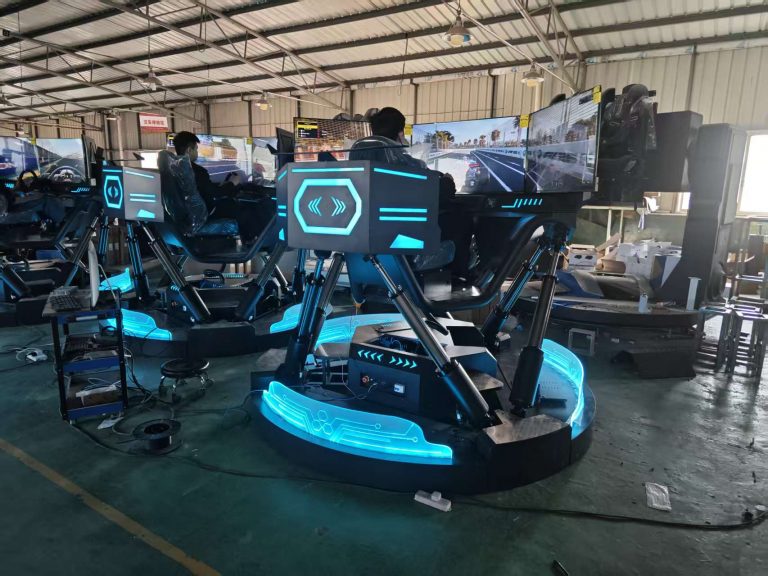
With the continuous growth of China’s motor vehicle ownership and the number of drivers, the demand for traffic safety training and standardized driving skill training has become increasingly urgent. Restricted by venues, weather, safety risks and high costs, traditional real-vehicle training can hardly carry out systematic training with high frequency, full-scenario coverage and zero risk. Developed in accordance with the industrial standard JT/T 378-2022, automobile driving simulators build a scientific, professional and intelligent driving training system relying on simulated hardware equipment and immersive virtual scenarios, breaking the limitations of traditional driver training. Their professional training skill experience covers multiple dimensions including basic operation, on-site special training, road traffic, harsh environment adaptation, emergency response and professional advanced training. They not only help novice drivers consolidate basic driving skills, but also assist experienced drivers in optimizing driving habits and improving emergency response capabilities, serving as the core carrier of modern intelligent driver training. This paper comprehensively analyzes the professional training skill experience dimensions of automobile driving simulators and deeply explores their training advantages and practical value.
I. Basic Operation Skill Experience: Consolidating Core Driving Fundamentals
Basic operation is the premise of all driving scenarios and the most fundamental training module of simulators. Targeting novice drivers with zero foundation, it focuses on the standardized training of basic vehicle control operations and solves core problems of new drivers such as unfamiliar driving feel, chaotic operation and irregular movements. The simulator is equipped with original vehicle parts to build an operation platform, whose steering wheel, clutch, brake, accelerator and gear shift deliver a driving feel highly consistent with real vehicles. Supported by a high-precision force feedback system, it can truly restore the mechanical feedback of vehicles during idling, semi-linkage, acceleration and braking, allowing trainees to quickly establish personalized driving awareness and achieve an immersive training effect identical to real vehicle operation.
In terms of specific training experience, the first part covers in-situ basic operation training, including vehicle starting and stalling, light operation, gear shifting and clutch coordination. In traditional real-vehicle training, frequent vehicle start-stop operations by novices easily cause vehicle wear and tear, and operational errors may lead to vehicle jitter and stalling, undermining trainees’ confidence. In contrast, simulators support unlimited repeated practice. Trainees can focus on polishing detailed operations such as eyes-free gear shifting and smooth clutch control, master the matching logic of clutch and gear for manual transmission vehicles as well as the accelerator and brake force control for automatic transmission vehicles, and completely correct bad driving habits including looking down at gears and slamming the accelerator or brake.
The second part focuses on basic driving skill training, including smooth starting, straight-line driving, uniform-speed parking and semi-linkage control. The simulator can accurately simulate real vehicle states such as idling jitter, semi-linkage critical point, starting rollback and parking forward tilting. Through repeated training, trainees can precisely grasp the clutch lifting speed, accelerator proportion, braking timing and force, and master the skills of smooth starting, jitter-free driving and accurate fixed-point parking. Meanwhile, the system records operational data in real time, gives instant prompts, scoring and playback analysis for wrong operations such as stalling, rolling back, driving deviation and over-limit parking. This enables trainees to clearly identify their problems, correct operational movements in a targeted manner, quickly form muscle memory, and lay a solid foundation for subsequent training in complex scenarios. Compared with traditional real-vehicle training, this module features zero loss, zero risk and high-frequency training, greatly shortening the cycle of basic skill proficiency.
II. On-site Special Skill Experience: Solving Core Difficulties in Driver Training Standardly
On-site driving is a core part of driving tests and a basic skill for daily parking and short-distance driving. Restricted by on-site marking, vehicle spacing and training duration, traditional on-site real-vehicle training makes it difficult for trainees to polish operational details, resulting in frequent problems such as line pressing, deviation and inaccurate point judgment. Automobile driving simulators are equipped with standardized examination scenarios, which restore the markings, benchmark poles, spacing and assessment rules of official driving test sites at a 1:1 ratio. Covering all mandatory on-site test items including reverse parking, parallel parking, slope fixed-point parking and starting, right-angle turning and curve driving, they provide trainees with refined and standardized special skill training experience.
In the process of special training, the core advantages of simulators lie in visualized details, accurate error identification and high-frequency training. Taking reverse parking training as an example, new drivers often struggle with inaccurate point judgment, delayed steering operation and improper vehicle body fine-tuning. In real-vehicle training, one mistake requires re-exiting the parking space and position adjustment, leading to extremely low training efficiency. In contrast, simulators support scenario pause and reset at any time. Trainees can repeatedly practice the complete set of movements including point observation, steering operation and vehicle body correction. The system detects the distance between the vehicle body and boundary lines in real time, accurately marks line pressing and position deviation, intuitively displays operational errors, and helps trainees quickly grasp core observation points and correction skills.
In slope starting training, the simulator accurately restores road slope and vehicle rolling inertia, enabling trainees to master the cooperative operation of the handbrake, clutch and accelerator, precisely control the semi-linkage critical point, and completely solve the problems of slope rolling, stalling and jittery starting. Right-angle turning and curve driving mainly train trainees’ vehicle distance judgment and steering rhythm control capabilities. Repeated immersive training helps trainees get familiar with vehicle track trajectories and form accurate spatial perception. In addition, the simulator conducts automatic assessment and scoring in strict accordance with official driving test standards, records full training data and generates training reports. Trainees can clearly identify their weak items, conduct targeted intensive training, completely overcome on-site training difficulties, and realize the transformation from mechanical exam-oriented operation to proficient skill mastery.
III. Conventional Road Driving Skill Experience: Adapting to Daily Traffic Scenarios
After completing basic operation and on-site training, road driving skill training is a key link connecting examination venues and real road conditions, as well as an advanced core module of simulator professional training. This module simulates full-scenario conventional traffic environments including urban roads, rural roads, expressways, intersections, bridges, tunnels, school sections and residential areas, and restores real traffic flow, pedestrian dynamics, traffic signs, markings and signal light rules. It trains trainees’ comprehensive capabilities of compliant driving, road condition judgment and civilized traffic participation, making up for the shortcomings of traditional real-vehicle road training with single scenarios and timid operation in complex traffic flow.
Conventional road training focuses on two core capabilities: compliant driving and dynamic road condition disposal. On the one hand, it trains trainees’ basic road traffic specifications, including uniform-speed straight driving, car following, meeting, yielding, overtaking, lane changing and U-turning. Trainees can master the essential skills of speed control, safe distance maintenance, turn signal operation and observation and lookout on different roads. The simulator simulates road environments with different traffic densities, from empty roads to crowded urban arterial roads, gradually improving trainees’ operation proficiency and overcoming new drivers’ common problems such as hesitant lane changing and overtaking, and overly close car following.
On the other hand, it focuses on training the judgment and disposal capabilities for intersection traffic and special road sections. For complex nodes such as crossroads, T-junctions, roundabouts, tunnels and bridges, it simulates dynamic scenarios including signal light switching, pedestrian crossing, non-motor vehicle cutting in and vehicle turning and merging, cultivating trainees’ driving thinking of advance observation, road condition prediction, deceleration and avoidance. Unlike random scenarios in traditional real-vehicle training, the simulator allows repeated training in fixed scenarios, enabling trainees to proficiently master traffic rules and operational key points for various road scenarios, develop good driving habits of advance prediction, stable operation and civilized yielding, eliminate new drivers’ nervousness, flustered operation and ambiguous rule cognition, and fully adapt to daily commuting and short-distance travel scenarios.
IV. Harsh Complex Environment Skill Experience: Breaking the Limitations of Real-Vehicle Training
Harsh environments such as rain, snow, fog, night driving and slippery roads are major inducements for traffic accidents in real driving. However, restricted by weather conditions and safety risks, traditional real-vehicle training can hardly carry out training in such scenarios, leaving most drivers lacking experience in harsh environment driving and prone to operational errors in sudden situations. Automobile driving simulators break the limitations of time and environment, and can simulate various harsh complex scenarios including rainy days, heavy rain, snow, dense fog, night driving, backlight, icy roads and waterlogged slippery roads all weather round, providing trainees with rare special environmental driving skill experience and making up for the shortcomings of conventional training.
Different harsh scenarios have distinct training focuses to improve drivers’ environmental adaptability in a targeted manner. In night driving scenarios, the simulator restores dim night vision, limited sight distance and glare from oncoming vehicle lights, training trainees’ capabilities of reasonable high and low beam switching, deceleration and road condition prediction, and correcting bad habits such as blind high-speed driving and irregular light use at night. In rain and fog scenarios, it simulates sight obstruction by rain, wiper operation, extended braking distance on slippery roads and reduced visibility in fog, allowing trainees to intuitively perceive the correlation between speed, vehicle distance and braking distance in harsh environments, and master the operational skills of decelerating, increasing safe distance and cautious lane changing and overtaking.
Snow, ice and waterlogged road scenarios focus on training anti-slip and anti-lost vehicle control skills. The simulator accurately restores road slippage, softened brakes, delayed steering and vehicle sideslip. Through repeated practice, trainees can proficiently master the key points of gentle accelerator and brake operation, stable steering and low-speed driving, and learn correction methods for slight vehicle loss of control. All training in such complex scenarios is zero-risk. Trainees can accumulate valuable harsh road driving experience in a safe environment, overcome driving fear in special weather, and greatly improve driving stability and safety in complex environments, which is an irreplaceable core advantage of simulators compared with traditional real-vehicle training.
V. Emergency Response Skill Experience: Strengthening Core Safety Avoidance Capabilities
Safety avoidance and emergency response capabilities are the core of driving skills and the last line of defense for driving safety. Traditional driver training emphasizes operational skills but ignores emergency disposal, resulting in most drivers only being capable of conventional driving and prone to panic and errors in sudden dangerous situations, which may cause traffic accidents. Automobile driving simulators are equipped with a complete emergency scenario training system, simulating various sudden dangers such as sudden obstacles, sudden braking of front vehicles, pedestrian crossing, vehicle faults, tire blowouts and vehicle sideslip and loss of control. Through immersive emergency experience, it trains trainees’ core skills of rapid response, accurate disposal and scientific risk avoidance, realizing the upgrade from “being able to drive” to “being able to drive safely”.
Emergency training scenarios feature strong suddenness and authenticity, comprehensively exercising trainees’ emergency response capabilities. For sudden road dangers, the simulator simulates scenarios including sudden pedestrian crossing, non-motor vehicle retrograde, sudden braking of front vehicles and sudden road obstacles, training trainees’ operational logic of rapid braking, emergency avoidance and reasonable risk avoidance. It corrects new drivers’ wrong emergency operations such as frantic sharp steering and full-throttle sudden braking, and masters the scientific risk avoidance principle of deceleration first, avoidance second and stable vehicle control.
For vehicle fault emergency scenarios, it simulates common faults such as tire blowouts, brake failure, idling stalling and steering wheel jamming during driving. Trainees can get familiar with vehicle state characteristics of various faults, and master the disposal process of emergency parking, fault warning, stable speed control and emergency rescue, avoiding secondary accidents caused by improper fault disposal. Meanwhile, the simulator can repeatedly reproduce various sudden dangers, enabling trainees to form conditioned reflexes in multiple trainings, standardize emergency disposal procedures, eliminate panic in unexpected situations, greatly improve the safety fault tolerance rate of road driving, and reduce traffic accident rates from the source.
VI. Professional Advanced Skill Experience: Meeting the Needs of Professional Driving Scenarios
In addition to basic driver training scenarios, automobile driving simulators also have professional advanced training functions, adapting to the skill improvement needs of professional scenarios such as freight, passenger transport, special vehicle driving and track driving, and providing refined and high-level skill experience for professional drivers. Compared with ordinary driver training, professional advanced training focuses more on precise vehicle control, long-distance driving state management, efficient passage on complex roads and energy-saving standardized driving.
For commercial vehicle drivers, the simulator simulates high-frequency professional scenarios such as long-distance highway driving, mountain winding roads, heavy-load driving and congestion slow traffic. It trains professional skills including precise speed control, stable vehicle operation, energy-saving driving and fatigue state adjustment, develops standardized professional driving habits, and reduces the risk of commercial vehicle faults and accidents. Meanwhile, through driving behavior analysis technology, the system accurately counts data such as speed fluctuation, start-stop jitter and braking frequency, helping professional drivers optimize operational movements and achieve the comprehensive effects of fuel saving, vehicle protection and safety improvement.
For advanced driving enthusiasts and track practitioners, the simulator accurately restores professional skill training including track driving, high-speed cornering, braking point control, trail braking and vehicle posture correction. It supports repeated polishing of steering, braking and power matching skills in high-speed driving, improving vehicle control capabilities under extreme conditions. In addition, the full-process data recording function accurately analyzes details such as driving track, braking force and gear shifting timing, providing data support for skill optimization and realizing refined advanced improvement.
VII. Summary of Core Values of Simulator Professional Training
From the perspective of full-dimensional skill experience, professional training based on automobile driving simulators realizes the all-round, zero-risk, high-efficiency and refined upgrading of driving skill cultivation, completely making up for various shortcomings of traditional real-vehicle training. In terms of training safety, virtual scenarios eliminate safety risks such as scratching, collision and personal injury, allowing trainees to attempt various operations boldly and polish skills efficiently without fear of mistakes. In terms of training efficiency, it supports all-weather and high-frequency repeated training free from the restrictions of weather, venues, vehicles and traffic flow, quickly consolidating muscle memory and driving thinking. In terms of training comprehensiveness, it covers the whole process from basic operation, on-site assessment and conventional road driving to harsh environment adaptation, emergency avoidance and professional advancement, realizing systematic training from entry to proficiency.
Meanwhile, relying on the intelligent data assessment and analysis system, simulators realize the standardization, visualization and refinement of driving training, breaking the traditional driver training mode of empirical teaching and fuzzy evaluation. They enable trainees to clearly grasp their weaknesses and improve skills in a targeted manner. For the driver training industry, the popularization and application of simulators promote the transformation of driver training from exam-oriented training to ability-oriented cultivation. It not only improves drivers’ operational proficiency, but also cultivates safe driving awareness, standardized driving habits and scientific emergency thinking, improves national driving literacy from the source, reduces road traffic accident rates, and provides important support for the construction of traffic safety systems.
In conclusion, the professional skill training of automobile driving simulators covers all dimensions of driving ability development, including refined polishing of basic skills, special breakthroughs in complex and emergency scenarios, and high-level improvement of professional capabilities. With the rapid development of intelligent driver training, simulators are no longer simple auxiliary teaching equipment, but core tools for systematically cultivating professional, safe and civilized drivers. They provide a solid guarantee for the standardization of driving skills and the normalization of traffic safety, with high teaching and social value.
RELATED POSTS
In‑depth Analysis of Application Scenarios of 4‑DOF Racing Simulator
The Future Development of Flight Simulators
Multiple Application Scenarios and Social Value of the J-20 National Defense Education Simulator
Research on Diverse Applications of Compact Automobile Driving Simulators
Research on Technical Advantages and Practical Training Applications of 6-DOF Full-Scenario Automobile Driving Simulator