Application Venues of 4‑DOF Simulators
Introduction
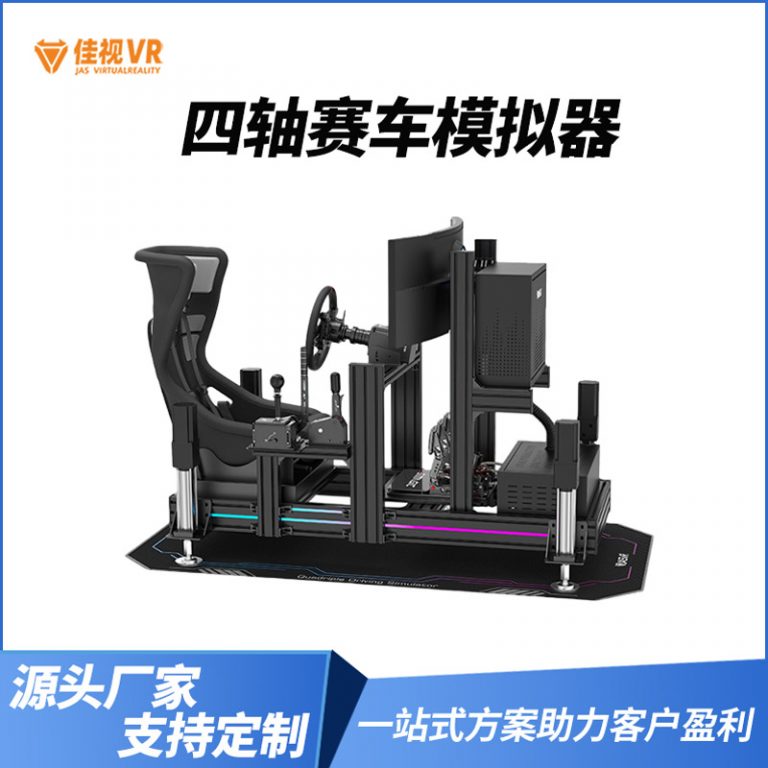
With the rapid popularization of virtual reality, servo motion control and digital simulation technologies, dynamic simulators have evolved from professional laboratories into the mass market. Within the family of multi‑degree‑of‑freedom simulation equipment, the 4‑DOF (four‑degree‑of‑freedom) dynamic simulator features four core motion capabilities: pitch, roll, heave and longitudinal slip. It strikes an optimal balance between simulation fidelity, procurement budget, site requirements and later‑stage maintenance, making it one of the most widely deployed immersive simulation devices with diverse landing scenario
Compared with simple 3‑DOF platforms, 4‑DOF simulators can realistically recreate nose‑up acceleration, nose‑down braking, cornering roll and road surface bumps to deliver significantly enhanced immersion. In contrast to high‑end 6‑DOF simulators, they require no special foundation reinforcement, occupy a smaller footprint, suffer lower failure rates, and entail much lower construction and operation costs. This makes them ideal for batch deployment, daily operation and small‑to‑medium‑sized projects.
Many project investors and venue operators only recognize the entertainment value of simulators during planning, ignoring their diversified application potential. In fact, 4‑DOF simulators are no longer mere gaming devices. They have been deeply adopted in driving training, vocational college practical teaching, popular science and safety education, cultural tourism scenic spots, enterprise exhibition halls, national defense research and study tours, industrial special‑operation training and many other fields.
This paper systematically sorts out the mainstream application venues of 4‑DOF simulators, analyzes the construction requirements, equipment values and operation modes of each category, and explores the model‑selection logic for different scenarios. It provides references for venue planning, project investment and equipment procurement, with a total length of approximately 3,000 words.
- Motor Vehicle Driving Schools and Vocational Driving Training Institutions
Driving schools represent a mature and large‑scale landing venue for 4‑DOF simulators and form the basic track for simulation equipment. Traditional on‑vehicle training has obvious drawbacks: fuel consumption and vehicle wear continuously raise operating costs; training cannot proceed in heavy rain, dense fog, icy roads and other severe weather conditions; high‑risk scenarios such as tire blowouts, emergency evasion and road skidding cannot be repeatedly practiced on real roads; operational errors of novice trainees may easily cause scratches and collisions, bringing potential safety hazards.
In modern smart driving‑training sites, 4‑DOF simulators are usually arranged in rows in the simulation training classrooms of theoretical teaching buildings, equipped with a central monitoring and management system. Before taking real‑vehicle lessons, trainees can master basic operations such as steering wheel control, coordination of accelerator and brake pedals, and gear shifting on simulators. They build muscle memory in advance, reducing collision damage to actual vehicles. Through the background system, instructors can access each trainee’s operation data, error records and driving trajectories, accurately identify weak points and deliver targeted teaching, greatly improving training efficiency.
Besides ordinary driving schools, internal driver training centers of large passenger transport groups, logistics parks and hazardous‑chemical transportation enterprises are also suitable for deploying 4‑DOF simulators. Such venues mainly provide pre‑job training and annual safety refresher courses for truck, coach and muck truck drivers. They simulate high‑risk working conditions including fatigue driving, sudden obstacles, cross‑wind driving and vehicle rollover warnings, strengthen defensive driving awareness and lower road traffic accident rates.
It should be objectively acknowledged that 4‑DOF simulators serve as auxiliary teaching tools and cannot completely replace real‑road training. Virtual simulation training and on‑road practice complement each other to form a complete driving training system. - Vocational Colleges, University Laboratories and Research‑and‑Study Bases
Various traffic vocational institutes, automotive engineering training centers, technical secondary schools and youth comprehensive practical research‑and‑study bases are among the fastest‑growing application venues for 4‑DOF simulators. Amid the reform of vocational education, colleges and universities are vigorously promoting integrated theory‑and‑practice teaching and transforming the traditional classroom model that overemphasizes theories while neglecting hands‑on practice. The 4‑DOF simulator perfectly bridges abstract textbook theories and dynamic practical operations.
In automotive training laboratories, when teachers explain abstract knowledge of vehicle dynamics, chassis structures and tire grip, students can physically experience vehicle pitch during hard braking, roll in high‑speed cornering and continuous vibration on bumpy roads. Abstract formulas and principles are converted into intuitive bodily sensations. The software of the equipment supports switching among front‑wheel‑drive, rear‑wheel‑drive and four‑wheel‑drive vehicle models, as well as asphalt, gravel and icy road surfaces to facilitate comparative teaching. A training report is automatically generated after practice for classroom review and assessment. Apart from automotive majors, customized flight, excavator and rail‑vehicle simulation cockpits can be developed for general aviation, drone and rail‑transit‑related majors to enrich practical training programs.
Primary and secondary school research‑and‑study bases and youth quality‑education camps set higher requirements for equipment safety, entertainment and popular‑science attributes. A science experience exhibition hall is usually built on‑site, where 4‑DOF simulators act as carriers for research‑and‑study courses. Programs covering traffic‑safety popularization, aviation knowledge and physical dynamics experience are offered. Instead of passively reading display boards, students immerse themselves in the operating status of vehicles and aircraft and stimulate enthusiasm for scientific exploration. During peak winter and summer vacation seasons, simulators serve as fixed experience items to receive group research‑and‑study teams, boosting the attractiveness of bases and enriching quality‑education content. - Urban Emergency Science Museums, Traffic‑Safety Experience Halls and Fire‑Safety Education Centers
In recent years, China has continuously built public safety‑education facilities. Emergency management departments, traffic police brigades and fire‑safety detachments across the country have constructed safety‑experience museums, disaster‑reduction popular‑science bases and anti‑drug exhibition halls. 4‑DOF simulators have become standard interactive exhibits in such venues. These sites focus not on profit‑oriented entertainment but on safety warning education. Dynamic immersive experiences deliver shocking effects, enabling visitors to deeply perceive the hazards of accidents and improve risk‑avoidance capabilities.
In traffic‑safety experience halls, 4‑DOF driving simulators can reproduce rear‑end collisions, high‑speed loss of control and drunk‑driving scenarios. Visitors feel violent shaking caused by vehicle runaway in a firsthand manner and understand the severe consequences of speeding and distracted driving. In earthquake and typhoon exhibition halls, customized 4‑DOF motion platforms simulate seismic shaking and strong‑wind jolts, combined with audio‑visual systems that recreate building sway and wall cracking. Visitors experience the power of disasters in an absolutely safe environment and learn correct shelter‑taking and escape skills. Fire‑safety education centers can integrate tunnel fires and vehicle spontaneous combustion to simulate emergency braking and emergency disposal in smoky environments.
Conventional safety education relies on display boards and video lectures with monotonous forms and low visitor participation. The introduction of dynamic simulators upgrades static preaching into immersive interaction and greatly enhances engagement. The venues carry out regular public‑welfare publicity activities targeting schools, communities and enterprises and institutions to give full play to the social value of popular‑science bases. Faced with large visitor flows and frequent reception batches, the equipment must operate stably, feature simple operation and support one‑click switching between different popular‑science scenarios. Standard general‑purpose 4‑DOF simulators can well meet these demands. - Commercial Complexes, VR Experience Halls, Arcades and Racing E‑Sports Clubs
As immersive experience economy booms, shopping‑mall amusement zones, VR experience parlors, game arcades and racing e‑sports clubs form the most important profit‑making commercial venues for 4‑DOF simulators and account for the largest market deployment volume. The core goals of commercial sites are attracting foot traffic, boosting secondary consumption and achieving steady revenue. Therefore, operators pay close attention to equipment footprint, operation difficulty and payback cycle.
Most shopping‑mall VR parlors have limited floor space and cannot accommodate large‑scale 6‑DOF simulation cabins. In contrast, 4‑DOF simulators feature a compact structure, with each unit occupying only a few square meters. Multiple units can be arranged side by side to build a racing track and launch multiplayer online competitive projects. Customers pay to experience car drifting, off‑road crossing, aerial tours and roller‑coaster simulations. Operators gain revenue through single‑time tickets, package cards and membership top‑ups. Built‑in dazzling lighting and surround stereo create strong visual impact to draw passers‑by and become signature attractions of stores.
Racing e‑sports clubs and simulation racing leagues adopt 4‑DOF simulators as core business projects. They organize online tournaments and offline timed challenges for racing enthusiasts, build community culture and cultivate loyal customers. Compared with ordinary arcade devices, dynamic simulators boast stronger competitive features, higher per‑customer spending and outstanding profitability. Meanwhile, lightweight movable 4‑DOF simulators fit temporary commercial occasions such as auto shows, real‑estate exhibition halls, commercial roadshows and carnivals. They can be quickly disassembled, transported and relocated after events, offering great flexibility. - Cultural‑Tourism Scenic Spots, Theme Parks, Aviation Towns and Popular‑Science Research‑and‑Study Parks
Major 4A‑ and 5A‑level tourist attractions, cultural‑tourism towns, aviation popular‑science bases and RV campsites are actively adding immersive interactive amusement projects to break away from simple sightseeing models, extend tourists’ staying time and raise secondary consumption revenue. 4‑DOF simulators perfectly satisfy the upgrading demands of cultural tourism.
In aviation towns and flight camps, 4‑DOF flight simulation cabins are installed in aviation popular‑science exhibition halls. Tourists experience the whole process of take‑off, cruising and turbulence bumps of general‑aviation aircraft, combining entertainment with aviation popular science. The equipment is highly suitable for family visitors and research‑and‑study groups. Mountain resorts and off‑road theme parks can develop off‑road crossing and jungle adventure simulation programs. Dynamic platforms recreate jolts on bumpy roads and undulating slopes, overcoming the drawbacks of high risks and weather restrictions of real off‑road activities. Some drifting and island tourist resorts launch virtual yacht and speedboat racing simulators. Visitors experience the thrill of water navigation without going outdoors, and projects can operate normally on rainy days, effectively alleviating the huge gap between peak and off‑peak tourist seasons.
Cultural‑tourism venues have two mainstream layout modes for simulators: self‑procurement and self‑operation, or cooperative placement with equipment manufacturers on a revenue‑sharing basis to reduce upfront capital pressure. In terms of operation, simulators are suggested to be integrated into the overall visiting routes of scenic spots and bundled with research‑and‑study courses and package tickets, instead of being isolated amusement facilities, so as to maximize equipment value. - Auto 4S Stores, Automaker Exhibition Halls and R&D Test Laboratories of Component Enterprises
Car brand showrooms, new‑energy experience centers and modification shops frequently deploy 4‑DOF simulators for brand display and marketing. The simulators are loaded with original vehicle dynamic parameters to replicate the real‑car characteristics of acceleration, cornering and braking. Customers gain immersive driving experience and deepen their understanding of vehicle performance, stimulating automobile sales. At large‑scale auto shows and new‑product launch conferences, dynamic simulators become highly popular interactive booths that gather crowds and elevate corporate technological image.
Small‑and‑medium‑sized automakers, chassis‑component manufacturers and automotive research laboratories adopt 4‑DOF simulators for lightweight simulation tests. Leading large automakers invest heavily in 6‑DOF platforms for high‑level autonomous‑driving calibration at enormous costs. A large number of emerging new‑energy enterprises, shock‑absorber and tire manufacturers do not require ultra‑precise attitude simulation. 4‑DOF simulators can complete massive repetitive chassis tuning, in‑vehicle human‑machine interaction tests and basic road‑condition simulation experiments, obtain valid test data within a controllable budget, shorten product R&D cycles and avoid the high costs and safety risks of real‑road tests. Such venues impose stricter requirements on dynamic software and data‑acquisition functions and demand customized algorithms and open interfaces from manufacturers. - National‑Defense Education Bases, Civil Air‑Defense Experience Halls and Military Simulation Training Rooms
With the continuous advancement of nationwide national‑defense education, local national‑defense research‑and‑study bases, civil air‑defense popular‑science museums and militia training centers have gradually introduced simulation equipment. Thanks to moderate prices and reliable performance, 4‑DOF simulators have become important tools for the digital upgrading of national‑defense exhibition and education.
In national‑defense education halls, customized cockpits simulate military transport vehicles and military off‑road vehicles traveling on complex off‑road terrains, recreating bumpy sections, steep slopes and sudden obstacles. They display the driving features of military vehicles to visitors and spread knowledge of national‑defense equipment. Research‑and‑study activities targeting primary and secondary schools, government organs and enterprises and institutions are carried out, transforming the traditional mode of model displays and picture explanations and strengthening experience and appeal.
In grassroots military units and militia training rooms, 4‑DOF simulators are used for basic training of general transport‑vehicle drivers. Trainees practice driving on complex virtual terrain and emergency risk avoidance, reducing heavy wear of real vehicles from long‑duration high‑intensity exercises and saving fuel and maintenance expenses. It should be noted that high‑precision flight training for fighter jets and large transport aircraft generally adopts high‑end 6‑DOF platforms. 4‑DOF simulators are mainly positioned for popular‑science education and entry‑level basic skills training and fit large‑scale popularization projects. - Niche Extended Venues and Future Application Directions
Apart from the above‑mentioned mainstream venues, the application boundaries of 4‑DOF simulators keep expanding. Construction‑machinery training bases can be equipped with excavator and loader simulation cockpits for pre‑job training in the construction industry; inland‑waterway training centers develop simulation programs for ship jolting and sailing in rough waves; rehabilitation centers utilize gentle dynamic platforms for vestibular‑function rehabilitation training; private enthusiasts and clubs build home simulation driving spaces for amateur hobbies.
Meanwhile, equipment selection must be rationalized as demands vary greatly across venues, and blind pursuit of higher degrees of freedom should be avoided. If venues focus on public popular science, commercial foot‑traffic attraction and basic teaching with limited budgets and space, 4‑DOF simulators offer the optimal cost‑performance solution. For professional racing teams, high‑end aviation training and in‑depth autonomous‑driving R&D, 6‑DOF simulators shall be adopted instead. In the early stage of project construction, the positioning, visitor volume, operation mode and budget of venues should be taken into account to determine plans, customize software scenarios and cockpit appearances, and prevent mismatches between equipment functions and actual demands.
Conclusion
Overall, the application venues of 4‑DOF simulators cover five major sectors: education and training, public popular science, commercial cultural tourism, corporate R&D and national‑defense research and study tours. The scenarios range from public‑welfare exhibition halls to market‑oriented profit‑making stores, and from college laboratories to scenic amusement projects, featuring rich and diversified use cases. Their core advantage lies not in ultra‑professional simulation accuracy, but in achieving a balance among experience effect, investment cost and site adaptability, combining educational, popular‑scientific and commercial values.
With the continuous development of digital technologies, 4‑DOF simulators will further integrate VR headsets, digital twins, AI intelligent evaluation and multiplayer network confrontation technologies, enrich scenario content and penetrate more segmented industries. For venue planners and project investors, understanding the operational pain points of different sites, clarifying the positioning of simulators and reasonably planning equipment quantity, scenario content and operation schemes are essential to maximize the efficiency of dynamic simulation equipment and build distinctive and sustainably‑operated digital experience projects.
Note:The English translation strictly follows the original Chinese structure and professional terminology. If you need a brochure‑style abridged version or a PPT abstract, I can further edit it.
RELATED POSTS
The Future Prospect of eVTOL Flight Simulators
In-depth Application and Industrial Transformation of Driving Training Simulators in Driving Schools
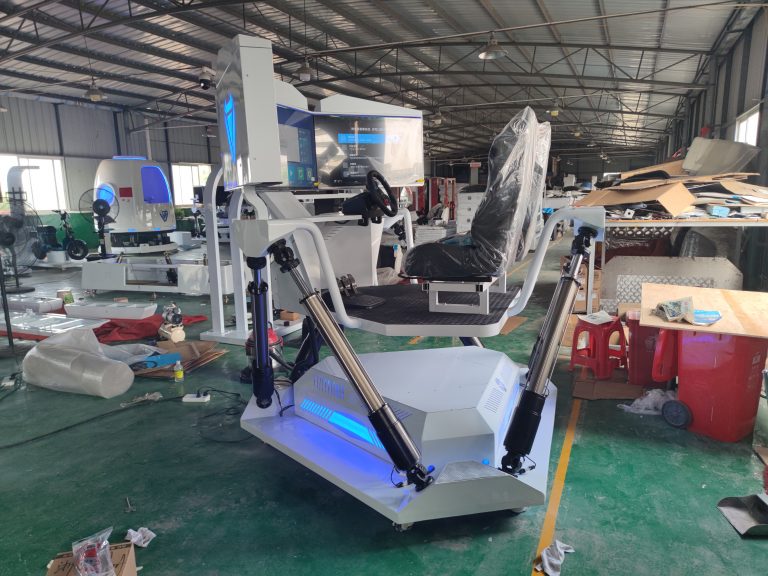
How Visual Immersion Is Achieved in Three-Screen Six-Axis Racing Simulator

VR Large-Space Full-Sensory Cinema: Breaking the Boundaries of Virtual and Reality, Reshaping a New Ecosystem of Immersive Movie Viewing
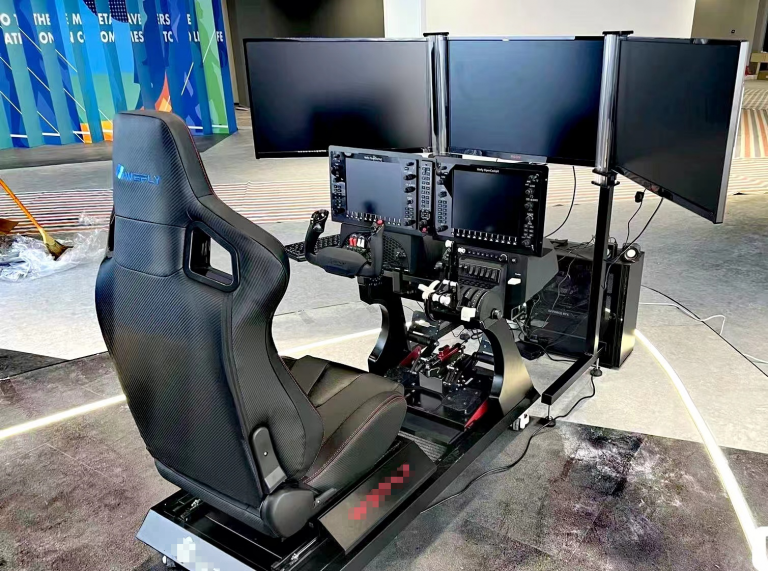
How Big is the Market for Basic Racing Simulators?