Analysis on Application Scenarios of Automobile Driving Simulators
Road traffic is the core thread that sustains social operation and economic circulation. Non‑standard driver operation, insufficient emergency‑response capabilities and weak safety awareness have consistently been the primary triggers of road traffic accidents. According to statistics from transportation authorities, over 90 % of road traffic accidents are caused by human operational errors, dangerous driving behaviours and improper handling under harsh conditions. Traditional driving training relies heavily on real‑vehicle on‑road practice, which suffers high fuel consumption, severe vehicle wear, site constraints and the inability to conduct practical exercises for high‑risk scenarios. It also carries potential risks of scratches, collisions and even personal injury. Meanwhile, traffic‑safety publicity has long adopted one‑way indoctrination modes such as poster displays, video playback and classroom lectures. The public can hardly perceive the fatal consequences of irregular driving intuitively, resulting in limited educational effects.
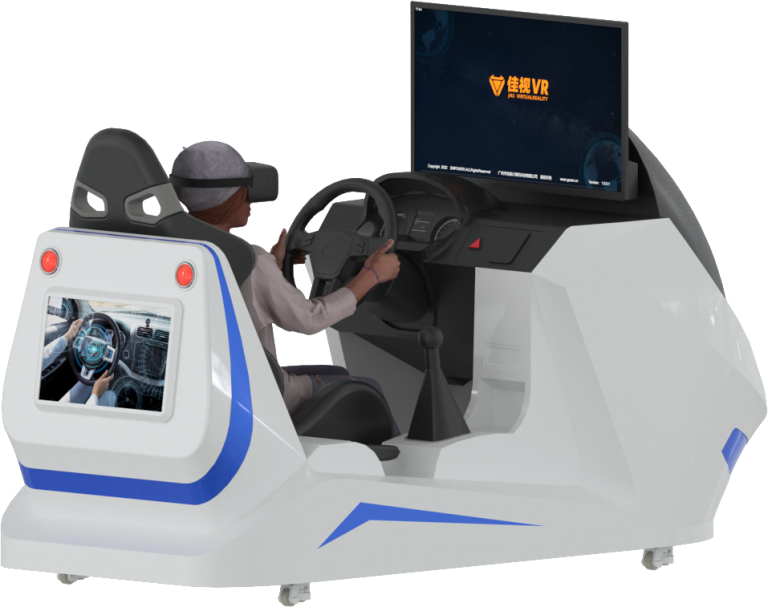
With the continuous maturity of virtual simulation technology, 6‑degree‑of‑freedom motion platforms, VR immersive interaction and vehicle‑dynamics algorithms, automobile driving simulators have achieved leapfrog technological upgrading. Ranging from basic static driving‑training simulators to 3‑DOF and 6‑DOF full‑dynamic simulation cockpits equipped with servo electric cylinders, and further to integrated systems combining panoramic triple‑screen display, force‑feedback controls, AI intelligent evaluation and big‑data storage, the equipment can reproduce the handling feel of dozens of vehicle types including passenger cars, buses, coaches, heavy‑duty trucks and rail‑transit vehicles at a 1:1 ratio. It can simulate tens of thousands of real‑world road conditions and sudden hazards infinitely many times, such as rain, snow and fog, high‑speed tyre blowouts, brake failure, road surface skidding, tunnel passage, night‑time driving and sudden pedestrian crossing at intersections. It delivers truly zero‑risk, repeatable, quantifiable and full‑scenario simulation training and experience.
Today, automobile driving simulators have gone far beyond their original positioning as mere learning‑to‑drive tools for driving schools. They have been widely deployed in eight core fields: motor‑vehicle driving training, pre‑job assessment and recurrent training for commercial‑vehicle drivers, government‑enterprise traffic‑safety science‑popularisation, vocational‑college teaching, R&D in automobile manufacturers for intelligent vehicles, special‑vehicle training for military and police forces, cultural‑tourism commercial leisure experience, and scientific‑research experiments for smart transportation. They have become indispensable intelligent equipment for building a digital traffic system. This paper systematically sorts out the full‑dimensional application scenarios of automobile driving simulators, analyses their core values, solved pain points and practical advantages in different scenarios, and provides references for equipment selection, project implementation and industry standard‑setting.
I. Smart Driving‑Training Scenarios for Driving Schools: Restructuring Modern Driving‑Teaching Systems
Driving schools represent the most fundamental and popular application of automobile driving simulators and serve as a key starting‑point for the digital transformation of the driving‑training industry. In accordance with the industrial specifications of the Motor‑Vehicle Driving‑Training Teaching and Examination Syllabus, standardised driving simulators can fully cover all teaching content for subjects one through four for driving licence categories C1, C2, C3 and others, making up for multiple shortcomings of traditional real‑vehicle training.
At the basic entry‑level training stage, novice trainees commonly struggle with poor coordination of accelerator, brake and clutch, frequent stalling on start‑up and excessive nervousness when steering. Direct on‑road practice easily triggers psychological fear and causes heavy wear‑and‑tear on training vehicles. Equipped with steering wheels, pedal groups and gear‑shift structures identical to real vehicles, simulators allow trainees to repeatedly practise subject‑two compulsory items in a closed and safe environment, including start‑up, reverse parking into garages, parallel parking, right‑angle turns, curve driving and ramp fixed‑point stopping. The system corrects faulty operations in real time and records data such as gear‑shift timing, steering angle and vehicle‑speed control, helping trainees rapidly build a sense of vehicle handling and overcome anxiety about real‑road driving. Measured by multiple chain‑operated driving schools, pre‑training via simulation can reduce real‑vehicle class hours by 30 %‑50 %, significantly cutting operating costs such as fuel expenses, maintenance fees and insurance premiums and improving the overall profitability of driving schools.
In advanced road‑practice training, simulators reconstruct diverse traffic environments including urban arterial roads, roundabouts, school and residential zones, bridges, tunnels, urban‑rural fringe areas and highways. They dynamically reproduce complex traffic flows such as weaving traffic, electric‑vehicle lane‑cutting and pedestrians crossing roads, training trainees’ core road‑driving capabilities including safe following distances, safe lane‑changing, overtaking and yielding etiquette. Of highest value are special high‑risk emergency simulations. Hazardous situations that cannot be practised with real vehicles, such as out‑of‑control tyre blowouts, road‑surface skidding in rainy weather, extended braking distances on icy‑snow roads and obstacle‑avoidance for sudden hazards, can be rehearsed repeatedly in virtual environments. Trainees master complete workflows for emergency avoidance, smooth braking and proper handling, fundamentally lowering accident rates for newly‑licensed drivers.
Furthermore, intelligent driving simulators can directly connect to official driving‑training timing systems, automatically counting simulation class hours and generating training files and assessment reports. They satisfy regulatory requirements for traceable and verifiable whole‑process driving training, support driving schools in upgrading smart‑training qualifications and build differentiated teaching competitiveness.
II. Pre‑job Assessment and Recurrent‑training Scenarios for Commercial‑vehicle Drivers: Consolidating Safety Barriers for Transportation
Public‑transport groups, long‑distance passenger‑transport companies, logistics‑freight enterprises, ride‑hailing platforms and other transportation operators undertake massive public‑travel and goods‑transport tasks. Commercial vehicles feature heavy loads, long driving distances and complex road conditions. Once accidents occur, they are highly likely to cause major casualties. Transportation‑management authorities explicitly require commercial‑vehicle drivers to receive regular defensive‑driving recurrent training, special drills for adverse‑weather conditions and safety‑qualification assessments. Automobile driving simulators have become standard training equipment for enterprises to implement their main responsibilities for work‑safety production.
For drivers of coaches and urban buses, simulators customise exclusive modules on blind‑spot observation of large‑vehicle inner‑wheel differences, speed‑limiting during turns, standard docking at bus stops and emergency handling of passenger incidents in congested traffic. Many bus scratching accidents stem from drivers’ misjudgement of vehicle dimensions and turning trajectories. Repeated immersive simulation allows drivers to intuitively perceive blind‑spot ranges of large vehicles and develop professional habits of low‑speed turning and advance observation. For heavy‑duty trucks, box‑type lorries and muck‑transport vehicles, the system focuses on simulating scenarios such as braking‑performance degradation under heavy loads, over‑heated brakes during long downhill descents, risks of overloading, mountain‑road curve meeting at night and tail‑spin during high‑speed emergency braking. It reinforces truck drivers’ safety awareness against fatigue driving, speeding and overloading, as well as the proper use of water‑spray brake‑cooling systems.
In addition, simulators integrate warning‑education programmes for drunk driving, drugged driving, distracted phone‑use and prolonged fatigue driving. Through somatosensory feedback including visual distortion and delayed reaction, drivers of commercial vehicles gain a profound perception of how dangerous driving impairs vehicle‑control capacity. Transport enterprises may link simulation‑assessment results directly to employment qualifications and performance‑related pay, implementing regular safety recurrent training, effectively reducing violation and accident rates for commercial vehicles and avoiding major corporate work‑safety liability risks.
III. Traffic‑safety Science‑popularisation Exhibition‑hall Scenarios for Traffic‑control Authorities: Realising Immersive Public‑oriented Safety Education
Traffic‑safety‑education bases, rule‑of‑law science‑popularisation exhibition halls and youth research‑and‑practice bases established under the leadership of traffic‑police brigades, emergency‑management bureaus and education bureaus represent core government‑procurement scenarios for automobile driving simulators. Their core objective is to shift from passive lectures to active immersive experience and enhance society‑wide awareness of traffic laws and safety.
Targeting teenagers and primary‑/secondary‑school students, simulators adopt simplified operation logic paired with cartoon‑style virtual urban‑road environments. They set up experiential content including traffic‑light recognition, zebra‑crossing yielding, safe non‑motor‑vehicle riding and seat‑belt wearing. Minors learn traffic‑sign meanings and traffic rules during simulated driving, developing concepts of civilised travel from an early age and effectively reducing risk‑taking behaviours such as jaywalking and illegal electric‑scooter riding by juveniles. This fills gaps in hands‑on campus traffic‑safety education.
For the general public, driving‑licence candidates, public‑sector employees and enterprise staff, exhibition halls prioritise dangerous‑driving warning‑education modules. They reproduce the whole accident process of drunk‑driving‑induced visual distortion, reduced attention from fatigue driving, insufficient braking distance caused by speeding and collision impacts without seat‑belts, complemented by motion‑platform vibration, sound effects and striking visuals. Visitors gain a tangible sense of personal injury, family breakdown and legal liabilities stemming from improper operations, dispelling fluke mindsets such as “occasional drunk driving is harmless”. Some municipal traffic‑safety exhibition halls deploy clusters of multiple networked simulators for synchronous multi‑user road simulation, restoring complex real‑world mixed‑traffic interactions. This supports group traffic‑behaviour research and provides data for traffic‑control authorities to optimise road‑management schemes and improve traffic‑facility layouts.
IV. Teaching‑and‑training Scenarios for Vocational Colleges and Universities: Bridging Theory and Practical Operation
Majors such as automotive engineering, intelligent connected vehicles, new‑energy‑vehicle technology and transportation management at vocational‑technical colleges, technical schools and universities commonly face teaching challenges: high costs of real‑vehicle practical training, impossibility of demonstrating high‑risk working conditions and abstract vehicle‑dynamics theories. High‑precision automobile driving simulators have become standard laboratory teaching equipment for automotive‑related disciplines.
In fundamental courses, instructors rely on simulators to disassemble driving characteristics of fuel‑powered, battery‑electric and hybrid vehicles. They intuitively explain how braking, steering, suspension and chassis tuning affect vehicle handling. By adjusting virtual‑vehicle parameters such as tyre pressure, suspension stiffness and load weight, students observe dynamic differences in corner roll, brake dive and acceleration thrust. Abstract textbook theories of vehicle dynamics are converted into perceptible hands‑on experience, greatly improving classroom efficiency.
For skill training, colleges may configure simulators for different vehicle types according to specialities: bus‑coach simulators for urban‑passenger‑transport courses, heavy‑truck simulators for logistics‑transport majors, rail‑transit simulation systems for metro and high‑speed‑rail specialities, and high‑end 6‑DOF motion platforms for research topics on intelligent driving and vehicle testing. For new‑energy‑vehicle teaching, simulators are equipped with exclusive operating‑condition modules including one‑pedal mode, regenerative‑braking‑intensity adjustment, low‑temperature range attenuation and emergency power‑off during battery faults. Keeping pace with developments in the new‑energy‑vehicle industry, they equip students with cutting‑edge professional competences on campus, enabling seamless transition after graduation into posts at automobile manufacturers, 4S dealerships and transportation enterprises. In addition, students may use simulators for graduation projects, traffic‑flow‑simulation experiments and driver‑behaviour‑analysis research, outputting standardised research data and enhancing colleges’ competitiveness in professional education.
V. R&D and Testing Scenarios for Automobile OEMs and Component Enterprises: Cutting Iteration Costs for Intelligent Vehicles
Within the automotive‑industry R&D sector, high‑end industrial‑grade 6‑DOF driving simulators constitute core virtual‑test‑laboratory equipment for vehicle manufacturers, autonomous‑driving technology firms and component suppliers. They are widely used throughout R&D workflows for full‑vehicle‑performance tuning, ADAS advanced driver‑assistance‑system validation, algorithm simulation for L3‑and‑above high‑level autonomous driving and ergonomic optimisation. Compared with conventional real‑world field testing, virtual simulation offers prominent advantages: low costs, high efficiency, zero safety hazards and unlimited scenario reuse.
In early‑stage new‑vehicle R&D, manufacturers can complete thousands of performance tests including chassis‑suspension tuning, steering‑feel calibration, braking‑distance measurement and NVH ride‑comfort evaluation in virtual environments without investing heavily in multiple physical prototypes. Design schemes are iterated rapidly, shortening new‑vehicle R&D cycles by 20 %‑30 % and substantially reducing expenses for real‑road testing, fuel, sites and manpower. For autonomous‑driving R&D, simulators construct extreme test scenarios difficult to replicate on real roads: visual sensor failure under heavy rain, misjudgement caused by strong backlight, “ghost‑probe” pedestrian crossing events, multi‑vehicle lane‑cutting games and tunnel driving with poor illumination. Algorithms for perception, decision‑making and execution are validated repeatedly tens of thousands of times. Industrial data shows virtual simulation covers over 95 % of road operating conditions, with testing costs merely one‑tenth of real‑vehicle road tests, greatly lowering R&D risks for autonomous‑driving deployment.
Meanwhile, component manufacturers for vehicle lamps, instrument panels, central‑control infotainment systems, seats and steering wheels leverage simulators for human‑machine‑interface evaluation. They test sight‑line obstruction, operation convenience and long‑duration‑driving fatigue under different interior layouts, providing objective quantitative evidence for component optimisation and advancing the upgrade of digital R&D systems in the automotive industry.
VI. Professional‑driving‑training Scenarios for Military, Police and Special‑forces: Enhancing Traffic‑passage Capabilities in Complex Environments
Armed‑police units, fire‑and‑rescue services, emergency‑response departments and military logistics‑transport units frequently carry out transport, rescue and relief missions in harsh environments such as mountain roads, muddy river‑beaches, collapsed road sections and night‑time low‑visibility zones. Special‑vehicle driving poses high difficulty and risk; real‑site training carries uncontrollable hazards such as vehicle trapping, overturning and personnel injury. High‑grade motion driving simulators serve as safe platforms for regular special‑driving training.
Simulators for military‑logistics heavy‑duty transport vehicles and armoured personnel carriers can simulate tactical scenarios such as crater‑pocked battle‑zone roads, bumpy floating‑bridge passage, steep‑slope crossing and single‑bridge manoeuvre on unpaved off‑road terrain. They train drivers to maintain vehicle stability and precise speed control under complex topography. Special‑vehicle simulators for fire‑and‑rescue focus on drills for narrow‑alley turning of emergency‑response vehicles, wading‑section passage, rapid parking at accident sites and evasion of civilian vehicles during high‑speed emergency dispatch, improving driving safety coefficients for firefighters undertaking rescue missions. All training data is fully recorded and archived for skill assessment and post‑training review. This avoids wear‑and‑tear and safety risks from intensive real‑special‑vehicle training while enabling year‑round high‑intensity special‑driving drills.
VII. Cultural‑tourism, Exhibition‑hall and Commercial‑complex Leisure‑experience Scenarios: Building Immersive Consumption Projects
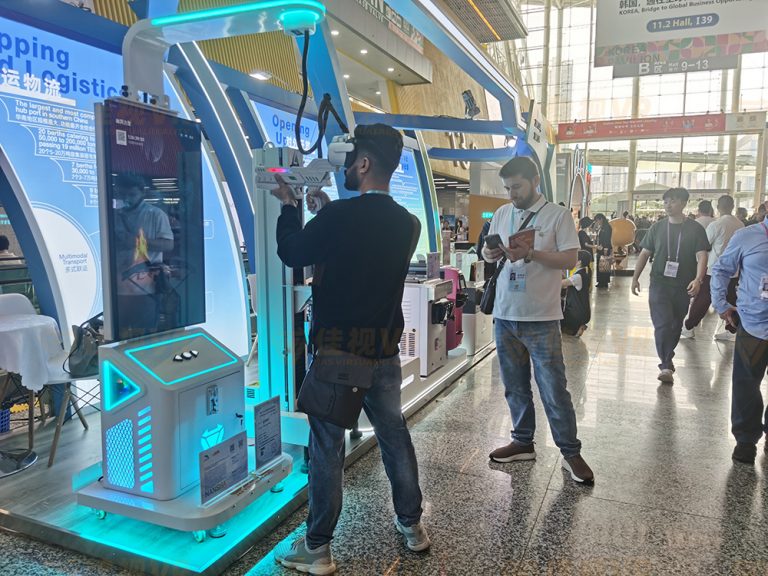
In the cultural‑tourism‑consumption sector, panoramic triple‑screen 6‑axis racing simulators and VR motion‑driving simulators, with strong interactivity and visual appeal, have become high‑traffic attractions in science‑and‑technology museums, automobile museums, theme parks, game centres, shopping‑mall atriums and auto shows, realising dual empowerment for science‑popularisation‑education and commercial profitability.
Science‑and‑technology museums and automobile museums deploy driving simulators as exhibits for automotive‑culture popularisation, offering experience modes such as Formula‑1 racing simulation and virtual city tours. Visitors learn principles of vehicle dynamics, aerodynamics and safety‑protection devices through entertainment, deepening public understanding of automobile structures and safety rules. Commercial‑entertainment venues prioritise competitive‑recreation modes: multiple networked simulators host virtual‑racing leagues and lap‑timing contests to attract young visitors and family groups, boosting venue foot traffic and revenue.
At auto shows, brand press conferences and 4S‑store events, motion driving simulators quickly draw crowds. Visitors immerse themselves in the handling performance of brand vehicles, reinforcing corporate technological and high‑end brand images and supporting automotive‑product marketing. Some parent‑child‑experience halls deploy simplified mini driving‑simulators for children. Accompanied by guardians, children learn traffic rules in entertaining interactive sessions.
VIII. Smart‑transportation Scientific‑research and Road‑safety‑subject‑research Scenarios: Supporting Optimisation of Urban‑traffic Systems
Transportation‑planning institutes, university traffic‑engineering research institutes and smart‑city construction task‑forces utilise clustered driving simulators for special‑research work including macro traffic‑flow simulation, road‑alignment‑safety evaluation and driver‑psychology research. They generate scientific data supporting urban‑road‑network reconstruction, traffic‑light timing optimisation and road‑sign‑and‑marking improvement.
Researchers can reconstruct driving environments of high‑accident‑risk road sections to analyse influences of curve curvature, downhill length, intersection blind zones and road‑surface friction coefficients on drivers’ speed‑judgement and braking‑reaction. Safety flaws in road design are identified and corrective proposals put forward. Large‑scale participant testing via simulators collects operational deviations under fatigue and emergency‑reaction speeds under distraction, analysing root causes of road‑traffic accidents. In testing for vehicle‑road‑co‑ordination and V2X internet‑of‑vehicles technologies, simulators interconnect with urban‑traffic digital‑twin systems to verify information‑interaction logic between vehicles and road‑side infrastructure, providing key experimental evidence for top‑level design of smart cities and intelligent road‑networks.
IX. Summary and Industry Outlook
Across the eight major application scenarios outlined above, the core values of automobile driving simulators revolve consistently around five dimensions: risk reduction through safety, cost cutting, efficiency improvement, enhanced education and research empowerment. Within the driving‑training industry, they drive the transformation of conventional learning‑to‑drive towards standardisation and digitalisation. In traffic‑safety work, they break the constraints of traditional publicity modes and embed safety concepts deeply in public minds. For vocational education and industrial R&D, they build virtual bridges between theory and real‑world practice, accelerating talent cultivation and automotive‑industry innovation. They also deliver irreplaceable practical value in government‑enterprise science‑popularisation, military‑police training, cultural‑tourism commerce and traffic‑science research.
In the future, with the in‑depth integration of large‑language‑model AI, metaverse digital‑twin technology, eye‑tracking physiological monitoring and full‑body force‑feedback somatosensory technology, automobile driving simulators will evolve toward higher simulation fidelity, smarter evaluation and deeper scenario customisation. On the one hand, systems will deliver personalised training programmes tailored to individual trainee weaknesses. On the other hand, cloud‑based interconnection across devices and scenarios will become mainstream, connecting data from driving schools, experience halls and OEM laboratories to build comprehensive big‑data systems for driving‑behaviour analysis.
Against the backdrop of comprehensive traffic‑safety governance, smart‑city construction and high‑quality‑development of the automotive industry, automobile driving simulators — as key outcomes of virtual‑simulation‑technology applications within transportation — will continue to deepen their presence in segmented scenarios. They will continuously release technological momentum to reduce road‑traffic accidents, improve public traffic‑safety literacy and underpin the safe and stable operation of the whole transportation industrial chain via digital‑technology barriers.
RELATED POSTS

Application and Industrial Value Analysis of VR Full‑Sensation Large‑Space Cinema
Analysis on the Future Development Trends of Environment Simulation Multifunctional Desks
VR Large-Scale Equipment: A Spatial Revolution Reconstructing Immersive Experience
VR Experience Centers: A Comprehensive Overview (Full English Version)
Research on Multi-scenario Application and Practical Combat Value of Military Battlefield Driving Simulator