Comprehensive Operation Plan for Immersive Large-Space VR Experience Hall
With the rapid development of the digital entertainment industry and immersive technology, virtual reality technology has become a mainstream upgrading direction for cultural tourism, commercial complexes, parent-child entertainment, research and team building industries. Different from traditional fixed single-player VR devices, the large-space free-roaming VR experience hall boasts advantages such as ultra-large activity space, multi-player synchronous interaction, immersive real-scene battles and high-freedom control, solving the industry pain points of traditional VR equipment including monotonous experience, limited playability and low unit price. At present, consumer groups are gradually becoming younger. Consumers are no longer satisfied with traditional entertainment such as video game rooms and movies, and prefer new-type entertainment with strong stimulation, high interactivity and social attributes. Therefore, building a professional, standardized and commercial large-space multi-player competitive VR experience hall can quickly seize the blue ocean market of offline immersive entertainment and create stable profits from ticket sales, team building and research cooperation. This paper formulates a complete and implementable operation plan for the large-space VR experience hall from the aspects of project positioning, site planning, equipment configuration, pricing system, marketing promotion, personnel management, profit model and risk control.
1. Overall Project Positioning
1.1 Project Introduction
The large-space free-roaming VR experience hall is an open immersive venue based on wide-range wireless positioning technology, equipped with high-definition VR headsets, tactical accessories and somatosensory interactive devices. The venue supports 4 to 10 players to move freely, cooperate and compete simultaneously, with diversified built-in game scenarios including shooting competition, secret chamber adventure, doomsday survival, sci-fi challenges and Chinese-style secret realms. Players can run, climb, shoot and interact freely within the designated area without cable restrictions to obtain fully realistic virtual combat experience. Adaptable to young people, parent-child families, enterprise teams and student groups, this project can be deployed in shopping malls, cultural tourist attractions, video game cities, science education bases and pedestrian streets, serving as a high-return and differentiated high-quality startup project in the offline entertainment industry.
1.2 Customer Group Positioning
To ensure stable daily revenue, we accurately target four core consumer groups according to the characteristics of large-space VR devices. The first group covers young consumers aged 16 to 35, including students and office workers who are the main individual customers and favor stimulating games such as shooting and competitive challenges. The second group refers to parent-child families, dominated by teenagers aged 8 to 15 accompanied by parents, who prefer puzzle-solving and mild adventure projects. The third group consists of small and medium-sized enterprises, which book the venue for staff team building and group gatherings to enhance team cohesion through multi-player cooperative games. The fourth group includes surrounding primary and secondary schools and training institutions, which carry out extracurricular research activities and develop integrated technology and entertainment research courses. Diversified customer groups can effectively reduce operational risks caused by single-source customers and balance off-peak and peak seasons.
1.3 Project Operational Advantages
Compared with offline entertainment projects such as traditional video game centers, escape rooms and script-killing games, the large-space VR experience hall has prominent operational advantages. Firstly, the content update cost is low. Operators only need to update game resources online instead of replacing hardware equipment, which greatly reduces long-term operating costs. Secondly, the venue boasts high utilization rate, as multiple game themes can be switched to meet the needs of different customer groups. Thirdly, the operation threshold is low. Only 2 staff members are required to complete equipment control, customer reception and safety management, realizing lightweight operation with unattended auxiliary functions. Fourthly, it features distinct differentiation. The coverage of large-space VR experience halls in sinking markets is relatively low with limited competition, helping investors quickly build exclusive regional entertainment projects.
2. Site Selection and Planning Scheme
2.1 Site Selection Standards
Site selection directly determines passenger flow and payback period. Three types of high-quality sites are prioritized. The first choice is large shopping malls in urban core business districts (3rd to 5th floors), which gather massive young and parent-child customers with complete supporting catering and entertainment facilities to support scattered ticket sales. The second option covers popular cultural tourist attractions, theme parks and Internet-famous commercial streets, which rely on huge tourist flow to realize high-premium secondary consumption. The third type includes youth activity centers, university towns and street shops for low-budget startups to cover surrounding fixed consumer groups. In addition, the site shall meet basic hardware requirements: regular shape without excessive obstacles, floor height of no less than 3.5 meters, away from flammable and explosive stores. Operators shall complete fire acceptance and obtain business licenses, public place operation permits and fire safety certificates legally.
2.2 Site Area and Functional Partition
A standardized large-space VR experience hall covers an area of 120 to 200 square meters and is divided into four functional areas to optimize customer flow and improve venue turnover. The core experience area accounts for 60% of the total area, specially used for free-roaming VR experiences with dedicated zones for 4-player, 6-player and 10-player modes. The floor is paved with anti-slip and anti-collision cushions, and the surrounding walls are equipped with soft packages to ensure player safety. The reception and rest area takes up 20%, equipped with front desks, leisure seats, beverage display cabinets and game poster walls for ticket selling, queuing and luggage storage. The pre-job training area accounts for 10%, where staff instruct players on equipment wearing, game rules and safety precautions to shorten on-site training time. The peripheral display area occupies 10%, displaying VR accessories, game peripherals and package posters to stimulate secondary consumption and membership recharge.
2.3 Decoration and Supporting Standards
The overall decoration adopts tech and cyber styles, with dark blue, black and fluorescent white as the main colors, matched with ambient light strips, dynamic light signs and e-sports decorations to create an immersive technological atmosphere. The experience area is equipped with sound insulation devices to avoid noise interference. Air conditioners and ventilation systems are installed across the whole venue to guarantee fresh air circulation. Game posters, safety regulations and playing guidelines are posted on walls to beautify the venue and reduce staff explanation costs. Decoration shall be simple, elegant and cost-effective to control early-stage investment.
3. Equipment Configuration and Content Planning
3.1 Hardware Equipment Configuration
As the core of venue operation, professional large-space VR equipment with high stability and precise multi-player positioning is essential. The complete equipment set includes wireless high-definition VR headsets, high-precision optical positioning base stations, multi-functional somatosensory controllers, tactical simulation guns, protective harnesses, anti-collision buffer systems and background control servers. The equipment supports wide-range free movement with a positioning error within 2mm, free of dizziness and delay, suitable for long-term continuous operation. Spare vulnerable accessories such as headsets and controllers shall be prepared for timely replacement to prevent operational suspension caused by equipment failure.
3.2 Game Content Layout
Diversified game contents are configured for different customer groups, with 1 to 2 new themes updated monthly to maintain customer stickiness. First, competitive shooting games, including doomsday zombie survival, team offense and defense, sci-fi warfare and battle royale, serve as core drainage projects for young game enthusiasts. Second, secret chamber adventure games such as ancient tomb treasure hunting and puzzle escape are suitable for groups of friends and couples. Third, parent-child puzzle games centered on space exploration and animal adventures eliminate violent and terrifying elements to fit teenagers and children. Fourth, team building games focusing on collaborative challenges and material collection are customized for corporate team building orders.
4. Pricing System and Profit Model
4.1 Diversified Pricing Scheme
Based on industry market prices, we adopt a three-dimensional pricing model covering scattered tickets, combined packages and membership recharges to balance retail sales and long-term customer retention. Single scattered ticket: $9.5-$12.5 for a 30-minute experience, $14-$18.5 for a 60-minute experience. Combined packages: $3 discount for double-player tickets and 20% discount for 4-player group tickets to lower the threshold for group consumption and increase per capita consumption. Membership system: recharge $28 to get $4 extra, recharge $70 to get $17 extra, recharge $140 to get $42 extra; members enjoy exclusive discounts, free extended playtime and priority access during holidays. Team building packages: $255 for half-day rental and $395 for full-day rental with customized supporting services.
4.2 Multiple Profit Channels
To break the limitation of single ticket revenue, we build a multi-dimensional profit system to maximize comprehensive benefits. Basic profits include scattered tickets, group packages and membership recharges. Value-added profits cover beverages, snacks, game peripheral sales and equipment time leasing. Channel profits are derived from long-term cooperation with enterprises, schools and training institutions for team building and research activities. Activity profits come from holiday-themed events, mall joint activities and short-term equipment leasing. The multi-channel profit model effectively taps the potential value of venues and equipment and shortens the investment payback period.
5. Personnel Organization and Daily Operation Management
5.1 Personnel Allocation
Small and medium-sized large-space VR experience halls adopt lightweight low-cost operation mode with only 2 to 3 on-site staff. Front desk staff are responsible for customer reception, ticket sales, membership recharge and order registration. On-site operation specialists take charge of equipment debugging, disinfection, pre-game training, safety monitoring and daily troubleshooting. The store manager oversees marketing activities, customer maintenance, cross-industry cooperation, inventory management and overall business operation. All employees must receive professional training covering equipment operation, emergency response and service standards to realize standardized services.
5.2 Standard Daily Operation SOP
Daily operations are divided into three stages with standardized operating procedures. Thirty minutes before opening, staff complete power-on detection, venue cleaning, equipment disinfection and material inventory. During business hours, standardized processes including pre-game training, customer guidance, on-site monitoring and post-session disinfection are implemented; wearable devices such as headsets and controllers are disinfected after every session. After closing, all devices are powered off, potential faults are checked, daily revenue and membership data are counted, and activity schedules for the next day are updated. A complete equipment maintenance ledger is established for in-depth weekly maintenance to reduce failure rates.
5.3 Safety Management System
Safety is the foundation of sustainable operation. Operators shall formulate comprehensive safety management regulations. Players with hypertension, heart disease and pregnant women are prohibited from experiencing high-intensity projects; minors must be accompanied by guardians. Staff monitor players’ moving tracks in real time during the experience and remind them to avoid protective boundaries. First-aid kits, fire extinguishers and emergency evacuation signs are equipped across the venue, and regular emergency drills are organized. The maximum number of players per session is strictly limited to avoid overloading and eliminate potential safety hazards from the source.
6. Marketing Promotion and Activity Planning
6.1 Online Drainage Promotion
Online drainage relies on short-video platforms and local life service platforms. Publish game highlight clips, operation tutorials and store visiting videos on Douyin and Kuaishou, launch targeted local traffic delivery and attach group-buying links. Launch single tickets and combined packages on Meituan and Dianping, optimize store ratings and capture local search traffic. Release preferential activities and new game updates on WeChat groups and Moments to retain old customers; launch social fission activities such as likes exchange for extended playtime and group-buy discounts. Invite local Internet-famous bloggers to experience and publish recommendation videos to quickly improve store popularity.
6.2 Offline Promotion
Offline promotion focuses on surrounding customer groups. Carry out cross-industry cooperation with cinemas, milk tea shops, billiard halls and video game centers to share customer resources and exchange coupons. Launch ground promotion activities in surrounding universities, communities and primary and secondary schools, and launch exclusive student preferential packages. Push customized team building plans to enterprise administrative departments and negotiate long-term cooperation to secure stable team building orders.
6.3 Holiday Themed Activities
Leverage passenger flow dividends during holidays to boost revenue with themed activities. Launch limited-time flash sales of low-cost experience tickets during the opening period to accumulate initial customers. Hold weekly e-sports competitions with cash rewards, free playtime and game peripherals to attract game lovers. Launch exclusive activities for Valentine’s Day, National Day and summer/winter vacations respectively, and formulate differentiated preferential strategies to maximize peak-season revenue.
7. Risk Analysis and Countermeasures
7.1 Market Competition Risk
The rising popularity of immersive entertainment leads to increasing homogeneous competition. Countermeasures: continuously update exclusive game content to build regional differentiated features; focus on high-value team building and research channels to avoid low-price homogenized competition in scattered ticket business; optimize the membership system to enhance customer loyalty and build solid competitive barriers through word-of-mouth.
7.2 Equipment Operation Risk
VR precision electronic devices are prone to lag and accessory damage under long-term high-frequency use. Countermeasures: implement daily power-on/off detection, weekly in-depth maintenance and monthly overall inspection; prepare complete spare accessories for immediate replacement in case of faults; sign after-sales agreements with equipment suppliers to ensure 24-hour response for complex technical failures.
7.3 Off-Peak Passenger Flow Risk
Insufficient passenger flow on workdays results in idle venue resources. Countermeasures: launch exclusive off-peak packages and student discount tickets for workdays; provide short-term venue leasing services for small-scale team building and community activities; cooperate with training institutions to launch low-price research experience courses to revitalize idle off-peak resources.
8. Summary and Long-Term Development Plan
In conclusion, the large-space immersive VR experience hall conforms to the development trend of the offline entertainment industry, benefiting from immersive experience, low operating costs, diversified profit channels and extensive customer groups. The project features high feasibility and a mature profit model, suitable for mall self-operation, personal entrepreneurship and supporting facilities for government-research projects. During actual operation, the management team shall take precise site selection as the foundation, high-quality equipment and exclusive game content as the core, standardized services and diversified marketing as the driving force, balance the customer proportion of scattered tickets, membership recharge, team building and research projects to achieve stable all-day revenue.
In the long run, operators can expand the venue scale, increase the maximum number of concurrent players and launch exclusive IP game contents according to operating benefits. Mature operation modes can be replicated to open chain stores and develop regional cooperative channels to build a benchmark local immersive entertainment brand. Against the backdrop of booming immersive digital technology, investing in large-space VR experience halls conforms to national digital cultural and entertainment policies, helps investors seize the blue ocean market of new offline entertainment, realize short-term cost recovery and long-term stable profits, and possesses high commercial promotion value and market development potential.
RELATED POSTS
Application Venues of 4‑DOF Simulators
Analysis on the Standardized Training Subject System and Practical Training Value of Driving Simulators
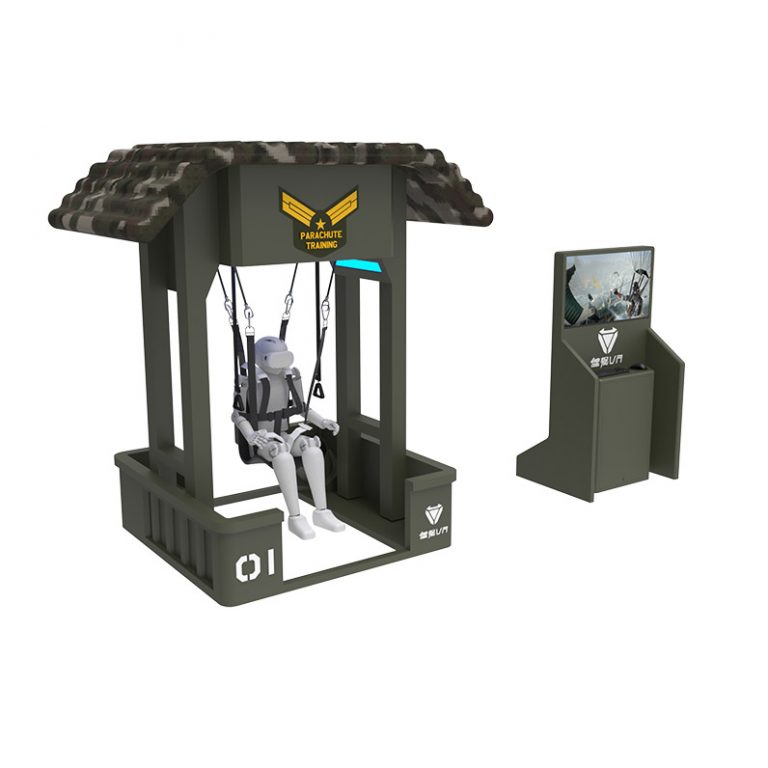
Diverse Application Scenarios and Practical Value of VR Skydiving Simulators
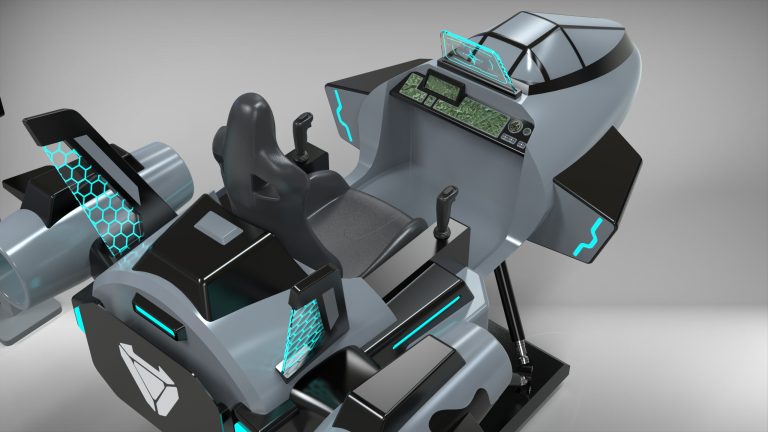
The future development and application prospects of automobile driving simulators
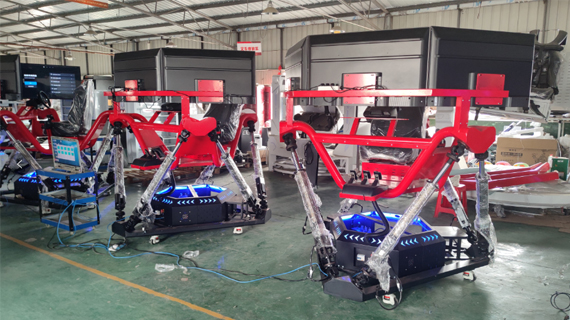
How Six-Axis Racing Simulators Are Entering Homes