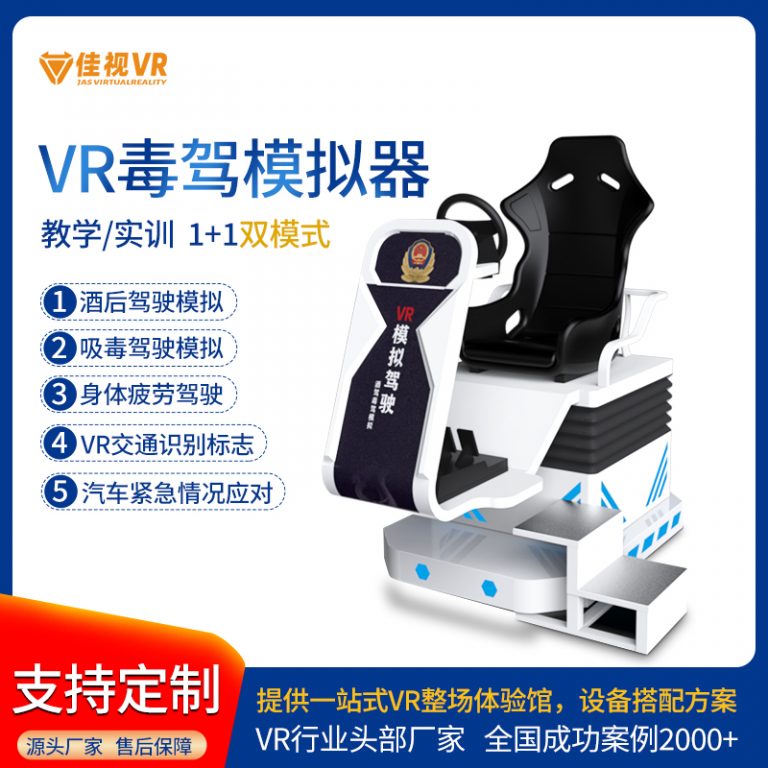
Technology Empowers Safe Travel: The Multiple Values of VR Traffic Experience Halls
With the acceleration of urbanization, the number of motor vehicles continues to rise, and the structure of road traffic participants becomes increasingly complex. Traffic bad habits such as running red lights, drunk driving, and distracted driving are still common. The occurrence of traffic accidents not only threatens people’s lives and property safety but also brings considerable pressure to social governance. Traditional traffic safety education is mostly “didactic”, delivering knowledge through posting slogans, playing videos, and explaining regulations. It often suffers from problems such as a single form, weak sense of immersion, and poor memory retention, making it difficult to truly change people’s travel habits. The emergence of VR traffic experience halls, with technology as a bridge, deeply integrates virtual reality technology with traffic safety education, breaking the limitations of traditional education. Through immersive experience, scenario-based simulation, and precise training, it provides a new solution for improving the overall traffic safety literacy of the whole people. Its value has long exceeded mere “experience” and has become an important barrier to safeguarding travel safety.
The core value of VR traffic experience halls lies in transforming abstract traffic rules into immersive experiences, allowing experiencers to “experience” danger in an absolutely safe environment and strengthen safety awareness from the root. In traditional traffic safety education, phrases such as “drunk driving is dangerous” and “running red lights is likely to cause accidents” often become a mere formality. Although people know the rules, they can hardly internalize them into conscious actions because they have not truly felt the impact of danger. However, through highly realistic scene restoration and multi-sensory interactive equipment, VR technology allows experiencers to personally feel the serious consequences of traffic violations. In the Fuhai County VR Traffic Safety Experience Area, after wearing VR equipment, experiencers can intuitively simulate typical traffic violation scenarios such as drunk driving, speeding, and running red lights. The 0.8-second visual delay after drunkenness, the chest pressure during a speeding rear-end collision, the violent vibration of being hit when running a red light, combined with 7.1-channel surround sound effects such as glass breaking and harsh braking sounds, comprehensively impact the experiencer’s vision, hearing, and touch, making “danger” no longer distant. As an experiencer resident said, the impact of such realistic scenes is more effective than ten safety education classes, making people reverence the rules and stay away from bad habits from the bottom of their hearts.
Data testifies to the effectiveness, and the shock of VR experience is directly transformed into an improvement in safety awareness. According to statistics, among participants who have experienced VR traffic simulation, 92% said they would take the initiative to fasten their seat belts, the correction rate of dangerous driving behaviors increased to 35%, and the rate of pedestrians running red lights decreased by 28%. Compared with the traditional “watching videos + reciting regulations” model, the retention rate of safety knowledge increased by more than 40%, and abstract traffic laws and regulations were transformed into deep muscle memory, truly achieving the educational effect of “one experience, lifelong vigilance”. This “experiential vigilance” model has completely solved the dilemma of “knowing is easy but doing is difficult” in traditional traffic safety education, allowing people to take the initiative to abandon traffic bad habits and develop the habit of civilized travel after personally “experiencing” danger.
The value of VR traffic experience halls is also reflected in their ability to accurately cover different groups of people, provide personalized and targeted safety training, and achieve the educational goal of “tailored training for thousands of people”. Different traffic participants have different travel scenarios and risk points, and their needs for traffic safety knowledge also vary. Through modular design, VR experience halls customize exclusive experience and training programs for different groups such as teenagers, professional drivers, ordinary citizens, and the elderly, making traffic safety education more targeted.
For teenagers, VR traffic experience halls make traffic safety knowledge “enter the brain and heart” in a gamified and interesting way. Teenagers are curious and quick to accept new things, but their safety awareness is weak. Traditional didactic education is difficult to attract their attention. The children’s traffic experience area built by VR experience halls allows children to learn traffic rules through interaction in the form of mini traffic road models, VR riding simulation, and traffic safety checkpoint games. In the Inner Mongolia Baotou Children’s “Traffic Safety Interactive Experience Camp”, children transform into “traffic safety guards”, explore traffic scenes in a panoramic view through VR equipment, recognize traffic signs and master riding safety skills in checkpoint challenges, and establish the rule awareness of “stop at red lights and go at green lights” in interesting experiences. After Nantong Wushan Primary School introduced the VR truck blind spot simulation game, the pass rate of students’ traffic safety knowledge tests jumped from 68% to 92%, and the proportion of students who took the initiative to abide by traffic rules increased from 58% to 89%, fully proving the remarkable effect of VR experience on teenagers’ traffic safety education.
For professional driver groups, such as freight drivers, bus drivers, and food delivery riders, VR traffic experience halls provide intensive special training, effectively improving their professional skills and emergency response capabilities. This group is in a high-intensity driving state for a long time, facing multiple risks such as fatigue driving, distracted driving, and driving in extreme weather. Once an operational error occurs, it is very likely to cause a major traffic accident. For professional drivers, VR experience halls simulate high-risk scenarios such as high-speed rear-end collisions, mountain road rollovers, vehicle tire blowouts, and inner wheel difference dangers, equipped with professional equipment such as hydraulic motion platforms and force feedback seats to accurately restore the entire process of accidents. At the same time, through infrared sensing and fluid dynamics algorithms, it real-time captures 18 operational data such as steering angle and braking distance, generates holographic image reports, quantitatively analyzes driving behavior risks, and helps drivers accurately find their own weak links. After a logistics company introduced VR training, the accident rate of drivers at intersections decreased by 62%, and the emergency braking response time was shortened by 0.8 seconds; after being used by bus companies, the standard operation rate of drivers increased to 95%, fully demonstrating the important role of VR training in the training of professional drivers.
For ordinary citizens and the elderly, VR traffic experience halls focus on daily travel risks and fill the gap in traditional traffic safety education. The elderly are slow in movement and declining in reaction ability, and are not familiar with new traffic rules and travel scenarios, making them a high-risk group for traffic accidents; ordinary citizens often have bad habits such as distracted driving and not wearing safety helmets due to fluke psychology. Through simulating daily scenarios such as pedestrians crossing the road, electric vehicle riding, and driving at night, VR experience halls allow the elderly to intuitively feel dangers such as “ghost probes” and “blind spots” and learn to avoid travel risks; let ordinary citizens experience the serious consequences of distracted phone calls and not wearing seat belts in simulations, thereby developing good travel habits. After Hefei Yaohai District introduced VR traffic experience equipment, the number of residents running red lights decreased by 47%, and the rate of electric vehicles carrying passengers illegally decreased by 63%, effectively improving the level of road traffic safety in the district.
In addition to strengthening safety awareness and improving driving skills, VR traffic experience halls also provide an efficient and safe solution for traffic management and emergency response training, reducing training costs and risks. In traditional emergency response training, simulating scenarios such as vehicle collisions and fire escapes often has potential safety hazards, and the training cost is high, the scene restoration degree is low, making it difficult to achieve the ideal training effect. However, VR technology can accurately restore sudden scenarios such as vehicle fires, chain rear-end collisions, and casualty rescue, allowing experiencers to repeatedly practice emergency response procedures in a virtual environment, such as using fire extinguishers, implementing initial casualty rescue, and evacuating the scene in a standardized manner, improving emergency response capabilities and disposal levels without any safety risks.
At the same time, VR traffic experience halls also have a one-stop service function of “experience + publicity and education + consultation”. Police auxiliary police can combine local real traffic accident cases to carry out explanations and guidance during the experience, focusing on popularizing knowledge such as safe driving on icy and snowy roads, standardized practice of “one helmet and one belt”, and refusal to drink and drive, patiently answering people’s travel questions, allowing experiencers to deeply understand the connotation and significance of traffic laws and regulations while having an immersive experience. In addition, the VR system can also combine AI algorithms to predict individual behavioral risks and push personalized training programs based on the experiencer’s operational data, realizing the upgrade from “experiential teaching” to “data-driven intervention” and making traffic safety education more intelligent and precise.
The promotion and application of VR traffic experience halls also have important social value, helping to build a civilized, orderly, and safe road traffic environment. Today, more and more regions regard VR traffic experience halls as an important position for traffic safety publicity, opening regular experience activities for different groups. Fuhai County, relying on the VR experience area of the traffic police station, carries out regular experiences for motor vehicle drivers, food delivery riders, students, community residents and other groups, promoting the concept of traffic safety to enter the brain and heart; mobile VR experience exhibition vehicles in various places can be flexibly deployed to communities, enterprises, and schools, allowing traffic safety education to break spatial limitations, cover more people, and truly achieve the goal of “full participation and full improvement”.
In the long run, VR traffic experience halls are not only a new type of safety education carrier but also a vivid embodiment of technology empowering social governance. It breaks the temporal and spatial limitations of traditional traffic safety education, transforms “passive acceptance” into “active experience”, and “abstract rules” into “concrete feelings”, allowing every experiencer to remember safety in shock and master skills in practice. With the continuous upgrading of technology, VR traffic experience halls will also integrate more intelligent elements, such as optimizing experience scenarios combined with big data analysis, introducing AI voice real-time error correction, and building cross-regional online experience platforms, further improving the educational effect and coverage.
Traffic safety is no trivial matter, and civilized travel depends on everyone. The emergence of VR traffic experience halls provides a new path for national traffic safety education. It uses the power of technology to protect every trip, uses immersive experience to arouse every sense of reverence, and makes the concept of civilized travel take root in everyone’s heart. It is believed that with the widespread popularization of VR traffic experience halls, more and more people will develop good travel habits, road traffic bad habits will gradually decrease, the incidence of traffic accidents will continue to decline, our cities will become safer, more orderly, and warmer, and every trip will be full of peace of mind and hope.
RELATED POSTS
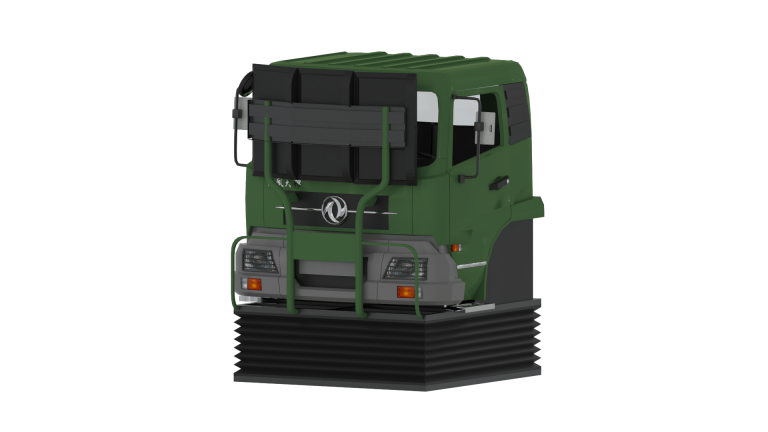
Future Development Trends of Truck Cabin Driving Simulators
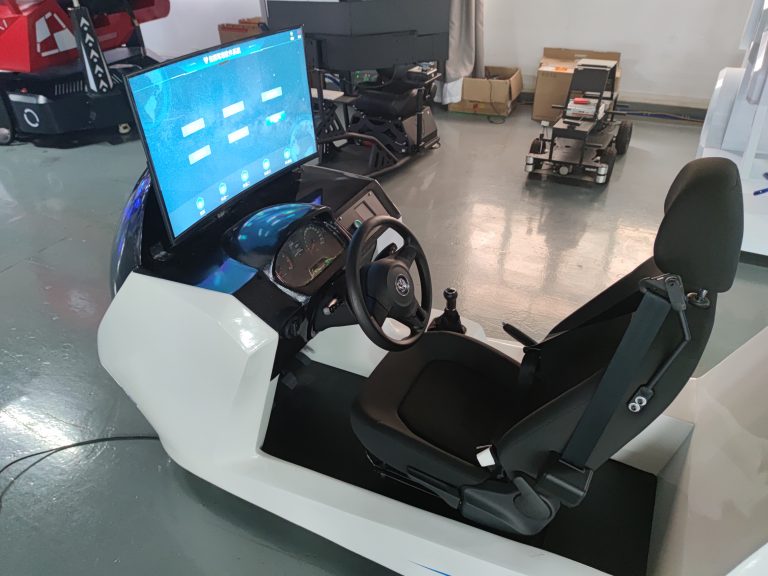
Experience of Basic Operation Skills of Automobile Driving Simulator
The Application of Racing Simulators in Malls: Unlocking a New Track for Commercial Entertainment
Real Vehicle Transformed Dongfeng Truck Head Driving Simulator: Unlocking the Comprehensive Learning Scenario for Heavy-Duty Truck Driving
A New Benchmark in Immersive Racing: Versatile Functions and Application Values of Three-Screen Six-Axis Racing Simulator