Diverse Application Scenarios and Value Analysis of VR Bicycle Simulators
With the rapid iteration of virtual reality (VR) technology, immersive simulation equipment has gradually broken industrial boundaries and deeply integrated into various fields such as daily life, education and training, the sports industry, and cultural tourism. As a new intelligent device combining virtuality and reality, the VR bicycle simulator relies on core technologies including three-dimensional virtual scene construction, dynamic somatosensory interaction, real-time data monitoring, and multi-scene free switching. It solves the pain points of traditional outdoor cycling restricted by weather, venue, safety, time and space, and realizes the digital, safe and diversified upgrading of cycling experience. Compared with traditional bicycle riding and ordinary indoor spinning training, the VR bicycle simulator features outstanding safety, entertainment, professionalism and practicality, adapting to the usage needs of different groups and scenarios. Nowadays, the device is no longer limited to a single fitness and entertainment function, but has gradually expanded to multiple fields including traffic safety education, professional sports training, immersive cultural tourism experience, daily family leisure, scientific research experiments and commercial display, showing broad application prospects and high practical value. This paper comprehensively analyzes the core application scenarios of VR bicycle simulators and deeply interprets their application advantages and development value in different fields.
1. Traffic Safety Education Scenarios: Immersive Popularization and Innovative Education Mode
Traffic safety is a core part of national basic education. Traditional bicycle safety education is mostly carried out in the forms of classroom lectures, graphic exhibitions and video playback, which are boring and single in form. Audiences can hardly gain intuitive perception, and their understanding of traffic hidden dangers and violation consequences remains at the theoretical level, resulting in greatly reduced education effectiveness. The emergence of VR bicycle simulators has completely subverted the traditional traffic safety education model. With the advantages of immersion, interactivity and high-fidelity simulation, it has become a core device for traffic safety science popularization, widely applied in primary and secondary school classrooms, traffic police safety education bases, community science popularization activities, enterprise safety training, public welfare exhibition halls and other scenarios.
In adolescent safety education, the VR bicycle simulator is specially adapted to the cognitive characteristics of primary and secondary school students. It builds high-frequency traffic scenarios including campus roads, urban streets, crossroads and residential lanes, and fully restores basic traffic rules such as traffic light passage, pedestrian avoidance, non-motor vehicle traffic regulations, road turning and roundabout passing. Wearing VR equipment for simulated cycling, experiencers can directly identify various traffic signs and master standard cycling skills. Meanwhile, the device is embedded with a wealth of accident simulation scenarios, including sudden pedestrians in blind spots, door crashes caused by vehicle opening, reverse cycling collisions, poor sight in night riding, and rushing collisions at intersections. It allows experiencers to intuitively perceive the serious consequences of traffic violations in an absolutely safe virtual environment. Different from traditional didactic education, this personal experience can deeply strengthen teenagers’ safety awareness, help them fully understand the hazards of illegal cycling, and fundamentally eliminate dangerous behaviors such as running red lights, reverse riding and occupying motor vehicle lanes.
In social traffic safety training, the device can be used for special safety training for food delivery riders, courier practitioners, frequent shared bicycle users and elderly cyclists. Targeting the complex road conditions and high-frequency road travel characteristics of professional cycling groups, the simulator can customize special scenarios such as complex urban road sections and crowded traffic sections, and simulate harsh cycling environments including slippery rainy roads, poor night vision, blind spots of large vehicles and emergency condition avoidance. It helps practitioners master emergency disposal skills and improve cycling safety in complex road conditions. In addition, traffic police departments can carry out public welfare promotion activities with this device, popularize traffic safety laws and regulations through immersive experience, break the limitations of traditional safety publicity, make traffic safety knowledge truly internalized in people’s minds, and effectively reduce the accident rate of non-motor vehicles.
Overall, the VR traffic safety education model realizes a full-chain education of “theoretical learning + real-scene experience + consequence perception + skill operation”. It avoids safety risks in on-site teaching, solves the problems of dullness and inefficiency in traditional education, greatly improves the pertinence and effectiveness of traffic safety popularization, and serves as an innovative carrier of national safety education in the new era.
2. Public Fitness Scenarios: Breaking Temporal and Spatial Restrictions to Build a New Indoor Fitness Model
With the in-depth advancement of the national fitness strategy, public fitness demands continue to upgrade. Although traditional outdoor cycling integrates sports and leisure, it is restricted by extreme weather, limited venues, traffic congestion and potential safety hazards, making regular exercise difficult. Ordinary indoor spinning training has single scenarios and insufficient fun, and long-term training tends to cause boredom and interrupt fitness. Perfectly making up for the shortcomings of traditional cycling fitness, the VR bicycle simulator integrates sports fitness with virtual reality technology, becoming a highly popular indoor fitness device widely used in gymnasiums, cultural and sports centers, community fitness stations and staff activity centers.
In public fitness scenarios, the VR bicycle simulator is equipped with massive high-definition virtual cycling scenes, including mountain roads, coastal tracks, grassland greenways, urban landscape roads and rural pastoral routes, and supports day-night switching, seasonal scene replacement and weather simulation. Fitness enthusiasts can experience cycling fun in different regions and landscapes without going out, getting rid of the monotony of traditional indoor fitness and greatly improving the interest and sustainability of exercise. Equipped with intelligent sensor systems, the device can real-timely monitor core sports data such as cycling speed, cadence, heart rate, calorie consumption and mileage, feed back exercise status in real time, help exercisers accurately control exercise intensity, formulate scientific fitness plans, and avoid excessive exercise or ineffective training.
Meanwhile, most VR bicycle simulators support multi-player online interaction, group competition and online events, eliminating the loneliness of single-person fitness. Exercisers can connect with cycling enthusiasts across the city and the country online to carry out interesting cycling competitions and group check-in activities. The social and competitive exercise mode stimulates fitness motivation and turns boring endurance exercise into an enjoyable activity. For fitness beginners, the built-in intelligent guidance system can correct cycling postures and adjust force application methods in real time, avoiding knee injuries, waist and back strain caused by incorrect cycling and ensuring safe and professional fitness. For people with targeted needs such as fat loss, body shaping and endurance improvement, the special training courses embedded in the device support targeted fitness training and significantly improve exercise efficiency.
In addition, the device is suitable for people of all age groups. Teenagers can enhance physical fitness and limb coordination through interesting cycling; adults can efficiently reduce fat and relieve pressure by using fragmented time; the middle-aged and elderly can carry out moderate aerobic cycling to exercise cardiopulmonary function, meeting the needs of national regular fitness and serving as an innovative carrier for the national fitness program.
3. Professional Sports Training Scenarios: Precise and Controllable Training to Assist Athletes’ Scientific Training
For professional cyclists, cycling majors in sports colleges and professional cycling teams, traditional outdoor training has many uncertainties. Unpredictable weather, uncontrollable road conditions and sudden potential traffic hazards not only affect training progress but also cause sports injuries and safety accidents, making standardized and targeted special training difficult. With the advantages of controllable scenarios, accurate data, diversified training and all-weather availability, the VR bicycle simulator has become an important auxiliary device for professional cycling training, widely applied in professional sports team training bases, sports college training venues and cycling clubs.
In terms of professional skill training, the simulator can accurately reproduce various professional competition tracks, including mountain climbing tracks, curve racing tracks, long-distance flat tracks and bumpy cross-country tracks, and precisely simulate complex climatic conditions such as headwind, tailwind, rain, strong wind and haze, fully restoring the real cycling environment of professional events. Athletes can conduct targeted training according to their own shortcomings, such as strengthening climbing force skills, improving curve vehicle control, optimizing high-speed cycling stability, and enhancing emergency response capabilities in harsh road conditions. Compared with random outdoor training, VR simulation training has controllable parameters and stable environments, allowing athletes to polish professional skills repeatedly, standardize cycling movements and improve competitive levels.
In physical fitness and endurance training, the intelligent data system of the device can collect comprehensive data including athletes’ cadence, force intensity, heart rate changes, physical consumption and cycling rhythm. The background big data analysis generates professional training reports, helping coaches accurately grasp athletes’ physical status, technical shortcomings and rhythm defects, so as to formulate personalized training plans and realize scientific and precise training. Meanwhile, the simulator can set gradient training intensity to gradually improve athletes’ endurance, explosive power and cardiopulmonary function, avoiding physical overdraft and movement deformation caused by high-intensity outdoor training.
Furthermore, the VR simulator can simulate the competitive atmosphere of professional events and support multi-player online battles and simulated competitions, enabling athletes to adapt to competitive rhythms, adjust competition mentality and improve on-site response capabilities during training. In severe weather or at night when outdoor training is unavailable, the device ensures the continuity of training, makes up for the deficiencies of outdoor training, helps athletes maintain stable training status, and provides strong support for event preparation. At present, many professional cycling teams have incorporated VR simulation training into their daily training system, making it an important method of modern sports training.
4. Immersive Cultural Tourism Scenarios: Integrating Virtual and Reality to Innovate Cultural Tourism Consumption Modes
Under the background of the digital transformation of the cultural tourism industry, immersive and experiential cultural tourism projects have become the mainstream of industrial development. Relying on virtual scene restoration and immersive interactive experience, the VR bicycle simulator breaks geographical and spatial restrictions, creates a new experience mode of “virtual cycling + cultural tourism sightseeing”, and is widely used in cultural tourism scenic spots, theme parks, immersive experience halls, cultural tourism complexes and urban Internet-famous check-in venues, injecting new vitality into the cultural tourism industry.
In scenic spot cultural tourism experience, scenic areas can customize exclusive virtual cycling routes combining their own characteristic landscapes, integrating natural scenery, cultural attractions and characteristic landmarks into virtual tracks. Tourists can wander through the core landscapes of scenic spots immersively through VR bicycles without hiking or transportation tools, easily enjoying the scenery of mountains, lakes, forests and ancient towns. It is especially suitable for the elderly, children, people with limited mobility and other groups who cannot complete full-scenic tours, allowing them to experience scenic spot landscapes effortlessly. Meanwhile, scenic spots can build cross-regional virtual cycling projects to integrate well-known cycling landscapes, Internet-famous tracks and natural scenic resources across the country, enabling tourists to enjoy beautiful scenery from all over the country in one venue, enriching the experience formats of scenic spots and improving the competitiveness and differentiation of cultural tourism projects.
In commercial cultural tourism venues, theme parks and immersive experience halls, the VR bicycle simulator serves as a lightweight, interesting and highly adaptable experience project with low operation cost and wide audience coverage, which can quickly attract passenger flow. Venues can set up interactive gameplay such as interesting cycling challenges, landscape check-in cycling and speed competitions, and build an all-round immersive experience with multi-dimensional feedback of sound, vision and somatosensation to meet public consumption needs for leisure, entertainment and check-in. In addition, the multi-player online battle mode supports parent-child interaction, friend teaming and tourist competitions, improving experience satisfaction and repurchase rate, and bringing stable passenger flow and benefits to commercial cultural tourism venues.
Moreover, the device can be applied to urban cultural tourism promotion. By restoring urban Internet-famous roads, characteristic landscapes and cultural tourism landmarks, it builds exclusive urban virtual cycling routes, allowing tourists to perceive urban styles immersively, serving as a new carrier for urban cultural tourism promotion and urban image display, and boosting the digital upgrading of the cultural tourism industry.
5. Family Leisure and Health Scenarios: Efficient and Convenient for Daily Household Life
With the popularization of smart home and home fitness concepts, lightweight, multi-functional and interesting home sports equipment has become a new trend of family consumption. Traditional outdoor cycling is time-consuming and laborious, restricted by weather and time; ordinary spinning bikes have single functions and poor experience, failing to meet the diversified leisure and fitness needs of modern families. Small household VR bicycle simulators are compact in size, convenient to operate and cost-effective, perfectly adapting to home scenarios and becoming a high-quality choice for family leisure fitness and daily health care.
In daily family fitness, family members can use fragmented time for cycling exercise. Immersive cycling in the morning awakens the body and activates physical energy, while evening cycling relieves stress and relaxes the mind, enabling people to enjoy outdoor cycling fun at home. Embedded with massive leisure scenes and lightweight fitness courses, the device adapts to the sports needs of children, young people and the middle-aged and elderly. Children can exercise limb coordination and concentration through interesting scene cycling and develop exercise habits; young people can achieve fat loss and body shaping and relieve work pressure through high-intensity cycling; the middle-aged and elderly can carry out low-speed and stable aerobic cycling to exercise cardiopulmonary function and promote blood circulation for daily health maintenance.
In addition, household VR bicycles support multi-person sharing and parent-child interactive cycling. Parents can accompany their children to carry out interesting cycling check-ins and parent-child speed races, enhancing parent-child affection and creating a positive family sports atmosphere. The built-in data recording function can track family members’ sports data for a long time and generate health analysis reports, helping users grasp their physical health status in real time and realize scientific home health care. Compared with the tediousness and risks of outdoor cycling, home VR cycling is safe, convenient and free from venue and weather restrictions, enabling regular and lightweight fitness and highly adapting to the life rhythm and health needs of modern families.
6. Scientific Research, Teaching and Commercial Display Scenarios: Diversified Empowerment to Expand Industrial Value Boundaries
In addition to mainstream scenarios such as public experience, fitness and education, the VR bicycle simulator further expands industrial application value and boundaries relying on its advantages of high-precision simulation, monitorable data and customizable scenarios, extending to professional fields such as scientific research, teaching and brand commercial display.
In university scientific research and teaching, the device serves as a high-quality practical training and scientific research platform for majors including sports science, mechanical engineering, ergonomics and traffic engineering. Universities can carry out scientific research experiments such as cycling dynamics research, human motion posture analysis, road condition impact on cycling and traffic safety behavior research, and support academic research and practical teaching through accurate experimental data. Meanwhile, teachers can carry out visualized teaching with virtual scenes, transforming abstract knowledge of sports principles, traffic rules and mechanical structures into intuitive immersive experience, reducing teaching difficulty, improving teaching quality and facilitating the cultivation of applied talents.
In commercial brand display scenarios, bicycle brands and sports equipment enterprises can carry out product display and experiential marketing with VR bicycle simulators. Virtual simulation technology restores the performance parameters and cycling texture of brand bicycles, allowing consumers to experience the cycling effect, applicable scenarios and performance advantages of different models without real test rides, and intuitively perceive core performances such as shock absorption, speed change and control, improving consumers’ experience and purchase intention. In addition, VR cycling experience can be used as a characteristic interactive project in exhibitions, supermarkets and brand stores to attract passenger flow, enhance brand popularity and achieve dual effects of brand promotion and product marketing.
7. Conclusion
In summary, with the core advantages of immersive experience, high safety, diversified scenarios, accurate data and unrestricted time and space, the VR bicycle simulator breaks many limitations of traditional cycling modes and covers six core application scenarios: traffic safety education, public fitness, professional sports training, immersive cultural tourism experience, family health preservation, and scientific research and commercial display, adapting to the all-industry and multi-scene needs of all people. From public welfare popularization education to regular public fitness, from professional sports training to digital cultural tourism experience, and from daily family health care to refined scientific research and commercial application, VR bicycle simulators realize the multi-dimensional landing of technical, social and economic value.
In the era of in-depth integration of digital economy and real economy, with the continuous upgrading of VR technology and enrichment of scenario content, the application scenarios of VR bicycle simulators will be more refined, with more complete functions and more realistic experience. In the future, the device will continue to empower the innovation of safety education, upgrading of the sports industry, digital transformation of cultural tourism and the development of national health undertakings, becoming a highly potential intelligent simulation device in the era of virtual-reality integration and providing new impetus for the digital innovation and development of various industries.
RELATED POSTS
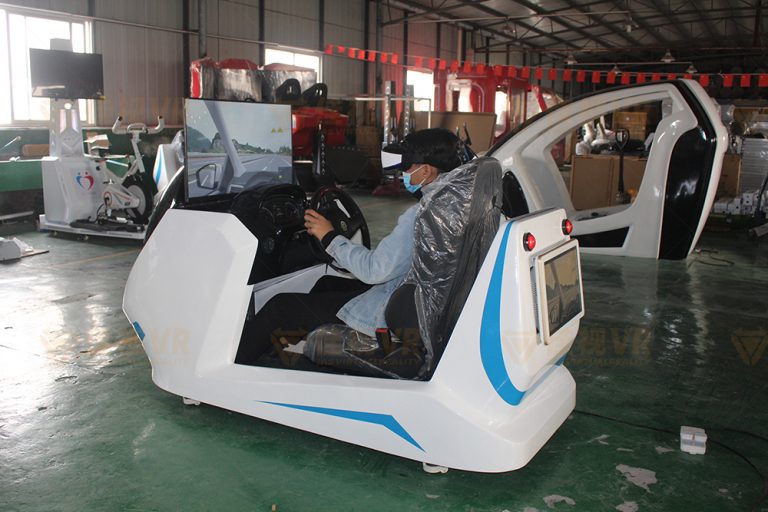
Future Market Analysis Report on Driving Simulators for Driving Schools
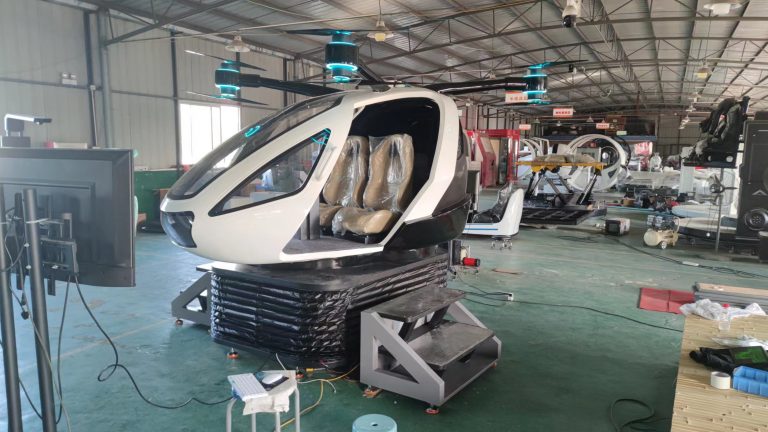
Six-Axis Dynamic Attitude Simulation Technology: Redefining New Experiences of UAV Aerial Photography and eVTOL Flight Simulation
Profit Model and Operation Strategy of VR Flight Simulator Deployment in Malls
Comprehensive Practical Guide to Operating a VR Device Experience Center
Site Planning Design and Construction Scheme of 4‑Axis Simulators