Diversified Profit Models and Business Operation Strategy Analysis of VR Car Driving Simulator
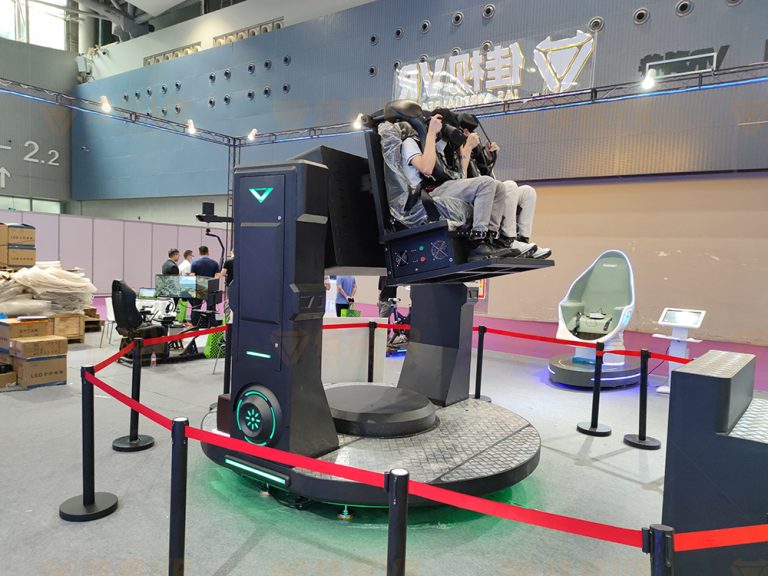
With the popularization and maturity of virtual reality technology, industries including intelligent science popularization, immersive cultural tourism, digital driving training and real-scene experience entertainment have ushered in new development opportunities. As a new type of intelligent equipment integrating simulation technology, virtual reality technology and human-computer interaction technology, the VR car driving simulator highly restores real car driving operations, road condition scenarios, traffic rules and sudden accident scenarios. It has multiple functions such as driving training, safety education, leisure entertainment and event experience. Compared with traditional physical driving training and offline amusement projects, the VR car driving simulator boasts core advantages including high safety factor, low site requirements, low operating costs, iterable scenarios and full audience coverage. It is widely applicable to diverse scenarios such as driving training institutions, campus safety education, cultural tourism experience halls, commercial entertainment venues, enterprise safety training bases and research and study bases. At present, the single profit model of equipment sales or one-time experience fees can no longer meet market development needs. Establishing a diversified, long-term and low-risk profit system has become the core key to the sustainable operation of VR car driving simulator projects. Combining the current industry market situation, this paper comprehensively analyzes the profit channels, landing operation plans, cost control strategies and long-term development models of VR car driving simulators, providing a complete practical solution for the commercial implementation, revenue improvement and market expansion of the project.
I. Industry Market Status and Project Profit Advantages
In recent years, the continuous boom of domestic intelligent education, traffic safety science popularization and immersive experience economy has created a broad market space for VR car driving simulators. In the driving training industry, traditional driving school training faces pain points such as site restrictions, large vehicle loss, high fuel costs, high operational risks for novice drivers and low subject training efficiency. A large number of driving schools have begun to introduce VR simulation equipment for pre-training teaching to reduce physical vehicle training costs and improve student pass rates. In the field of popular science education, the state vigorously promotes national traffic safety education, and primary and secondary schools, youth activity centers and science popularization exhibition halls are in urgent need of intelligent and immersive safety education equipment to replace the single model of traditional graphic publicity and video teaching. In the commercial entertainment sector, immersive VR experience, racing competitions and Internet-famous interactive projects have become the traffic code for shopping malls, cultural tourism venues and parent-child parks. Traditional amusement equipment suffers from serious homogenization, while VR car driving simulators can quickly attract passenger flow and create differentiated experience projects by virtue of its technological sense, interactivity and competitiveness.
In terms of the core profit advantages of the project, the VR car driving simulator has extremely high commercial cost performance. First, the hardware equipment requires a one-time investment with extremely low subsequent operation and maintenance costs. No fuel consumption or frequent maintenance is needed, and only basic equipment inspection and system content updates are required. The long-term operating cost is far lower than that of traditional physical vehicle training and amusement equipment. Second, scenario content can be iterated infinitely, covering subject 2 and subject 3 driving training, urban road driving, highway road conditions, severe weather such as rain, snow and fog, traffic accident emergency disposal, professional racing and other diverse scenarios. It can meet the three major needs of teaching, science popularization and entertainment, covering all age groups including children, teenagers, trainees and adults. Third, it has strong site adaptability, requiring only a few square meters of space for deployment. It can be flexibly arranged in indoor venues, shopping mall stalls, campus classrooms, driving school training grounds, research and study bases and other scenarios without large-scale site renovation, featuring low entry barriers and short payback periods. Fourth, the business model is flexible, covering To B government and enterprise procurement, commercial cooperation and To C retail experience. Multiple revenue channels complement each other, effectively avoiding market risks caused by single business operation.
II. Core Diversified Profit Channels of VR Car Driving Simulator
The core of long-term profitability for VR car driving simulator projects is to break the traditional model of “single equipment sales and one-time ticket charging”, and build a four-dimensional profit system of hardware revenue + scenario services + value-added operation + long-term cooperation, covering short-term rapid capital recovery, medium-term sustained income growth and long-term stable profitability to comprehensively improve project revenue.
1. Hardware Sales and Customized Services: Core Short-term Capital Recovery Channel
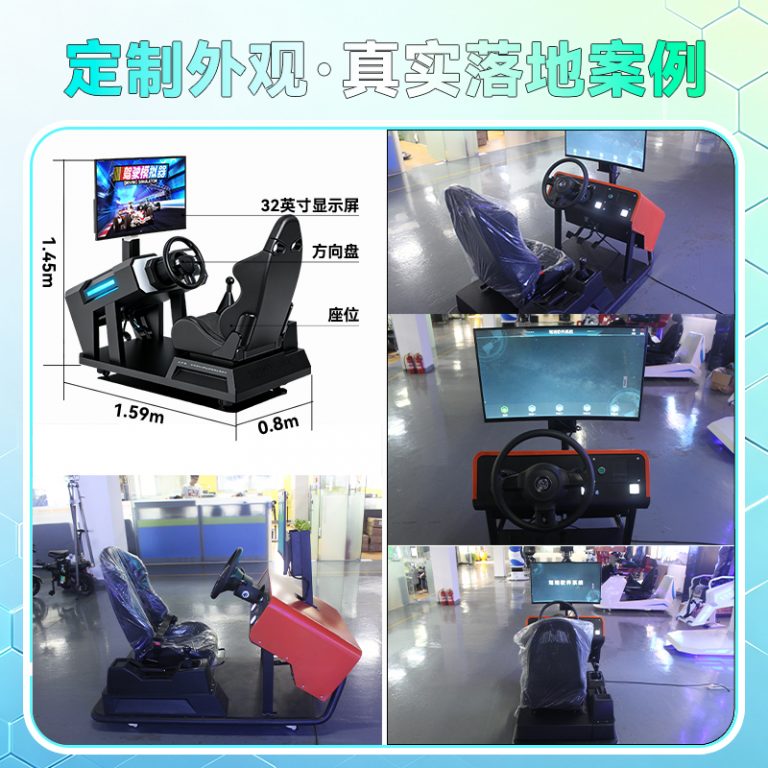
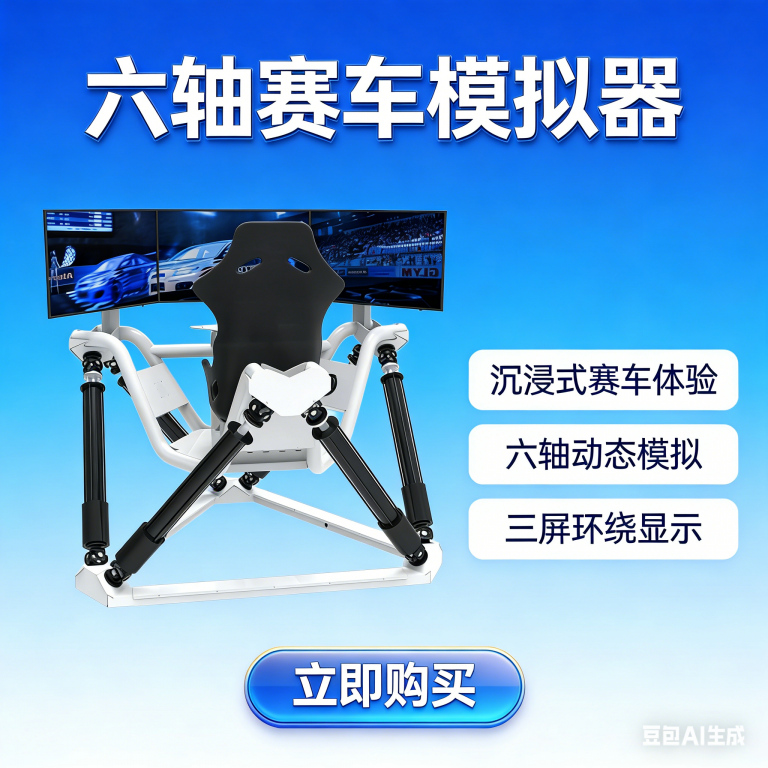
Hardware sales are the most direct and stable short-term profit method of the project, mainly providing standardized equipment sales and customized solution sales for B-end government and enterprise institutions, commercial venues and educational institutions. Target customers include driving training institutions across the country, safety education centers of primary, secondary and universities, urban science popularization exhibition halls, cultural tourism research and study bases, shopping mall entertainment venues, enterprise safety production training bases and youth activity centers. According to the differentiated needs of different customers, three types of equipment can be divided: standardized basic version, dynamic simulation advanced version and 6-DOF high-end competitive version, adapting to different budgets and usage scenarios to meet the diverse needs of public training, professional teaching and high-end competition.
Meanwhile, customized value-added sales services can be provided to further increase single-product profits. For government and enterprise popular science projects, exclusive traffic safety popular science scenarios, party building traffic publicity scenarios and campus safety education courses can be customized. For driving school institutions, special training scenarios in line with driving test standards and student data statistics systems can be customized. For commercial venues, Internet-famous racing competition scenarios and multi-player online battle modes can be customized. For automobile brand activities, customized brand car simulation driving and new car experience scenarios can be developed with brand IP-based exclusive experience content. Hardware sales feature high single payment amount and stable transactions, serving as the core channel for the project to quickly recover funds and lay a foundation for operation.
2. Equipment Leasing and Scenario Sharing: Low-risk Long-term Profit Model
For customers with limited budgets who are unwilling to make one-time hardware procurement investments, equipment leasing, venue joint operation and revenue sharing models are launched to lower cooperation thresholds and lock in long-term sustainable profits, which is the core profit method for large-scale project expansion. First, short-term leasing services are provided for exhibitions, commercial activities, campus public welfare activities, offline automobile brand promotion and festival shopping mall activities. Daily, weekly and monthly short-term equipment leasing services with professional operation and maintenance, equipment commissioning and on-site guidance are available to collect leasing fees and service fees, adapting to short-term activity needs and realizing rapid light-asset profitability. Second, long-term leasing services are launched for small driving schools, community science popularization halls, township research and study bases and other budget-constrained institutions, with quarterly and annual long-term leasing plans to collect monthly rent for sustainable and stable income.
Third, the venue joint operation and revenue sharing model adopts in-depth cooperation with shopping mall amusement parks, cultural tourism scenic spots, large-scale science popularization halls and research and study bases. Our side provides complete VR driving simulator equipment, content updates and operation and maintenance services, while the partner provides venues, passenger flow and on-site operation. Both parties share revenue in accordance with the agreed proportion. This model requires no venue rent or labor costs on our part, realizing zero-cost sustainable income relying on the partner’s existing passenger flow with extremely low risks and long-term stable returns, making it the optimal model for large-scale operation. Meanwhile, a per-student revenue sharing model can be launched for driving schools, with equipment settled in driving schools and service fees charged according to the number of trained students, helping driving schools reduce upfront investment and achieve win-win cooperation.
3. C-end Immersive Experience Retail: Instant Traffic Monetization
Relying on self-operated or cooperative venues, paid immersive experience services are provided for individual consumers to realize instant traffic monetization, suitable for high-traffic scenarios such as shopping malls, scenic spots and science popularization halls. A diversified charging system is designed based on user consumption habits, covering single experience, multiple consumption and group experience to maximize individual customer value. The basic charging mode is single experience billing with duration gears of 5 minutes, 10 minutes and 15 minutes to meet the casual trial needs of individual customers. In addition, discount packages such as experience cards, monthly cards and stored-value cards are launched for surrounding residents, students and regular customers to lock in stable repeat customers and improve user stickiness.
Meanwhile, group customized consumption is deeply developed to undertake group orders such as campus class team building, parent-child activities, enterprise team building, youth research groups and training institution collective experiences, with exclusive group preferential packages to increase daily revenue in batches. In addition, a paid competition model is created by regularly holding VR racing competitions and driving skill contests with registration fees and awards, which not only adds new revenue channels but also attracts traffic and improves project popularity and topic influence. Compared with traditional amusement projects, VR driving experience has outstanding advantages in technological sense, freshness and interactivity, with higher repurchase rate and communication ability, enabling rapid traffic monetization.
4. Content Subscription and Operation Value-added Services: Sustainable Invisible Profit Growth
The core competitiveness of VR equipment lies in scenario content. Long-term invisible profit channels are created through continuous content iteration and professional operation and maintenance services. On the one hand, content subscription services are provided. Monthly and annual content update subscriptions are offered for cooperative customers who purchase or lease equipment, continuously updating new road conditions, severe weather scenarios, new car models, competitive tracks and popular science course content to avoid outdated content and homogeneous experience, ensuring the sustainable use value of customer equipment. For driving school customers, exclusive updates of new driving test regulation scenarios and error-prone special training content are provided; for science popularization venues, updated traffic science popularization courseware and accident case demonstration content are available; for commercial venues, updated Internet-famous competitive tracks and online battle gameplay are launched.
On the other hand, paid operation and maintenance value-added services are provided, including regular equipment inspection, fault maintenance, system upgrading, data backup and personnel training for cooperative customers to collect annual operation and maintenance service fees. Meanwhile, standardized curriculum systems, operation plans and customer expansion plans can be exported to provide full-process landing guidance for novice operation customers, charging plan service fees and technology empowerment fees. Such value-added services have extremely low marginal costs and high repurchase rates, bringing long-term stable net profits and improving the overall profit system.
5. Brand Co-branding and Advertising Resource Monetization: Diversified Cross-border Profit Growth
With the improvement of project popularity and passenger flow, cross-border cooperation and advertising brand monetization can be realized relying on equipment scenarios, offline venues and user traffic. First, automobile brand co-branding cooperation. Cooperate with automobile manufacturers, 4S stores and auto insurance companies to implant brand car models, automobile knowledge and auto insurance popular science content in VR driving scenarios, undertake brand promotion, offline traffic attraction and product marketing businesses and collect brand cooperation fees. Meanwhile, new car experience activities can be jointly held with automobile enterprises to allow users to immerse themselves in experiencing new car performance through VR simulation scenarios to realize commercial monetization. Second, offline scenario advertising monetization. Advertisements for auto peripheral products, parent-child products, cultural tourism products and educational products can be implanted on equipment bodies, experience venues and screen interfaces to obtain advertising revenue.
Third, online traffic monetization. Post user experience videos, event activities and popular science short videos on Douyin, Kuaishou, Video Accounts and other platforms to accumulate private domain traffic, and realize online monetization through live streaming sales, advertising order receiving, group buying traffic attraction and local promotion. Cross-border advertising and brand co-branding require no additional investment, and can expand profit boundaries relying on existing equipment and traffic resources.
III. Refined Landing Operation to Improve Profit Efficiency
A sound profit model requires supporting refined operation strategies. Optimizing venue layout, precise customer expansion, user management and cost control can further improve equipment utilization and single-store revenue and shorten the payback period. In terms of venue operation, high-traffic locations such as shopping mall atriums, scenic spot entrances, core exhibition areas of science popularization halls and core venues of research and study bases are prioritized. Optimize equipment layout to build Internet-famous check-in experience areas and enhance visual attraction and conversion rate. Adjust operation strategies according to different time periods: focus on student and individual experience on working days, and prioritize group, parent-child and team building orders on weekends and holidays to maximize daily equipment usage hours.
In terms of customer expansion, build an integrated online and offline customer acquisition system. Offline, actively connect with local driving schools, schools, science popularization centers and research institutions to undertake bulk group orders and B-end cooperation projects. Online, rely on local short videos, local life platforms and community promotion to release immersive experience videos and preferential activities, attract local individual customers to experience in store, and open online group buying and reservation channels to reduce customer acquisition costs. Meanwhile, establish user private domain communities, regularly issue coupons, push event activities and popular science courses, activate user repurchase and realize new customer fission from old customers.
In terms of cost control, the operation of VR car driving simulators has almost no rigid consumption. Core costs only include equipment depreciation, a small amount of electricity fees and basic operation and maintenance fees. Compared with traditional amusement equipment and physical vehicle training, there is no need for fuel, consumables or frequent maintenance, with extremely low labor costs. One or two staff members can complete the daily operation, guidance and maintenance of multiple devices. Regular equipment inspection, system upgrading and content iteration can extend equipment service life, reduce fault loss, further compress operating costs and improve net profit margins.
IV. Project Profit Advantages and Long-term Development Prospects
With increasingly fierce industry competition, the VR car driving simulator project has strong market competitiveness and long-term profit potential by virtue of four core advantages: diversified profitability, low consumption and high efficiency, flexible scenario adaptation and policy empowerment. From the policy perspective, the state continuously promotes national traffic safety popularization, intelligent driving training reform, campus safety education implementation and immersive cultural tourism industrial upgrading, providing a favorable policy environment for the project with stable market demand and low barriers for government-enterprise procurement, campus cooperation and popular science project implementation. From the market perspective, traditional experience projects suffer from serious homogenization, while VR immersive driving experience integrates education, entertainment and competition with obvious differentiated advantages, covering four major track markets: education, cultural tourism, commerce and driving training, with wide audience coverage and sustainable demand.
In terms of profitability, the project abandons the traditional single revenue model. Short-term rapid capital recovery is realized through hardware sales, medium-term sustained income is obtained through leasing, experience and group orders, and long-term stable profitability is achieved through content subscription, joint operation sharing and cross-border advertising. The multi-level profit structure empowers each other, effectively avoiding market fluctuation risks, with short payback period and high profit stability. With the continuous upgrading of virtual reality technology, high-end content such as intelligent driving simulation, automatic driving training, professional track competition and multi-player online events can be iterated in the future, continuously improving equipment value and charging standards to tap greater profit potential.
V. Conclusion
As an innovative project integrating immersive digital economy with safety education and leisure entertainment, the VR car driving simulator breaks the development bottlenecks of traditional driving training, popular science and amusement industries. With the core advantages of low investment, low loss, high adaptability and high return, it has become a high-value light-asset entrepreneurship and commercial operation project. Its diversified profit system is perfectly adapted to B-end government and enterprise commercial cooperation and C-end mass consumer markets, balancing short-term capital recovery and long-term sustainable profitability, and adapting to the development needs of different operation entities and venue scenarios. Under the trend of intelligent education, immersive cultural tourism and national safety science popularization, the establishment of a comprehensive profit model of “hardware sales + leasing sharing + experience retail + value-added content + cross-border monetization”, combined with refined landing operation strategies, can continuously improve project profitability and market competitiveness, realize stable revenue generation and long-term operation, and boast huge market development and commercial profit potential in the future.
RELATED POSTS
Diversified Application Scenarios and Practical Value Analysis of Simple Car Driving Simulators
The Applications of Racing Simulators: A Comprehensive Analysis
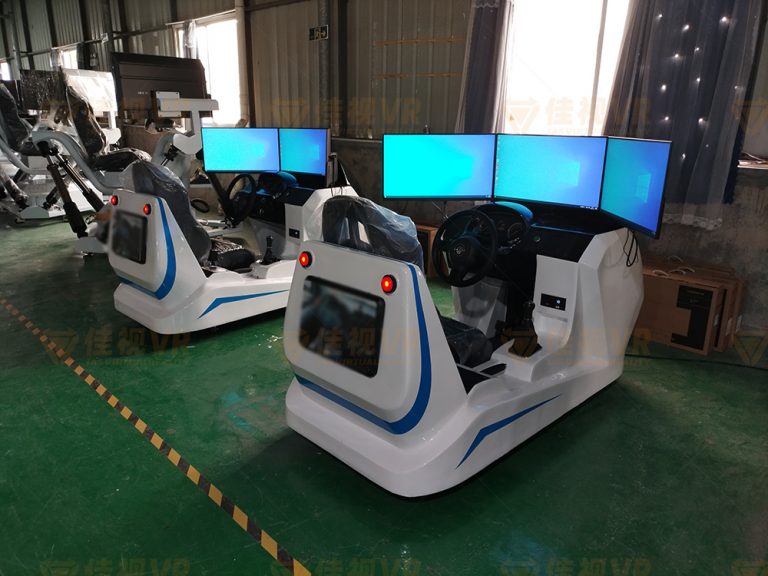
Application Exploration and Practice of Car Simulators in Experience Halls
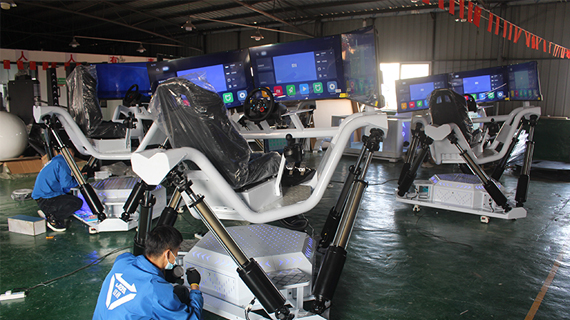
Three-Screen 6-Axis Racing Simulator: Profit Generation and Customer Acquisition Strategy
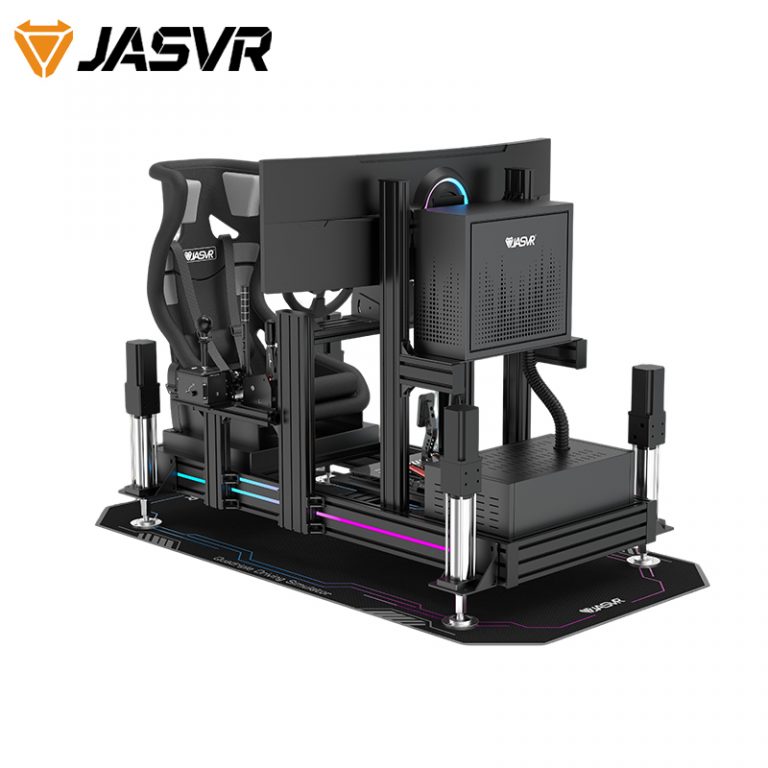
All-Dimensional Immersive Racing Experience: In-Depth Analysis of Professional Sheet Metal Racing Simulator