Future Development Trends of Truck Cabin Driving Simulators
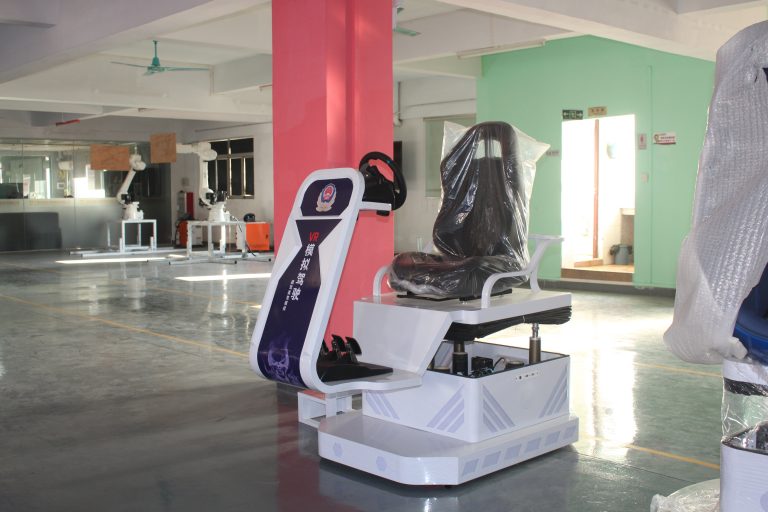
Against the backdrop of rapid expansion of modern logistics, the transformation of commercial vehicles toward electrification and intelligence, and increasingly stringent traffic safety supervision, truck cabin driving simulators, as core equipment for the implementation of virtual simulation technology in the transportation sector, are evolving from simple driving training aids into comprehensive digital platforms integrating vocational training, vehicle enterprise research and development, safety science popularization, and autonomous driving algorithm testing. Constrained by shortcomings such as low simulation accuracy, single scenarios, and isolated data, traditional fixed-screen basic simulators can no longer meet the high-quality development demands of the heavy-duty truck industry. Over the next five to ten years, truck cabin driving simulators will achieve all-round innovation relying on five core technologies: six-degree-of-freedom motion platforms, XR immersive vision, generative artificial intelligence, digital twins, and cloud computing big data. Seven core development trends will emerge, including high-fidelity simulation, intelligent self-adaptation, full-scenario segmentation, cloud-network integration, special adaptation for new energy vehicles, coordinated testing with autonomous driving, and lightweight mass production by tiers. Combining the current market status, policy orientation, and technology application cases of the industry, this paper deeply analyzes the technical iteration logic, application scenario expansion paths, and industrial business model transformation of truck cabin driving simulators, and predicts the medium- and long-term market pattern and industry development opportunities. The full text totals approximately 3,000 words.
I. Current Industry Status and Core Value Foundation
(1) Continuous Market Expansion Driven by Policies to Boost Industry Penetration
The continuous expansion of the global logistics industrial chain, rising demand for e-commerce freight, trunk transportation, and cross-border heavy truck haulage, as well as a persistent shortage of professional freight drivers, force the industry to reform traditional real-vehicle training models. According to global simulation equipment market research data, the compound annual growth rate of the global truck driving simulator market will reach 8.3% from 2026 to 2033. The Asia-Pacific region boasts the fastest growth rate thanks to its huge logistics volume and demand for digital transformation of driving training.
Domestic market growth momentum stands out prominently. The market scale of China’s domestic truck simulation driving industry is expected to exceed RMB 1.51 trillion in 2026, representing a year-on-year increase of 18.9%. By 2030, the industry scale will approach RMB 3 trillion. The deployment rate of truck simulators at Grade-I driving schools has surpassed 90%, with incremental markets shifting to four major segments: secondary driving schools at county levels, self-built training centers of logistics enterprises, vocational transportation colleges, and intelligent driving laboratories of vehicle manufacturers.
Policies have formed a rigid supporting system. The Ministry of Transport has issued guidelines such as the Guidelines for the Construction of Digital Training Systems for Road Transport Drivers and Technical Requirements for Automobile Driving Training Simulators, mandating compulsory deployment of heavy-duty truck simulation equipment at Grade-I driving training institutions, with financial subsidies of up to 30% available for the purchase of compliant simulators. The national standard for intelligent connected vehicle simulation testing newly implemented in 2026 incorporates virtual truck simulation into compliance verification channels for autonomous driving, opening up two major market channels: driving training and vehicle enterprise R&D. Leading logistics enterprises including SF Express and JD Logistics have completed the construction of truck simulation training platforms at national distribution centers, with annual procurement investment exceeding 100 million yuan, marking the explosive growth of professional training demand on the enterprise side.
(2) Shortcomings of Traditional Simulators Forcing Comprehensive Technological Upgrading
Three tiers of mainstream truck cabin simulators currently dominate the market: entry-level fixed triple-screen devices without motion systems, mid-range triple-screen four-axis motion simulators, and high-end six-axis VR full-simulation driving cabins. All product categories share common industry pain points:
First, insufficient physical simulation precision. Mid-to-low-end equipment can only simulate simple acceleration, deceleration and steering movements, failing to accurately reproduce heavy-truck-specific dynamic characteristics such as inner wheel difference during semi-trailer turning, braking distance under heavy loads, skidding on slippery roads, cargo jolting, and loss of control due to tire blowouts, creating a large gap between simulated driving experience and real-world operation.
Second, backward visual interaction systems. Traditional triple-screen displays suffer from visual segmentation at field-of-view edges, distorted blind-spot reproduction, and an inability to simulate extreme visibility conditions including nighttime driving, heavy fog, blizzards, and intense backlighting, lacking a full 360° spatial perception.
Third, fixed scenario libraries with limited self-adaptability. Software scenarios in traditional simulators consist of pre-set fixed routes and cannot randomly generate high-frequency risk conditions encountered in real traffic, such as sudden pedestrian crossings, road construction, and vehicle malfunctions. Training content is standardized yet lacks personalization.
Fourth, isolated data silos. Training data from simulators is stored locally and cannot connect to driving school supervision platforms, fleet management systems of logistics enterprises, or vehicle operation and maintenance databases of automakers, making it impossible to form a closed loop for comprehensive driver competency evaluation.
Fifth, limited vehicle model compatibility. Most existing simulation systems focus on traditional fuel-powered heavy trucks, with severe shortages of dedicated simulation modules for pure electric tractors, hydrogen fuel heavy trucks, and driverless container trucks, failing to keep pace with the electrification transformation of commercial vehicles.
(3) Irreplaceable Core Industrial Value of Truck Cabin Simulators
Compared with traditional real-vehicle training, truck cabin simulators feature five irreplaceable advantages: zero safety risks, ultra-low operating costs, full coverage of traffic scenarios, standardized training, and traceable data. Heavy trucks feature large body dimensions, long braking distances, and catastrophic accident consequences. Practicing dangerous conditions such as tire blowouts, brake failure on long downhill slopes, and rollovers in mountainous terrain with real vehicles easily leads to casualties and property losses, whereas simulators can reproduce all types of high-risk working conditions infinitely without hidden safety hazards. Real-vehicle training incurs high costs for fuel, tires, and vehicle maintenance. A single six-axis motion simulator can accommodate 20 trainees for continuous training every day, with comprehensive long-term operating costs accounting for merely one-fifth of real-vehicle training expenses.
Meanwhile, simulators unify teaching standards and eliminate disparities caused by uneven coaching proficiency. They fully record drivers’ operating habits, traffic violations, and reaction speeds in emergency responses, providing objective quantitative evidence for vocational qualification assessments and fleet safety ratings — the core underlying logic behind policy-mandated promotion of simulated training.
II. Seven Core Future Development Trends of Truck Cabin Driving Simulators
Trend 1: Iterative Hardware with High-Fidelity Simulation; Six-Degree-of-Freedom Platforms and XR Panoramic Vision Become Standard Configuration
Simulation motion experience and visual immersion will constitute the core competitiveness of future simulators, with industry-wide hardware upgrades converging toward three directions: multi-degree-of-freedom motion platforms, XR integrated vision, and multi-channel tactile feedback.
In terms of motion systems, six-degree-of-freedom (6DOF) electric servo platforms will comprehensively replace conventional four-axis and three-axis simplified motion equipment as the standard configuration for mid-range and high-end truck cabin simulators. Coordinated linkage of six servo cylinders enables three translational axes (forward/backward, left/right, vertical) and three rotational axes (pitch, roll, yaw), delivering millisecond-level synchronous feedback of heavy-truck-specific dynamic behaviors including jolting under heavy loads, roll during high-speed cornering, nose-dive under emergency braking, vibration from uneven road surfaces, and body drift under crosswinds, with motion response latency controlled within 5ms to replicate real vehicle dynamic feedback to the maximum extent. Lightweight miniaturized six-axis modules will be launched for entry-level products to lower procurement thresholds and achieve full market coverage across tiers.
Visual systems will transition from flat triple-screen displays to integrated VR/AR panoramic solutions. Traditional triple-screen simulators suffer from segmented peripheral vision and incomplete blind-spot presentation. Future high-end models will adopt 4K ultra-high-definition VR headsets paired with eye-tracking technology to construct an unobstructed 360° driving field of view, accurately reproducing the right-side blind zone of heavy trucks and distortion in rearview mirror vision. AR overlay technology projects virtual road conditions, vehicle fault alerts, load parameters, and tire pressure data directly onto the physical driving cabin view, balancing immersive training and practical teaching applicability. Spherical projection and circular LED giant screen solutions will be available to accommodate group teaching in driving schools, forming a dual visual product system: VR for individual training and circular screens for group instruction.
Tactile interaction systems will also undergo refined upgrades. Steering wheels will be equipped with high-precision force feedback modules that dynamically adjust centering resistance based on load weight and road friction coefficients; vibration piezoelectric modules built into seats and pedals simulate road surface obstructions, engine vibration, and thermal attenuation of brake pedals. In the long run, full-body haptic feedback devices will be integrated to fully reproduce physical sensations from collision impacts and vehicle tilting, constructing a four-dimensional full-sensory simulation system covering vision, audio, touch, and motion.
Trend 2: In-Depth Empowerment by Generative AI Enabling Self-Adaptive Intelligent Teaching and Dynamic Scenario Generation
Artificial intelligence will restructure the underlying software logic of simulators, completely breaking away from fixed scenarios and one-size-fits-all teaching modes to form an intelligent system featuring AI teaching assistants, dynamic scenario generation, and personalized training.
First, generative AI drives unlimited dynamic traffic scenario libraries. Scenarios in traditional simulators are pre-programmed limited routes, while AI can generate randomized real-world road conditions in real time based on national big data of actual roads, including urban congestion, continuous mountain bends, highway fog, unlit nighttime road segments, sudden road obstacles, and illegal crossing by non-motor vehicles, forming tens of thousands of combined working conditions with non-repetitive training environments to maximize drivers’ risk prediction capabilities. The system automatically increases the occurrence probability of weak-point scenarios for individual trainees, delivering targeted reinforcement training for learners prone to lane drifting, speeding, or failure to yield to pedestrians.
Second, AI intelligent assessment and self-adaptive training programs. Built-in large language models analyze real-time data on driver throttle, brake, steering, and gear-shifting operations, automatically identifying dangerous driving behaviors such as fatigue driving, reckless overtaking, and coasting in neutral on long downhill slopes, issuing instant voice warnings, and generating exclusive training reports. Training difficulty, teaching workflows, and assessment criteria are automatically switched for four groups of users: novice drivers, veteran operators, hazardous goods transporters, and new energy truck drivers, realizing personalized training tailored to individual learners.
Third, virtual AI traffic participants with independent decision-making capabilities. Other trucks, passenger cars, pedestrians, and non-motor vehicles within simulation scenarios no longer travel along fixed trajectories; they can independently execute lane changes, sudden braking, and road crossing behaviors in response to road conditions and driver actions, greatly enhancing scenario authenticity and solving the longstanding pain point of rigid traffic environments that fail to cultivate drivers’ on-site emergency response capabilities.
Trend 3: Digital Twins and Cloud Platform Networking to Build an Integrated Cross-Regional Digital Training Ecosystem
Cloud computing and digital twin technology will eliminate isolated data storage on standalone simulators, with the entire industry shifting toward cloud-based collaborative operation models, representing the core medium- and long-term industrial transformation trend.
Cloud platforms deliver three core functions: first, centralized data storage and cross-terminal data interoperability. Simulators deployed at driving schools, logistics enterprises, and transportation colleges nationwide connect to provincial-level cloud supervision platforms for driving training, enabling real-time upload of trainee training hours, assessment results, and violation data for remote compliance verification by regulatory authorities. Logistics groups synchronize driver training data across national branches via the cloud, unifying safety assessment standards and conducting batch analysis of overall fleet driving risks. Second, remote collaborative teaching. Instructors can monitor trainee operations on multiple simulators through cloud backends without on-site attendance, deliver remote voice guidance, and issue special training tasks with one click to reduce labor costs for teaching. Off-site trainees can access standardized online courses via lightweight terminals to realize hybrid offline-online training.
Digital twin technology closes the data loop between real vehicles and virtual simulation. Full vehicle parameters, road test operation data, and fault records of physical heavy trucks are reproduced 1:1 in virtual models. Simulators can synchronously replicate regular transportation routes and common fault types of fleets, allowing drivers to become familiar with handling characteristics of their own vehicles in virtual environments. Massive simulation data from simulators is fed back into digital twin R&D platforms of automakers to provide data support for optimization of vehicle braking systems, chassis calibration, and battery management, forming a data cycle covering simulation training, real vehicle operation, and complete vehicle R&D.
Lightweight cloud simulators will gain rapid popularity simultaneously, including portable all-in-one machines and computer-based simulation software versions, lowering equipment investment thresholds for small and medium-sized driving schools and logistics enterprises, and forming a three-tier product matrix: large professional cabins with six-axis motion, mid-range triple-screen motion equipment, and lightweight cloud-based simulation software.
Trend 4: Specialized Product Segmentation Covering Multiple Tracks Including New Energy Heavy Trucks, Hazardous Goods Transportation, and Autonomous Driving
With accelerated segmentation of the commercial vehicle industry, market space for general-purpose simulators will gradually shrink, while customized special simulators will become the main growth driver, divided into four major sub-sectors:
- Dedicated Simulators for New Energy Heavy Trucks The popularization of pure electric and hydrogen fuel heavy trucks creates brand-new simulation demands, as traditional fuel truck simulators cannot replicate exclusive working conditions including motor energy recovery, battery thermal management, fast-charging systems, and electronic control malfunctions. Future simulators will develop independent new energy modules to simulate exclusive operation processes such as power attenuation under heavy climbing loads, range reduction in low temperatures, motor fault alarms, and adjustable regenerative braking force, catering to pre-job training for drivers of new energy tractors, mining dump trucks, and urban muck trucks. This represents the largest incremental sub-sector over the next 3–5 years.
- Specialized Simulators for Hazardous Goods Transportation Dedicated scenario libraries will be developed for tankers and hazardous goods semi-trailers to simulate special working conditions including hazardous material leakage, tank rollover, driving in flammable and explosive environments, and emergency pressure relief disposal, paired with standardized assessment question banks for industry vocational qualification certification, serving compliance training at hazardous goods logistics enterprises and transportation vocational colleges.
- Simulators for Special Mining and Port Trucks Closed factory simulation scenarios will be developed for open-pit mining dump trucks and port driverless container trucks, simulating narrow-yard passing, heavy-load reversing, and coordinated container loading/unloading operations to support internal driver training at industrial and mining enterprises and port groups.
- Simulators for Coordinated Autonomous Driving Testing Tailored for R&D of L2–L4 intelligent heavy trucks, these simulators integrate simulation models for millimeter-wave radar, LiDAR, and vehicle-mounted cameras, capable of simulating sensor perception failure and recognition deviation under all types of extreme road conditions to generate millions of virtual test samples for autonomous driving algorithms, drastically cutting real-vehicle road test costs for automakers and forming the core track for high-end industrial-grade simulators.
Trend 5: Diversified Business Models Shifting from Hardware Sales to Integrated Operation of “Equipment + Content + Cloud Services”
The traditional industry profit model relies solely on hardware equipment sales, leading to severe homogeneous competition and shrinking profit margins. Future industrial business models will fully upgrade to integrated software and hardware service models with three layers of revenue streams:
- Basic hardware revenue: Tiered sales of full-series truck cabin simulators including fixed-screen, four-axis, and six-axis models, supplying standardized hardware to driving schools, enterprises, and exhibition halls.
- Value-added software content services: Annual subscription fees for scenario library updates, AI training systems, dedicated new energy modules, and hazardous goods transportation courses, with continuous iteration of national road maps, annual traffic regulation updates, and data for new heavy truck models.
- Cloud platform operation services: Private cloud deployment, data monitoring, remote teaching, and customized driver safety rating systems for transportation regulatory authorities, large logistics groups, and vocational colleges, with monthly platform operation and maintenance service fees.
New implementation models including equipment leasing, installment procurement, and government-enterprise joint training centers will emerge simultaneously. Small and medium-sized logistics enterprises can conduct monthly safety refresher training via time-sharing leasing without one-time high equipment procurement costs. Manufacturers co-build simulation training bases with local transportation colleges, with the government providing venue subsidies and enterprises supplying equipment, sharing operating revenues to reduce upfront investment pressure for clients and accelerate market penetration in lower-tier regions. The cultural tourism and science popularization track will also expand, with lightweight truck simulators deployed in science and technology museums, traffic safety exhibition halls, and shopping mall entertainment zones, delivering both safety education and leisure experience functions and unlocking incremental market demand among civilian consumers.
Trend 6: Parallel Lightweight Design and Domestic Substitution, Falling Costs Accelerate Market Penetration in Lower-Tier Regions
Early high-end six-axis truck simulators relied on imported servo platforms and simulation software, resulting in high unit prices that limited procurement capacity of small and medium-sized institutions. Domestic simulation equipment manufacturers have continuously broken through core patents for motion control algorithms, dynamic simulation engines, and multi-channel visual synchronization technology, achieving over 95% domestic production of complete hardware and software systems and drastically reducing equipment manufacturing costs. It is projected that prices of entry-level triple-screen motion simulators will drop by 30% by 2028, and lightweight six-axis all-in-one machine prices will fall below RMB 400,000, releasing full procurement demand in lower-tier markets.
Parallel hardware lightweight transformation is underway. Traditional six-axis equipment features bulky dimensions, requiring professional ground foundations and supporting power supply for installation. New-generation lightweight electric servo platforms reduce floor space, support direct placement on standard indoor floors, and simplify installation procedures, adapting to cramped premises at county-level small driving schools and township logistics stations. Equipment energy consumption is reduced by 60%, significantly lowering long-term electricity operating costs and further boosting procurement willingness among small and medium-sized clients. Maturing industrial chains drive standardized mass production of spare parts, forming scale cost advantages and transforming truck simulators from high-end professional equipment to popular teaching tools.
Trend 7: Deep Standardization of Safety Training to Become a Mandatory Assessment Carrier for Driver Qualification and Annual Inspection
Traffic safety governance will continue to tighten, with a sound accountability system for major accidents involving freight vehicles. Transportation regulatory authorities will gradually incorporate simulated training hours and simulator assessment results as mandatory indicators for applying for freight driver vocational qualification certificates and annual integrity assessments. Traditional offline theoretical examinations and on-site real-vehicle assessments will be deeply integrated with virtual simulation training in the future; drivers who fail to complete required truck simulation training hours or pass AI safety assessments will be disqualified from annual inspections and license renewal.
Simulators will embed nationally unified assessment question banks for freight drivers and standardized operation scoring systems, with scoring rules connected to traffic control and road transport administration systems, granting official recognition to assessment data and thoroughly resolving industry pain points of subjective bias and inconsistent standards in manual offline evaluations. Logistics enterprises will mandate a minimum of 40 hours of simulated training for newly recruited drivers and 8 hours of annual emergency scenario refresher training for incumbent operators. Simulated training will evolve from an optional supplementary measure into a mandatory safety management tool for the entire industry, generating stable long-term market demand.
III. Core Industry Development Challenges and Medium- and Long-Term Outlook
(1) Core Current Industry Development Challenges
First, high R&D thresholds for high-end simulation core algorithms. Small and medium-sized domestic manufacturers suffer from insufficient precision of vehicle dynamic models in software, resulting in severe product homogeneity, while low-price disorderly competition in the low-end segment disrupts the market.
Second, procurement costs for high-end XR hardware remain relatively high, with complete VR six-axis simulator packages carrying high total prices that cannot be fully popularized to grassroots small training institutions in the short term.
Third, insufficient coordination of cross-industry standards. Technical specifications for simulators targeting three major scenarios — driving training, autonomous driving testing for automakers, and hazardous goods transportation — have not been fully unified, leaving room for improvement in equipment compatibility.
Fourth, high R&D investment required for professional simulation content. Iterative updates of high-precision national road maps and special scenario libraries for new energy heavy trucks and hazardous goods transportation incur substantial costs, making sustained content development unaffordable for small and medium-sized manufacturers.
(2) Medium- and Long-Term Industry Outlook
Over the next decade, truck cabin driving simulators will complete three major transformations: from single-function driving training aids to digital simulation infrastructure for the transportation industry; from standalone hardware devices to integrated cloud-network intelligent training platforms; and from supporting tools for fuel vehicles to comprehensive simulation systems coordinating new energy vehicles and autonomous driving.
In terms of market structure, the industry will accelerate reshuffling. Leading manufacturers with self-developed six-axis motion platforms, proprietary simulation engines, and complete cloud service systems will dominate mid-to-high-end markets, while small and medium-sized manufacturers will focus on lightweight low-end fixed-screen products to penetrate county-level lower-tier markets, forming a differentiated competitive landscape across tiers. Downstream application markets will expand in balanced fashion: driving training institutions will sustain steady growth as the fundamental market base, while three core growth tracks will emerge: safety training for logistics enterprises, intelligent driving R&D of automakers, and cultural tourism science popularization experience, maintaining an annual industry growth rate above 15%.
At the technical iteration level, brain-computer interaction, holographic projection, and full-domain haptic feedback technologies will be integrated in the long run to further eliminate the experience gap between virtual and real driving. Simulators will no longer be limited to driver training, extending to full transportation industrial chain links including truck chassis R&D, intelligent driving perception algorithm verification, and road traffic safety risk simulation deduction, deeply empowering the digital construction of a transportation power.
IV. Conclusion
Three megatrends — digitalization of the logistics industry, electrification and intelligence of commercial vehicles, and refined traffic safety governance — jointly drive truck cabin driving simulators into a golden cycle of technological innovation and market expansion. Six-degree-of-freedom motion hardware, XR immersive vision, generative artificial intelligence, and digital twin cloud platforms form the underlying technical foundation for future simulators, with irreversible industrial development main lines including specialized product segmentation, service-oriented operation, equipment lightweighting, and assessment standardization.
Boasting unique advantages of safety, low cost, high efficiency, and traceable data, truck cabin driving simulators address longstanding pain points in traditional heavy truck training and vehicle R&D. They serve not only as core carriers to improve the overall safety literacy of freight drivers, but also as critical digital tools supporting technical iteration of intelligent heavy trucks and new energy commercial vehicles. For equipment manufacturers, only sustained in-depth research on core simulation technologies, abundant development of special industry scenarios, and construction of integrated cloud operation service systems can capture industry transformation dividends. For downstream clients including driving schools, logistics enterprises, and automakers, proactive layout of digital simulation training systems can significantly reduce operational risks and cut training and R&D costs, conforming to the general trend of digital transformation in the transportation industry. In the long run, deep integration of virtual simulation technology and the heavy truck industry will continuously reshape the industrial ecosystem of freight driving training and commercial vehicle R&D, providing solid digital support for the development of modern road transportation safety and intelligent automobile industries.
RELATED POSTS
Characteristics and Multi-field Application Analysis of VR Construction Safety Lifting Walking Platform Simulator
How Visual Immersion Is Achieved in Three-Screen Six-Axis Racing Simulator

The Future is Here: A Deep Dive into the Flying Theater Market and Forecasting Industry Transformation at the Technological Singularity
Research on Technical Characteristics and Multi-field Applications of 4-Axis Dynamic Simulators
VR Shenzhou Spacecraft Simulator: Innovative Practice and Educational Value of Immersive Aerospace Popular‑Science Education