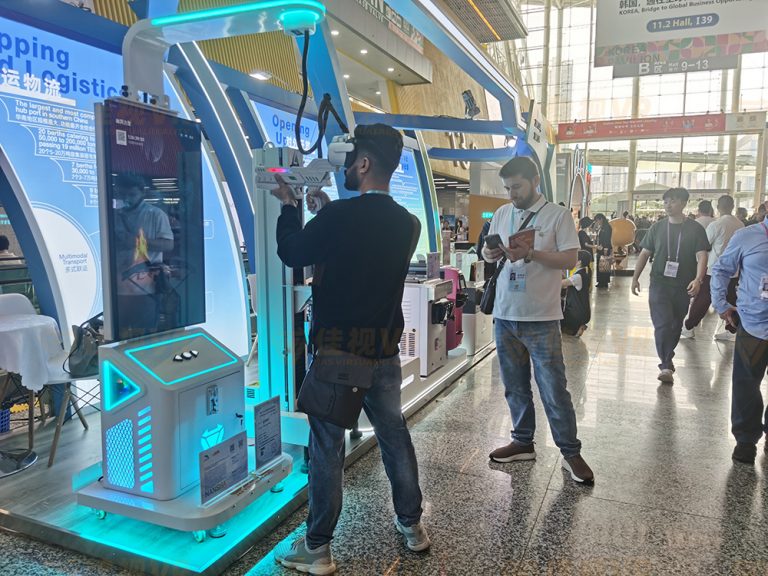
Six-Axis Dynamic Attitude Simulation Technology: Redefining New Experiences of UAV Aerial Photography and eVTOL Flight Simulation
The rapid boom of the low-altitude economy has fueled the widespread popularity of emerging business formats including UAV aerial photography, manned eVTOL aircraft, and low-altitude cultural tourism experiences. Public demands for higher authenticity, immersion and refinement in low-altitude flight visual experience and flight simulation training continue to grow. Traditional UAV aerial photography can only capture images from fixed perspectives and conventional attitudes, while ordinary flight simulation devices feature single attitude modes and delayed dynamic feedback, failing to restore the complex flight states and aerial dynamics of real eVTOL aircraft. In contrast, simulation devices equipped with six-axis dynamic and full-dimensional rotational attitude effects break through the technical barriers of traditional low-altitude experience equipment. Adopting high-precision mechanical motion control and dynamic attitude restoration combined with immersive visual linkage, they can fully replicate the full-process flight attitudes of eVTOL aircraft such as vertical takeoff and landing, attitude switching, aerial maneuvering, and airflow disturbance response. Meanwhile, they adapt to diversified UAV aerial photography content creation and customized scenario experiences, becoming core equipment in the fields of low-altitude visualization, flight simulation training and immersive cultural tourism experiences. This paper comprehensively analyzes the innovative value and practical applications of six-axis dynamic attitude simulation technology and equipment from the perspectives of technical principles, core advantages, aerial photography content adaptation, customized scenario applications and industrial value.
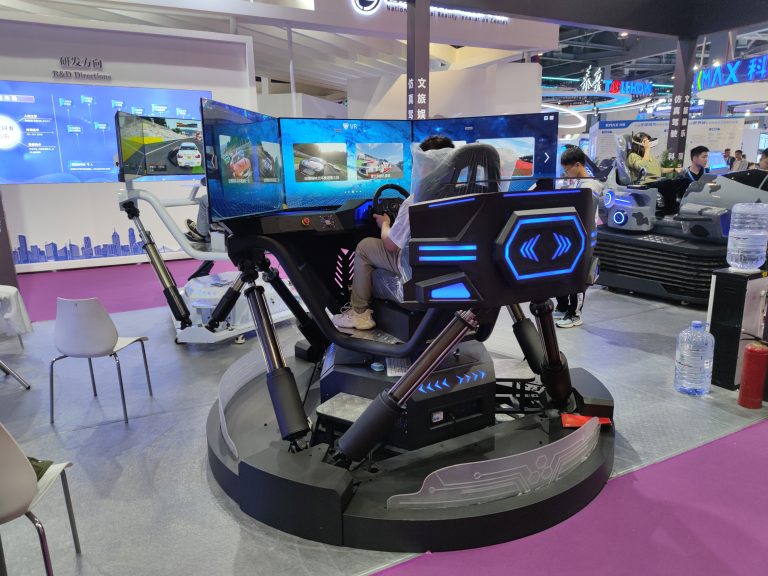
Compared with traditional four-axis and three-axis simulation devices, the six-axis dynamic attitude simulation device is a high-precision simulation system designed based on the Stewart parallel mechanism, and it is currently the most suitable core hardware for eVTOL flight simulation. Equipped with six independent servo electric cylinders and universal hinge structures, the device realizes three translational degrees of freedom (vertical, horizontal and longitudinal) and three rotational degrees of freedom (pitch, roll and yaw). The six-dimensional movements are independent of each other and can operate collaboratively, accurately reproducing all flight attitudes of aircraft in three-dimensional space and thoroughly solving the pain points of traditional devices such as single attitude simulation, rigid dynamic connection and inability to restore composite flight states. Different from fixed-wing aircraft and traditional multi-rotor UAVs, eVTOL aircraft have special flight modes including vertical takeoff and landing, hover transition, tilting cruise and low-speed maneuvering. Their frequent attitude switching and complex aerodynamic changes during flight impose extremely high requirements on the dynamic response speed, attitude restoration accuracy and motion stability of simulation equipment. With millimeter-level motion accuracy and millisecond-level response speed, the six-axis dynamic device can accurately capture and restore subtle attitude changes during eVTOL flight, including the weightlessness of vertical ascent during takeoff, slight vibration caused by aerial airflow turbulence, roll offset during steering, and attitude fine-tuning during cruising, maximally fitting the physical characteristics of real flight.
In terms of flight somatosensory restoration, the core advantage of six-axis dynamic and rotational attitude effects lies in realizing full-process, full-attitude and high-fidelity dynamic simulation. Real eVTOL flight is not a single uniform motion but involves multi-dimensional composite dynamic changes: vertical takeoff and landing brings lifting load changes caused by axial thrust; low-altitude cruising is accompanied by irregular jitters affected by canyon airflow and turbulence; steering maneuvering integrates simultaneous yaw and roll composite attitudes; tilting transition involves continuous switching of multi-dimensional attitudes. Traditional simulation devices can only achieve simple lifting and left-right swinging, unable to reproduce composite attitude motions, resulting in a huge gap between simulated experience and real flight. Through dedicated motion control algorithms, the six-axis dynamic device analyzes flight simulation data in real time and links six servo mechanisms for collaborative operation, accurately restoring the full-cycle dynamic effects of eVTOL flight. It seamlessly presents and highly restores all flight attitudes, including slight tremors during takeoff and liftoff, steady acceleration during vertical climbing, subtle attitude adjustment during aerial hover, stable posture during high-speed cruising, flexible deflection during low-altitude obstacle crossing, and damping sensation during landing buffering. Supported by auxiliary feedback systems of vibration and wind force equipped on the device, the immersive flight experience is further enhanced, making the simulation effect infinitely close to real eVTOL flight status.
Beyond professional flight simulation training, the device shows strong adaptability and innovation in UAV aerial photography content creation and customized scenario shooting. Traditional on-site shooting by real UAVs has many limitations: it is impossible to approach and shoot high-risk complex scenarios, and shooting in extreme weather, high-altitude canyons and closed airspaces faces high safety risks; real UAVs have low controllability of flight attitudes, making it difficult to achieve accurate, repeated and standardized shooting of special attitudes; aerial footage features single dynamic effects, failing to capture first-view images under extreme maneuvering and composite attitudes, while boasting high shooting costs, low fault tolerance and poor repeatability of footage. In contrast, the aerial photography simulation device integrated with the six-axis dynamic attitude simulation system can completely replace real UAVs to complete various aerial photography tasks and support customized scenario and attitude effect settings, thoroughly breaking the scenario and technical bottlenecks of traditional aerial photography.
In conventional aerial photography content creation, the device can accurately simulate the conventional flight attitudes of consumer-grade and industrial-grade UAVs, reproducing basic aerial shots such as high-altitude overlooking, low-altitude close-to-ground shooting, surround tracking and linear cruising. Relying on six-axis high-precision attitude control, it delivers more stable and accurate footage output than real UAVs. For professional content demands such as film and television aerial photography, advertising short films and urban promotional videos, the device can customize and simulate special flight attitude effects, including extreme-angle diving, large-angle roll surrounding, irregular curve maneuvering, and dynamic jitter under turbulence disturbance — shots that are difficult for real UAVs to stabilize. Meanwhile, it supports 360° full-dimensional rotational attitude adjustment and dead-angle-free perspective switching, easily creating immersive and highly impactful aerial footage suitable for film and television special effects shots, immersive short videos, low-altitude panoramic imaging and other diversified content creation scenarios. Compared with real UAV aerial photography, simulation shooting is free from restrictions of weather, airspace and site, enabling all-weather operation, greatly reducing shooting risks and costs. It also supports repeated lens debugging and precise attitude fine-tuning, significantly improving the fineness and quality of aerial photography works.
In terms of customized aerial photography and immersive experience content development, the six-axis dynamic simulation device boasts strong scenario expansion capabilities, which can customize exclusive flight scenarios, routes, attitude effects and visual images according to the needs of different industries. For the cultural tourism industry, it can create panoramic aerial content of urban landmarks, natural scenic spots, ancient towns and low-altitude canyons, restoring immersive flight perspectives such as low-altitude roaming, cloud shuttle and canyon traversing to develop immersive tourism experience projects and panoramic promotional videos. For the aviation science popularization and education industry, it can customize content including eVTOL flight principle demonstration, UAV attitude teaching and low-altitude safe flight simulation. Through visualized dynamic attitude display, learners can intuitively understand the six-degree-of-freedom motion principle of aircraft, the impact of airflow on flight attitudes and attitude change rules in different flight stages, realizing the in-depth integration of theoretical and somatosensory teaching. For low-altitude commercial exhibition and marketing scenarios, it can develop sci-fi immersive flight experience content, simulating future urban low-altitude commuting, eVTOL aerial shuttle and intelligent low-altitude logistics scenarios, intuitively demonstrating the application prospects of the low-altitude economy and building high-end scientific and technological experience scenarios.
From the perspective of professional eVTOL flight simulation, the six-axis dynamic attitude device serves as an irreplaceable core supporting equipment for the research and development, testing and training of low-altitude aircraft. Currently, the eVTOL industry is in a critical stage of commercialization, and the research and development debugging, pilot operation training and flight attitude optimization testing of eVTOL aircraft all rely on high-precision simulation equipment. Different from traditional aircraft, eVTOL features complex flight modes, frequent attitude switching and extremely low fault tolerance. Real aircraft testing is not only costly but also prone to flight failures and crash damage risks. In contrast, the six-axis dynamic simulation device can restore eVTOL full-process flight attitudes at a 1:1 ratio, accurately simulating dynamic changes in three core flight modes: vertical takeoff and landing mode, rotor transition mode and fixed-wing cruise mode. It can also simulate flight attitude responses under special working conditions such as complex meteorological environments, airflow disturbances and minor power faults. R&D personnel can rely on the device to complete aerodynamic parameter debugging, attitude control algorithm optimization and adaptability testing under extreme working conditions; flight operators can conduct regular simulation training to master attitude operation skills in different scenarios and working conditions, improve emergency response capabilities in complex environments, and greatly reduce safety risks and time costs of real aircraft training.
The core technical advantages of the device are reflected in three aspects: high-precision dynamic response, full-dimensional attitude restoration and software-hardware collaborative adaptation. Firstly, benefiting from the structural advantages of the Stewart parallel mechanism, the device features high rigidity, stable load-bearing and dead-angle-free motion. Its six degrees of freedom can be controlled independently or collaboratively, realizing accurate single-dimensional translation and rotation as well as multi-dimensional composite attitude motion, which perfectly matches the complex flight motion characteristics of eVTOL and solves the problems of limited motion range and distorted composite attitudes of traditional devices. Secondly, adopting a closed-loop control system consisting of sensors, servos and computers, the device completes attitude data collection, algorithm solution and mechanical response within milliseconds, realizing real-time synchronization of visual images, dynamic somatosensation and attitude data without delay or stutter, eliminating the image-somatosensation disconnection problem of traditional simulation equipment and ensuring the authenticity and fluency of flight simulation. Finally, the device has strong expandability and adaptability. It can be connected with 4K/120Hz high-definition panoramic visual systems, VR immersive cockpits, surround sound systems, wind simulation, vibration feedback and other auxiliary systems. It also supports customized flight parameters, scenario parameters and attitude parameters, enabling personalized functional optimization for diverse application scenarios including UAV aerial photography creation, flight simulation training, immersive cultural tourism experience and popular science education.
In practical implementation, the six-axis dynamic attitude simulation device has formed a diversified application system of “content creation + simulation training + immersive experience”. In the field of aerial photography content creation, it is widely used in film and television aerial photography pre-visualization, panoramic image production, short video special effect shooting and urban cultural tourism promotional video customization, efficiently completing various high-difficulty, high-precision and high-dynamic aerial shots, making up for the shortcomings of real UAV aerial photography and enriching the creation dimension of low-altitude visual content. In aviation simulation training, it has become the core training equipment for eVTOL pilots and UAV operators, covering full-cycle training scenarios including basic operation training, advanced training in complex scenarios and fault emergency disposal training, supporting the standardized cultivation of low-altitude flight talents. In cultural tourism and science popularization, it builds immersive low-altitude flight experience projects settled in science and technology museums, cultural tourism experience halls, aviation science popularization bases and commercial complexes, allowing the public to experience the charm of eVTOL low-altitude flight without boarding real aircraft, popularizing aviation knowledge and promoting the dissemination of low-altitude culture. In industrial R&D, it provides simulation test support for eVTOL manufacturers, assisting in aircraft attitude optimization, control algorithm iteration and product performance upgrading, and accelerating the commercialization of low-altitude aircraft.
With the standardized and industrialized development of the low-altitude economy, business formats such as UAV applications, manned eVTOL flight and low-altitude cultural tourism experience will continue to expand, driving growing market demands for high-precision flight simulation, high-quality low-altitude visual content and immersive low-altitude experience. Traditional single-function and low-fidelity simulation devices can no longer meet industrial upgrading requirements. In contrast, simulation devices equipped with six-axis dynamic and full-dimensional rotational attitude effects perfectly adapt to industrial development trends with the core advantages of high fidelity, high precision, customizability, low cost and high safety. In the future, with continuous technological iteration, the device will further optimize dynamic response accuracy, expand extreme scenario simulation capabilities and upgrade intelligent content customization systems, realizing new functions such as AI intelligent attitude adaptation, automatic scenario generation and multi-device collaborative simulation. It will further cover the whole industrial chain including low-altitude aircraft R&D and testing, professional flight training, high-end content creation and public immersive experience, becoming an indispensable core hardware and content support carrier in the low-altitude economy industrial chain.
In conclusion, six-axis dynamic and rotational attitude simulation technology breaks through the technical bottlenecks of traditional flight simulation and UAV aerial photography. With accurate six-degree-of-freedom attitude restoration, immersive dynamic somatosensory feedback and diversified customized content adaptation, it maximally reproduces the full-process real flight attitudes of eVTOL aircraft. It not only provides high-precision technical support for professional aviation simulation, aircraft R&D and flight talent training, but also opens up new paths for UAV aerial photography content innovation, immersive low-altitude experience scenario construction and low-altitude science popularization. Amid the rapid development of the low-altitude economy, the device will continuously exert its technical advantages, promote the refinement of low-altitude visual content creation, standardization of low-altitude flight simulation and diversification of low-altitude experience scenarios, and inject sustainable innovative momentum into the industrialized and high-quality development of the low-altitude economy.
RELATED POSTS
Technology Empowers Driving Training Innovation——In-depth Application and Development of Driving Simulators in Driving Schools
Analysis on the Multi-dimensional Applications and Industrial Value of Six-axis Racing Simulators
Research on Site Planning, Design and Construction of Automobile Driving Simulators
Diverse Application Scenarios and Industry Value Analysis of Six-Axis Full-Dynamic G-Force Racing Simulation Cockpit

Profit Plan for VR1080 Simulator