
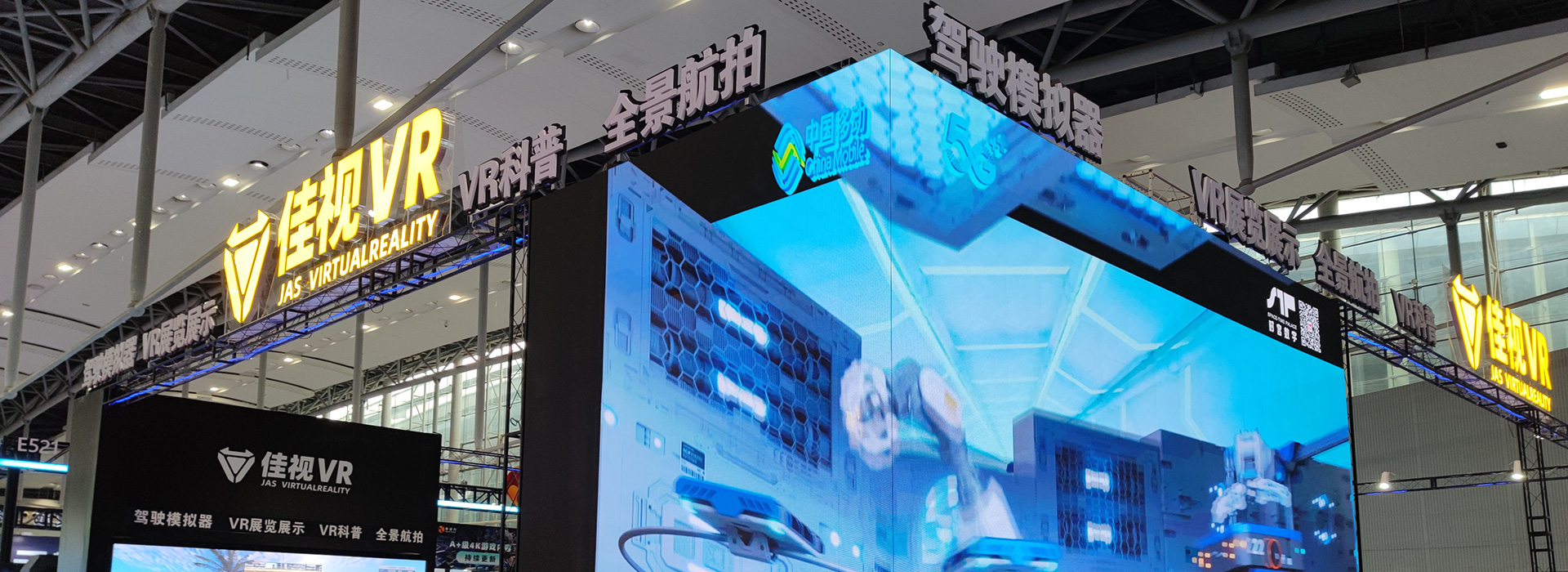
Experience of Basic Operation Skills of Automobile Driving Simulator
With the continuous increase in automobile popularity, driving skills have become one of the essential practical skills for modern people. Traditional driving school training mostly relies on real vehicles, which is restricted by limited training venues, single road conditions, high safety risks and high consumption costs. As a professional training device integrating mechanical simulation, computer technology and virtual reality technology, the automobile driving simulator highly restores the operating logic, driving texture and road environment of real vehicles through simulated mechanical structures, high-definition virtual scenes and intelligent sensing systems, providing a safe, efficient and repeatable training platform for novice drivers. Through systematic experience with the automobile driving simulator, I have systematically learned basic control components, practiced core skills including vehicle starting, gear shifting, steering and braking, and experienced key driving points under different road conditions. This experience has not only consolidated my basic driving operation skills, but also cultivated standardized and safe driving awareness, enabling me to gain a comprehensive and in-depth understanding of the value of simulated driving training and the core logic of automobile driving.
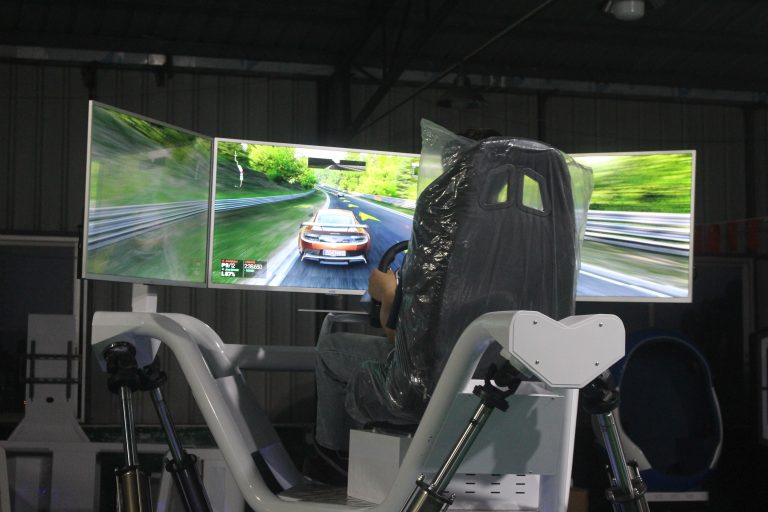
The automobile driving simulator is a professional training device integrating mechanical simulation, computer technology and virtual reality technology. Its overall structure is highly consistent with household manual and automatic transmission vehicles, mainly composed of four parts: a simulated cockpit, a control mechanism, a display system and an intelligent evaluation system. The simulated cockpit restores the seat, safety belt, rearview mirror and dashboard layout of real vehicles, fits the human body’s driving posture, and effectively guarantees the immersion of training. As the core of the simulator, the control mechanism includes a steering wheel, clutch pedal, brake pedal, accelerator pedal, gear lever, handbrake, as well as various control buttons for lights, wipers and horns. The stroke, damping and feedback force of all components are consistent with real vehicles, delivering an authentic driving feel. The display system presents all-round virtual driving scenarios through high-definition screens, accurately restoring various road conditions such as urban roads, rural highways, expressways, curves, slopes, as well as rainy, snowy and foggy weather. The intelligent evaluation system can capture operational data in real time, accurately record irregular operations such as gear shifting errors, excessive speed, lane pressing and failure to observe road conditions, and automatically generate training reports after training, helping learners identify errors accurately and improve in a targeted manner. Compared with real vehicle training, the biggest advantages of the simulator lie in its safety and fault tolerance. Novices can boldly attempt various operations without worrying about collisions, engine stalling or vehicle sliding, allowing them to focus on polishing operational details and consolidating basic driving skills.
Before formal driving training, standardized equipment inspection and posture adjustment are the prerequisites for ensuring training effects and developing good driving habits, which are also the primary learning content of this experience. During the equipment commissioning stage, I first inspected the operating status of the simulator, confirming normal power supply, unobstructed operation of all control components, clear screen display and normal sensor feedback functions, so as to avoid the impact of equipment faults on training. Then, I adjusted my sitting posture in accordance with standard driving specifications. I moved the seat forward and backward to ensure that my feet could fully step on the pedals with a slight bend in the legs when the clutch and brake pedals were fully depressed. The seat back was adjusted to fit the back naturally and provide effective lumbar support to prevent driving fatigue. Meanwhile, I adjusted the height and distance of the steering wheel to keep my arms slightly bent and relaxed when my hands were naturally placed at the 9 o’clock and 3 o’clock positions of the steering wheel. Finally, I calibrated the angles of the internal and external rearview mirrors to ensure a full visual field without blind spots and a clear view of the road conditions on both sides and behind the vehicle. This simple preparation process made me deeply realize that standardized driving posture and comprehensive visual field are the foundation for accurate vehicle control and response to changing road conditions, as well as the primary prerequisite for safe driving.
Proficiency in basic control components is the foundation of driving training. In this experience, I focused on mastering the cooperative operation skills of three core components: the steering wheel, pedals and gears, gradually eliminating the stiffness and force control errors common for novice drivers. Steering wheel control is the key to controlling the vehicle’s driving track. In the early stage of training, I often made mistakes such as sharp steering, delayed wheel centering and excessive minor correction, resulting in track deviation and obvious vehicle shaking. After repeated practice, I mastered the core skills of stable steering: during straight-line driving, hold the steering wheel gently, make slight adjustments in time when the vehicle deviates slightly, and avoid frequent and large-scale corrections; when turning, predict the curve angle in advance, steer smoothly at a constant speed, follow the principle of “steer and recenter slowly for gentle curves, steer and recenter quickly for sharp curves”, and center the steering wheel in a timely manner after turning to keep the vehicle running stably in the middle of the lane. Meanwhile, I strictly followed driving specifications, turning on the corresponding turn signals and observing the rearview mirrors to confirm safety before steering, lane changing or overtaking, so as to cultivate a driving mindset of predicting road conditions.
Pedal operation requires precise force control and stable rhythm. The clutch, brake and accelerator pedals of the manual transmission simulator have distinct functions with closely connected operating logic. The clutch pedal controls the power connection between the engine and the gearbox, which is the key to smooth starting and gear shifting, with the core operating principle of “lifting slowly and releasing gently”. During training, I focused on practicing the control of the clutch semi-linkage point. When lifting the clutch slowly, the slight vibration of the vehicle body and slight drop of engine speed indicate the semi-linkage state. At this moment, stabilizing the clutch and gently stepping on the accelerator can realize smooth starting and effectively solve the problems of engine stalling and violent vehicle jitter. The accelerator pedal should be pressed and released gently at all times. Maintain a stable speed by fine-tuning the accelerator during constant-speed driving, and accelerate gradually to avoid sudden speed changes. The brake pedal is used for two scenarios: normal braking and emergency braking. Under conventional road conditions, predict road conditions in advance and brake gently to reduce speed slowly; in case of emergencies, step on the brake firmly and hold the steering wheel steady to ensure stable and deviation-free braking. Through repeated practice, I gradually overcame the problem of uncoordinated hand and foot movements and achieved precise control of the three pedals.
Gear operation directly determines the vehicle’s power output and affects driving stability and fuel economy. The manual transmission simulator is equipped with five forward gears, reverse gear and neutral gear, with each gear corresponding to a specific speed range. Drivers must follow the core principle of matching gear with vehicle speed. Start the vehicle in first gear at a low speed, and shift up sequentially as the speed increases. Fully depress the clutch before shifting gears and complete the operation neatly to avoid gearbox abnormal noise and vehicle jitter caused by incomplete gear engagement. When decelerating, brake to reduce speed in advance and shift to the corresponding low gear, avoiding abnormal operations such as high gear with low speed or low gear with high speed. Shift to reverse gear when reversing, control the speed with semi-clutch and gentle braking, observe the surrounding environment through rearview mirrors, reverse slowly and prepare for braking at any time. In the early stage of training, I frequently encountered problems such as jittery gear shifting, wrong gear selection and unreasonable speed matching. With the error correction prompts of the intelligent system and repeated practical operation, I became proficient in the applicable scenarios of each gear, realizing smooth gear shifting and reasonable speed matching with greatly improved operational proficiency.
After mastering the operation of basic components, I carried out special training on core basic driving skills, including vehicle starting and parking, straight-line driving, lane changing and overtaking, curve driving and slope driving to comprehensively polish my driving ability. Smooth starting and standardized parking are essential entry-level driving skills and the most error-prone items for novices. The standard starting procedure is as follows: power on and start the vehicle, fasten the safety belt, depress the clutch and shift to first gear, release the handbrake, lift the clutch slowly to the semi-linkage state, and gently step on the accelerator to start smoothly with coherent and rhythmic movements. For parking, turn on the right turn signal in advance, observe the right rearview mirror, slowly drive close to the right side of the road, brake gently to reduce speed, depress the clutch and brake to stop the vehicle after the body is aligned, pull up the handbrake, shift to neutral gear and turn off the turn signal to complete standardized parking. After multiple practices, I completely solved common problems such as stalling during starting, vehicle sliding and lane pressing during parking, realizing standardized and stable starting and parking operations.
Straight-line driving seems simple, but it actually tests the driver’s concentration and fine adjustment ability. During training, I deeply realized that straight-line driving does not mean holding the steering wheel rigidly. Instead, drivers should look straight ahead with a broad field of vision, take the road center line or roadside markings as references, adjust the steering wheel in a timely manner to correct body deviation, stabilize the accelerator to maintain a constant speed and avoid fluctuating vehicle speed. Curve driving training helped me master the core skills of “reducing speed before entering the curve, keeping stable speed in the curve and accelerating after exiting the curve”. Reduce speed gently before entering the curve according to the curve angle, avoid lane pressing, speeding and arbitrary lane changing in the curve, and slowly center the steering wheel to accelerate stably after exiting, effectively eliminating potential safety hazards such as speeding, lane pressing and tail flicking on curves.
Lane changing and overtaking are frequent road operations as well as key and difficult points of safe driving. The simulator’s virtual scenes highly restore real road traffic flow, enabling me to master standardized operating procedures. For lane changing, turn on the turn signal for more than three seconds in advance, observe the traffic condition of the target lane through rearview mirrors, confirm a safe distance, steer slightly to complete smooth lane changing, and turn off the turn signal after the operation. Continuous and forced lane changing is strictly prohibited. For overtaking, observe the front road condition and oncoming traffic flow in advance, turn on the left turn signal, overtake from the left side after confirming safety, keep a safe lateral distance from the overtaken vehicle, observe the right rearview mirror after overtaking, and return to the original lane stably after confirming a safe distance from the rear vehicle. Speeding overtaking and close-distance overtaking are strictly forbidden throughout the process.
Slope driving is a difficult training item, including slope starting, slope parking and constant-speed slope driving, focusing on solving the problems of vehicle sliding, engine stalling and excessive speed on slopes. The core of slope starting is accurate control of the semi-linkage point. When the vehicle body shakes slightly and the front of the vehicle lifts up, stabilize the clutch, release the brake slowly and apply gentle accelerator to start smoothly and avoid backward sliding. Adjust the vehicle speed according to the slope gradient during slope driving: speed up appropriately and shift down reasonably before ascending a slope to ensure sufficient power; never coast in neutral gear when descending a slope, control the speed with gentle braking, assist deceleration with engine braking, and avoid long-time continuous braking which may lead to brake failure. Through repeated special training, I overcame the nervousness in slope operation and became proficient in the core skills of slope driving.
In addition to conventional road condition training, the simulator is equipped with simulation functions for special scenarios such as rainy, snowy and foggy weather, night driving and emergency obstacle avoidance, which greatly enriched my driving training experience. In rainy weather, the road surface is slippery with reduced tire adhesion and prolonged braking distance. Drivers need to reduce speed, increase the following distance, and avoid sudden braking and sharp steering to prevent vehicle sideslip and loss of control. In foggy weather with low visibility, turn on fog lamps and outline markers, drive at a strictly low speed, reduce lane changing and overtaking operations, and keep observing road conditions at all times. Night driving features limited visibility; drivers should switch between high and low beams reasonably, turn off high beams in time when meeting and following vehicles to avoid dazzling other drivers, predict road conditions cautiously and guard against sudden risks. In the emergency obstacle avoidance scenario, the system randomly generates pedestrians, obstacles and sudden vehicles to train my abilities of advance prediction, rapid response, stable braking and accurate avoidance. It made me understand that in driving, prediction is more important than operation, and only by maintaining vigilance and standardized operation at all times can road risks be effectively avoided.
This simulator driving experience has not only enabled me to master basic automobile driving operation skills proficiently, but also promoted my transformation from mechanical operation to safe driving thinking, bringing me fruitful gains and profound insights. In the early stage of training, I had many problems such as uncoordinated hand and foot movements, disordered operation rhythm, insufficient concentration and weak safety awareness, often resulting in stalling, lane pressing, failure to turn on signals and speed runaway. However, the high safety and fault tolerance of the simulator allowed me to practice repeatedly without fear of mistakes. With the data analysis of the intelligent evaluation system, I accurately identified my operational shortcomings, corrected non-standard behaviors one by one, and gradually formed standardized operating habits and muscle memory. Compared with traditional real vehicle training, simulated driving training is not limited by weather, venue and vehicle loss, and supports unlimited repeated practice of difficult key items, featuring higher training efficiency and safety, making it an optimal way for beginners to lay a solid driving foundation.
Meanwhile, this experience made me deeply realize that driving is never a simple mechanical operation, but a comprehensive skill integrating technology, standardization and safety. Accurate hand-foot coordination, stable speed control, comprehensive road observation and advance risk prediction are all indispensable. Many novice drivers tend to ignore minor details, such as failing to turn on turn signals, close following distance, speeding on curves and arbitrary lane changing. These seemingly trivial operational errors are highly likely to cause traffic accidents in real road scenarios. The real-scene simulation training of the simulator helped me avoid bad driving habits in advance and establish the driving concept of “safety first, standardized operation and cautious prediction”, making me understand that standardized operational details are the core guarantee of driving safety.
Of course, there are certain differences between simulated driving and real vehicle driving. The simulator cannot restore real vehicle body vibration, wind noise and road feedback, and the virtual traffic scenarios lack the randomness and complexity of real road conditions. Nevertheless, simulated driving is an indispensable basic training link for driving learning. It helps beginners get familiar with vehicle operating logic and develop standardized driving habits in a zero-risk environment, laying a solid foundation for subsequent real vehicle training and formal road driving. In future driving learning and practical operation, I will combine the basic skills and safety awareness cultivated in simulated training with real vehicle driving experience, continuously optimize my operating details, improve risk prediction and emergency response capabilities, and always adhere to safe, standardized and civilized driving principles to become a qualified and responsible driver.
RELATED POSTS
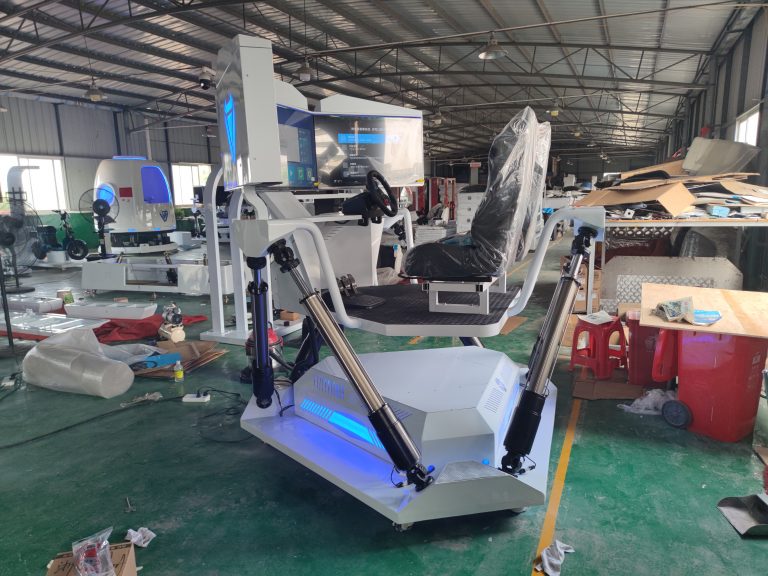
How Visual Immersion Is Achieved in Three-Screen Six-Axis Racing Simulator
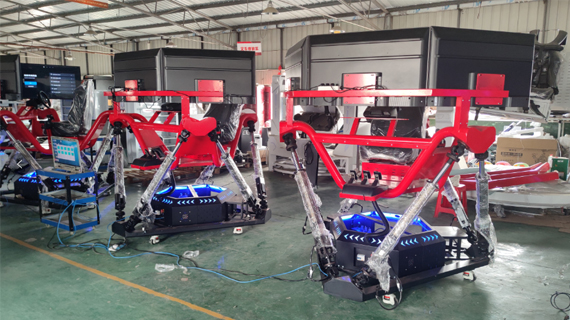
How Six-Axis Racing Simulators Are Entering Homes
VR Large-Scale Equipment: A Spatial Revolution Reconstructing Immersive Experience
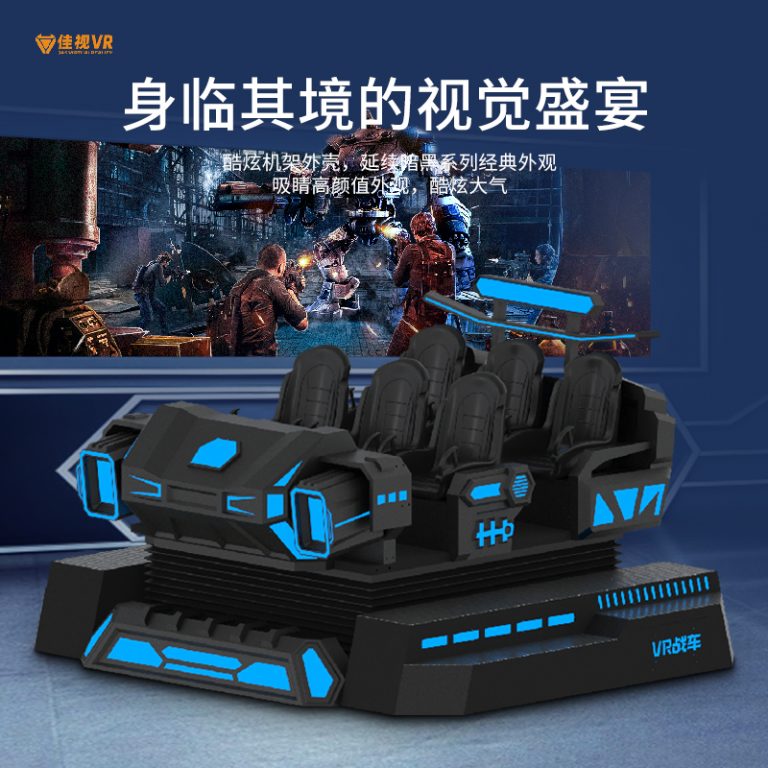
VR Six‑Player Chariot Simulator Profit‑Making Operation Plan
What is the core of an automobile driving simulator?