Exploration of the Cross-Industry Applications and Industrial Value of Six-Axis Flight Simulators
In various key fields such as aerospace, military training, civil aviation, and scientific research and innovation, flight simulation technology has always played an indispensable role. With the iterative upgrading of precision manufacturing, electronic control, digital simulation and other technologies, six-axis flight simulators, relying on their core advantage of accurately reproducing six degrees of freedom in three-dimensional space (translational motion along the X, Y, and Z axes, as well as pitch, yaw, and roll rotational motion around the X, Y, and Z axes), have broken the performance limitations of traditional flight simulation equipment and achieved a leap from “basic simulation” to “immersive reproduction”. As a high-end equipment integrating mechanical engineering, electronic technology, computer simulation, control science and other multidisciplinary fields, six-axis flight simulators not only greatly reduce the cost and risk of flight training and equipment research and development, but also promote the intelligent and safe development of related industries, becoming an important support for the high-quality development of the modern aerospace industry. This article will comprehensively explore the core technical characteristics of six-axis flight simulators, in-depth interpret their specific application scenarios and practical value in various industries, and look forward to their future development trends, providing reference for application practice and technological innovation in related fields.
I. Core Technical Characteristics and Advantages of Six-Axis Flight Simulators
The core competitiveness of six-axis flight simulators stems from their precision motion system built on the principle of parallel mechanisms and a multidisciplinary integrated technical architecture. Compared with traditional three-axis and four-axis simulators, they have irreplaceable advantages in motion accuracy, immersion, and scene adaptability, laying a solid technical foundation for cross-industry applications.
(I) Core Technical Architecture
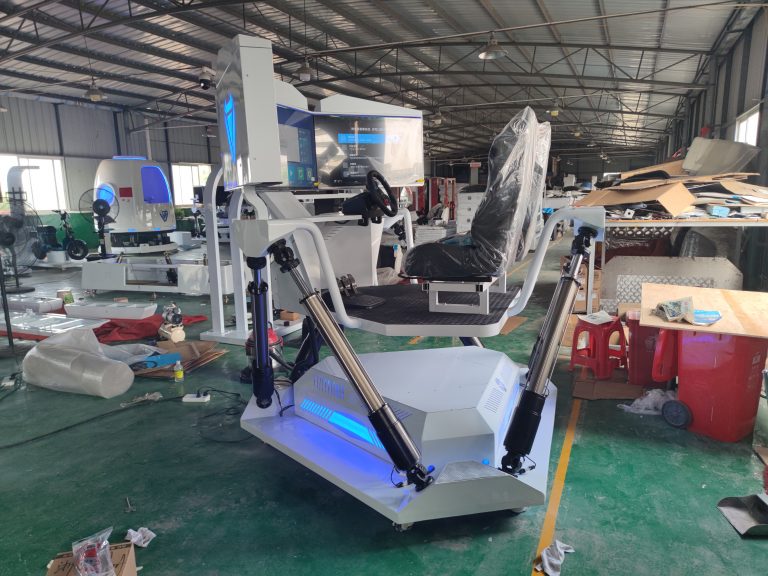
A six-axis flight simulator is mainly composed of six core systems, which work together to accurately reproduce real flight scenarios. First, the six-axis motion platform, as the core component of the equipment, adopts a parallel structure consisting of an upper platform, a lower platform, and six driving branches. The telescoping of the branches is controlled by servo motors or electro-hydraulic servo systems to realize the coordinated motion of six degrees of freedom. The positioning accuracy can reach ±0.01°, and the repeat positioning accuracy is better than ±0.005°, which can quickly respond to subtle changes in flight attitude. Second, the simulated cockpit system, which is reproduced 1:1 according to the real aircraft cockpit, integrates instrument systems, control equipment, visual display devices, etc., to restore the pilot’s operating environment and interaction logic. Some high-end models also reproduce special designs of the cockpit, such as the overhead floor windows of helicopters, to further improve simulation authenticity. Third, the visual simulation system generates realistic scenes such as terrain, weather, and airports through computer imaging technology, and provides a wide-angle field of view in combination with extended visual projection and mirror systems. It can simulate complex meteorological conditions such as heavy rain, haze, and strong winds, and some systems also support VR/AR technology integration to enhance immersion. Fourth, the motion control system is equipped with advanced control algorithms to real-time solve the flight dynamics model, complete more than 5 million floating-point operations per second, and update the attitude at a refresh rate of 60Hz, ensuring that the motion response delay is less than 20 milliseconds, and realizing seamless synchronization between motion attitude and flight operations. Fifth, the data acquisition and analysis system collects control input, attitude changes and other data at high speed, realizes data synchronization of each subsystem through Ethernet/CAN bus, and has data recording, playback, and evaluation functions to provide data support for training effect analysis and equipment optimization. Sixth, the instructor console can set training scenarios, monitor the operation process, simulate equipment failures, and has assessment and evaluation functions to facilitate real-time guidance and skill evaluation.
In terms of technical path, six-axis flight simulators have undergone an upgrade from hydraulic drive to electric servo drive. Although traditional hydraulic drive platforms can meet the needs of heavy loads, they have shortcomings such as high maintenance costs, easy leakage, and high noise, and are currently being gradually replaced by electric servo drive solutions. Domestic manufacturers have achieved key technological breakthroughs in electric six-degree-of-freedom platforms, with performance close to the international advanced level, and some products have successfully replaced imported equipment such as Moog (USA) and SIEMENS (Germany), and are applied in various key projects. At the same time, the integration of digital twin and AI control algorithms is becoming a new trend. The intelligent adaptive control system can real-time optimize power output according to load changes, reduce energy consumption and extend equipment life, while modular design shortens the product delivery cycle and improves customization capabilities.
(II) Core Application Advantages
Compared with traditional flight simulation equipment, the advantages of six-axis flight simulators are concentrated in three aspects. First, high motion reproduction accuracy, which can accurately reproduce complex attitudes during flight such as takeoff, landing, turning, turbulence, and weightlessness, and even simulate the physical dynamics of emergency scenarios such as engine failure, cockpit fire, and bird strike. At the same time, it minimizes the risk of motion sickness, allowing users to obtain a somatosensory experience highly consistent with real flight. Second, strong safety and controllability. All simulated scenarios are carried out in a controllable ground environment, which can avoid potential personal safety risks and equipment damage risks in real flight, especially suitable for high-risk subject training and fault simulation, greatly improving the safety of training and research and development. Third, significant cost-effectiveness. It does not require fuel consumption or occupy airport airspace resources, and can carry out training and testing repeatedly, greatly reducing the cost of real flight training and equipment research and development. At the same time, it reduces equipment wear during training and extends the service life of real aircraft. After some professional simulators obtain international certification, their training hours can be directly included in the actual flight time, further enhancing the use value. In addition, six-axis flight simulators also have advantages such as customizable scenarios, high training efficiency, and traceable data, which can adapt to the application needs of different fields and scenarios, and have extremely strong versatility and flexibility.
II. Analysis of Cross-Industry Application Scenarios of Six-Axis Flight Simulators
With its excellent technical performance and advantages, six-axis flight simulators have been widely used in various fields such as military aviation, civil aviation, scientific research and innovation, popular science education, and entertainment experience. They play an important role in improving training quality, promoting technological innovation, and popularizing aviation knowledge, and the application scenarios in various fields show differentiated characteristics and values.
(I) Military Aviation Field: Core Support for Real-Combat Training and Equipment R&D
The military aviation field is the earliest and most core application scenario of six-axis flight simulators. Its core value is to provide pilots with a real-combat-oriented training environment, and at the same time provide a reliable simulation platform for fighter R&D and equipment testing, helping to enhance national defense capabilities. In modern military training, real-combat, efficiency, and safety have become core needs. Six-axis flight simulators perfectly meet this demand and have gradually replaced some high-risk and high-cost actual flight training subjects.
In terms of pilot training, six-axis flight simulators can cover the entire process from basic training to real-combat drills. In the basic training stage, it can simulate basic operations, takeoff and landing, route flight and other subjects of fighter jets, helping pilots quickly familiarize themselves with cockpit operations and flight attitude control, and cultivate basic flight skills. Compared with actual flight training, simulator training can be practiced repeatedly, not limited by weather, airspace, fuel and other conditions, greatly improving training efficiency. In the advanced training stage, it can simulate real-combat scenarios such as complex meteorological conditions (heavy rain, strong winds, haze), complex terrain (mountains, oceans, cities), and battlefield environments (enemy aircraft interception, missile attacks, electronic interference), carry out tactical confrontation, formation flight, emergency response and other subject training, allowing pilots to drill hundreds of emergency procedures with high risks in actual flight in a safe environment, such as engine failure, hydraulic system failure, and cockpit fire. These scenarios are developed based on historical military accident data and have extremely high real-combat reference value. For example, the “Goksim” full-motion simulator developed by Turkey’s Havalan Company for the “Gobe” utility helicopter can be used for pilot type conversion training, emergency maneuver drills, mission rehearsal and maintenance training. The first batch of students are from the Turkish Gendarmerie Aviation Command. The simulator has also obtained the highest level certification from the European Union Aviation Safety Agency (EASA), and its training hours can be included in the actual flight time, greatly improving training efficiency. Domestically, the six-degree-of-freedom instrument J10 simulator deployed by a unit in Fuzhou is strictly designed according to the instrument layout of the J10 fighter jet, which can restore the takeoff, cruise, combat and other actions of the fighter jet, support instrument flight, formation flight and other subject training, and is specially built for J10 aircraft operators; the VR simulation flight training project of a unit of the People’s Liberation Army integrates a six-degree-of-freedom flight platform, with functions such as flight combat and battle simulation, which can carry out air combat tactical training and special mission training such as air-to-air missile interception. At the same time, it has physiological data collection and analysis functions to realize psychological evaluation and early warning of participating officers and soldiers.
In terms of military equipment R&D and testing, six-axis flight simulators can be used for design verification, performance testing and fault diagnosis of equipment such as fighter jets and helicopters. In the equipment design stage, the flight performance of different design schemes can be simulated through the simulator, the rationality of the fuselage structure, control system and avionics system can be tested, design defects can be found in advance, and the R&D cost and cycle of the prototype can be reduced; after the equipment is finalized, it can be used for equipment performance optimization, simulate the equipment operation status under different working conditions, test the reliability and stability of the equipment, and provide data support for the improvement and upgrading of the equipment. For example, in the process of helicopter R&D, the six-axis simulator can simulate the rotor flapping dynamics equation, restore the periodic flapping motion of the rotor blades, help R&D personnel optimize the rotor design, and improve the flight stability of the helicopter; in the test of the fighter avionics system, the response of the avionics system in complex battlefield environments can be simulated through the simulator, and the anti-interference ability and reliability of the system can be tested. In addition, six-axis flight simulators can also be used for maintenance training of military equipment, simulate equipment failure scenarios, allow maintenance personnel to practice fault diagnosis and maintenance operations in a simulated environment, improve maintenance skills, and reduce the risk of equipment damage during actual equipment maintenance. With the acceleration of the modernization of national defense, the application of six-axis flight simulators in the military aviation field will become more extensive, and gradually upgrade to multi-aircraft coordinated training, intelligent tactical simulation, full-process equipment testing and other directions, becoming an important support for improving the combat effectiveness of military aviation.
(II) Civil Aviation Field: Important Guarantee for Pilot Training and Civil Aviation Safety
The civil aviation field is one of the most widely used fields of six-axis flight simulators. Its core applications are concentrated in pilot training, civil aviation safety drills, airport operation optimization and other aspects. With the rapid development of the civil aviation industry, especially the gradual mass delivery of the domestic C919 large jet, the demand for six-axis flight simulators continues to grow, becoming an important equipment for promoting the high-quality development of the civil aviation industry.
Pilot training is the core application scenario of six-axis flight simulators in the civil aviation field. According to the “2023 Civil Aviation Industry Development Statistical Communique” released by the Civil Aviation Administration of China, as of the end of 2023, there were 18 certified flight training centers in the country, with about 160 various flight simulators, an increase of 12 compared with 2022. It is estimated that it will exceed 200 by 2025, corresponding to a demand for more than 40 new six-degree-of-freedom platforms. The training of civil aviation pilots is divided into initial training, type conversion training, regular recurrent training and other stages. Six-axis flight simulators can cover all training subjects and have the advantages of safety, efficiency and low cost. In the initial training stage, it can simulate basic operations, takeoff and landing, route flight and other subjects of civil aviation airliners, helping students quickly master flight skills and accumulate flight experience; in the type conversion training stage, it can customize the simulated cockpit and flight parameters for different models (such as Boeing 737, Airbus A320, domestic C919), helping pilots quickly adapt to the operation logic of new models and shorten the conversion cycle; in the regular recurrent training stage, it can simulate emergency situations (such as engine failure, landing gear failure, air turbulence, route deviation), carry out emergency response training, improve the emergency response ability of pilots, and ensure civil aviation flight safety. For example, major domestic airlines are equipped with six-axis flight simulators for daily recurrent training and emergency drills of pilots. By simulating various emergency scenarios, pilots can proficiently master the emergency response process and reduce the safety risks in real flight; for the domestic C919 large jet, relevant enterprises are accelerating the R&D and deployment of supporting simulators to provide support for the training of C919 pilots and promote the large-scale operation of domestic airliners.
Six-axis flight simulators also play an important role in civil aviation safety drills and airport operation optimization. On the one hand, it can be used for civil aviation emergency rescue drills, simulate aircraft crashes, emergency landings and other scenarios, cooperate with ground rescue equipment, carry out emergency response training for rescuers, and improve rescue efficiency and coordination ability; on the other hand, it can be used for airport route optimization and airspace planning, simulate the flight status of different routes, analyze the rationality of routes, optimize flight paths, reduce flight delays, and improve airport operation efficiency. In addition, six-axis flight simulators can also be used for training civil aviation maintenance personnel, simulate airliner failure scenarios, allow maintenance personnel to practice fault diagnosis and maintenance operations, improve maintenance skills, and ensure the operational reliability of airliners. With the continuous expansion of the civil aviation market, the application of six-axis flight simulators will be further expanded, gradually developing towards intelligent training, personalized teaching, full-process safety control and other directions, providing a strong guarantee for the safe and efficient development of the civil aviation industry.
(III) Scientific Research and Innovation Field: An Important Tool for Aerospace Technological Breakthroughs
In scientific research fields such as aerospace, artificial intelligence, and new materials, six-axis flight simulators, as a high-precision simulation test platform, provide important support for technological R&D, theoretical verification, and product testing, helping researchers break through technical bottlenecks and promote technological innovation in related fields.
In aerospace scientific research, six-axis flight simulators can be used in various directions such as aircraft design, flight dynamics research, and avionics system R&D. In the process of aircraft design, researchers can simulate the flight performance of different design schemes through the simulator, test the rationality of the fuselage aerodynamic layout, control system, and power system, find design defects in advance, optimize the design scheme, and reduce the R&D cost and cycle of the prototype. For example, in the R&D process of new UAVs and light aircraft, the six-axis simulator can be used to simulate the aerodynamic characteristics under different flight attitudes, test the stability and controllability of the aircraft, and provide data support for design optimization; in the R&D of spacecraft, it can simulate the on-orbit flight attitude, orbit change process, landing process, etc. of the spacecraft, test the control system and structural reliability of the spacecraft, and help the R&D and finalization of the spacecraft. In the field of flight dynamics research, researchers can simulate changes in flight attitude under complex flight scenarios through the simulator, study the mechanical characteristics during flight, verify the correctness of flight dynamics theories and algorithms, and promote the development of flight dynamics theories. For example, simulating the turbulent motion of aircraft in air currents through a six-axis simulator, studying the impact of air currents on aircraft flight attitude, and providing theoretical support for the stability design of aircraft; in the research of helicopter rotor dynamics, the flapping motion of the rotor can be restored through the simulator, the mechanical characteristics of the rotor can be studied, and the rotor design can be optimized.
Six-axis flight simulators also play an important role in emerging scientific research fields such as artificial intelligence and autonomous driving. With the application of artificial intelligence technology in the aviation field, researchers can use six-axis flight simulators to carry out autonomous driving flight technology R&D, simulate flight status under different scenarios, train autonomous driving algorithms, and improve the reliability and adaptability of autonomous driving systems. For example, in the R&D of UAV autonomous driving technology, the simulator can be used to simulate flight scenarios under complex terrain and harsh weather, train UAV path planning, obstacle avoidance, autonomous landing and other algorithms, and accelerate the landing application of autonomous driving technology. In addition, six-axis flight simulators can also be used for testing new materials and new equipment, simulating extreme environments (high temperature, high pressure, strong vibration) during flight, testing the performance of new materials and the reliability of new equipment, and providing support for the R&D and application of new materials and new equipment. For example, testing the vibration resistance and fatigue resistance of new aviation materials to provide data support for the upgrading of aircraft fuselage materials; testing the operational stability of new avionics equipment to ensure that it can work normally in complex flight environments.
In the field of scientific research, the core value of six-axis flight simulators is to provide researchers with a controllable, repeatable, and high-precision simulation environment, which can effectively reduce research costs, shorten the R&D cycle, and promote technological innovation and breakthroughs. With the continuous development of scientific research technology, six-axis flight simulators will be deeply integrated with big data, artificial intelligence, digital twin and other technologies, further improving simulation accuracy and functions, and providing stronger support for scientific research innovation.
(IV) Popular Science Education Field: An Important Carrier for Popularizing Aviation Knowledge and Cultivating Talents
With the rapid development of the aerospace industry, the importance of aviation popular science education has become increasingly prominent. As an intuitive and interactive popular science tool, six-axis flight simulators have gradually entered campuses, science and technology museums, youth activity centers and other places, becoming an important carrier for popularizing aviation knowledge, cultivating young people’s interest in aviation, and reserving aviation talents.
In terms of campus popular science education, six-axis flight simulators can be used in aviation popular science courses in primary and secondary schools and universities, providing students with an immersive flight experience, helping students understand flight principles, aviation equipment, flight safety and other knowledge, and stimulating students’ interest in aviation and innovative thinking. For example, aviation and aerospace majors in universities can be equipped with six-axis flight simulators for classroom teaching and practical training, allowing students to intuitively feel changes in flight attitude, understand flight dynamics principles, and improve practical operation capabilities; primary and secondary schools can introduce six-axis flight simulators through popular science activities, organize students to experience simulated flight, understand aviation knowledge, cultivate young people’s aviation dreams, and reserve reserve talents for the aerospace industry. At the same time, six-axis flight simulators can also be used in aviation popular science competitions, summer camps and other activities. Through simulated flight competitions, flight skill challenges and other forms, the participation and learning enthusiasm of students can be improved, and aviation knowledge can be further popularized.
In public popular science venues (science and technology museums, youth activity centers), six-axis flight simulators, as core popular science exhibits, provide the public with the opportunity to get close to aviation technology, help the public understand the development achievements of the aerospace industry, and improve the national aviation literacy. For example, science and technology museums can set up six-axis flight simulation experience areas, equipped with simplified six-axis flight simulators, allowing the public to experience simulated flight, understand the basic process of flight operations, and feel the charm of aviation technology; youth activity centers can carry out aviation popular science training, use six-axis flight simulators to provide young people with systematic aviation knowledge training and flight experience, and cultivate young people’s interest in aviation and practical capabilities. In addition, six-axis flight simulators can also be used for aviation culture promotion, showing the development history and achievements of the aerospace industry by simulating flight scenarios of different aircraft models, and enhancing the public’s national pride and aviation feelings.
In the field of popular science education, the application of six-axis flight simulators has broken the limitations of traditional popular science education, realized a “theory + practice” popular science model, made aviation knowledge more intuitive, vivid and easy to understand, effectively improved the effect of popular science education, and cultivated a group of reserve talents with strong interest and practical capabilities for the aerospace industry.
(V) Entertainment Experience Field: An Emerging Carrier of Immersive Consumption Scenarios
With the upgrading of consumption and the rapid development of the immersive entertainment industry, six-axis flight simulators have gradually entered the entertainment market, becoming an emerging carrier for creating immersive entertainment scenarios and enriching consumption experiences. They are mainly used in theme parks, VR experience halls, high-end entertainment clubs and other places to provide consumers with unique flight entertainment experiences.
In terms of theme parks, six-axis flight simulators can be used to create aviation-themed experience projects, combining VR/AR technology and visual simulation technology to provide tourists with an immersive flight experience. For example, theme parks can set up a “simulated flight experience area” equipped with six-axis flight simulators to simulate flights in different scenarios (such as high-altitude flight, aerobatic flight, and canyon crossing), allowing tourists to feel the excitement and fun of flight; some theme parks can also combine aviation culture to create themed simulated flight projects, such as “fighter jet simulated flight” and “airliner simulated flight”, to meet the needs of different tourists. For example, the six-degree-of-freedom flight simulator launched by Fujian Kede Electronics, combined with visual imaging technology, is compatible with popular flight games such as P3D and DCS, allowing players to feel the pleasure of flying from the clouds, and has become a popular experience project in theme parks.
In VR experience halls and high-end entertainment clubs, six-axis flight simulators can be combined with VR equipment to create an immersive flight entertainment experience, providing consumers with a more realistic and exciting entertainment feeling. For example, VR experience halls can launch “VR simulated flight” projects. Consumers wear VR equipment and take six-axis flight simulators to feel the flight experience in virtual scenarios, such as crossing space, flying over cities, and aerobatic flight, realizing an “immersive” flight fun; high-end entertainment clubs can be equipped with high-end six-axis flight simulators to provide customers with personalized flight experience services, meeting their entertainment and social needs. In addition, six-axis flight simulators can also be used in film and television shooting, game development and other fields to simulate flight scenarios, improve the realism and immersion of films, television and games, and enrich the content and form of cultural and entertainment products.
In the field of entertainment experience, the application of six-axis flight simulators conforms to the trend of consumption upgrading, meets consumers’ demand for immersive and personalized entertainment experiences, and also promotes the diversified development of the entertainment industry. With the continuous upgrading of technology, the entertainment application of six-axis flight simulators will become more extensive, gradually developing towards intelligence, personalization and sceneization, providing consumers with more abundant and high-quality entertainment experiences.
III. Challenges and Solutions in the Application of Six-Axis Flight Simulators
Although six-axis flight simulators have been widely used in various fields and played an important role, in the actual application process, they still face challenges such as technical bottlenecks, high costs, inconsistent standards, and talent shortages. These problems restrict the further expansion of their application scope and the high-quality development of the industry. In response to these challenges, targeted solutions need to be taken to promote the application and development of six-axis flight simulators.
(I) Main Challenges Faced
First, core technical bottlenecks still exist. Although domestic manufacturers have achieved key technological breakthroughs in electric six-degree-of-freedom platforms, they still rely on imports for key components such as high-precision encoders and high-performance bearings. Core control algorithms and visual simulation technologies still have gaps compared with the international advanced level. The core technologies of some high-end simulators are still monopolized by foreign enterprises, which restricts the performance improvement and industrial upgrading of domestic six-axis flight simulators; at the same time, the motion accuracy, response speed, immersion and other aspects of the simulator still have room for improvement, and it is difficult to fully restore the physical characteristics of some extreme flight scenarios.
Second, the equipment cost is high and the application threshold is high. Six-axis flight simulators are high-end precision equipment with high R&D, production and maintenance costs. The price of a professional six-axis flight simulator is usually millions or even hundreds of millions of yuan, making it difficult for many small and medium-sized enterprises and grass-roots units to bear, limiting its application in small-scale training, grass-roots popular science and other fields; at the same time, the maintenance of the equipment requires professional technical personnel, and the maintenance cost is high, further increasing the application threshold.
Third, the industry standards are not unified, and the application coordination is insufficient. At present, there are no unified industry standards for the R&D, production, testing, application and other links of six-axis flight simulators. Equipment produced by different manufacturers has differences in performance parameters, interface specifications, operation procedures, etc., making it difficult to achieve interconnection and intercommunication between equipment, affecting application coordination; at the same time, the application needs of different fields are quite different, and there is a lack of targeted standard specifications, resulting in the application effect of the simulator not being fully exerted.
Fourth, there is a shortage of professional talents and insufficient support capacity. The R&D, operation, maintenance, training and other aspects of six-axis flight simulators require professional talents with multidisciplinary knowledge such as mechanical engineering, electronic technology, computer simulation, and aerospace. At present, there is a shortage of relevant professional talents in China, especially compound talents who understand both technology and application, which is difficult to meet the needs of industry development; at the same time, the talent training system is not perfect, and there is a lack of targeted talent training courses and practical platforms, which further aggravates the problem of talent shortage and affects the application and promotion of six-axis flight simulators.
(II) Solutions
First, increase investment in core technology R&D to break through technical bottlenecks. The government should increase support for the R&D of core technologies of six-axis flight simulators, introduce relevant policies, encourage enterprises, universities and scientific research institutions to carry out industry-university-research cooperation, focus on the R&D of key components, core control algorithms, visual simulation technologies and other fields, and improve the level of independent controllability of core technologies; enterprises should increase R&D investment, strengthen technical exchanges and cooperation with internationally advanced enterprises, introduce advanced technologies, digest, absorb and re-innovate, and improve product performance and competitiveness; at the same time, promote the in-depth integration of new technologies such as digital twin, AI, and VR/AR with six-axis flight simulators, improve simulation accuracy and immersion, and expand application scenarios.
Second, optimize the industrial layout and reduce application costs. Promote the large-scale and intensive development of the six-axis flight simulator industry, reduce equipment R&D, production and maintenance costs through mass production and technical optimization; encourage enterprises to develop products of different grades and types, launch cost-effective simplified six-axis flight simulators for small and medium-sized enterprises and grass-roots units, and reduce the application threshold; at the same time, establish an equipment sharing mechanism, promote the sharing of simulator resources among universities, scientific research institutions and enterprises, improve equipment utilization rate, reduce application costs, and expand application scope. For example, flight training centers can provide simulator rental services to small and medium-sized enterprises and grass-roots units to improve equipment utilization efficiency.
Third, improve the industry standard system and enhance application coordination. The government should take the lead in organizing enterprises, universities and scientific research institutions to formulate unified industry standards for the R&D, production, testing, application and other links of six-axis flight simulators, standardize equipment performance parameters, interface specifications, operation procedures, etc., realize interconnection and intercommunication between equipment, and improve application coordination; at the same time, formulate targeted standard specifications for the application needs of different fields, optimize the application scheme of the simulator, and improve the application effect; strengthen industry self-discipline, standardize the market order, promote the healthy and orderly development of the industry, avoid vicious competition, and promote technological innovation and application promotion.
Fourth, strengthen the training of professional talents and improve support capacity. Improve the talent training system, universities should add relevant majors and set up targeted courses to cultivate professional talents with multidisciplinary knowledge; enterprises should cooperate with universities and scientific research institutions to establish practical teaching bases, carry out school-enterprise joint training, and improve the practical ability of talents; strengthen the training of on-the-job personnel, carry out technical training, skill assessment and other activities to improve the professional level of existing personnel; at the same time, introduce relevant policies to attract outstanding talents at home and abroad to engage in the field of six-axis flight simulators, alleviate the problem of talent shortage, provide strong talent support for industry development, and promote the application and promotion of six-axis flight simulators.
IV. Development Trends of Six-Axis Flight Simulator Applications
With the continuous progress of science and technology and the continuous upgrading of needs in various industries, the application of six-axis flight simulators will show the development trends of intelligence, integration, sceneization and lightweight. Its application scope will be further expanded, and its industrial value will be further improved, injecting new momentum into the development of related fields.
First, the level of intelligence will continue to improve. With the development of artificial intelligence, big data, the Internet of Things and other technologies, six-axis flight simulators will gradually achieve intelligent upgrading, with functions such as autonomous learning, adaptive adjustment and intelligent diagnosis. For example, the intelligent control system can automatically adjust the training difficulty and scene settings according to the user’s operating habits and skill level to achieve personalized training; the intelligent diagnosis system can real-time monitor the equipment operation status, timely find equipment failures, and provide early warning to reduce maintenance costs; the big data analysis system can conduct in-depth analysis of training data and flight data, provide data support for training optimization and technological R&D, and improve the application effect. At the same time, the application of AI control algorithms will further optimize the motion control accuracy and response speed, realize more accurate flight attitude reproduction, improve immersion and simulation authenticity, promote the development of six-axis flight simulators towards intelligence and autonomy, become high-end simulation equipment with independent decision-making capabilities, and provide more intelligent and efficient support for applications in various fields.
Second, the trend of in-depth integration of multiple technologies is obvious. Six-axis flight simulators will be deeply integrated with new technologies such as VR/AR, digital twin and 5G to expand application scenarios and improve application effects. For example, integration with VR/AR technology can create a more realistic virtual flight environment, allowing users to obtain an “immersive” flight experience; integration with digital twin technology can build digital twin models of aircraft and flight scenarios, realize real-time simulation, monitoring and optimization of the flight process, and provide more accurate support for equipment R&D and training optimization; integration with 5G technology can realize remote collaboration of multiple simulators, carry out cross-regional and multi-person collaborative training and joint drills, and improve the coordination and efficiency of applications. In addition, six-axis flight simulators will also be integrated with new energy technologies and new material technologies to reduce equipment energy consumption, improve equipment reliability and durability, and promote the green and sustainable development of the industry. For example, using lightweight and high-strength materials to manufacture platform components can reduce the platform weight, improve motion flexibility, and reduce energy consumption; using new energy drive systems to replace traditional fuel drive can achieve green and environmentally friendly operation, which is in line with the trend of modern industrial development.
Third, application scenarios are constantly expanding and refining. With the continuous upgrading of needs in various industries, the application scenarios of six-axis flight simulators will be further expanded, gradually penetrating into more segmented fields. In the military field, it will develop towards multi-service coordinated training, intelligent tactical simulation, full-process equipment testing and other directions; in the civil aviation field, it will develop towards personalized pilot training, full-process civil aviation safety control, intelligent optimization of airport operations and other directions; in the scientific research field, it will develop towards high-precision simulation testing, interdisciplinary research, rapid verification of new technologies and other directions; in the popular science education field, it will develop towards the normalization of campus popular science, the diversification of public popular science, and the refinement of popular science content and other directions; in the entertainment experience field, it will develop towards personalization, sceneization, interaction and other directions, creating more abundant immersive entertainment products. At the same time, in response to the needs of different segmented fields, six-axis flight simulators will be further refined, and targeted products and application schemes will be launched to improve the accuracy and effectiveness of applications. For example, special six-axis simulators will be launched for UAV training, customized simulated cockpits will be launched for helicopter training, and simplified and interactive simulation equipment will be launched for popular science education to meet the differentiated needs of different fields and users, promote the application of six-axis flight simulators to expand in depth and breadth, achieve full-scene coverage, and enhance industrial value and influence.
Fourth, the equipment develops towards lightweight and miniaturization. With the progress of precision manufacturing and electronic technology, six-axis flight simulators will gradually develop towards lightweight and miniaturization, reducing equipment volume and weight, improving equipment portability, and expanding application scenarios. For example, the development of small and portable six-axis flight simulators can be used in field training, grass-roots popular science, small enterprise training and other scenarios, reducing the application threshold; the development of lightweight simulators can reduce the transportation and installation costs of equipment, and improve the flexibility and applicability of equipment. At the same time, lightweight and miniaturized simulators will retain core functions and performance to ensure simulation effects, meet the application needs of different scenarios, further expand the application scope, promote the popularization and promotion of six-axis flight simulators, allow more users to use six-axis flight simulators conveniently, give full play to their application value in various fields, and promote the high-quality development of related industries. For example, small portable six-axis simulators can be used for pilot field emergency training, grass-roots popular science institutions can deploy them conveniently, reduce popular science costs, improve popular science efficiency, promote the widespread popularization of aviation knowledge, reserve more reserve talents for the aerospace industry, help the industry develop sustainably and healthily, provide strong support for national scientific and technological progress and national defense construction, inject new momentum and vitality into social and economic development, promote six-axis flight simulators to become an important bridge connecting aerospace, military, civil, scientific research, popular science, entertainment and other fields, realize multi-field coordinated development and win-win development, open a new era of six-axis flight simulator applications, contribute more to the development of human aerospace cause, promote the in-depth integration of simulation technology with various industries, empower industrial upgrading, help build a strong science and technology country, achieve higher quality and more sustainable development, transform the technical advantages of six-axis flight simulators into industrial development advantages and industrial competitiveness, provide strong support for the innovative development of various fields, write a new chapter in the application and development of six-axis flight simulators, promote simulation technology to move towards higher precision, more intelligence and wider application, provide more powerful guarantee for human beings to explore the sky, protect safety, popularize knowledge and enrich life, realize the organic unity of science and technology, humanity, safety and development, promote the coordinated development of the aerospace industry and related industries, help realize the national high-quality development strategy, lay a solid foundation for building a strong science and technology country and a strong aviation country, and let six-axis flight simulators play a greater role and create greater value in the new era, serving the progress and development of human society.
In summary, as a high-end precision simulation equipment, six-axis flight simulators, with their accurate motion reproduction capabilities, safe and controllable application advantages, and wide scene adaptability, play an important role in various fields such as military aviation, civil aviation, scientific research and innovation, popular science education, and entertainment experience, becoming an important support for promoting the high-quality development of related industries. Although their application currently faces challenges such as technical bottlenecks, high costs, inconsistent standards, and talent shortages, with the continuous breakthrough of core technologies, the continuous improvement of the industrial system, and the continuous growth of the talent team, the application of six-axis flight simulators will gradually move towards intelligence, integration, sceneization and lightweight, with further expanded application scope and improved industrial value. In the future, it is necessary to continuously increase investment in technological R&D, improve the industry standard system, strengthen talent training, promote the in-depth integration of six-axis flight simulators with various industries, give full play to their technical advantages, inject new momentum into the development of the aerospace industry, national defense construction, popular science education, entertainment industry and other fields, help realize the strategic goals of building a strong science and technology country and a strong aviation country, and let six-axis flight simulators shine more brightly in the new era and contribute more to the progress and development of human society.
RELATED POSTS
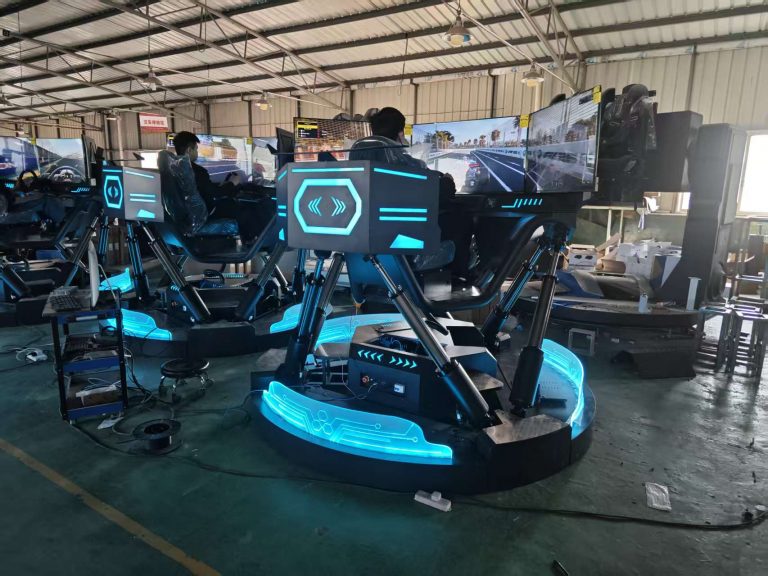
Intelligent Driving Integration, Track Expansion – Analysis of the Future Market Development of Racing Simulators (English Version)
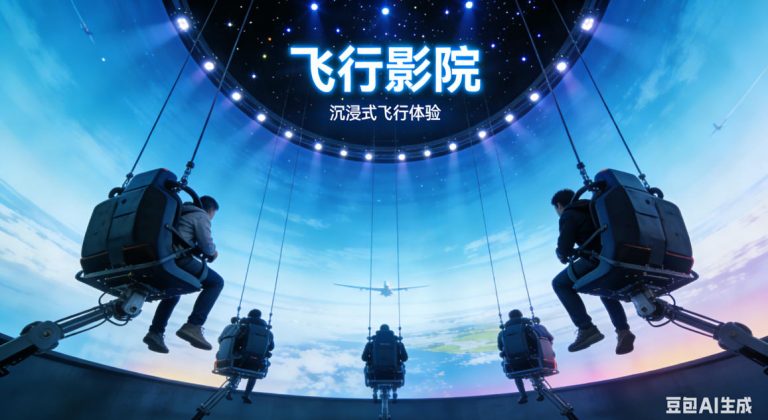
The Future is Here: A Deep Dive into the Flying Theater Market and Forecasting Industry Transformation at the Technological Singularity
Reshaping the Digital Battlefield: Research on Future Development Trends of Tank Simulators
The Future Prospect of eVTOL Flight Simulators
Core Applications and Cutting-Edge Exploration of Automotive Driving Simulators in Autonomous Driving Technology