Future Market Analysis Report on Driving Simulators for Driving Schools
Driving simulators for driving schools are simulation training devices for motor vehicle driver training, test practice and traffic safety education.I. Industry Overview & Core Value
Through vehicle dynamics, visual system, motion feedback and AI teaching, they restore real driving operations and road conditions, covering the whole training process including Subject 2, Subject 3, emergency handling, defensive driving and new energy vehicle operation.
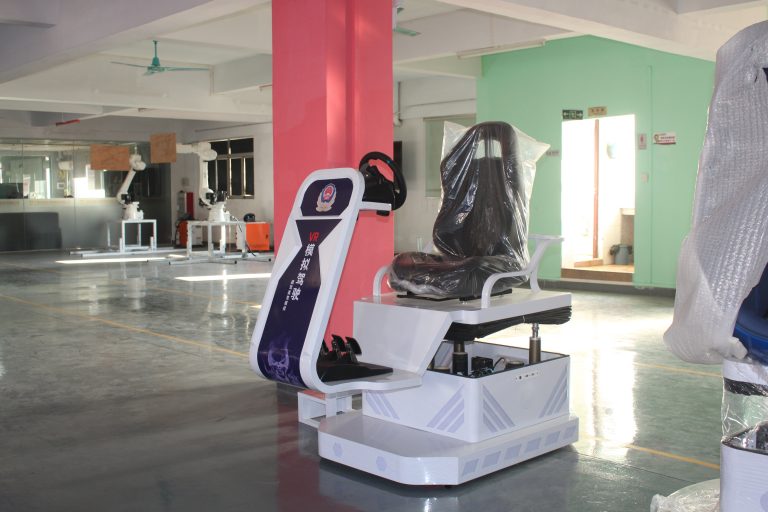
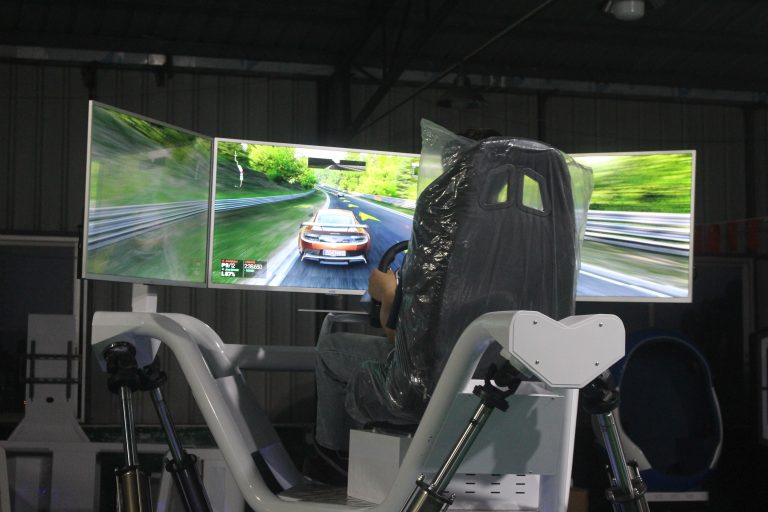
By form: fixed basic simulators, 3-DOF/6-DOF dynamic simulators, VR/AR immersive simulators, portable home simulators.
By scenario: driving school teaching type, test site simulation type, professional driver training type, traffic safety education type.
1.2 Core Value
- Cost Reduction & Efficiency Improvement: Reduce fuel consumption, vehicle damage, site occupation and instructor labor; comprehensive training cost for a single driving school decreases by 30%–50%.
- Safety & Controllability: Zero accident risk; reproduce high-risk scenarios such as rain, snow, fog, night and sudden obstacles.
- Standardized Teaching: AI scoring, data recording and error review solve problems of non-standard manual teaching and strong subjectivity.
- Policy Compliance: Meet regulatory requirements of timed training, credit recognition, smart driving training and low-carbon green development.
- Pass Rate Improvement: Immersive intensive training generally increases the pass rate of Subject 2 and Subject 3 by 10%–20%.
II. Current Market Status (2024–2026)
2.1 Market Size & Penetration Rate
There are about 12,000 driving schools in China, with an annual training volume of over 30 million people. In 2024, the domestic driving simulator market size was about 3.5–4 billion yuan, of which the driving school sector accounted for about 60%.
It is estimated that the overall market size will exceed 6 billion yuan in 2026 and reach 12–15 billion yuan by 2030, with a CAGR of 12%–15%.
At present, the penetration rate of driving simulators in driving schools is about 35%, reaching 50%–70% in leading provinces (Guangdong, Jiangsu, Zhejiang), while the central and western regions are still in the early popularization stage with significant room for growth.
2.2 Policy Drivers
- Smart Driving Training & Timed Training: The nationwide implementation of “theory + simulation + real vehicle” segmented teaching, with simulation credits included in legal training requirements.
- Safety & Low-Carbon: Regulators encourage simulators to replace part of real-vehicle training, reducing energy consumption and road risks.
- Standardized Examinations: Vehicle management offices in many regions connect simulator data with the test system to strengthen pre-test adaptive training.
- Upgrading of Professional Driving Training: Mandatory safety simulation training for freight, online car-hailing and hazardous chemicals transportation, opening up B-end incremental demand.
2.3 Technical Status
- Basic model: Mechanical transmission + three-screen display + fixed chassis, unit price 10,000–50,000 yuan, for basic operations.
- Mid-range model: Dynamic motion feedback + AI error correction + 1:1 test site modeling, unit price 50,000–150,000 yuan, preferred by mainstream driving schools.
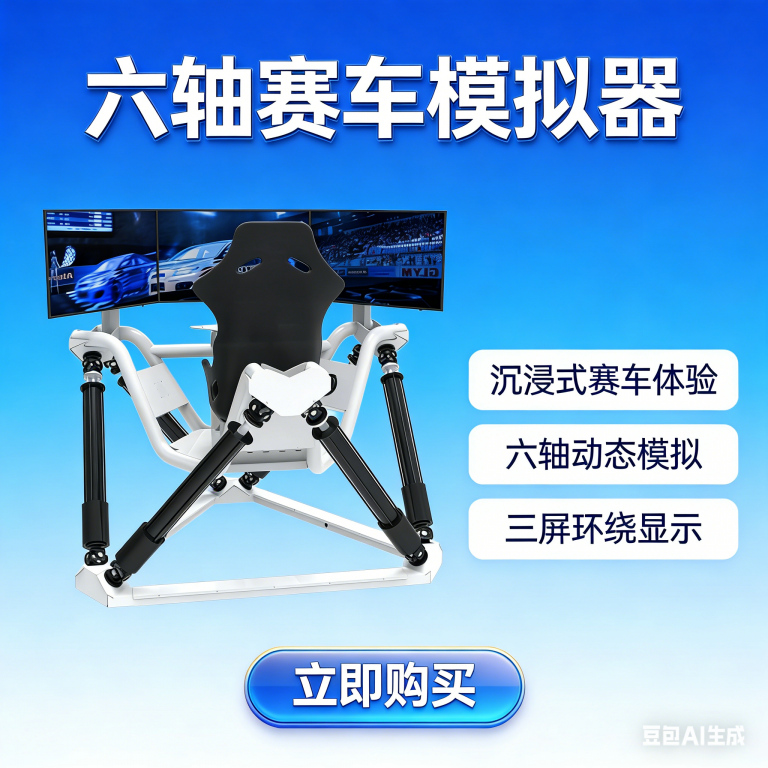
- High-end model: VR panoramic view, 6-DOF platform, digital twin road conditions, unit price 200,000–500,000 yuan, for demonstration driving schools and test sites.
- Software capability: AI teaching, credit upload, data dashboard, cloud management and multi-terminal linkage become standard configurations.
2.4 Demand Pain Points
- Severe low-price homogenization; uneven hardware durability, software updates and after-sales capabilities.
- Inconsistent local standards for credit recognition and device access, affecting purchase willingness.
- Driving schools are sensitive to “input-output ratio”; small and medium-sized driving schools have limited budgets.
- Insufficient experience of home/portable products, difficult to form large-scale repurchase.
III. Future Market Drivers (2026–2030)
3.1 Mandatory Policies & Unified Standards
In the next five years, mandatory simulation credits, standardized device certification and networked data supervision will be fully implemented.
The Ministry of Transport and the Ministry of Public Security continue to promote digitalization of driving training; simulators, as core equipment of smart driving training, will change from “optional” to “standard”.
Mandatory safety simulation training for professional drivers (freight, passenger transport, online car-hailing) directly drives demand for special simulators.
3.2 Transformation Pressure of Driving Training Industry
- Intensified homogeneous competition among driving schools; intelligent, service-oriented and lightweight become key to survival.
- Rising site rent and labor costs; simulators replace part of real vehicles and instructors, improving site and labor efficiency.
- Young students prefer self-service training, night training and repeated review, which matches the consumption habits of simulators.
- Popularization of new energy vehicles gives birth to special simulation training needs for electric vehicle operation, energy recovery and intelligent cockpit.
3.3 Technological Maturity & Cost Reduction
- Lower costs of VR/AR, binocular vision and dynamic motion feedback; immersive devices enter the mainstream range of 100,000 yuan.
- AI large models realize personalized teaching, dangerous behavior early warning, automatic scoring and weak point strengthening.
- Digital twin restores test sites and urban road networks, with training effects close to real vehicles.
- Cloud-based SaaS reduces one-time investment for driving schools; annual payment/leasing models become popular.
3.4 Expansion of Application Scenarios
- Test Site Simulation: 1:1 restoration of each test site route, pre-test intensive training becomes rigid demand.
- Safety Education: Government procurement for schools, enterprises and traffic safety experience.
- Professional Driving Training: Bulk procurement by logistics fleets and online car-hailing platforms for pre-job and retraining.
- Home Market: Lightweight, cost-effective products enter families as preview and consolidation tools.
- Used Cars & Insurance: Safe driving scores linked to insurance premiums, driving training demand.
IV. Market Size & Structure Forecast (2026–2030)
4.1 Overall Size
- 2026: Driving school simulator market size 3.5–4 billion yuan, penetration rate 45%.
- 2028: Market size 7–8 billion yuan, penetration rate 65%, increased proportion of dynamic and VR models.
- 2030: Market size 10–13 billion yuan, penetration rate over 80%, basically complete popularization.
4.2 Product Structure
- Basic fixed model: Share drops from 55% to 30%, mainly for sinking market and backup training.
- Mid-range dynamic + AI model: Share rises from 35% to 50%, becoming mainstream standard.
- High-end VR/digital twin model: Share rises from 10% to 20%, for demonstration driving schools and test sites.
- Software & services: Change from “free gift” to independent revenue, accounting for 15%–20%.
4.3 Channel Structure
- Direct sales: Leading brands serve large chain driving schools and government projects, accounting for 40%.
- Distribution: Cooperation with regional dealers in sinking markets, accounting for 45%.
- Leasing/SaaS: Lower threshold, quickly cover small and medium-sized driving schools, accounting for 15% and rising.
4.4 Regional Structure
- East China/South China/North China: Mature markets, mainly upgrading and function replacement.
- Central China/Southwest/Northwest: Rapid penetration, mainly basic + mid-range models.
- Counties and towns: Demand explosion, sales of portable and fixed models.
V. Competitive Landscape Analysis
5.1 Major Domestic Participants
- First-tier brands: C 智仿真,Huali Chuangtong, Xuan’ai Intelligent, subsidiaries of China Automotive Research Institute, etc.With full-stack capabilities of hardware + software + platform, perfect channels, winning large projects, medium and high pricing.
- Regional brands: Focus on provincial markets, high cost-performance, fast after-sales response, adapt to local test sites and policies.
- Small and medium manufacturers: Low-price volume, serious homogenization, slow software iteration, rely on price wars.
- Cross-border manufacturers: VR/AI enterprises, driving training system providers enter, break through with software and platform advantages.
5.2 International Brands
dSPACE, Cruden, Ansible Motion focus on high-end R&D and autonomous driving simulation, unit price of millions, limited penetration in driving school market; may enter high-end driving training scenarios through localized cooperation in the future.
5.3 Competitive Focus
- Policy docking capability: Credit upload, regulatory platform compatibility, certification qualifications.
- Test site restoration accuracy: Precision of routes, points and scoring rules.
- AI teaching & pass rate: Student effect directly determines repurchase.
- Cost & durability: Driving schools value depreciation, failure rate and operation and maintenance costs.
- Service system: Response speed of installation, training, upgrade and maintenance.
5.4 Landscape Evolution
In the next 3–5 years, it will shift from fragmented to concentrated.
Leading enterprises squeeze small and medium manufacturers by standard formulation, platform ecology and national services; industry CR5 (top 5 concentration) rises from current 25% to over 45%.
Platform enterprises with “hardware + SaaS + operation” capabilities will win.
VI. Technological Development Trends
6.1 Immersive & High Fidelity
VR/AR/MR replace multi-screens to achieve 360° panoramic view; dynamic platforms restore acceleration, deceleration, bump and roll motion; improved accuracy of vehicle dynamics models, operation feel close to real vehicles.
6.2 AI & Data-Driven
AI instructor for full guidance, danger prediction, automatic error correction and training report generation; student data precipitated in the cloud to form ability portraits and personalized courses; big data optimizes test site simulation and weak point training.
6.3 Digital Twin & Cloud-Based
1:1 digital twin of test sites and urban road networks, supporting real-time weather, traffic and pedestrian simulation; cloud-based devices realize remote management, OTA upgrade, credit networking and multi-device collaboration.
6.4 Adaptation to New Energy & Intelligent Connectivity
Added training modules for pure electric/hybrid operation, intelligent driving assistance, automatic parking and energy recovery to adapt to the new outline of driving training.
6.5 Lightweight & Home-Oriented
Portable, foldable, VR all-in-one forms, price down to within 3,000 yuan, opening the home preview market.
VII. Business Model Innovation
7.1 Leasing & Installment
Equipment leasing, pay-by-hour, financial installment, reduce one-time investment of driving schools, improve penetration rate.
7.2 SaaS Subscription
Affordable hardware, annual software fee, continuous provision of test site updates, AI upgrades and data services to improve LTV (customer lifetime value).
7.3 Joint Operation
Revenue sharing between manufacturers and driving schools; simulators as revenue-increasing projects charge students separately, achieving win-win.
7.4 Cooperation with Test Sites & Examination Centers
Build simulation training centers, connect test site traffic, create rigid demand entrance for pre-test training.
7.5 B-end & G-end Package
Integrated solutions of driving school + enterprise safety + campus education + government regulatory platform, increase unit price.
VIII. Risks & Challenges
8.1 Policy Risks
Changes in local credit recognition and access standards; higher certification thresholds due to stricter supervision; inadequate policy implementation affecting demand.
8.2 Technical Risks
Rapid iteration of VR/AI, fast hardware depreciation; poor software compatibility and stability affecting reputation; cost fluctuation caused by dependence on imported core components.
8.3 Market Risks
Price wars compress profits; capital shortage of small and medium driving schools, low purchase willingness; high education cost for home market, unmet expected experience.
8.4 Competitive Risks
Entry of cross-border giants squeezing small and medium manufacturers; serious homogenization, low brand barriers; loss caused by insufficient after-sales capacity.
8.5 Profit Risks
High R&D investment, channel costs and service costs, declining gross profit, long payment cycle.
IX. Investment & Development Suggestions
9.1 Enterprise Strategy
- Product stratification: Basic models for volume, mid-range models for profit, high-end models for benchmarking, covering all budgets.
- Software priority: Build AI teaching, test site library and cloud platform to build barriers.
- Channel deepening: Direct sales for large customers, distribution for sinking counties, leasing for small and medium driving schools.
- Service closed loop: Fast installation, training, upgrade and maintenance to improve renewal rate.
- Compliance first: Keep up with policy certification and data docking, seize first-mover advantage.
9.2 Driving School Purchase Suggestions
- Prioritize products with mature credit networking, accurate test sites and AI teaching.
- Prioritize leasing/installment to reduce cash flow pressure.
- Focus on improving pass rate and reducing costs, quantify input and output.
- Match value-added services such as night self-service training and pre-test intensive training to increase revenue.
9.3 Investment Opportunities
- Tracks: mid-range AI dynamic simulators, cloud SaaS, test site simulation, professional driving training.
- Targets: Leading enterprises with full-stack R&D, national channels and policy compliance.
- Risk points: Avoid pure hardware low-price homogenization enterprises, focus on software and service capabilities.
X. Conclusion & Outlook
Driving simulators for driving schools are upgrading from auxiliary tools to core infrastructure of smart driving training.
Four driving forces—policy rigidity, cost pressure, technological maturity and scenario expansion—resonate, entering a stage of high growth, high concentration and high gross profit in the next five years.
It is estimated that by 2030, the driving school market size will exceed 10 billion yuan with a penetration rate of over 80%, forming a mature pattern of “leading concentration, product stratification, service subscription and diversified scenarios”.
In the long run, simulators will extend to full-life cycle driving services: novice preview, pre-test training, licensed retraining, safety education, professional assessment and insurance risk control, becoming a digital entrance to the driving training and traffic safety industry.
Enterprises with integrated capabilities of technological R&D, policy adaptation, channel coverage and service operation will dominate the industry upgrade and share the trillion-yuan dividend of smart driving training.
RELATED POSTS
Construction of a Practical Military Vehicle Driving Training System and Capability Forging
In-depth Application of Virtual Reality Technology in Truck Driving Training
What is the core of an automobile driving simulator?
The Applications of Racing Simulators: A Comprehensive Analysis
Diversified Popular Science Applications and Social Value of VR Automobile Collision Simulators