The Future is Here: A Deep Dive into the Flying Theater Market and Forecasting Industry Transformation at the Technological Singularity
As we don specialized glasses, our seats gradually lift, a rush of wind hits our faces, and we soar over the majestic peaks of the Great Wall, skim the summit of Mount Everest, and plunge into the depths of the Mariana Trench—this is no longer the stuff of science fiction but the real experience offered by flying theaters. As a fourth-generation entertainment facility combining motion platforms, dome projection, environmental effects, and immersive audio, flying theaters are sparking a revolution in immersive entertainment worldwide. This article will provide a comprehensive forecast and analysis of the flying theater market’s prospects over the next decade, examining multiple dimensions including technological evolution, market demand, and industrial ecology.
I. Flying Theaters: The Ultimate Form of Immersive Entertainment
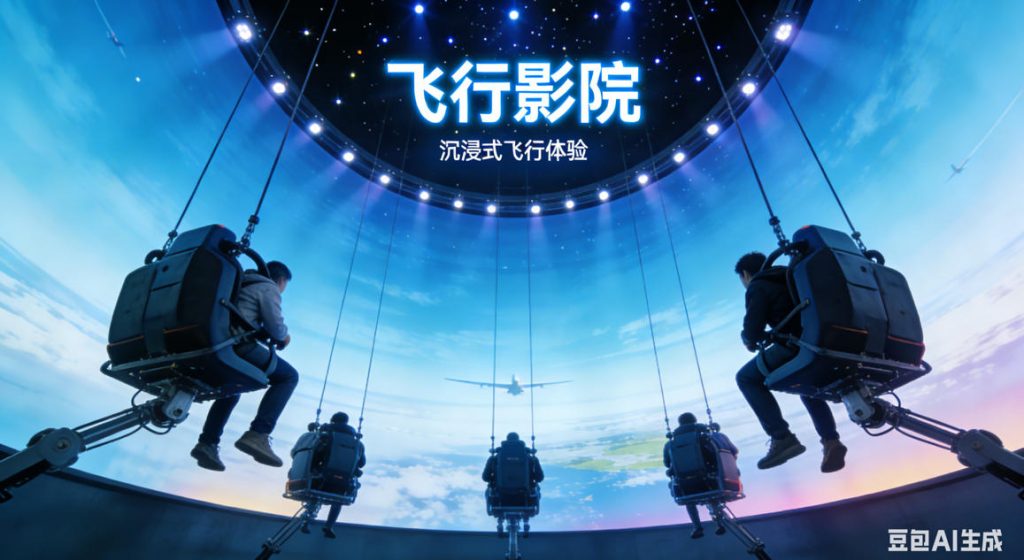
As an advanced form of special theater, the core characteristic of a flying theater is its use of hydraulic or electric motion platforms to simulate the diving, climbing, and tilting movements of flight. Combined with the enveloping visual presentation of a hemispherical screen, it creates a truly immersive flying experience. Compared to traditional 4D cinemas, flying theaters offer a greater range of motion, stronger visual immersion, and a narrative style more focused on exploring vast spaces.
The current global flying theater market has formed a three-tier structure: The first tier, represented by Canada’s Dynamic Attractions, the US’s SimEx-Iwerks, and the Netherlands’ VR Coaster, holds advantages in high-end technology and IP content. The second tier includes Chinese theme park operators like Chimelong Group and Fantawild, which have expanded through independent integration or cooperative development. The third tier consists of numerous small and medium-sized equipment suppliers and content studios focusing on regional markets or niche segments.
As of the end of 2023, over 150 flying theaters are operational globally, primarily distributed in North America, East Asia, and the Middle East. The Chinese market has experienced the most rapid growth, accounting for over 40% of the global increase in new flying theaters in the past five years. According to data from the Themed Entertainment Association (TEA), the global market size related to flying theaters reached $2.8 billion in 2023 and is projected to exceed $4 billion by 2025.
II. Technological Singularity: The Four Engines Driving an Experience Revolution
The future evolution of flying theaters will be closely tied to technological breakthroughs, with four key engines jointly propelling an experiential revolution:
1. Ultra-Immersive Display Technology
While current flying theaters commonly use 4K-8K resolution projection, within the next five years, this is expected to advance to 16K or even higher resolutions. More crucially, projection technology will evolve from traditional RGB laser towards holographic projection and light field display. Japan’s Sony has already developed a Crystal LED display system covering a 180-degree field of view, with a contrast ratio of 1,000,000:1—100 times that of traditional projection. Simultaneously, deformable screen technology is making breakthroughs in labs; future screens will be able to change curvature and size in real-time based on content needs, enabling seamless transitions from enveloping to penetrating views.
2. Intelligent Motion Platforms
Next-generation motion platforms will integrate AI prediction algorithms and ergonomic adaptive systems. Using front-facing cameras to capture audience micro-expressions and physiological responses (anonymized), the system can automatically adjust motion parameters before motion sickness sets in. The “Neuro-Adaptive Platform” being tested by Universal Studios in the US can optimize motion curves based on real-time audience EEG data, striking an optimal balance between excitement and comfort. Advancements in materials science will also make platforms lighter and more robust—the application of carbon nanotube composites could reduce platform weight by 40% while increasing load capacity by 200%.
3. Multi-Modal Sensory Fusion
Comprehensive sensory stimulation beyond sight and motion is key to flying theater evolution. Germany’s Audiovisual Experiences company has developed a “4D+” system capable of precisely controlling temperature, humidity, scent, and tactile feedback. For instance, when flying over snowy mountains in a film, audiences can feel a cold breeze, smell pine forests, and feel simulated ice crystals on seat armrests. Over the next decade, more sophisticated haptic feedback suits and neural interface technologies may enter commercial application, moving towards the ultimate goal of “conscious immersion.”
4. Personalized Experience Engines
Personalized content generation based on big data will be a core competitive advantage. Each flying experience will no longer be uniform but dynamically adjusted based on audience group characteristics (age, cultural background, even mood) for narrative pacing, perspective choice, and sensory stimulus intensity. Disney Research has developed a “Context-Aware Narrative Algorithm” that can analyze audience reactions in real-time and fine-tune story branches, increasing re-ride rates to over three times those of traditional attractions.
III. Demand Explosion: A Scenario Revolution from Theme Parks to Urban Complexes
The application scenarios for flying theaters are rapidly expanding, forming a multi-layered market landscape:
Theme Park Upgrade Core
Global theme parks face pressure from “experience involution,” making flying theaters a key facility for increasing revisit rates. Shanghai Disneyland’s “Soaring Over the Horizon” consistently maintains wait times exceeding 150 minutes, hosting over 5 million visitors annually—a record for single-attraction revenue in theme parks. In the future, theme parks will build “satellite-style” experience clusters around flying theaters, forming an ecological loop of “main flying experience + derivative immersive projects + themed consumption areas.”
New Landmarks for Urban Cultural Tourism
Cultural complexes in second-tier cities are becoming a new blue ocean for flying theaters. Compared to traditional IMAX theaters, flying theaters can offer non-replicable localized experiences—flying over local historical sites, natural wonders, and city skylines. The Chengdu “Soaring Over Tianfu” project integrates local IPs like Jiuzhaigou, Mount Qingcheng, and the Jinsha Site Ruins into an 8-minute flight journey, achieving profitability in its first year and attracting specialized tourists from within a 300-kilometer radius. These projects offer advantages like relatively smaller investments ($20-50 million) and shorter payback periods (3-5 years), making them suitable for cities rich in historical and cultural resources.
Powerful Traffic Drivers for Commercial Complexes
Under pressure from e-commerce, physical commercial spaces urgently need an “experiential” transformation. As high-traffic engines, flying theaters are being integrated into shopping malls, hotels, and resorts. The “Fly Over Dubai” at Dubai Mall attracts 1.2 million visitors annually, increasing foot traffic in surrounding commercial areas by 23% and generating a rental premium of 35%. In the future, miniaturized, modular flying theater systems will emerge, meeting installation needs in commercial spaces of 500-1,000 square meters with investment thresholds lowered to under $5 million.
Education, Popular Science, and Professional Training
The potential for serious applications of flying theaters is enormous. NASA already uses customized flight simulators for space mission training; National Geographic China is developing geography education series allowing students to “witness” geological evolution; the medical field is exploring controlled flight experiences for acrophobia treatment. Although this B2B market has smaller individual project scales, its high-profit margins and stable demand will become a significant revenue source for flying theater content providers.
IV. Market Forecast: Growth Curve and Value Distribution Over the Next Decade
Based on the technology hype cycle and market demand analysis, we make the following quantitative predictions for the flying theater market:
Market Size Growth Forecast
By 2030, the global market size for flying theater equipment and content is projected to reach $12 billion, with a compound annual growth rate (CAGR) maintained at 18-22%. The share of equipment sales is expected to gradually decline from the current 65% to below 50%, while the shares of content production, IP licensing, and operational services will continue to rise.
Evolution of Regional Market Distribution
The North American market will maintain its position as a center for technological innovation and high-end equipment supply, but growth will slow to an annual average of 12%. The Asia-Pacific market (particularly China and Southeast Asia) will become the largest growth pole, with its share increasing from 35% to 45%. China is expected to become the world’s largest single market around 2027. The Middle Eastern and European markets will specialize in luxury experiences and historical-cultural tourism, respectively, forming differentiated competitive advantages.
Innovation Matrix of Business Models
Three dominant business models will emerge: 1) The “Apple Model” of equipment sales + content subscriptions, led by technology providers; 2) The “Disney Model” of IP operation + customized experiences, defined by content creators; 3) The “Amazon Model” of platform integration + data services, aggregated by operators. By 2030, content subscription revenue is expected to account for over 30% of total revenue, while data services (audience behavior analysis, predictive equipment maintenance, etc.) are projected to create over $1.5 billion in new value.
Restructuring of the Industrial Value Chain
The traditional linear value chain of “equipment supplier-operator” will evolve into a networked value ecosystem of “technology layer – content layer – operation layer – derivative layer.” The technology layer includes core module suppliers for display, motion, and sensing. The content layer encompasses IP holders, film production companies, and game engine developers. The operation layer involves venue management, ticketing systems, and marketing. The derivative layer expands to merchandise, online experiences, educational services, etc. Each node has the potential to produce unicorn companies.
V. Challenges and Variables: Turbulence and Unknown Territories in Flight
Despite the promising prospects, the development of flying theaters still faces multiple challenges:
Lack of Technical Standards and Safety Regulations
Currently, there are no unified global technical safety standards for flying theaters, with significant differences in regulatory requirements across countries. Europe emphasizes mechanical safety redundancy, the US focuses on content rating management, while China pays attention to emergency evacuation design. Standard fragmentation increases R&D costs and market entry difficulties. The International Organization for Standardization (ISO) has initiated related standard-setting work, but achieving global consensus will likely take 5-8 years.
Crisis of Content Homogenization
Current flying theater content overly relies on natural landscapes and urban aerial footage, leading to a singular narrative mode. Market research shows audience satisfaction with existing content drops by 62% after three repeat experiences. Breaking the “travel brochure” paradigm and developing diverse genres like sci-fi, history, and fantasy with character-driven narratives is key to the industry’s sustainable development. This requires deep collaboration among multi-disciplinary talents like film scriptwriters, game designers, and psychologists.
Pressure from Investment Payback Periods
High-end flying theater project investments can range from $80 to $150 million, requiring 5-7 years to recoup costs even under ideal conditions. Economic cycle fluctuations can significantly impact the pace of large-scale projects. Modular, upgradeable flexible investment solutions will become mainstream, allowing operators to invest in stages and gradually upgrade experiences based on market feedback.
Competition from Alternative Technologies
Advancements in VR technology are blurring the lines between virtual and real. Wireless VR headsets are approaching the limits of human eye resolution, with haptic feedback technology rapidly developing. Although current VR experiences still fall short of flying theaters in terms of group sharing and comprehensive bodily perception, over the next decade, the relationship may shift from substitution to symbiotic integration—flying theaters incorporating personalized VR customization layers to form mixed reality (MR) super experiences.
VI. The Unique Trajectory of the Chinese Market and Its Global Impact
The Chinese flying theater market demonstrates a unique development logic that will profoundly influence the global industrial landscape:
Policy-Driven and Cultural-Tourism Integration
China’s 14th Five-Year Plan for cultural and tourism development explicitly lists immersive experience facilities as a key support area, with many local governments offering preferential policies like land and tax benefits. The national strategy of cultural-tourism integration positions flying theaters as new carriers for showcasing local culture. For example, the Henan “Soaring Over the Yellow River” project deeply integrates Yellow River culture and Central Plains history with the flight experience, receiving support from the National Arts Fund. This dual-drive model of “policy empowerment + cultural empowerment” gives Chinese projects unique advantages in launch speed and resource integration.
Radical Innovation in Technology Application
Chinese companies are more aggressive in certain technology applications. For instance, the “5G + Flying Theater” system jointly developed by Huawei and Fantawild enables multi-theater synchronization and cloud-based instant content updates; EHang has attempted to combine drone swarm performances with outdoor extended flying theater experiences. This culture of rapid experimentation and iteration may give rise to disruptive experience formats.
Ecosystem Cultivation Supported by Market Scale
China possesses the world’s largest theme park market (over 220 million annual visitors) and a rapidly growing network of commercial complexes, providing fertile ground for the scaled application of flying theaters. This market scale not only reduces single-project investment risks but, more importantly, supports the cultivation of a complete industrial ecosystem—from core components to content production, from professional talent training to operational management systems. China may be the first to form a complete flying theater industrial cluster.
VII. Future Vision: Imagining the 2033 Flight Experience
Based on current technology trajectories and market demand, we can envision the flying theater landscape a decade from now:
At the Shanghai “Stellar Exploration” entertainment center in 2033, you and your friends wear lightweight neural sensing headbands and step into a screenless flight pod. The system scans your iris, retrieving your unfinished Mars exploration save file. As the pod door closes, the seats don’t move mechanically but achieve smooth six-degrees-of-freedom movement through anti-gravity levitation technology. The Martian surface before your eyes isn’t pre-rendered imagery but terrain generated in real-time—at this very moment, a rover on Mars is transmitting actual surface data.
During the flight, you not only feel the impact of sandstorms but also experience the sensation of movement in Mars’ low gravity through a haptic suit. When you spot suspected signs of life, you make a gesture command; the aircraft immediately hovers, and the system connects to NASA’s open database for comparison and analysis. After the experience, an AI assistant generates a personalized exploration report based on your heart rate data and points of interest, recommending related popular science books and offline exhibitions.
By then, flying theaters will no longer be isolated facilities but nodes in an immersive experience network. AR devices at home can access “flight segments,” classrooms can share educational content via cloud platforms, and even hospital rehabilitation departments will use them for cognitive training. Encrypted, anonymized flight experience data will feed into city digital twin systems, providing unique perspectives for urban planning, traffic management, and even environmental protection.
Conclusion
Flying theaters stand at a critical juncture in the development of immersive entertainment. From a technological dimension, they integrate cutting-edge achievements in display technology, materials science, artificial intelligence, and perceptual engineering. From a market dimension, they meet the deep-seated needs for unique experiences, emotional connection, and self-realization in the context of consumption upgrading. From an industrial dimension, they are reconstructing the logic of entertainment, cultural tourism, education, and even urban development.
Over the next decade, flying theaters will complete their transformation from “novel devices” to “experience platforms.” Their value lies not only in the box office revenue they generate but also in how they redefine humanity’s relationship with the world—allowing us to rediscover the Earth’s grandeur from a flying perspective, understand civilization’s depth through immersion, and reconnect with each other’s emotions through shared experiences.
As we soar through clouds, skim over history, and explore the unknown in flying theaters, we are not merely consuming a period of entertainment but participating in a grand experiment expanding the boundaries of human perception. Ultimately, the market’s value may not lie in the economic scale it creates but in how it helps us rediscover, amidst technological envelopment, that pure, innocent human heart that yearns to fly.
Market forecasts always involve margins of error, and technological evolution is full of surprises. However, one thing is certain: humanity’s yearning for flight never ceases, and the pursuit of immersive experiences knows no bounds. The sky for flying theaters has no horizon.
RELATED POSTS
Application of Automobile Driving Simulators in Driving Schools
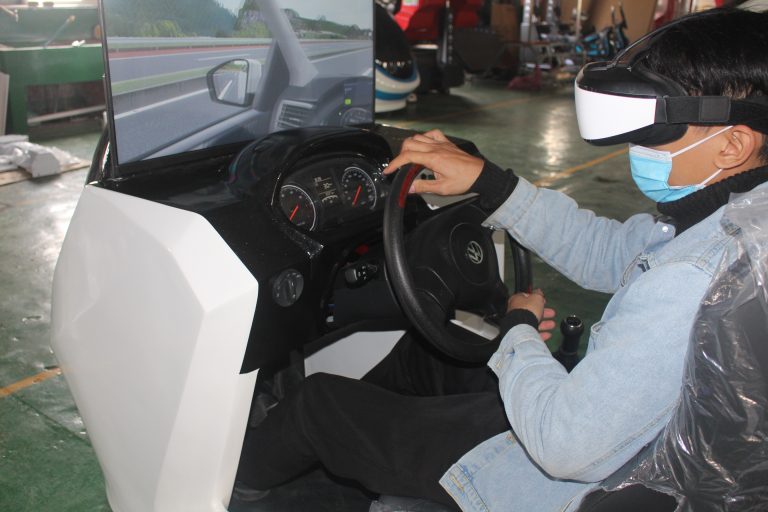
Can the driving simulator used in driving schools replace the instructor’s teaching?
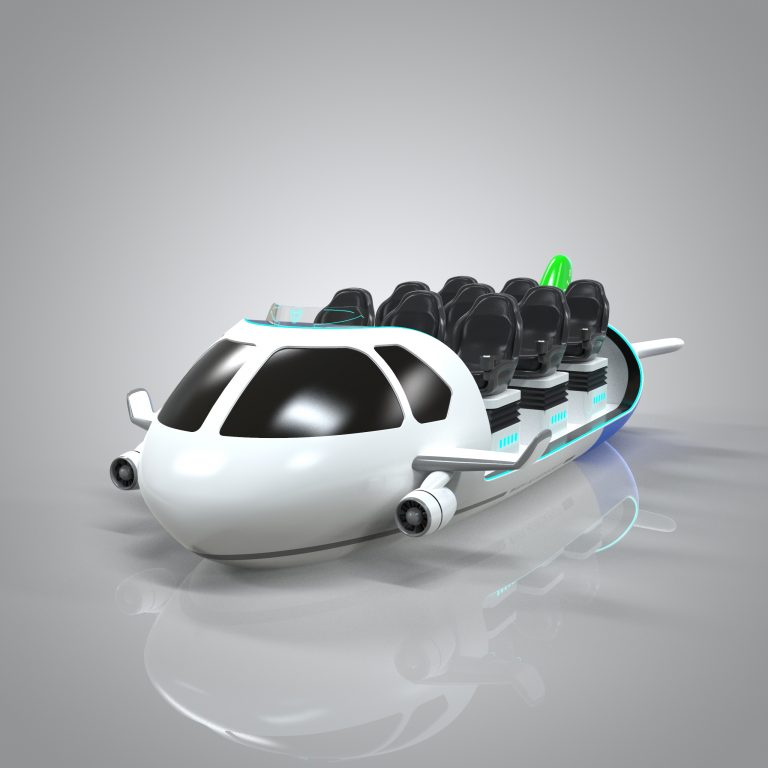
Flight Simulator: Reshaping the Future of Aviation Safety and Training
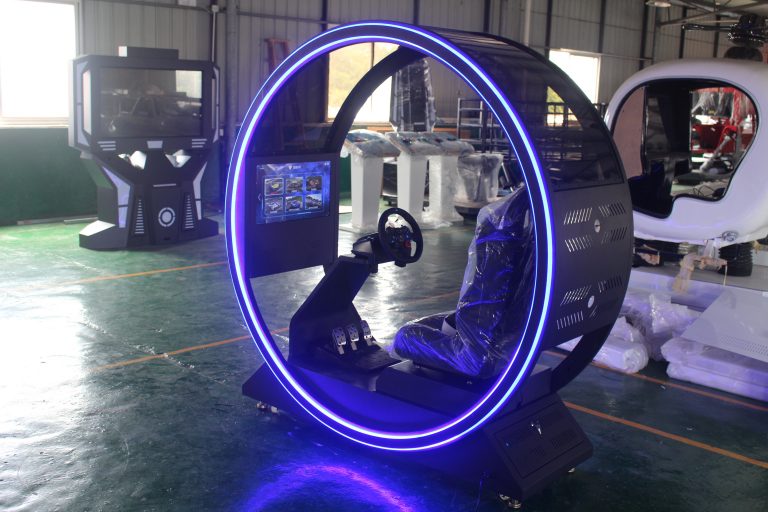
What are the advantages of car driving simulators in driving schools?
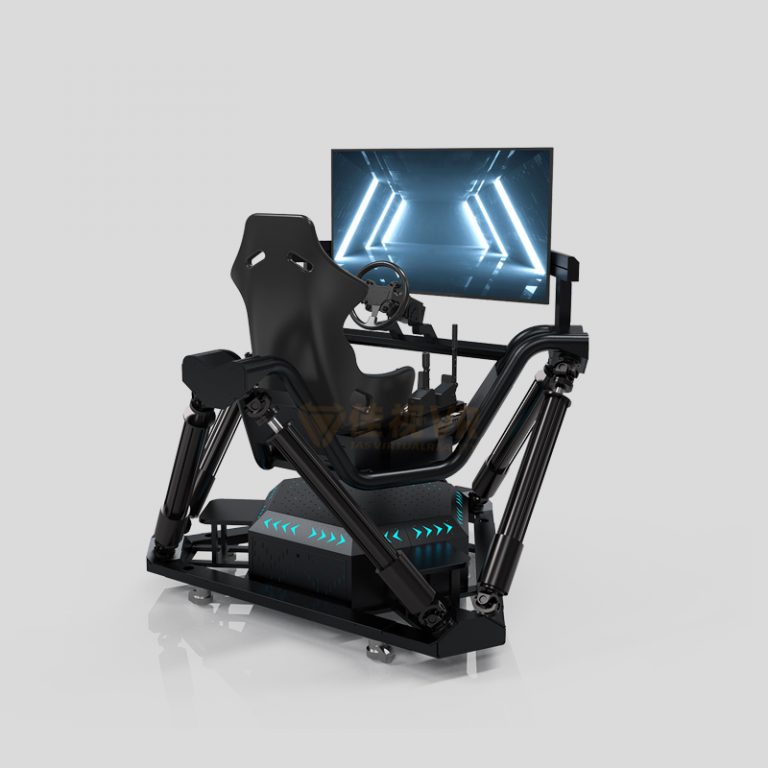
The Profound Impact of Driving Simulators on the Automotive, Aviation, and Maritime Industries