Profitability Models for XR Full-Sensory Large-Space Cinemas: Six Monetization Paths from the “Single-Seat Model” to “Spatial Cinema Chains”
In 2026, the XR large-space sector has completed a key cognitive shift. A year ago, the industry was still debating “whether users are willing to wear a headset and walk around for half an hour”; a year later, the focus has become “who has higher revenue per square meter, who has stronger repurchase rates, and who can roll out a thousand stores within two years.” Data from Analysys shows that the CR10 of the XR large-space industry is below 20%, with nearly 80% of companies still operating single projects—but leading players have already proven profitability with hard revenue figures. Xiying’s “Boundless XR Cinema” achieves average daily revenue per seat of 706 yuan, peaking at 1,200 yuan; the XR virtual cinema hall that Shanghai Film Group tucked into its cinema lobby exceeded 60% gross margin in its first month; and iQIYI’s full-sensory theater adapted from the Luoyang IP already accounts for 38% of the group’s total revenue from offline operations. These figures point to one conclusion: the profitability model for XR full-sensory large spaces is no longer paper speculation—it is a commercial logic being validated, one that can be broken down and should be replicated.
This article attempts to provide an actionable profitability framework from six dimensions: revenue structure, cost control, spatial strategy, content assetization, traffic operations, and scaling path.
I. Revenue Side: Breaking “One Ticket” into Five Layers of Income
The revenue model of traditional cinemas is extremely fragile: after box-office revenue sharing, distributors take the lion’s share, and what the cinema actually keeps is only 40–50% of the ticket price, with concessions and advertising being the only buffers. If XR full-sensory large spaces follow the single-minded approach of “selling tickets,” they are doomed to repeat the same mistakes. The first principle of a profitability plan is: design at least three payment touchpoints for every minute a user stays.
The base layer is experience ticketing. This is the fundamental cash flow, but pricing strategy needs to differentiate by scenario. Xiying’s Xuanzang and Kucha had an average ticket price of 67 yuan during the May Day holiday, with each seat serving 8 visitors per day on average—relying on low barriers to drive traffic. Shanghai Film Group’s XR virtual cinema hall, aligned with cinema-going habits, anchors ticket prices at 1.5 to 2 times traditional movie tickets, with the highest acceptance among families with children and young couples. The key to pricing is not “how much is XR worth,” but “what does it replace.” If a user originally planned to spend 80 yuan on a regular movie plus a cup of milk tea, pricing the XR experience at 100–120 yuan is a smooth upgrade; if positioned as “replacing escape rooms,” 150–200 yuan is equally viable.
The second layer is multi-person group premiums. The social attributes of XR large spaces are far stronger than traditional film viewing. Luoyang’s “Daxiangyuan · Aoying” store uses XR cyber laser tag as its core offering, while the Shangqiu store pairs it with a pirate ship 10D cinema, targeting friend groups and family outings. The group model naturally raises average ticket prices: two-person tickets, four-person packages, and corporate team-building buyouts all have far higher gross margins than individual walk-ins. More importantly, the sharing behavior inherent in multi-person experiences is itself free customer acquisition.
The third layer is IP derivative consumption. The reason iQIYI’s Luoyang offline full-sensory theater can reach 40+ stores and account for 38% of group revenue is that fans of the series, after the XR experience, also buy merchandise, visit co-branded F&B outlets, and participate in themed events. Gross margins on derivatives are typically several times those of tickets, with extremely low marginal costs. A 100-square-meter XR store that only sells tickets has a clearly visible monthly revenue ceiling; if the entrance displays co-branded figurines, limited-edition badges, and themed drinks, the revenue structure immediately changes.
The fourth layer is time-slot reuse. Shanghai Film Group’s approach is worth borrowing: the XR virtual cinema hall operates in sync with the cinema, and the gaps after screenings are perfect for absorbing XR experience traffic—no additional rent, while both labor efficiency and equipment utilization improve simultaneously. The same logic extends to weekday daytime hours—XR spaces near office buildings host corporate team-building, those near residential communities host parent-child educational tours, and those near scenic areas host tourist pop-ups. The same hardware, sold to different crowds at different times.
The fifth layer is B2B revenue. When C-end traffic fluctuates, B2B is the profit stabilizer. School educational tours, corporate Party-building events, brand pop-ups, and cultural tourism promotions—single-event pricing far exceeds individual ticket prices. Henan Broadcasting System’s “Daxiangyuan” partnered with the Communist Youth League during summer vacation to run XR public welfare mini-classes—ostensibly public welfare, but essentially cultivating awareness among future C-end users while building channels for institutional cooperation.
II. Cost Side: Crushing Fixed Costs with the “Minimum Operating Unit”
The biggest profitability killer for XR large spaces is not low ticket prices but high fixed costs. Traditional walkthrough large spaces often require 300–800 square meters, with rent, renovation, and positioning equipment installation cycles lasting months—and once foot traffic falls short of expectations, the payback period quickly lengthens. Xiying’s “one seat, one cinema” model offers another answer: break the operating unit down to the smallest possible size, so fixed costs flex elastically with revenue.
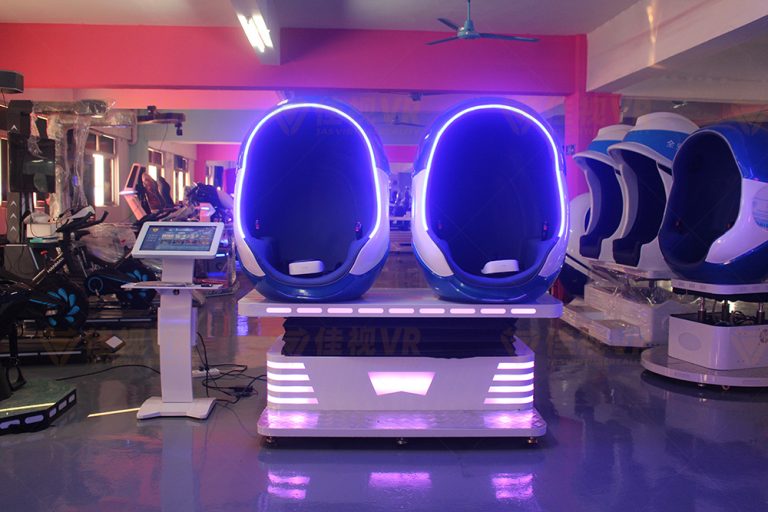
A “Boundless XR viewing seat” occupies only 2–5 square meters, integrating display, computing power, interaction, and content distribution. Modular assembly means the fastest turnaround from venue signing to official operation is just 10 days. This means site selection is no longer constrained by “whether it can be converted into an XR space”—instead, the logic reverses: anywhere there are people, placing a seat starts generating revenue. Shopping mall corridors, scenic area rest spots, transportation hub waiting areas, cinema lobby corners—these “leftover” spaces that traditional cinemas disdain are precisely the best hosts for the single-seat model.
For larger full-sensory large spaces, cost control shifts to equipment turnover rate and content reuse rate. Yuehua Entertainment’s VR concert project provides a reference: hundreds of headsets are centrally placed in a cinema, with multi-person synchronized playback and unified broadcast control organizing the viewing experience. Tickets are priced at 188 yuan, equipment is leased rather than purchased, and although production costs exceed ten million yuan, they can be amortized through multi-city tours. For small and medium-sized operators, the more pragmatic approach is to choose wireless streaming or all-in-one solutions, avoiding the procurement and maintenance burden of backpack PCs, while accessing platform-based content libraries with per-screening revenue sharing rather than one-time buyouts.
Labor costs also need to be “minimized.” An ideal configuration for a hundred-square-meter XR experience store is one store manager plus two part-time guides. The guides’ job is not to explain the plot but to help users put on headsets properly, confirm safety boundaries, and handle sudden dizziness. Standardized SOPs can compress training to half a day, meaning part-time college students are fully capable—keeping labor costs below 15% of revenue.
III. Spatial Strategy: De-Cinemaization, Decentralization, De-“Destinationalization”
The core judgment behind Xiying’s “Hundred Cities, Thousand Cinemas” project deserves repeated chewing by every practitioner: cinema’s competitors have long ceased to be just cinema. When users walk into a mall, they can freely choose among XR experiences, escape rooms, exhibition photo ops, and interactive installations. If XR cinemas define themselves as “destinations requiring dedicated time planning,” they will forever be trapped in the cage of low-frequency consumption.
The spatial logic of the profitability plan must therefore be reversed: don’t make users come to you—go where users already are. Xiying has placed Boundless XR cinemas in Guangzhou’s Grandview Mall, Xi’an’s cultural district, and Hefei’s commercial areas, covering six major scenarios including cultural districts, core commercial areas, popular scenic spots, and transportation hubs. Shanghai Film Group stuffed XR cinema halls into cinema lobbies, exploiting the “time gaps” when audiences arrive early or are unwilling to leave immediately after screenings. Henan Broadcasting System’s “Daxiangyuan · Aoying” chose Wanda Plazas and scenic areas—the Luoyang store targets young trend-seekers, the Shangqiu store targets families with children—with the same brand configuring different content in different scenarios.
The profitability significance of this “embedded” strategy is that rent costs are shared by the scenario owner, and customer acquisition costs are diluted by existing foot traffic. Malls are willing to offer favorable rents or even revenue-sharing terms to XR cinemas because they need fresh experience formats to drive traffic; cinemas are willing to give up lobby space because they need non-ticket revenue to offset box-office decline; scenic areas are willing to introduce XR projects because they need to extend visitor dwell time. When your existence benefits the scenario owner, the negotiating leverage is no longer in their hands.
Furthermore, the degree of standardization determines the speed of spatial replication. Xiying’s single-seat system can be assembled “LEGO-style,” Shanghai Film Group’s XR virtual cinema hall doesn’t alter the cinema’s original circulation, and Henan Broadcasting System’s stores go from signing to opening within weeks. Whoever can compress the store-opening cycle to the shortest will occupy the most quality locations within the window period.
IV. Content Assetization: From “Making a Project” to “Building a Library”
The most fatal financial trap in early XR large spaces was: every project was custom-developed at a cost of hundreds of thousands to millions of yuan, and after completion, it screened at only one venue—making payback a distant prospect. This “project-based” thinking must be replaced by “asset-based” thinking.
The content strategy of the profitability plan contains three levels. The first level is flagship IPs for brand-building. Xiying’s Xuanzang and Kucha won the Best Virtual Reality Film at the Beijing International Film Festival—academic endorsement plus Silk Road cultural themes make it irreplaceable in scenic area and cultural venue scenarios. iQIYI’s Luoyang relies on the series’ fan base, giving the offline theater a natural traffic entrance. The role of flagship IPs is not to make the most money directly but to establish the cognitive anchor that “this XR cinema has great content.”
The second level is standardized content for turnover. The greatest advantage of seated-viewing XR cinemas is that content can be standardly screened on any identical seat, following the film industry path of “production—distribution—exhibition.” This means one content library can serve hundreds or thousands of terminals. Xiying’s slate includes cultural blockbusters like Xuanzang and Kucha as well as lightweight content for families with children and young audiences—dinosaur adventures, underwater exploration, Sanxingdui—covering different crowds in different time slots. The richness of the content library directly determines repurchase rates—users come the first time out of curiosity, and the second time because last time they saw dinosaurs and this time they want to see space.
The third level is AI-driven rapid iteration. Generative AI is compressing the cycle of 3D modeling and scene generation from months to weeks or even days. For operators, this means content direction can be quickly adjusted based on box-office data and user feedback: if a historical theme sells well in scenic areas, add more of the same; if a sci-fi theme underperforms in commercial districts, reduce procurement weight. Content is no longer a gamble but an asset portfolio that can be tested in small steps and iterated rapidly.
V. Traffic Operations: Turning “One-Time Check-Ins” into “Monthly Repurchases”
There is a problem in the XR large-space industry that is repeatedly mentioned but rarely truly solved: repurchase rate. For most projects, user lifetime value equals a single ticket price, meaning customer acquisition costs eat most of the profit. Shunxi Universe’s hundred-square-meter stores achieve repurchase rates above 30% through self-developed IPs and continuously updated full-sensory experiences. But 30% is only a passing grade in the experience consumption industry—top escape room brands achieve 40%+, and membership repurchases at gyms and KTVs are measured in years.
The core of improving repurchase rates is not “making another new piece of content” but establishing an ongoing relationship between users and the space. The simplest approach is membership: monthly cards, quarterly cards, multi-visit cards that lock in users’ long-term consumption budgets. A more refined approach is content scheduling: treating XR experiences like a cinema with “slates”—new short films weekly, theme changes monthly, limited-edition content on holidays. Once users develop the habit of “checking in every so often to see what’s new,” repurchase becomes a natural outcome.
Online traffic operations are equally critical. Douyin and Meituan have already formed a standardized loop of “content seeding—online group buying—offline redemption.” A 15-second XR experience short video—if it captures users exclaiming after putting on headsets, reaching out to touch virtual objects, and looking reluctant to take off the headset—will have far higher conversion rates than any polished poster. The key is that the video should sell not “technology” but “the emotion after the experience.” Shanghai Film Group’s data shows that after three stores began operating simultaneously, content configuration, equipment maintenance, and user feedback could be cross-validated across different commercial districts—meaning operational experience itself is becoming a replicable asset.
VI. Scaling Path: Self-Operate to Prove, Franchise to Scale, Platform to Collect Rent
Single-store profitability and scale profitability are two different things. An XR cinema earning 100,000 yuan a month can be a good business, but to reach a hundred or a thousand stores requires a completely different capability structure. Analysys judges that from 2026 to 2030, industry competition will shift from “hardware comparison” to “ecosystem competition,” with standardized replication as the watershed.
Xiying’s “Hundred Cities, Thousand Cinemas” offers a referenceable rhythm: self-invest in 100 flagship stores in the first two years to validate the model, build the brand, and refine SOPs, while driving 200 market-invested stores; within five years, self-build 1,000 stores and drive 10,000, targeting annual box office of 30 billion yuan. The role of self-operated stores is not to contribute the most profit but to serve as “living showrooms”—when partners visit, they see real operating data, real user feedback, and real payback cycles, making signing willingness far higher than looking at a PowerPoint.
The design of franchise and partnership models requires restraint. The brand owner earns not one-time franchise fees but ongoing content revenue sharing and supply chain margins. Franchisees provide venues and local operations; the brand provides equipment, content updates, ticketing systems, and training. The advantage of the single-seat model is fully evident here: one seat is an independent operating unit, franchisee investment is controllable, and brand management radius is also controllable. Henan Broadcasting System’s “Daxiangyuan · Aoying” aims to complete 100+ stores nationwide by the end of 2027, following the same path of leveraging Oscar Cinema Chain’s channel resources and the broadcaster’s content accumulation, using state-owned brand trust to lower partners’ decision-making thresholds.
The lighter platform model is the ultimate form. When the number of offline terminals is large enough, the brand owner can step back and only handle content distribution and broadcast control management, extracting distribution shares from every ticket like a cinema chain company. Sandbox VR’s global platform model has already validated this path: content providers, technology providers, and venue operators each play their roles on the platform, and the platform earns from connection and efficiency. For players in the Chinese market, whoever first builds a distribution network covering enough terminals will have the opportunity to occupy the upstream of the value chain in the next stage.
Conclusion
The profitability model for XR full-sensory large spaces essentially answers a new version of an old question: after the novelty of technological experience fades, what kind of business can still make money sustainably? The insight from Xiying’s single-seat model is to break the experience into minimum units that are standardized, replicable, and independently accountable; the insight from Shanghai Film Group’s cinema lobby experiment is to go where users already are rather than waiting for them to come; the insight from iQIYI’s and Henan Broadcasting System’s IP paths is that content is not a one-time consumable but an asset that can be monetized repeatedly.
This industry is still fragmented, still lacks unified standards, and still has large numbers of single projects struggling on the profit-loss line. But the models that have worked are becoming clear: revenue must be layered, costs must be elastic, spaces must be embedded, content must be assetized, repurchases must be designed, and scale must be paced. There won’t be too many people who get all six right at the same time. And that is precisely where the opportunity lies.
RELATED POSTS
Multiple Application Scenarios and Social Value of the J-20 National Defense Education Simulator
Analysis on Diverse Application Scenarios of J-20 National Defense Education Simulator
A Thrilling Immersive Experience – The Fatal Attraction of Horror Scenes in VR Experience Stores
Diversified Application Scenarios and Practical Value Analysis of Simple Car Driving Simulators
Diverse Applications and Educational Value of VR Campus Safety Experience Halls in Schools