VR Motorcycle Racing Simulator Mall Drainage Plan
1. Introduction: Shopping Malls Need a New Experience That “Brings Its Own Traffic”
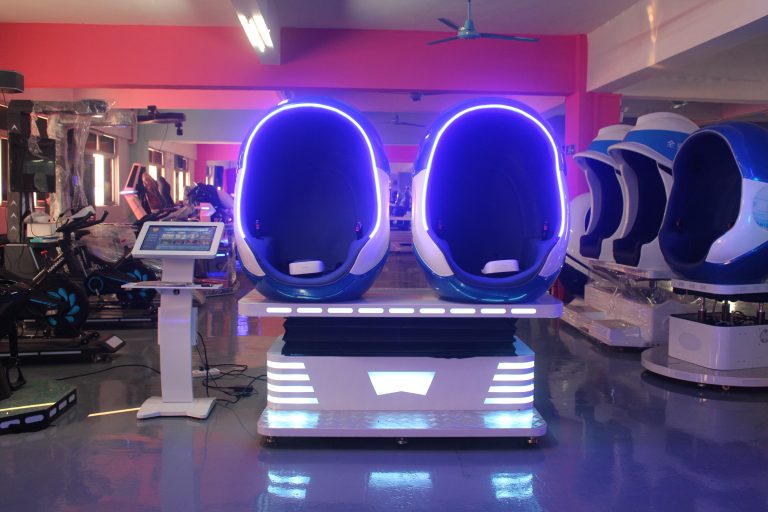
In recent years, traditional department stores and shopping centers have generally faced the pressure of declining customer flow and lower transaction conversion rates. Consumers’ motivation for visiting shopping malls has shifted from “shopping for goods” to “seeking experiences”. After catering, parent-child entertainment and cinemas, shopping malls urgently need new experience-oriented business formats to create topics, extend customer stay time and boost repeat visit rates. The VR motorcycle racing simulator is exactly such a new product that combines “cool sci-fi sense, intense stimulation and natural communication potential”. It does not require a large site area, is unaffected by weather, and has controllable operating costs. Yet it allows customers to get immersed and excited with a low entry threshold as soon as they try it, becoming the most eye-catching attraction in shopping malls.
Centered on the main line of Experience Attraction — Viral Communication — Member Deposition — Repurchase Conversion, this complete traffic acquisition plan covers site selection, equipment configuration, pricing, activity planning and data review for the deployment and operation of one or multiple VR motorcycle racing simulators.
2. Equipment Selection & Experience Design: The Cornerstone of Attracting Visitors
The premise of traffic generation is to “arouse people’s desire to try at first sight and keep them addicted after the first play”. Equipment and experience serve as the foundation of the plan and must be properly arranged.
Core Hardware & Selling Points
- Adopt VR motorcycle racing simulators equipped with a 6-DOF motion platform. Riders can obtain realistic gravity shift and road surface feedback while cornering, accelerating and braking. This is the core experience difference that distinguishes it from ordinary VR headsets.
- Equipped with high-performance headsets and curved screens for smooth images free of motion sickness. Handlebars, footrests and seats are laid out in real motorcycle proportions to lower the entry barrier.
- The software library covers various styles of tracks: urban arcade racing, mountain road cornering, off-road tracks, neon night tracks and more, catering to preferences of different age groups and genders.
- The floor area for a single device is controlled within 2.5–4 square meters. Commercial models support billing, settlement and member management functions for unified operation management.
Tiered Experience Design
- Basic Experience Package (3-minute race): Focus on low barriers and quick gameplay, with a low price to create queues and gather crowds.
- Advanced Package (Track Challenge / 2-player Battle): Increase competitiveness and fun, suitable for friends, couples and parent-child teams.
- Pro Player Package (Timed Leaderboard): Combine daily/weekly leaderboards to give “score-chasing” players goals and something to show off.
Through tiered packages, a single device can retain casual passers-by and lock in core players chasing high scores and competitions.
3. Site Selection & Customer Flow Routes: Convert Passing Crowds into Visitors
Three Core Principles for Site Selection
- Intersection of Passenger Flow: Prioritize locations near escalators, elevators, the edge of atriums, or between cinemas and catering zones, which are crossroads of visitor movement to guarantee dense natural foot traffic.
- Visual Accessibility: Place the equipment where customers can easily spot it; avoid obstructions such as pillars and green plants. Use light strips and looped gameplay footage on screens to create an effect of “attracting attention at a glance”.
- Ambience & Sound: Moderately amplify engine roars, cheers and leaderboard notifications to create a lively atmosphere and trigger the herd mentality.
Secondary Marketing During Queuing
Queuing itself is advertising. Install a screen showing the daily champion, gameplay tips and promotional posters in the waiting area. Arrange staff to actively guide visitors to “watch others play before trying themselves”, turning waiting time into a chance for conversion.
4. Pricing & Payment Design: Drive High-frequency Visits with Low-threshold Offers
Pricing Strategy
Adopt the structure of low-cost trial + member discounts + bundled packages. The price for the basic trial package is slightly lower than the average price of surrounding entertainment businesses to reduce the psychological barrier for first-time visitors. Launch 2-round bundles, parent-child packages and couple packages to raise average customer spending. Provide more favorable per-game prices for membership and stored-value cards to bind long-term visits.
Free Traffic-generation Mechanisms
Set 1–2 free experience slots every day or offer half-price deals for the first N customers to create a rush atmosphere. Distribute “free first-round vouchers” on shopping mall event days and holidays, attracting new customers to try and naturally pay for extended gameplay.
5. Viral Communication: Turn Every Player into a Promoter
One major advantage of the VR motorcycle racing simulator is that the experience is naturally suitable for recording and sharing.
Check-in & Content Sharing
Set up professional phone holders, lighting and backdrop boards in the experience zone to guide players to record first-person and third-person riding videos. Use leaderboards, achievement badges and unlockable vehicle models to encourage players to share their race results and videos, generating UGC content. Offer small gifts or discounted extended gameplay for players producing high-quality videos to motivate continuous content creation.
Social Platform Collaboration
Cooperate with the official Douyin, Xiaohongshu and Dianping accounts of the shopping mall to release trial and store-exploring content. Combine group-buying vouchers on local life platforms and collaborate with local influencers. Launch challenges such as the “Coolest Cornering Contest” to expand exposure via platform traffic pools and guide online audiences to the offline site.
Private Domain User Deposition
Invite users to scan the QR code and join the store community to receive exclusive coupons and daily missions. Publish competition previews, new track unlock notifications and member-day activities within the community to continuously engage and reactivate users.
6. Event Planning & Scenario Marketing: Create Continuous Hype
Traffic attraction is not a one-time effort. Periodic activities are required to sustain popularity.
- Weekly Regular Activities: Host 2-player battles and beginner-friendly races from Friday to Sunday to peak weekend popularity.
- Monthly Themed Activities: Launch limited tracks, themed decorations and joint gameplay for holidays (May Day, National Day, mall anniversaries).
- Cross-industry Cooperation: Partner with catering stores, cinemas, children’s playgrounds and clothing brands inside the mall. Launch offers such as “spend a certain amount to get a free trial” or “trial consumption credit for shopping” to drive mutual customer diversion.
- Business & Educational Scenarios: Undertake B-side orders including team-building activities, parent-child research tours, birthday parties and pre-event warm-up for corporate conferences, opening incremental revenue beyond regular mall operations.
7. Membership System & Repurchase Conversion: Turn One-time Visitors into Repeat Customers
- Growth System: Players level up from Novice → Rider → Racing God based on accumulated play rounds/duration, unlocking vehicle models, tracks and exclusive badges.
- Stored-value Incentives: Set multiple tiers of stored-value cards, gifting extra play rounds or limited experiences.
- Benefit Design: Members enjoy priority queuing, one free round per week, a free play session on birthdays, and referral rewards for inviting friends.
- Churn Recovery: Push notifications of “new track unlock / double points for limited time” to inactive members who have not visited for a period to re-engage them.
8. Data Review & Continuous Optimization
Track core metrics daily: conversion rate (onlookers → paying players), repeat purchase rate, average customer spending and queuing duration. Observe the popularity of different tracks and time slots via device backend data to dynamically adjust promotions and pricing. Filter high-performing traffic channels based on activity ROI and UGC output, increase investment in effective channels and phase out inefficient campaigns.
9. Revenue Estimation & Implementation Suggestions
Revenue Model (for single device, for reference)
With 40–60 daily visitors and an average customer spend of 25–40 RMB, monthly revenue can reach approximately 30,000–70,000 RMB. With additional B-side group purchases and stored-value membership income, the payback period can generally be controlled within 6–12 months. The actual figure varies depending on equipment purchase cost, rent and local consumption levels.
Implementation Advice
It is recommended to launch a pilot with 1–2 units plus intensive operational activities to verify the business model. Negotiate for better locations or expand the number of devices according to data performance. Meanwhile, keep updating software content to avoid novelty decay and keep the experience fresh for returning customers.
Conclusion
A VR motorcycle racing simulator is not a device that generates profit simply by being placed on site. Instead, it serves as a traffic engine requiring operation, hype and user retention. Its value lies not only in selling a single game session, but in creating hot topics, gathering crowds, accumulating members and realizing sustainable monetization. Deliver great experiences, boost social sharing and retain users, and it will become the most eye-catching traffic-generating attraction inside the shopping mall.
RELATED POSTS
What are the advantages of car driving simulators in driving schools?
VR Earthquake Simulation Experience Hall: Diverse Application Scenarios and Popular‑Science Practical Value
Flight Simulator: Reshaping the Future of Aviation Safety and Training
In-depth analysis of application scenarios of eVTOL simulators
Can the driving simulator used in driving schools replace the instructor’s teaching?