
The Value Restructuring and Practical Innovation of Driving Training in Military Training
I. Introduction
Against the background of the accelerated evolution of all-domain operations, joint operations and intelligent warfare, the capability of military mobility and support has become one of the core indicators measuring the development of military combat effectiveness. Military driving training, as a basic and supportive part of troop mobility, logistics supply, equipment transportation and battlefield support, has been upgraded from a traditional service skill training to a key link in the construction of combat capability system.
Different from civil driving training, which focuses on road compliance, military driving training is fundamentally oriented toward actual combat, all-domain adaptability, multi-capability development and high intensity, serving as an important bond connecting personnel, equipment and battlefield environments. Currently, with the accelerated deployment of new military vehicles, the expansion of complex battlefield environments and the deep advancement of civil-military integration, traditional military driving training models face new challenges and opportunities in training content, organization methods, assessment standards and resource allocation. Constructing a scientific, systematic and intelligent military driving training system is not only related to the efficiency of daily service support, but also directly affects mobile survivability and sustained combat capability in wartime. This paper systematically analyzes the functional positioning and practical paths of driving training in military training from the perspectives of value orientation, system composition, civil-military integration, technology empowerment and development trends.
II. Core Value and Strategic Positioning of Military Driving Training
(A) Basic Support for Combat Effectiveness Generation
Modern warfare emphasizes rapid response, long-range projection and full-domain arrival. The speed, sustainability and battlefield survivability of troop mobility directly determine the initiative in operations. As “combatants on wheels”, military drivers’ skills directly affect the quality of key tasks such as equipment transportation, ammunition supply, fuel delivery, casualty evacuation and communication hub construction. It can be said that without a reliable and efficient military driving training system, there will be no stable and sustained battlefield mobility support, and the generation of combat effectiveness will lose an important foundation.
(B) Survival Capability Guarantee in Complex Environments
The most prominent feature distinguishing military driving training from civil training is its extreme environmental adaptability and battlefield emergency response capability. From high-altitude anoxia, desert Gobi, ice and frozen soil to muddy wading, low-light night operations and electromagnetic interference environments, military drivers must maintain stable driving capabilities in all weather and terrain. Meanwhile, in the face of emergencies such as tire blowouts, brake failures, engine malfunctions, vehicle fires and enemy attacks, they must make rapid judgments and take precise actions to minimize equipment losses and personnel risks, improving battlefield survivability.
(C) An Important Carrier for Civil-Military Integration and Resource Coordination
Military driving training is one of the most closely coordinated and practical fields between the military and civilian sectors. Civil driving training systems are mature, with complete venues and sufficient coaching resources, while the military has advantages in military standards, practical subjects and discipline management. Through joint cultivation, mutual qualification recognition and resource sharing, the military can effectively alleviate problems such as shortage of training venues, high equipment wear and long training cycles, achieving one training session for both military and civilian use and mutual benefits, improving military training efficiency while laying a skills foundation for veterans’ employment and entrepreneurship.
(D) Key Support for Non-War Military Operations
In disaster relief, counter-terrorism, border control, international peacekeeping and other non-war military operations, military vehicle drivers often bear the brunt of mobility tasks. An efficient driving training system can quickly cultivate a large number of drivers capable of complex road driving, emergency rescue coordination and high-intensity continuous operations, providing fast and reliable mobility support for emergency responses and demonstrating the military’s emergency response capacity and social responsibility.
III. Essential Differences Between Military and Civil Driving Training
Military driving training is not a simple extension of civil driving training, but a military professional training comprehensively upgraded in objectives, standards, content and environment. The differences are mainly reflected in:
Goal Orientation
Civil driving training focuses on compliance with traffic laws and safe road use; military driving training centers on completing combat support tasks and improving battlefield survivability, emphasizing actual combat efficiency.
Skill Requirements
Civil training covers basic driving and regular road conditions; military training includes multi-equipment driving, complex terrain driving, formation coordination, battlefield repair and emergency avoidance.
Environmental Conditions
Civil training is limited to standardized training grounds and public roads; military training covers extreme environments and simulated battlefields such as plateaus, mountains, deserts, rain and snow, night and electromagnetic interference.
Intensity Standards
Civil driving emphasizes work-rest balance; military driving requires long hours of continuous operation, high-intensity stress tolerance and stable high-precision operation, with strong physical and mental resilience.
Assessment Systems
Civil driving tests are based on fixed subjects; military driving training implements a full-process elimination system and graded assessment system, integrating theory, practice and comprehensive drills, directly linked to post qualifications.
IV. Core Composition and Training Content of Modern Military Driving Training System
(A) Basic Theoretical System
Focusing on military vehicle structure, principles, power transmission, braking and steering systems, military traffic regulations, safety management, confidentiality discipline and battlefield first aid, it consolidates drivers’ theoretical foundation and strengthens discipline, safety and battlefield awareness.
(B) Basic Driving Skill System
Including starting, stopping, shifting, precise reversing, ramp positioning, continuous curves, high-speed driving and formation driving, it emphasizes standardized operation, directional stability, distance judgment and speed control, laying a foundation for complex environment driving.
(C) Complex Environment and Special Driving System
This is the core module of military driving training, including:
Extreme terrain: muddy, gravel, icy, wading, steep and narrow roads;
Extreme environments: high-altitude anoxia, high/low temperatures, sandstorms, heavy fog and low-light night driving;
Special subjects: railway loading positioning, ro-ro ship driving, traction equipment displacement, minefield passage and concealed camouflage driving;
Emergency response: tire blowouts, brake failures, vehicle fires, emergency repairs, battlefield avoidance and protection.
(D) Comprehensive Actual Combat Drill System
Through long-distance marches, cross-regional mobility, continuous battlefield emergency handling, multi-vehicle coordinated support and full-process support task simulation, it realizes the transformation from training to combat and from skills to capabilities, testing and improving drivers’ comprehensive literacy under real pressure.
(E) Graded Certification and Post Adaptation System
Military driving training generally implements a graded management system of primary, intermediate, senior and special-class drivers, with different levels corresponding to different vehicle types and tasks, forming a closed-loop management of “training-assessment-certification-post-promotion” to ensure personnel-equipment matching and consistency between training and application.
V. Innovative Practice of Military Driving Training from the Perspective of Civil-Military Integration
(A) Joint Military-Civilian Training to Shorten Growth Cycles
Relying on high-quality civil driving training institutions to complete basic driving skills and obtain civil licenses, the military then carries out special intensive military training, greatly reducing repeated investment in basic subjects and improving training efficiency. Meanwhile, it promotes the connection between military and civilian courses, integrating battlefield emergency and complex road content into civil training to achieve universal basic skills.
(B) Mutual Qualification Recognition to Open Employment Channels
After discharge, veterans can apply for civil Class B2 or above licenses with military driving licenses and military certificates without repeating road tests in accordance with policies. This not only saves social resources but also provides core competitiveness for veterans engaged in logistics, engineering, transportation and other industries, transforming military skills into social value.
(C) Resource Sharing to Improve Training Quality
The civilian sector provides standardized venues, simulation equipment and professional coaches; the military provides military subjects, actual combat standards and management models, jointly building civil-military integrated driving training bases, realizing shared venues, teachers and standards, effectively solving the shortage of training resources in grassroots units.
VI. Technology Empowerment: Intelligent Driving Training Becomes the Mainstream
(A) Wide Application of Simulation Training
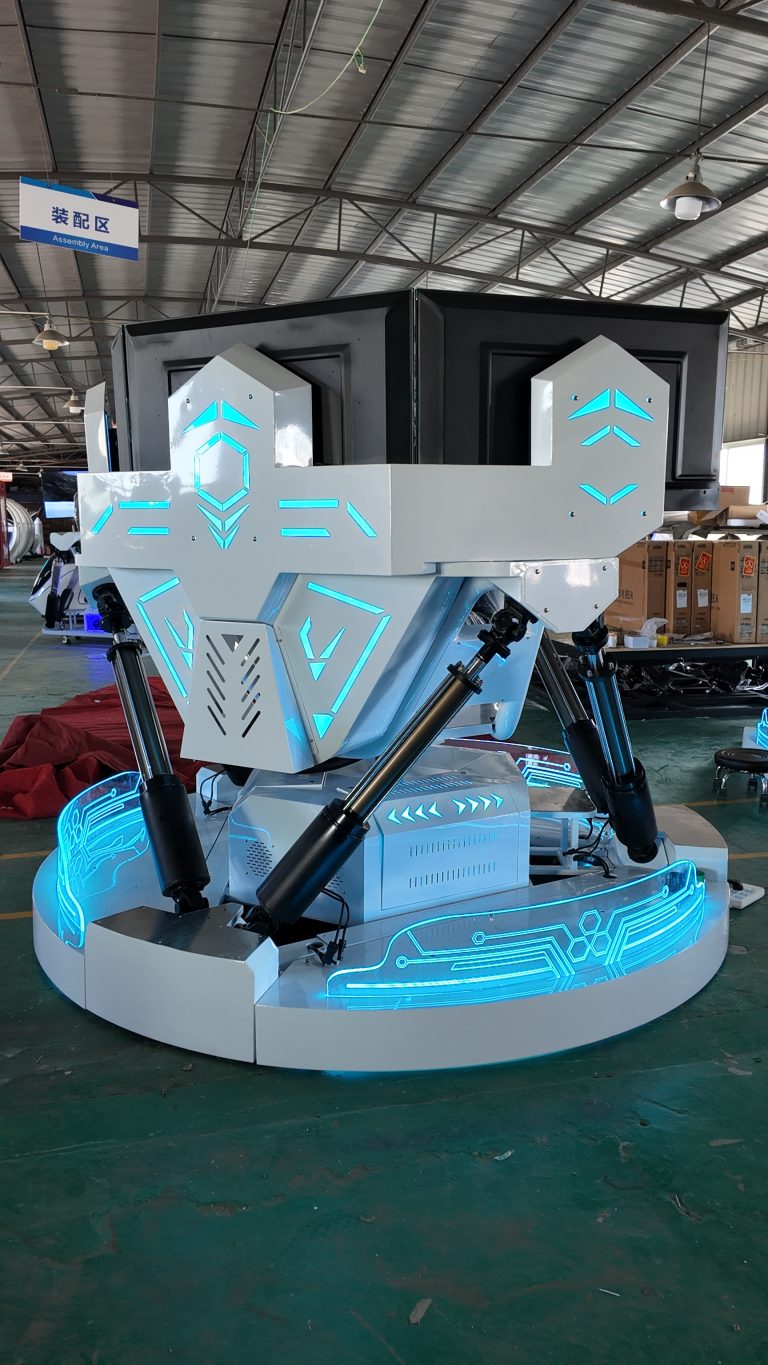
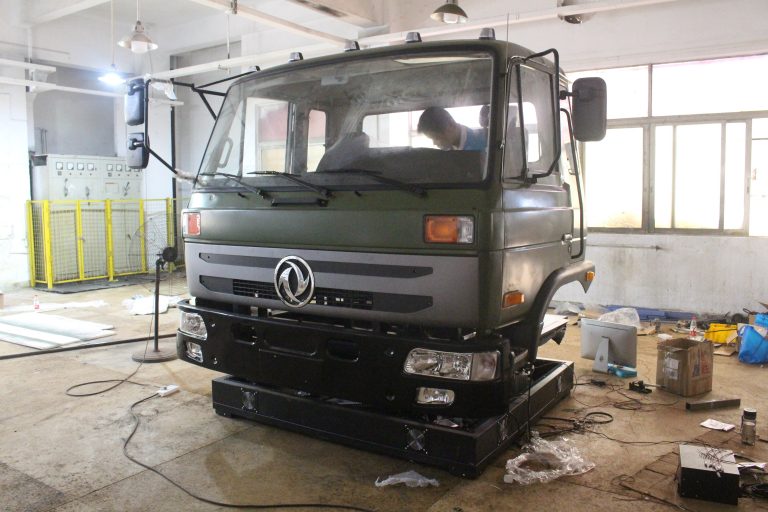
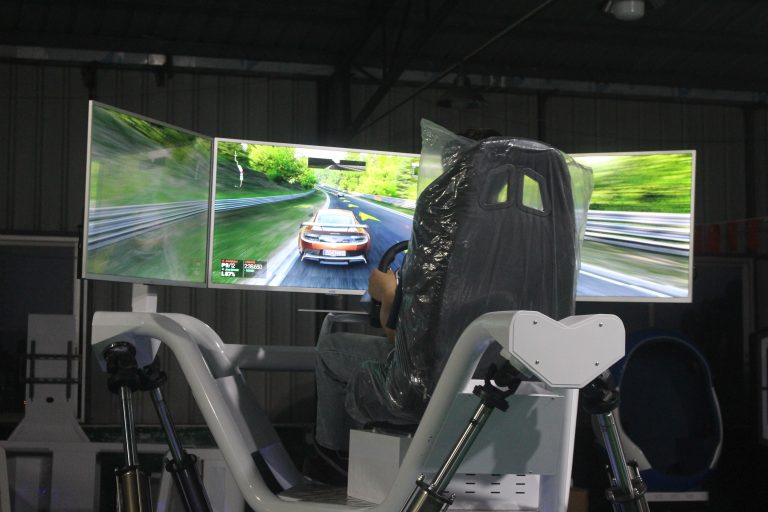
VR/AR driving simulators and vehicle dynamics systems can build virtual environments such as plateaus, deserts, rain and snow and battlefield emergencies with low cost, zero risk and high repeatability. New drivers consolidate skills on simulators before real-vehicle training, significantly reducing equipment wear and safety risks and shortening talent growth cycles.
(B) AI Intelligent Evaluation and Precise Teaching
Through AI sensing equipment and behavior analysis systems, operating data is recorded in real time and evaluation reports are automatically generated, achieving standardized evaluation, targeted correction and personalized teaching, overcoming the subjectivity and inconsistency of manual evaluation and improving training refinement.
(C) Upgrading of Actual Combat Training Facilities
Construction of realistic training facilities such as railway flatcars, ro-ro ships, obstacle sections, wading fields and low-light training grounds highly restores battlefield environments, seamlessly connecting training and battlefields, truly realizing “training like fighting and fighting like training”.
VII. Challenges and Development Directions of Current Military Driving Training
(A) Main Challenges
Rapid deployment of new equipment brings pressure to update training content;
High difficulty and cost in extreme environment training support;
Low efficiency of traditional training models and long talent growth cycles;
Need for further coordination between military and civilian standards and mechanisms.
(B) Development Directions
Actual Combat Orientation: Dynamically update training outlines and subject systems based on combat tasks;
Technological Transformation: Expand the proportion of simulation training and promote intelligent driving training platforms;
Systematic Promotion: Improve the whole-chain management of graded training, certification, assessment and promotion;
Deep Civil-Military Integration: Promote joint research, resource construction and talent cultivation between military and civilian sectors.
VIII. Conclusion
Military driving training is a basic, critical, ordinary yet important part of the military training system. Its value is reflected not only in skill teaching, but also in combat effectiveness generation, battlefield survival support, civil-military coordinated development and emergency response capacity. Against the background of intelligent, all-domain and systematic operations, military driving training is comprehensively transforming from traditional skill training to actual combat, intelligence, multi-capability and civil-military integration.
Only by continuously optimizing the training system, innovating training modes, strengthening technology empowerment and deepening civil-military integration can we cultivate a group of high-quality military drivers with excellent driving skills, strong support capabilities, solid work style and combat readiness, providing solid and reliable support for the improvement of military mobility and combat effectiveness, and consolidating the “solid foundation on wheels” for the achievement of the goal of strengthening the military in the new era.
RELATED POSTS
A New Benchmark for Smart Driving Training — Driving Simulator, Making Learning to Drive More Efficient, Safer and Easier
Six-Axis Dynamic Attitude Simulation Technology: Redefining New Experiences of UAV Aerial Photography and eVTOL Flight Simulation
Driving Simulators Unveiled: The Ultimate Co-Pilot for Driver Training
What is the core of an automobile driving simulator?
In‑depth Analysis of Application Scenarios of 4‑DOF Racing Simulator