Technology Empowers Fire Safety Education: Immersive Protection for Life Safety — Application Practice and Development Prospect of VR Fire Experience Halls
Fire safety is a vital cornerstone related to the safety of people’s lives and property and the stable development of society. With the acceleration of urbanization and the increasing complexity of various buildings, the concealment, suddenness and harmfulness of fire hazards are constantly increasing. Traditional fire safety education and training models can no longer meet the needs of fire safety work in the new era. The rise of VR (Virtual Reality) technology has provided a new solution for fire safety education and training. VR fire experience halls have emerged as the times require, transforming abstract fire safety knowledge into immersive and interactive experiences, breaking the limitations of time, space and safety, and realizing a fundamental transformation of fire safety education from “passive indoctrination” to “active experience” and from “theoretical cognition” to “practical drill”. This article will comprehensively explore the application practice of VR fire experience halls from the aspects of core technical support, diverse application scenarios, core application value, existing problems and development trends, providing reference for promoting the modernization of fire safety education.
I. Core Technical Support of VR Fire Experience Halls
The efficient application of VR fire experience halls is inseparable from the integration and support of cutting-edge technologies. Its core technical system includes virtual reality technology, simulation technology, interactive control technology and data management technology. These four technologies work together to build a highly realistic, interactive and traceable fire experience environment, providing personalized and practical fire training services for various groups of people.
(I) Core Virtual Reality (VR) Technology
Virtual reality technology is the foundation of VR fire experience halls. Through devices such as head-mounted displays (VR headsets) and immersive projection systems, it constructs a 1:1 virtual fire environment that restores real scenes, realizing multi-sensory immersive experiences such as vision, hearing and touch. Current mainstream VR headsets adopt 4K resolution per-eye display technology, combined with a refresh rate of more than 90Hz to ensure no motion blur in visual images. Some high-end models integrate eye-tracking functions, which can monitor the distribution of students’ attention and provide a basis for subsequent training analysis. With the help of computer graphics technology, virtual scenes can accurately restore the fire light, smoke, flame spread trajectory of different types of fires, and even simulate sudden scenes such as building collapse and gas explosion, allowing experiencers to feel the oppression of real fires in a safe environment and breaking the limitation of traditional training that “can be seen but not touched”. At the same time, VR technology supports 360° free viewing angle switching, allowing experiencers to independently explore fire-fighting facilities and hidden danger points in the scene, enhancing the autonomy and sense of involvement of the experience.
(II) Simulation Technology
Simulation technology is the key to improving the authenticity of VR fire experience. It realizes dynamic simulation of fire scenes through accurate modeling of the occurrence and development laws of fires. The 3D scene developed with Unity 2021 LTS engine has built-in more than 200 dynamic parameters, such as building structure load-bearing, combustible distribution, and ventilation system status. Combined with NVIDIA’s RTX real-time ray tracing technology, it achieves real light and shadow effects such as flame reflection and smoke refraction, reducing the incidence of motion sickness among students to less than 8%. At the same time, simulation technology can simulate the disposal process of different scenes and types of fires, such as kitchen oil pan fire, high-rise building fire, shopping mall fire, electric vehicle charging fire, etc. It can also simulate the use feel and operation feedback of fire-fighting equipment such as fire extinguishers, fire hydrants and smoke masks. The handheld controller is equipped with force feedback function, which can simulate the weight and recoil of fire extinguishers, allowing experiencers to master real operation skills in a virtual environment. In addition, intelligent NPCs are set in the scene, which have attributes such as panic index and path memory, and will automatically adjust the escape route according to the fire development, enhancing the authenticity and challenge of the drill.
(III) Interactive Control Technology
Interactive control technology realizes real-time interaction between experiencers and virtual scenes, transforming fire experience from “passive viewing” to “active operation”. Through interactive devices such as data gloves, motion capture equipment and handles, experiencers can complete a series of operations such as alarm, fire extinguishing, evacuation and rescue in the virtual scene, such as picking up a virtual fire extinguisher and spraying it at the root of the fire, wearing a smoke mask, laying fire hoses, and guiding personnel evacuation. The positioning system adopts UWB ultra-wideband technology, achieving centimeter-level positioning accuracy within 2000 square meters. Combined with a full-body motion capture suit, it can accurately reproduce complex movements such as climbing and crawling. At the same time, the interactive system has a real-time feedback function. When the experiencer makes an incorrect operation (such as improper fire extinguisher spraying angle, using the elevator during evacuation, standing upwind during fire extinguishing), the system will immediately issue a voice prompt and screen warning, and simulate the consequences of incorrect operation, such as accelerated flame spread and smoke backflow, helping the experiencer correct mistakes in time and strengthen the memory of correct operations. The supporting physical environment simulation system includes a smoke generator, temperature control equipment and a vibration platform, which are linked with the VR scene in real time. When students approach the fire source in the virtual environment, the physical equipment triggers corresponding environmental changes synchronously, further enhancing the sense of immersion.
(IV) Data Management Technology
Data management technology provides support for the standardized operation and training effect evaluation of VR fire experience halls. By collecting information such as experiencers’ operation data, training duration and number of mistakes, it establishes a complete training file and data report. The system collects 27 behavioral data in real time, including operation categories (fire extinguisher spraying angle, fire hose laying speed), decision-making categories (evacuation route selection, priority rescue objects), and physiological categories (heart rate changes, number of operation mistakes), with a data collection frequency of 60 frames per second to ensure the continuity of records. Through big data analysis, it can accurately evaluate the experiencer’s mastery of fire safety knowledge and emergency response capabilities, identify weak links, and provide a basis for subsequent personalized training. At the same time, the data management system supports multi-person online training at the same time. Adopting a P2P hybrid network architecture, it can automatically assign roles and synchronize data such as position and equipment status. After the training, it automatically generates a team collaboration heat map to analyze the coordination degree. In addition, the data can be connected to the urban emergency management platform, enterprise EHS management system and school safety education platform, realizing “visual decision-making + closed-loop management” and providing data support for fire safety management.
II. Diverse Application Scenarios of VR Fire Experience Halls
With the advantages of immersion, safety and repeatability, VR fire experience halls have been widely applied in various scenarios such as public fire science popularization, enterprise fire training, campus fire safety education and fire rescue team training, covering different groups of people and different fields, realizing comprehensive coverage of fire safety education, and promoting the regular and professional development of fire education.
(I) Public Fire Science Popularization Scenario: An Important Carrier for Improving全民 Fire Awareness
Public fire science popularization is the most basic and extensive application scenario of VR fire experience halls, mainly targeting community residents and the general public, aiming to popularize basic fire safety knowledge and improve the public’s fire safety awareness and self-rescue and mutual rescue capabilities. With the promotion of policies such as the “14th Five-Year Plan for Fire Cause Development” and the “Opinions on Strengthening the Construction of Grassroots Emergency Capabilities”, VR fire experience halls have become a key infrastructure in the urban emergency management system. In community VR fire experience halls, experience projects such as fire hazard investigation, fire escape drill, fire-fighting equipment use and initial fire fighting are usually set up. For special groups such as the elderly, children and the disabled, the experience process and operation interface are optimized. For example, the community version adds an “elderly exclusive mode”, which enlarges operation guidelines and extends prompt voices, allowing different groups of people to participate in the experience easily.
For example, residents can simulate a home fire scene through VR equipment to investigate fire hazards in the kitchen, bedroom, balcony and other areas (such as aging wires, gas leaks, illegal stacking of flammable items, electric vehicle charging at home, etc.). The system will comment on the investigation results and explain the hazards and rectification methods of hidden dangers; in the escape drill scene, experiencers need to choose the correct escape route according to the evacuation signs, bend down and keep a low posture, cover their mouths and noses in a virtual environment filled with smoke and limited visibility, avoid fire and smoke, and master the escape principles of “not taking the elevator, not coveting property, and evacuating in order”; in the fire-fighting equipment use experience, experiencers can virtually operate dry powder fire extinguishers, carbon dioxide fire extinguishers, fire hydrants and other equipment, mastering the applicable scenarios and operation steps of different equipment. For example, for a kitchen oil pan fire, the gas must be turned off first before spraying, and for an electrical fire, the power must be turned off virtually.
In addition, VR fire experience halls can carry out immersive science popularization activities in combination with themed activities such as Fire Prevention Day and Work Safety Month. Through interactive games, knowledge quizzes, case restoration and other forms, they enhance the interest and attractiveness of science popularization, allowing the public to learn fire safety knowledge in a relaxed atmosphere. For example, the Changwu County Public Security Bureau’s Security Experience Hall has received more than 2,300 person-times, with primary and secondary school students accounting for 85%. The ability of students to correctly use fire-fighting equipment has increased by 75%, effectively promoting the improvement of public fire awareness.
(II) Enterprise Fire Training Scenario: Accurately Improving Employees’ Emergency Response Capabilities
Enterprises are high-incidence areas of fire hazards, especially in industries such as chemical industry, construction, warehousing and catering. Fire safety training is an important guarantee for enterprise production safety. Traditional enterprise fire training mainly focuses on theoretical explanation and on-site demonstration, which has problems such as single training form, limited practical operation opportunities, high safety risks and poor training effect. The application of VR fire experience halls has effectively solved these pain points, providing enterprises with accurate and practical fire training solutions. With the official implementation of the 2025 fire safety new regulations, it is clearly required that VR training duration be included in the assessment of fire facility operators, and operation data be connected to the “enterprise main responsibility traceability system”, which marks that VR fire training has become a rigid demand for enterprises’ compliant operation.
Enterprise VR fire experience halls can customize exclusive training scenarios according to industry characteristics and enterprise actual needs. For example, chemical enterprises can simulate dangerous chemical leakage fire and explosion accident disposal scenarios, construction enterprises can simulate construction site fire and high-altitude rescue scenarios, and catering enterprises can simulate kitchen oil pan fire scenarios. During the training, employees can conduct repeated practical drills, such as initial fire fighting, personnel evacuation, fire-fighting equipment operation and emergency rescue, without worrying about safety risks and property losses caused by incorrect operations. For example, a construction enterprise replaced traditional outdoor training with VR equipment, saving more than 500,000 yuan annually in venue rental, water resource consumption, equipment maintenance and other costs, and the pass rate of pre-job fire training for new employees increased from 71% to 98%.
At the same time, through the data management system, enterprises can real-time grasp the training situation of employees, and carry out targeted intensive training for the weak links in employees’ operations to ensure that each employee can proficiently master fire safety knowledge and emergency response skills. For example, Huining County Tobacco Monopoly Bureau organized employees to simulate office fires through VR equipment to practice initial fire fighting and escape skills; data from a chemical enterprise shows that after VR training, the standard rate of fire hydrant operation for employees increased from 42% to 91%, and the repeated error rate decreased by 83%. In addition, VR fire training can achieve full coverage. Whether it is front-line employees, managers or new employees, they can receive personalized training according to their own job needs, improving the overall fire safety level of the enterprise.
(III) Campus Fire Safety Education Scenario: Building a Safety Line for Adolescents
Adolescents are the key group for fire safety education. Campus fire safety is directly related to students’ life safety and the stable development of the campus. The entry of VR fire experience halls into campuses transforms abstract fire safety knowledge into vivid and interesting immersive experiences, which is in line with the cognitive characteristics of adolescents, effectively improving the effect of campus fire safety education, helping adolescents establish correct fire safety awareness and master basic fire safety knowledge and self-rescue and mutual rescue skills.
Campus VR fire experience halls usually set up experience projects such as fire escape drill, fire-fighting equipment cognition, fire hazard investigation and emergency rescue. Combined with the characteristics of campus scenes, they simulate fire scenes in classrooms, dormitories, canteens, libraries and other areas, allowing students to experience the hazards of fires in a virtual environment and learn escape skills. For example, in the dormitory fire scene, students can simulate how to correctly wear a smoke mask, evacuate in order, and call the 119 alarm phone after a fire occurs, mastering the escape principles of “bending down and keeping a low posture, covering the mouth and nose, not pushing, and not coveting property”; in the fire-fighting equipment cognition experience, students can closely observe the structure and use method of fire extinguishers, fire hydrants, emergency lights and other fire-fighting equipment through VR equipment, and virtually operate the equipment for fire fighting drills to deepen their understanding of fire-fighting equipment.
In addition, VR fire experience halls can be combined with campus safety education courses to become a practical base for campus safety education. By regularly organizing students to carry out experience activities, fire safety knowledge is integrated into daily teaching, realizing the regularization of fire safety education. At the same time, according to the characteristics of adolescents, interesting experience projects such as interactive games and fire-fighting challenges are designed, such as the “Fire Little Guard” challenge course, which allows students to master basic fire-fighting skills in a gamified way. After completing the training, a practical certificate can be issued to enhance students’ participation enthusiasm, allowing students to learn fire safety knowledge in entertainment and build a safety line for adolescents.
(IV) Fire Rescue Team Training Scenario: An Important Means to Improve Practical Disposal Capabilities
The practical disposal capability of fire rescue teams is directly related to the effect of fire fighting and emergency rescue, and to the safety of people’s lives and property. Traditional fire rescue training is limited by factors such as venue, equipment and safety, making it difficult to simulate complex and extreme fire scenes. The application of VR fire experience halls provides an efficient, safe and repeatable training platform for fire rescue teams, effectively improving the practical disposal capability and collaborative operation capability of fire rescue personnel.
VR training scenarios for fire rescue teams can simulate various complex fire scenes, such as high-rise building fires, underground building fires, forest fires, dangerous chemical fires, etc., simulating sudden situations such as fire spread, smoke diffusion and building collapse under different fire scenes, allowing fire rescue personnel to carry out practical drills in a virtual environment, familiarize themselves with the fire disposal process, and master rescue skills in complex scenes. For example, in high-rise building fire training, fire rescue personnel can simulate operations such as high-altitude rescue, staircase evacuation and fire fighting, practice how to use equipment such as fire elevators and aerial work platforms to carry out rescue, and how to deal with sudden situations such as building collapse and smoke poisoning; in dangerous chemical fire training, they can simulate dangerous chemical leakage, explosion and other scenes, practice how to wear protective equipment, handle leakage and fight fires, and improve the capability of dealing with dangerous chemical fires.
At the same time, the VR training platform supports multi-person collaborative drills, which can simulate the division of labor and cooperation of fire rescue teams, such as commanders, fire fighting teams, evacuation teams and rescue teams, allowing fire rescue personnel to cooperate to complete fire fighting and emergency rescue tasks in a virtual environment, improving the collaborative operation capability. In addition, through the data management system, the training data of fire rescue personnel can be analyzed, the training effect can be evaluated, and intensive training can be carried out for weak links to continuously improve the practical level of fire rescue teams. For example, the projects of Chongqing Fire Rescue Corps and Zhuankou Fire Rescue Station serve both public education and professional training through the combination of multiple scenes such as fire emergency theme hall and water fire emergency hall.
(V) Other Characteristic Application Scenarios: Expanding the Boundaries of Fire Education
In addition to the above main application scenarios, VR fire experience halls also play an important role in other fields, constantly expanding the boundaries of fire education. In the cultural and tourism integration scenario, such as national-level projects like the China Wetland Museum, fire safety is combined with ecological safety and nature education, targeting parent-child families and research groups; in the transportation field, it can simulate vehicle fires, tunnel fires and other scenes to provide fire training for drivers and traffic management personnel; in elderly care institutions, according to the characteristics of the elderly’s inconvenient movement and weak safety awareness, simple and easy-to-understand experience projects are set up to popularize fire safety knowledge and self-rescue skills; in the field of fire product research and development, VR technology can be used to simulate the use scenarios of fire products, test product performance, optimize product design, and improve the practicality and safety of fire products.
III. Core Application Value of VR Fire Experience Halls
The application of VR fire experience halls not only innovates the fire safety education and training model, but also plays an important role in improving public fire awareness, strengthening emergency response capabilities, reducing fire risks and saving training costs. It has significant social and practical value, providing a new development path for fire safety work.
(I) Breaking the Limitations of Traditional Training and Improving Training Effect
Traditional fire safety education and training models have problems such as single form, poor immersion, limited practical operation opportunities and high safety risks, making it difficult for experiencers to truly master fire safety knowledge and emergency response skills. According to the survey data of the Fire Rescue Bureau of the Ministry of Emergency Management, the correct mastery rate of fire-fighting equipment use methods by students after traditional training is less than 40%, and the complete reproduction rate of fire emergency procedures is less than 30%. Through immersive experience and interactive operation, VR fire experience halls allow experiencers to “be personally on the scene” to feel the fire scene, actively participate in fire safety knowledge learning and practical drills, effectively improving the interest and attractiveness of fire safety education and training, and deepening the experiencers’ memory and understanding of fire safety knowledge. At the same time, VR technology supports repeated drills, and experiencers can operate and correct mistakes repeatedly until they proficiently master the relevant skills, greatly improving the training effect. Ordinary people can master the standard fire fighting process after 15 minutes of VR training, truly realizing “practice once, master for a lifetime”.
(II) Reducing Training Costs and Ensuring Training Safety
Traditional fire practical training requires a lot of manpower, material and financial resources, such as fire-fighting equipment consumption, venue rental and personnel training, with high costs and certain safety risks. For example, improper operation of fire extinguishers may lead to fire out of control, and smoke simulation may cause respiratory discomfort. Once built, VR fire experience halls can be used repeatedly without consuming physical fire-fighting equipment or occupying a lot of venues, greatly reducing training costs. Compared with traditional outdoor training grounds, VR equipment can be set up in only 1.6 square meters, reducing the construction cost by 70%, and can complete 120 person-times of training per day. At the same time, experiencers carry out drills in a virtual environment, which will not be affected by fire, smoke, high temperature and other dangerous factors, completely eliminating safety risks during training, ensuring the personal safety of experiencers, and realizing “zero-risk and high-efficiency” training.
(III) Realizing Precise Training and Meeting Personalized Needs
There are differences in fire training needs among different groups of people and different fields. Traditional fire training mostly adopts a “one-size-fits-all” model, which is difficult to meet personalized training needs. VR fire experience halls can customize exclusive training scenarios and content according to the needs of different groups of people and different industries, realizing precise training. For example, for enterprise employees, customize industry-specific fire scenes and training content; for adolescents, design interesting and easy-to-understand experience projects; for fire rescue personnel, simulate complex and extreme fire scenes to improve practical disposal capabilities. At the same time, through the data management system, it can accurately grasp the training situation of experiencers, identify weak links, and carry out targeted intensive training to meet the personalized needs of different experiencers and improve the pertinence and effectiveness of training. The “intelligent cloud platform + multi-terminal experience equipment” architecture proposed by Xiaoqi Technology can configure differentiated training content according to industry and position to achieve precise training.
(IV) Promoting the Regularization of Fire Education and Improving the Overall Fire Literacy of the Public
The construction and application of VR fire experience halls have made fire education free from the limitations of time and space, providing public fire science popularization and training services anytime and anywhere, and promoting the regular development of fire education. Whether it is communities, enterprises, campuses or fire rescue teams, they can regularly carry out fire experience and training activities through VR fire experience halls, integrating fire safety knowledge into daily life, and allowing the public to improve their fire safety awareness and self-rescue and mutual rescue capabilities imperceptibly. At the same time, the interest and attractiveness of VR fire experience halls have effectively stimulated the public’s enthusiasm for participating in fire education, forming a good social atmosphere of “everyone learns fire safety, understands fire safety and abides by fire safety”, improving the overall fire literacy of the public, and laying a solid foundation for building a safe society.
(V) Assisting the Construction of Smart Fire Protection and Improving the Level of Fire Safety Management
With the continuous advancement of smart fire protection construction, as an important part of smart fire protection, VR fire experience halls have realized the real-time collection, analysis and sharing of fire training data through data management technology, providing data support for fire safety management. By analyzing the training data of experiencers, it can accurately grasp the weak links of fire safety among different groups of people and different fields, carry out targeted fire publicity and hidden danger investigation work, and improve the pertinence and effectiveness of fire safety management. At the same time, VR fire experience halls can be connected to smart fire protection systems and emergency rescue systems to achieve resource sharing and collaborative linkage, improve fire prevention, emergency response and rescue capabilities, assist the construction of smart fire protection, and promote the development of fire safety management in the direction of intelligence and refinement. Projects such as Meishan Urban Safety Experience Center and Hunan Changde Emergency Safety Experience Hall implemented by Xiaoqi Technology have all realized the connection with the urban emergency management platform, improving the regional fire safety management level.
IV. Existing Problems in the Application of VR Fire Experience Halls
Although VR fire experience halls play an important role in fire safety education and training and have significant advantages and value, there are still some problems and deficiencies in the actual application process, which restrict their further promotion and development, mainly reflected in the following aspects.
(I) High Construction Cost and Difficult Promotion
The construction of VR fire experience halls requires a lot of funds, including VR equipment purchase, scene development, venue decoration, technical maintenance, etc. The price of a complete set of VR fire experience equipment is relatively high. For some small and medium-sized enterprises, communities and rural areas, the construction cost is too high to bear, resulting in the limited promotion scope of VR fire experience halls and failure to achieve full coverage. Especially in remote areas and grass-roots units, due to insufficient funds, it is difficult to build standardized VR fire experience halls, which restricts the popularization and improvement of fire education.
(II) Outdated Scene Content and Lack of Pertinence
The scene content of some VR fire experience halls is relatively single, mostly general scenes, lacking personalized scenes for different industries and groups of people, and the scene content is not updated in a timely manner, which cannot keep up with the new changes of fire hazards, the new development of fire technology and the new requirements of fire regulations. For example, with the increase of new fire hazards such as electric vehicle fires and lithium battery fires, some VR fire experience halls have not added relevant scenes in a timely manner, leading to the disconnection between training content and actual needs and affecting the training effect. At the same time, the simulation degree of some scenes is not high enough, and the detail restoration is not accurate enough, which reduces the immersion and authenticity of the experience.
(III) Difficult Technical Maintenance and Shortage of Professional Talents
VR fire experience halls involve multiple fields such as VR equipment, simulation technology, interactive technology and data management technology, with high technical content, requiring professional technical personnel for maintenance and management. However, at present, there is a shortage of professional and technical talents in the field of VR fire protection in China. Many VR fire experience halls lack professional maintenance personnel, resulting in the failure of timely maintenance when equipment breaks down, affecting the normal operation of the experience hall. At the same time, some operators lack professional fire safety knowledge and VR equipment operation skills, unable to provide professional guidance for experiencers, affecting the experience effect and training quality.
(IV) The Enthusiasm of Experiencers to Participate Needs to Be Improved
Although VR fire experience has a certain degree of interest, some experiencers have insufficient understanding of VR fire experience halls, thinking that they are only “entertainment projects”, lacking attention to fire training and low enthusiasm to participate. Especially some adults think that they have mastered basic fire safety knowledge and do not need to participate in VR experience training, leading to low utilization rate of VR fire experience halls and failure to give full play to their role. In addition, the operation difficulty of some VR experience projects is relatively high, which is inconvenient for special groups such as the elderly and children to operate, also affecting their participation enthusiasm.
V. Development Trends of VR Fire Experience Halls
With the continuous upgrading of VR technology and the continuous advancement of fire safety work, VR fire experience halls will usher in better development opportunities. In the future, they will develop in the direction of intelligence, personalization, diversification and popularization, constantly improving the application model, enhancing the application effect, and providing stronger support for fire safety work.
(I) Technological Upgrading to Improve the Authenticity and Intelligence Level of Experience
In the future, VR technology will continue to upgrade, combining with cutting-edge technologies such as AI (Artificial Intelligence), AR (Augmented Reality), big data and the Internet of Things to further improve the authenticity and intelligence level of VR fire experience. Through AI technology, intelligent interaction and dynamic adjustment of virtual scenes can be realized, and the development trend of fire scenes can be automatically adjusted according to the operation behavior of experiencers, providing personalized guidance and feedback; combining with AR technology, virtual fire safety knowledge can be combined with real scenes, allowing experiencers to learn fire safety knowledge and identify fire hazards in the real environment, improving the practicality of fire education; through the Internet of Things technology, the linkage between VR equipment and real fire-fighting facilities can be realized, allowing experiencers to operate real fire-fighting facilities in the virtual environment, improving the pertinence and effectiveness of practical training. At the same time, VR equipment will develop in the direction of light weight and convenience, reducing the use threshold and improving the comfort of experience.
(II) Content Optimization to Create Personalized and Diversified Experience Scenes
In view of the current problems of single and outdated scene content in VR fire experience halls, in the future, we will strengthen the research and development and optimization of scene content, and create personalized and diversified experience scenes. According to the needs of different industries and groups of people, customize exclusive training scenes and content. For example, for the new energy industry, add scenes such as new energy vehicle fires and energy storage station fires; for the elderly, design simple and easy-to-understand experience projects; for adolescents, develop more interesting and interactive experience content. At the same time, establish a scene content update mechanism, timely add new fire hazards, fire technology and fire regulations related content to ensure that the training content is synchronized with the actual needs. In addition, we will strengthen the detail restoration of scenes, improve the simulation degree, and enhance the immersion of the experience.
(III) Reducing Costs to Promote the Popularization of VR Fire Experience Halls
With the popularization and industrialization of VR technology, the price of VR equipment will gradually decrease, and the construction cost of VR fire experience halls will also decrease accordingly, providing a guarantee for their popularization and development. In the future, we will increase policy support and financial assistance for the construction of VR fire experience halls, especially for small and medium-sized enterprises, communities, rural areas, etc., providing subsidies and preferential policies to promote the popularization of VR fire experience halls in various fields and regions. At the same time, we will explore diversified operation models, such as government-led, enterprise-operated and social participation, encouraging social capital to invest in the construction and operation of VR fire experience halls, and improving their utilization rate and sustainable development capacity.
(IV) Strengthening Talent Training to Improve Operation and Training Quality
In view of the shortage of professional talents in the field of VR fire protection, in the future, we will strengthen the training of professional talents, establish a sound talent training system, and cultivate a group of compound talents who master both VR technology and fire safety knowledge. Through colleges and universities and vocational colleges offering relevant majors and carrying out VR fire technology training, we will provide talent support for the operation and management of VR fire experience halls; at the same time, strengthen the training of existing operators and maintenance personnel, improve their professional skills and service level, and ensure the normal operation and training quality of VR fire experience halls. In addition, we will strengthen industry exchanges and cooperation, introduce advanced technologies and experiences, and promote the construction of the talent team in the field of VR fire protection.
(V) Integrated Development to Assist the Construction of Smart Fire Protection System
In the future, VR fire experience halls will be further deeply integrated with the smart fire protection system, becoming an important part of smart fire protection construction. Through data management technology, realize the data sharing and collaborative linkage between VR fire training data and smart fire protection systems and emergency rescue systems, providing more accurate and comprehensive data support for fire safety management; combine big data analysis to accurately identify fire hazards, early warning, and improve fire prevention capabilities; use VR technology to simulate fire scenes to provide support for the formulation and drill of emergency rescue plans, and improve emergency response capabilities. At the same time, VR fire experience halls will be deeply integrated with fire publicity, hidden danger investigation, emergency rescue and other work, forming a closed-loop system of “training – investigation – early warning – rescue”, and promoting the development of fire safety work in the direction of intelligence, refinement and scientization.
VI. Conclusion
As an important carrier of technology empowering fire safety education, VR fire experience halls, with the advantages of immersion, interactivity, safety and repeatability, have broken the limitations of traditional fire safety education and training, played an important role in various scenarios such as public fire science popularization, enterprise fire training, campus fire safety education and fire rescue team training, and provided strong support for improving public fire awareness, strengthening emergency response capabilities, reducing fire risks and promoting smart fire protection construction. Although there are still problems such as high construction cost, outdated scene content and shortage of professional talents in the application of VR fire experience halls, with the continuous upgrading of technology, continuous policy support and continuous construction of the talent team, VR fire experience halls will develop in the direction of intelligence, personalization, diversification and popularization, constantly improving the application model and enhancing the application effect.
In the future, we should give full play to the advantages of VR technology, constantly optimize the construction and operation model of VR fire experience halls, strengthen the research and development of scene content and talent training, promote the popularization and application of VR fire experience halls in various fields, let more people learn fire safety knowledge and master emergency skills through immersive experience, build a solid fire safety line, and contribute to building a safe, harmonious and stable social environment. At the same time, we should also strengthen industry self-discipline and standardization construction, promote the healthy and sustainable development of the VR fire protection industry, and let technology truly become an “invisible bodyguard” guarding life safety.
RELATED POSTS
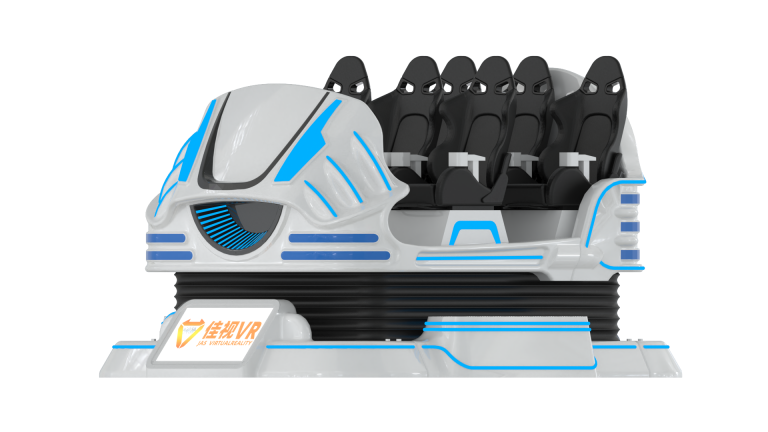
Analysis on the Future Development Trends of Six-Person VR Spaceship Simulators
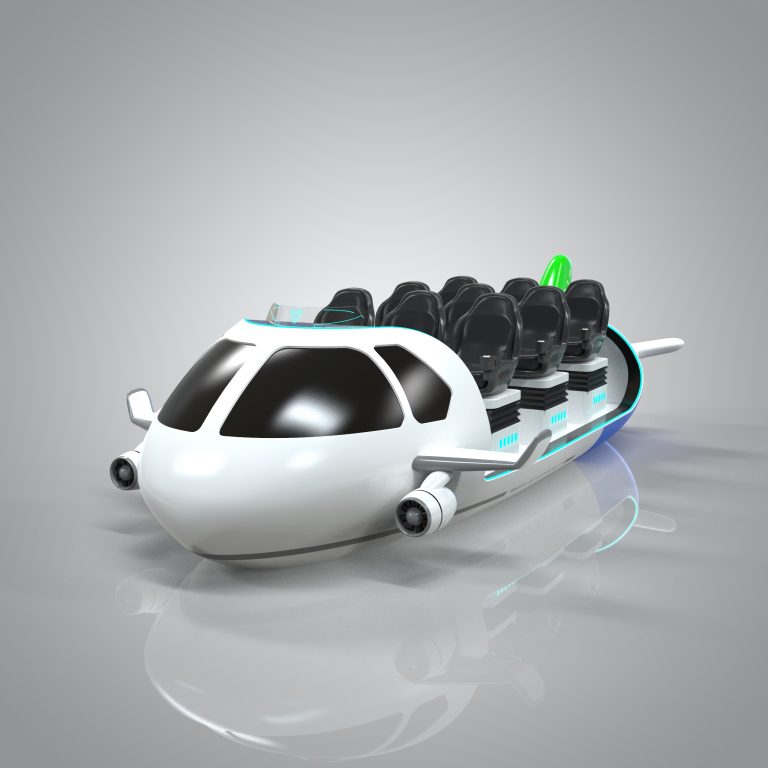
The Future Development of Flight Simulators
Application and Industrial Value Analysis of VR Full‑Sensation Large‑Space Cinema
Technology Empowers Training, Precisely Forges Capabilities – A Detailed Explanation of the Military and Special Vehicle Driving Simulator Training System
VR Large-Space Full-Sensory Cinema: Breaking the Boundaries of Virtual and Reality, Reshaping a New Ecosystem of Immersive Movie Viewing