VR Six‑Player Chariot Simulator Profit‑Making Operation Plan
Introduction
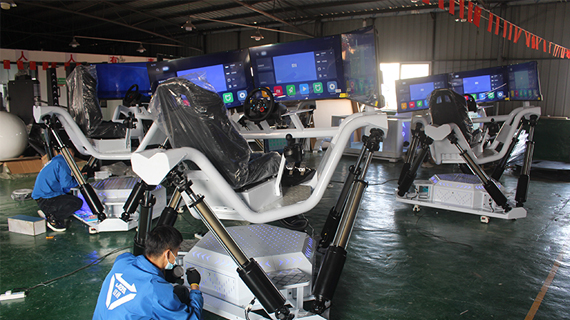
With the upgrading of domestic cultural‑tourism consumption, immersive VR experience projects have become popular secondary‑consumption business forms in commercial complexes, scenic spots and amusement parks. The VR six‑player chariot simulator (Dark Mecha Six‑Person Chariot) is equipped with a 6‑degree‑of‑freedom motion platform. It can accommodate 6 players simultaneously for shooting, adventure and mecha combat experiences, with environmental special effects including wind blowing, vibration and leg sweep. Different from traditional single‑player VR egg‑chair devices, its biggest advantage lies in multi‑player simultaneous gameplay and high hourly visitor throughput, making it a representative floor‑efficiency‑oriented VR product in the commercial VR industry. Many investors are only attracted by the cool hardware, yet ignore the complete operation system. Blind procurement may result in insufficient passenger flow, low revenue and extended payback cycles. Starting from project positioning, site selection, diversified revenue streams, pricing strategy, marketing & promotion, cost estimation, risk control and joint‑venture cooperation model, this paper sorts out a complete profit‑implementation solution for the VR six‑player chariot simulator, and provides practical reference for investors and venue operators.
I. Core Product Advantages & Market Positioning
The overall footprint of the VR six‑player chariot simulator is about 15‑20 ㎡. Large‑scale renovation is not required, and the unit can be put into operation simply by connecting to 220V power supply. Each session lasts 8‑10 minutes, with 4‑5 runs per hour under full‑load conditions. At maximum capacity, up to 30 visitors can be served per hour. Compared with single‑player VR devices, its visitor‑handling capacity is multiplied within the same floor area, which is why the industry defines it as a high‑floor‑efficiency VR device. The built‑in content library covers five categories: mecha shooting adventure, extreme roller‑coaster experience, ocean exploration, science popularization & research study, and parent‑child animation. Operators may switch among different modes to adapt to visitors of various age groups. Core target groups include teenagers, young couples, family parent‑child groups and corporate team‑building participants.
There are two major market‑positioning directions. The first is a self‑operated profit‑generating project for ticket revenue. The second is an attraction supporting facility implanted in amusement parks and science museums, which does not serve as the main profit driver but enriches business formats and boosts overall venue passenger flow and secondary consumption. It must be clarified that hardware is merely a tool. Profitability does not solely depend on the equipment itself. Site selection, pricing, daily operation and content update are decisive factors for business performance. A common misconception among novice investors is that revenue comes automatically once the hardware is purchased. Neglecting operational work will lead to low equipment utilization and idle hardware.
II. Site‑Selection Strategy: Pros and Cons of Different Scenarios
Four mainstream deployment scenarios for the VR six‑player chariot simulator are shopping malls, cultural‑tourism scenic spots & theme parks, video arcades / VR experience centers, and short‑term roadshow & rental activities. Passenger‑flow structures vary across scenarios, resulting in different profit models.
First, shopping‑mall locations include fixed storefronts and pop‑up atriums. Prioritize zones on the 3rd‑5th floor adjacent to video arcades and parent‑child amusement areas. Visitors are mainly weekend families and young people with scattered weekday foot traffic and explosive holiday crowds. Drawbacks include relatively high mall rent. Some malls adopt revenue‑sharing deductions. During negotiation, try to choose either fixed rent or revenue‑sharing deduction. Pop‑up atrium deployment suits project trial runs. Long‑term store leasing is not required. Operators may test market feedback for 2‑3 months and convert to permanent locations if profitability is proven, so as to lower trial‑and‑error risks.
Second, scenic spots and theme parks. Tourists are one‑time floating visitors with relatively strong consumption willingness, which allows moderately higher unit price. Ideal placement includes visitor centers, amusement zones and secondary‑consumption areas near exits. The main pain point of scenic‑spot business is obvious seasonality: full capacity during peak holidays and sharp traffic drop‑offs in off‑seasons. Operators need to develop alternative revenue channels in low seasons instead of purely relying on walk‑in ticket sales.
Third, video arcades and VR experience centers. Many experience centers adopt the six‑player chariot as a core project and combine it with two‑player versus and large‑space VR devices. The advantage is inherent entertainment positioning where visitors arrive with consumption intention. However, relying entirely on this single device will cause insufficient freshness and declining repeat visits over time.
Fourth, commercial roadshows and equipment rental services. The unit can be deployed for short‑term events such as mall promotions, real‑estate warm‑up campaigns and science carnivals. This is a supplementary revenue channel and shall not be treated as core business.
Hard requirements for site selection: minimum 20 ㎡ total space including queuing area, flat ground condition and stable power supply. Keep away from flammable and explosive zones and implement basic fire‑safety protection. For commercial public operation, complete business license and public‑place compliance certificates are mandatory.
III. Construction of Diversified Revenue Streams
Five major revenue sources: walk‑in ticket sales, bundled ticket packages, group B2B business, rental & joint‑venture cooperation, and value‑added derivative business.
1. Walk‑in Retail Tickets (Basic Revenue)
Walk‑in customers constitute fundamental income. Nevertheless, pure reliance on walk‑in sales results in weak weekday performance and huge gap between peak and off‑peak hours. Each session lasts 8‑10 minutes for 6‑player full load. In real‑world operation, full‑house status cannot be guaranteed all the time. Very often sessions start with only 2‑4 players. Do not estimate revenue merely based on theoretical full‑load capacity.
2. Ticket Package Strategy to Increase Average Customer Spend
Frequent price discounts shall be avoided as they devalue the project. Tiered ticket packages are preferred: ① Single‑visit ticket; ② Couple package for two persons; ③ Family parent‑child package (3‑4 persons); ④ Comprehensive venue combo ticket bundling chariot experience with other VR projects.
For scenic‑spot scenarios, cooperate with official scenic‑spot operators to incorporate the project into official amusement combo tickets with commission for channel distribution for stable passenger flow. Launch student discount tickets valid on weekdays to absorb idle capacity and balance peak‑off‑peak gaps.
3. B2B Group Business to Improve Weekday Utilization
Weak weekday walk‑in traffic is a major pain point for most venues. The solution lies in developing B2B group orders targeting research‑study institutions, primary & secondary schools and corporate team‑building. Switch to science‑popularization content such as aerospace and disaster education for research‑study groups. For corporate team‑building, provide mecha shooting combat experience with time‑slot‑based venue‑booking pricing regardless of actual participant number. Time‑slot booking fully leverages idle weekday capacity and optimizes monthly revenue structure.
4. Rental and Joint‑Venture Cooperation Model to Lower Investment Pressure
Two cooperation modes are available. First, equipment leasing: investors lease hardware to venue owners and collect monthly rent while venues take charge of daily operation. Second, revenue‑sharing joint venture: investors supply hardware and venue partners provide site and staff. Both parties split operating revenue. Investors avoid high fixed rent, which suits novice trial‑run. Clarify revenue‑sharing ratio and maintenance responsibilities during negotiation to prevent idle hardware caused by insufficient venue promotion.
5. Value‑Added Derivative Business
Sell beverages and snacks in queuing zones. Record player experience short videos for online marketing. Undertake commercial event venue‑booking when conditions permit. Derivative business serves as supplementary income rather than core revenue.
IV. Pricing Reference, Cost & Payback Calculation (for theoretical reference only, not investment advice)
Pricing guide: RMB 40‑60 per person for first‑tier cities; RMB 30‑45 per person for second‑ and third‑tier cities; RMB 25‑35 per person for county‑level markets and scenic spots. Online group‑buying platforms adopt slightly lower prices for lead generation rather than main sales channel.
Cost breakdown:
- Fixed investment: procurement cost of six‑player chariot simulator. Commercial‑industry standard depreciation cycle is 5 years.
- Venue cost: rent or revenue‑sharing fee, normally the largest monthly expense.
- Labor cost: one‑staff configuration for normal venues for ticket checking, VR headset handling and basic operation. Part‑time staff may be added for peak holidays. Staff duties include disinfection of headgear pads and simple equipment inspection. Sanitary condition directly impacts user reputation.
- Consumables & maintenance: replacement of VR headset foam cushions, periodic maintenance of motion platform servo motors, system update & troubleshooting. Reserve 3‑6% of monthly revenue as maintenance contingency fund. Equipment downtime means suspension of revenue generation. Power consumption is another recurring expense. Total power of the whole unit is approximately 3KW, which accumulates considerable electricity cost for long daily operation.
Revenue example for second‑ and third‑tier‑city venue: offline price RMB 35 per visitor. Average 60 visitors on weekdays and 160 visitors on weekends & holidays. 22 weekdays and 8 holiday days per month. Gross monthly revenue = 60 × 22 × 35 + 160 × 8 × 35 = RMB 74,200. Monthly net profit is obtained after deducting rent, labor, consumables and electricity cost. Attendance rate is a key variable. Actual revenue drops if seats are frequently unfilled. Industry payback cycle varies greatly. Well‑run venues achieve payback within 8‑14 months; average‑performance venues need 18‑24 months. Poor site selection and lack of operation may further prolong the payback period. Do not trust manufacturer advertisements promising ultra‑fast payback and make rational revenue expectation.
V. Online & Offline Marketing & Promotion
Passive waiting for customers brings limited results, so active lead generation is required.
Offline marketing: the mechanical lighting appearance itself serves as a billboard, especially for mall‑atrium deployment. Post content posters in queuing areas showing shooting and adventure scenes. Encourage visitors to share self‑shot experience clips on social media with minor preferential treatment for word‑of‑mouth viral diffusion. Develop cross‑industry cooperation with surrounding catering and children‑oriented merchants: issue project vouchers for qualified consumption to realize mutual traffic diversion.
Online channels: local Douyin short videos and Meituan / Dianping are two core channels. Shoot real‑player on‑site experience videos highlighting dynamic mecha‑shooting excitement and run local targeted traffic. Launch group‑buying packages on Meituan as online lead‑generation entry. For scenic‑spot projects, cooperate with local cultural‑tourism influencers for short‑video content creation. Note that online channels focus on attracting traffic, and excessive reliance on low‑price group‑buying will squeeze profit margin.
VI. Business Risk Identification & Control Measures
First risk: insufficient attendance and seasonal fluctuation. Scenic‑spot operators shall prioritize research‑study and group booking in off‑seasons to fill traffic gaps. For mall venues with persistent low weekday traffic, evaluate joint‑venture mode or short‑term equipment rental for events.
Second risk: equipment breakdown and downtime. For high‑frequency commercial usage, servo motors of 6‑DOF motion platforms and VR headsets are wearing parts. Implement daily inspection and maintenance routine, timely replace foam cushions and complete disinfection. Confirm after‑sales service, firmware upgrade and continuous content update from suppliers at procurement stage. Stale game content without iteration leads to declining repeat visits. Continuous content iteration maintains project vitality.
Third risk: user‑safety risk. Some users suffer VR motion sickness. Put up warning signs for visitors with hypertension, susceptibility to vertigo and young children. Motion intensity can be adjusted via backend settings: reduce movement amplitude for parent‑child mode to guarantee playing safety.
Fourth risk: homogenized competition. When similar VR amusement products emerge nearby, avoid destructive price war. Optimize ticket packages and B2B group business, and develop research‑study‑oriented content to build differentiated competitiveness.
VII. Conclusion
Featuring six‑person simultaneous experience and high floor efficiency, the VR six‑player chariot simulator is a competitive commercial VR hardware product. Nevertheless, hardware is only a carrier and cannot guarantee stable profit. The complete profit‑making logic lies in selecting proper venues, building diversified revenue structure covering walk‑in sales, ticket packages, B2B booking, rental and joint‑venture business, controlling rent, labor and maintenance costs, and implementing online‑offline marketing. At project initiation, investors shall not merely focus on hardware parameters but conduct market research based on their own site conditions. For self‑operation, test with pop‑up or joint‑venture mode first, and commit heavy‑asset investment only after verified market feedback so as to minimize risks. Business operation requires continuous optimization. Adjust pricing and promotional activities dynamically according to real‑time traffic data and improve attendance rate for long‑term stable profitability.
RELATED POSTS
Reshaping the Digital Battlefield: Research on Future Development Trends of Tank Simulators
The Future is Here: A Deep Dive into the Flying Theater Market and Forecasting Industry Transformation at the Technological Singularity
Overview and Feature Analysis of Mainstream Truck Simulator Applications
How Visual Immersion Is Achieved in Three-Screen 6-Axis Racing Simulators
Research on Site Planning, Design and Construction of Automobile Driving Simulators