Characteristics and Multi-field Application Analysis of VR Construction Safety Lifting Walking Platform Simulator
Characteristics and Multi-field Application Analysis of VR Construction Safety Lifting Walking Platform Simulator
With the rapid development of China’s infrastructure industry, the number of construction projects such as building construction, road and bridge engineering, tunnel excavation and mining continues to grow year by year. The construction site features complex operating environments and a high concentration of high-risk posts. Accidents including falling from heights, object strikes, foundation pit collapse and electric shock have always been key difficulties in the safety management of the construction industry. As a core method to prevent safety accidents, standardize operating procedures and improve workers’ safety literacy, traditional safety training modes such as oral preaching, billboard display and video teaching can no longer meet the management needs of modern construction sites. Against the background of the widespread popularization of digital smart construction sites, VR virtual reality technology has been gradually integrated into safety production training. With the advantages of high-fidelity somatosensory simulation, full-scene accident simulation, liftable walking interaction and zero-risk training, the VR construction safety lifting walking platform simulator has become standard equipment for safety education carried out by construction enterprises, vocational colleges, safety supervision departments and engineering training institutions. It effectively solves various pain points of traditional safety training and promotes the digital and intelligent upgrading of safety training in the infrastructure industry in an all-round manner.
1. Product Overview
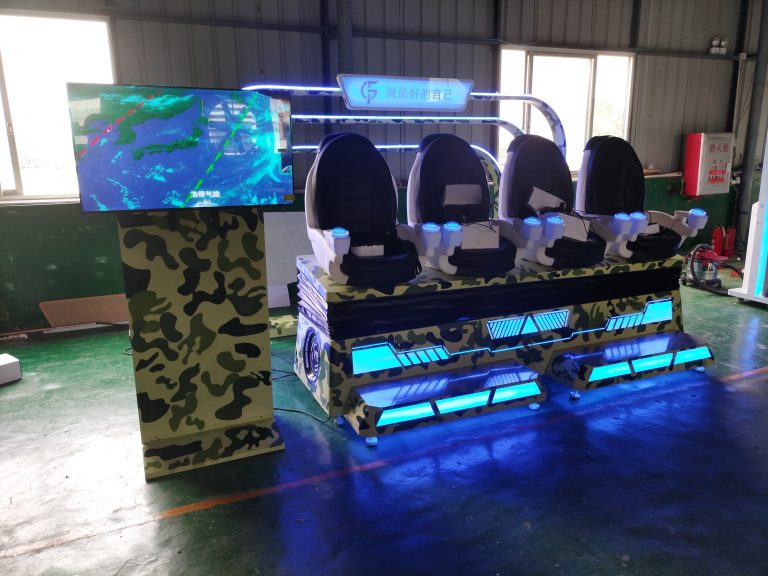
The VR construction safety lifting walking platform simulator is an immersive safety training equipment developed exclusively for high-risk construction scenarios. It integrates virtual reality technology, dynamic somatosensory simulation technology, hydraulic lifting control system and physical vibration feedback system. The hardware consists of five core components: a multi-functional liftable walking base, high-definition professional VR headsets, high-precision interactive controllers, safety binding belts and a central control system. Different from ordinary fixed VR devices, this equipment supports omnidirectional free walking, vertical lifting simulation and falling vibration feedback, which can restore the walking experience and accident impact effect of real construction sites at a 1:1 ratio.
The built-in software system contains hundreds of special training scenarios, covering five major construction sectors: building construction, road and bridge engineering, tunnels, mines and municipal engineering. It involves high-risk training subjects such as high-altitude operation, scaffolding erection, edge and opening protection, tower crane operation, foundation pit escape, falling from heights, collapse accidents, electric shock emergency response and fire drills. After wearing VR devices, trainees can complete pre-job learning, violation operation experience, accident emergency escape and standardized operation practice in the virtual construction environment. Supporting single-player training and multi-player simultaneous assessment, the equipment integrates teaching, demonstration, assessment and data archiving functions, featuring high practicality and professionalism to adapt to safety training scenarios across the entire construction industry.
2. Existing Pain Points of Traditional Construction Safety Education
For a long time, most domestic construction projects and architectural colleges still adopt traditional safety training modes, which are characterized by single teaching forms, low efficiency and unimplemented training results, failing to fundamentally enhance workers’ awareness of risk aversion. The main pain points are summarized into four aspects as follows.
First, rigid training forms lead to shallow memory. Traditional safety training is dominated by reading safety regulations, playing accident videos and visiting publicity billboards, belonging to passive indoctrination teaching. Most front-line construction workers have a low educational level and show low acceptance of boring theoretical knowledge. It is common for employees to neglect learning during courses and forget key knowledge quickly after training. They cannot intuitively perceive the severe consequences caused by violation operations, resulting in weak safety awareness.
Second, high-risk scenarios cannot be practiced on-site. Fatal accidents such as falling from heights, scaffolding collapse, tunnel collapse and mine roof fall are prohibited from full-staff practical drills in real scenarios due to extreme risks. Traditional physical safety experience halls can only simulate simple tilting and falling effects with single functions and high construction costs, unable to cover various types of construction accidents, which creates obvious defects in safety training.
Third, high training costs cause serious resource waste. Physical safety experience halls occupy a large area, require a long construction cycle and demand huge one-time investment. Besides, they cannot be disassembled and reused for multiple projects. In addition, centralized offline training requires work suspension, which not only hinders the construction progress, but also consumes abundant human and material resources, increasing the long-term regular training cost of enterprises.
Fourth, imperfect assessment system makes training results unquantifiable. The traditional training mode lacks a standardized assessment system. It cannot record trainees’ learning tracks and operation details, nor accurately judge whether employees have mastered standardized operating specifications. The training is often superficial. In the event of safety accidents, the management team cannot trace training responsibilities, leaving huge hidden dangers for project safety management.
3. Core Application Fields of VR Construction Safety Lifting Walking Platform
3.1 Pre-job Training for Construction Projects
Construction sites feature high personnel mobility, and pre-job safety education for new workers is the first line of defense for project safety management, also serving as the core application scenario of this equipment. Construction enterprises can place the VR lifting walking platform in the on-site safety experience area. All newly recruited steel bar workers, scaffolders, high-altitude operators and on-site managers must complete VR special training before taking up their posts. For high-altitude operations with frequent accidents, trainees can simulate high-altitude climbing, material handling and safety belt fastening through the lifting platform. The system will trigger sudden dangers including loose pedals and damaged guardrails, matched with physical vibration and falling feedback of the platform, allowing trainees to personally experience the fatal consequences of violation operations. The immersive safety warning education fundamentally corrects workers’ fluke mentality, reduces violation behaviors in high-altitude operations and greatly cuts down the occurrence rate of accidents related to falling from heights.
3.2 Special Training for Road, Bridge and Tunnel Engineering
Road, bridge and tunnel construction features enclosed and complex working environments with concealed hazard sources. The occurrence rate of collapse, water seepage, falling objects and tunnel fire accidents is much higher than that of ordinary building projects, and conventional training modes cannot meet special teaching requirements. The VR lifting walking platform can accurately restore exclusive scenarios such as bridge hanging basket construction, tunnel excavation and support, in-tunnel escape and slope protection, and simulate emergencies including tunnel collapse, toxic gas leakage and rainwater accumulation. Operators can repeatedly practice emergency escape routes, risk avoidance methods and accident rescue procedures to master professional safety specifications for their posts. Unrestricted by weather, site and construction period, this training mode supports all-weather daily training, which is especially suitable for key infrastructure projects such as expressways, high-speed rail tunnels and large-scale bridges.
3.3 Safety Production Education for Underground Mines
Underground mining is a ultra-high-risk operation with narrow working space and harsh operating conditions. Accidents such as roof collapse, gas explosion and water inrush are likely to cause mass casualties, and accident simulation drills are strictly prohibited in real mine environments. The VR lifting walking simulator perfectly solves the training difficulties of the mining industry. It reproduces underground roadways, working faces and supporting structures at a 1:1 ratio and simulates high-risk scenarios including underground high-altitude operation, roadway falling, roof collapse and gas leakage. Trainees can learn standardized walking specifications, equipment operation procedures, risk avoidance skills and self-rescue & mutual-rescue knowledge in a completely safe virtual environment. Meanwhile, customized training contents can be developed according to different mineral types and mining modes, helping mining enterprises implement the safety production responsibility system and protect the lives and property of underground workers.
3.4 Professional Teaching for Construction Majors in Vocational Colleges
Vocational colleges and technical secondary schools offering majors such as architectural engineering, municipal engineering, road and bridge engineering and mining engineering can equip classrooms with VR lifting walking platforms to build digital intelligent training rooms. Most students lack practical construction experience and have insufficient cognition of high-altitude risks and hidden dangers on construction sites, while traditional textbook teaching is overly abstract. With VR equipment, teachers can carry out scenario-based teaching to help students immerse themselves in various construction scenarios, intuitively learn professional knowledge about edge protection, high-altitude operation and foundation pit construction, and finish standardized operation training as well as emergency drills. This mode makes up for the shortage of on-campus training sites, reduces teaching risks and costs, and helps students develop good safety operation habits to lay a solid foundation for their future career in the construction industry.
3.5 Safety Warning Education Bases for Government and Supervision Departments
Housing and urban-rural development bureaus, emergency management bureaus and safety warning education centers at all levels are responsible for unified safety education and legal popularization for regional construction enterprises. Featuring multi-functionality, high simulation and easy deployment, the VR construction safety lifting platform has become the core exhibit of government-led safety warning education bases. It is used for regular centralized training for small and medium-sized construction enterprises and labor teams in the region, as well as safety knowledge popularization for the public and students. The immersive experience mode eliminates the dullness of traditional warning education, expands the coverage of safety education and improves the overall safety production level of the regional infrastructure industry.
3.6 Temporary Rental and Itinerant Training Services
Compared with fixed physical experience halls, the VR lifting walking platform boasts high integration, easy assembly and convenient transportation, supporting mobile itinerant training and short-term rental services. Engineering groups can deploy the equipment to multiple subordinate construction projects in turn to realize resource sharing and reduce repeated procurement costs. In addition, the equipment can be applied to various temporary scenarios such as safety month activities, construction industry skill competitions, industry exhibitions and safety education lectures, adapting to diversified operation modes and maximizing the utilization value of the equipment.
4. Core Advantages of VR Lifting Walking Platform Over Traditional Training
4.1 Immersive Experience to Strengthen Risk Aversion Awareness
The equipment adopts a four-dimensional simulation mode integrating VR visual immersion, stereo sound effect, lifting walking and falling vibration, which perfectly restores the instantaneous impact of safety accidents. Different from traditional passive classroom learning, trainees actively participate in operations, face potential risks and witness accident consequences intuitively, forming long-term effective memory. Practical data shows that VR immersive training can increase trainees’ retention rate of safety knowledge by more than 70%, solidifying the bottom line of safety production from the ideological level.
4.2 Zero-risk Training Covering All High-risk Scenarios
All accident drills are completed in a virtual environment without any potential safety hazards, thoroughly solving the industry pain point that high-risk scenarios cannot be practiced offline. A single set of equipment covers dozens of segmented fields including building construction, road and bridge engineering, tunnels, mines and municipal engineering, with hundreds of training subjects. Scenario updates only require online software upgrading without hardware renovation, delivering wider adaptability than traditional physical experience halls.
4.3 Cost Reduction and Training Efficiency Improvement
With small floor occupation and low investment cost, the equipment can replace traditional physical safety experience halls covering thousands of square meters. The training process requires no work suspension or material consumption, and trainees can receive training at any time. The training duration for single person is controllable, enabling enterprises to complete pre-job assessment for a large number of workers in a short period. The equipment can be allocated across different projects and regions, effectively reducing the long-term training investment of construction enterprises, colleges and government departments.
4.4 Data-driven Assessment to Realize Closed-loop Management
The supporting intelligent data background can automatically record trainees’ basic information, training subjects, operational errors and assessment scores, and generate training reports for cloud archiving. Managers can check training data in real time to identify trainees’ weak points and carry out targeted supplementary teaching. Complete archived training data can also serve as an important basis for project safety assessment and responsibility tracing, realizing a closed-loop management system of “training-practice-assessment-archiving”.
5. Industry Application Value and Development Prospect
Against the policy background of national promotion for smart construction sites and digital safety production, digital safety education has become an inevitable trend for the transformation and upgrading of the infrastructure industry. The popularization of the VR construction safety lifting walking platform delivers great social and industrial value. For enterprises, it helps reduce safety training costs, lower accident rates, standardize on-site operation specifications and avoid huge economic losses and administrative penalties caused by safety accidents. For vocational education, it optimizes the training system for construction majors and teaching modes, cultivating compound skilled talents with professional capabilities and comprehensive safety literacy. For the whole industry, it innovates the traditional safety education mode, promotes the transformation of construction safety training towards digitalization, intelligence and immersion, and supports the high-quality and sustainable development of China’s infrastructure industry.
In the future, with the iterative upgrading of virtual reality, artificial intelligence and big data technology, VR safety training equipment will become more intelligent and refined. Functions such as AI intelligent scoring, physical sign detection and personalized error correction push will be added to optimize the training system continuously. Meanwhile, more updated construction technologies and hazard source scenarios will be compatible to cover the safety production needs of the entire industrial chain. For equipment suppliers and investors, deploying VR construction safety training equipment conforms to national safety production policies and helps seize the blue ocean market of smart construction sites to achieve cost reduction, efficiency improvement and long-term stable profits.
In conclusion, the VR construction safety lifting walking platform simulator solves four major pain points of traditional safety education: poor experience, high operational risks, high costs and difficult assessment. Covering six core application scenarios including construction projects, road & tunnel engineering, mining, vocational colleges and government safety education bases, it has become indispensable core equipment for smart construction site construction and safety production education. Under the general trend of normalized and digital safety production, this type of VR safety training equipment will be widely popularized in construction projects, vocational colleges and safety warning education bases nationwide, possessing broad market development prospects.Characteristics and Multi-field Application Analysis of VR Construction Safety Lifting Walking Platform Simulator
With the rapid development of China’s infrastructure industry, the number of construction projects such as building construction, road and bridge engineering, tunnel excavation and mining continues to grow year by year. The construction site features complex operating environments and a high concentration of high-risk posts. Accidents including falling from heights, object strikes, foundation pit collapse and electric shock have always been key difficulties in the safety management of the construction industry. As a core method to prevent safety accidents, standardize operating procedures and improve workers’ safety literacy, traditional safety training modes such as oral preaching, billboard display and video teaching can no longer meet the management needs of modern construction sites. Against the background of the widespread popularization of digital smart construction sites, VR virtual reality technology has been gradually integrated into safety production training. With the advantages of high-fidelity somatosensory simulation, full-scene accident simulation, liftable walking interaction and zero-risk training, the VR construction safety lifting walking platform simulator has become standard equipment for safety education carried out by construction enterprises, vocational colleges, safety supervision departments and engineering training institutions. It effectively solves various pain points of traditional safety training and promotes the digital and intelligent upgrading of safety training in the infrastructure industry in an all-round manner.
1. Product Overview
The VR construction safety lifting walking platform simulator is an immersive safety training equipment developed exclusively for high-risk construction scenarios. It integrates virtual reality technology, dynamic somatosensory simulation technology, hydraulic lifting control system and physical vibration feedback system. The hardware consists of five core components: a multi-functional liftable walking base, high-definition professional VR headsets, high-precision interactive controllers, safety binding belts and a central control system. Different from ordinary fixed VR devices, this equipment supports omnidirectional free walking, vertical lifting simulation and falling vibration feedback, which can restore the walking experience and accident impact effect of real construction sites at a 1:1 ratio.
The built-in software system contains hundreds of special training scenarios, covering five major construction sectors: building construction, road and bridge engineering, tunnels, mines and municipal engineering. It involves high-risk training subjects such as high-altitude operation, scaffolding erection, edge and opening protection, tower crane operation, foundation pit escape, falling from heights, collapse accidents, electric shock emergency response and fire drills. After wearing VR devices, trainees can complete pre-job learning, violation operation experience, accident emergency escape and standardized operation practice in the virtual construction environment. Supporting single-player training and multi-player simultaneous assessment, the equipment integrates teaching, demonstration, assessment and data archiving functions, featuring high practicality and professionalism to adapt to safety training scenarios across the entire construction industry.
2. Existing Pain Points of Traditional Construction Safety Education
For a long time, most domestic construction projects and architectural colleges still adopt traditional safety training modes, which are characterized by single teaching forms, low efficiency and unimplemented training results, failing to fundamentally enhance workers’ awareness of risk aversion. The main pain points are summarized into four aspects as follows.
First, rigid training forms lead to shallow memory. Traditional safety training is dominated by reading safety regulations, playing accident videos and visiting publicity billboards, belonging to passive indoctrination teaching. Most front-line construction workers have a low educational level and show low acceptance of boring theoretical knowledge. It is common for employees to neglect learning during courses and forget key knowledge quickly after training. They cannot intuitively perceive the severe consequences caused by violation operations, resulting in weak safety awareness.
Second, high-risk scenarios cannot be practiced on-site. Fatal accidents such as falling from heights, scaffolding collapse, tunnel collapse and mine roof fall are prohibited from full-staff practical drills in real scenarios due to extreme risks. Traditional physical safety experience halls can only simulate simple tilting and falling effects with single functions and high construction costs, unable to cover various types of construction accidents, which creates obvious defects in safety training.
Third, high training costs cause serious resource waste. Physical safety experience halls occupy a large area, require a long construction cycle and demand huge one-time investment. Besides, they cannot be disassembled and reused for multiple projects. In addition, centralized offline training requires work suspension, which not only hinders the construction progress, but also consumes abundant human and material resources, increasing the long-term regular training cost of enterprises.
Fourth, imperfect assessment system makes training results unquantifiable. The traditional training mode lacks a standardized assessment system. It cannot record trainees’ learning tracks and operation details, nor accurately judge whether employees have mastered standardized operating specifications. The training is often superficial. In the event of safety accidents, the management team cannot trace training responsibilities, leaving huge hidden dangers for project safety management.
3. Core Application Fields of VR Construction Safety Lifting Walking Platform
3.1 Pre-job Training for Construction Projects
Construction sites feature high personnel mobility, and pre-job safety education for new workers is the first line of defense for project safety management, also serving as the core application scenario of this equipment. Construction enterprises can place the VR lifting walking platform in the on-site safety experience area. All newly recruited steel bar workers, scaffolders, high-altitude operators and on-site managers must complete VR special training before taking up their posts. For high-altitude operations with frequent accidents, trainees can simulate high-altitude climbing, material handling and safety belt fastening through the lifting platform. The system will trigger sudden dangers including loose pedals and damaged guardrails, matched with physical vibration and falling feedback of the platform, allowing trainees to personally experience the fatal consequences of violation operations. The immersive safety warning education fundamentally corrects workers’ fluke mentality, reduces violation behaviors in high-altitude operations and greatly cuts down the occurrence rate of accidents related to falling from heights.
3.2 Special Training for Road, Bridge and Tunnel Engineering
Road, bridge and tunnel construction features enclosed and complex working environments with concealed hazard sources. The occurrence rate of collapse, water seepage, falling objects and tunnel fire accidents is much higher than that of ordinary building projects, and conventional training modes cannot meet special teaching requirements. The VR lifting walking platform can accurately restore exclusive scenarios such as bridge hanging basket construction, tunnel excavation and support, in-tunnel escape and slope protection, and simulate emergencies including tunnel collapse, toxic gas leakage and rainwater accumulation. Operators can repeatedly practice emergency escape routes, risk avoidance methods and accident rescue procedures to master professional safety specifications for their posts. Unrestricted by weather, site and construction period, this training mode supports all-weather daily training, which is especially suitable for key infrastructure projects such as expressways, high-speed rail tunnels and large-scale bridges.
3.3 Safety Production Education for Underground Mines
Underground mining is a ultra-high-risk operation with narrow working space and harsh operating conditions. Accidents such as roof collapse, gas explosion and water inrush are likely to cause mass casualties, and accident simulation drills are strictly prohibited in real mine environments. The VR lifting walking simulator perfectly solves the training difficulties of the mining industry. It reproduces underground roadways, working faces and supporting structures at a 1:1 ratio and simulates high-risk scenarios including underground high-altitude operation, roadway falling, roof collapse and gas leakage. Trainees can learn standardized walking specifications, equipment operation procedures, risk avoidance skills and self-rescue & mutual-rescue knowledge in a completely safe virtual environment. Meanwhile, customized training contents can be developed according to different mineral types and mining modes, helping mining enterprises implement the safety production responsibility system and protect the lives and property of underground workers.
3.4 Professional Teaching for Construction Majors in Vocational Colleges
Vocational colleges and technical secondary schools offering majors such as architectural engineering, municipal engineering, road and bridge engineering and mining engineering can equip classrooms with VR lifting walking platforms to build digital intelligent training rooms. Most students lack practical construction experience and have insufficient cognition of high-altitude risks and hidden dangers on construction sites, while traditional textbook teaching is overly abstract. With VR equipment, teachers can carry out scenario-based teaching to help students immerse themselves in various construction scenarios, intuitively learn professional knowledge about edge protection, high-altitude operation and foundation pit construction, and finish standardized operation training as well as emergency drills. This mode makes up for the shortage of on-campus training sites, reduces teaching risks and costs, and helps students develop good safety operation habits to lay a solid foundation for their future career in the construction industry.
3.5 Safety Warning Education Bases for Government and Supervision Departments
Housing and urban-rural development bureaus, emergency management bureaus and safety warning education centers at all levels are responsible for unified safety education and legal popularization for regional construction enterprises. Featuring multi-functionality, high simulation and easy deployment, the VR construction safety lifting platform has become the core exhibit of government-led safety warning education bases. It is used for regular centralized training for small and medium-sized construction enterprises and labor teams in the region, as well as safety knowledge popularization for the public and students. The immersive experience mode eliminates the dullness of traditional warning education, expands the coverage of safety education and improves the overall safety production level of the regional infrastructure industry.
3.6 Temporary Rental and Itinerant Training Services
Compared with fixed physical experience halls, the VR lifting walking platform boasts high integration, easy assembly and convenient transportation, supporting mobile itinerant training and short-term rental services. Engineering groups can deploy the equipment to multiple subordinate construction projects in turn to realize resource sharing and reduce repeated procurement costs. In addition, the equipment can be applied to various temporary scenarios such as safety month activities, construction industry skill competitions, industry exhibitions and safety education lectures, adapting to diversified operation modes and maximizing the utilization value of the equipment.
4. Core Advantages of VR Lifting Walking Platform Over Traditional Training
4.1 Immersive Experience to Strengthen Risk Aversion Awareness
The equipment adopts a four-dimensional simulation mode integrating VR visual immersion, stereo sound effect, lifting walking and falling vibration, which perfectly restores the instantaneous impact of safety accidents. Different from traditional passive classroom learning, trainees actively participate in operations, face potential risks and witness accident consequences intuitively, forming long-term effective memory. Practical data shows that VR immersive training can increase trainees’ retention rate of safety knowledge by more than 70%, solidifying the bottom line of safety production from the ideological level.
4.2 Zero-risk Training Covering All High-risk Scenarios
All accident drills are completed in a virtual environment without any potential safety hazards, thoroughly solving the industry pain point that high-risk scenarios cannot be practiced offline. A single set of equipment covers dozens of segmented fields including building construction, road and bridge engineering, tunnels, mines and municipal engineering, with hundreds of training subjects. Scenario updates only require online software upgrading without hardware renovation, delivering wider adaptability than traditional physical experience halls.
4.3 Cost Reduction and Training Efficiency Improvement
With small floor occupation and low investment cost, the equipment can replace traditional physical safety experience halls covering thousands of square meters. The training process requires no work suspension or material consumption, and trainees can receive training at any time. The training duration for single person is controllable, enabling enterprises to complete pre-job assessment for a large number of workers in a short period. The equipment can be allocated across different projects and regions, effectively reducing the long-term training investment of construction enterprises, colleges and government departments.
4.4 Data-driven Assessment to Realize Closed-loop Management
The supporting intelligent data background can automatically record trainees’ basic information, training subjects, operational errors and assessment scores, and generate training reports for cloud archiving. Managers can check training data in real time to identify trainees’ weak points and carry out targeted supplementary teaching. Complete archived training data can also serve as an important basis for project safety assessment and responsibility tracing, realizing a closed-loop management system of “training-practice-assessment-archiving”.
5. Industry Application Value and Development Prospect
Against the policy background of national promotion for smart construction sites and digital safety production, digital safety education has become an inevitable trend for the transformation and upgrading of the infrastructure industry. The popularization of the VR construction safety lifting walking platform delivers great social and industrial value. For enterprises, it helps reduce safety training costs, lower accident rates, standardize on-site operation specifications and avoid huge economic losses and administrative penalties caused by safety accidents. For vocational education, it optimizes the training system for construction majors and teaching modes, cultivating compound skilled talents with professional capabilities and comprehensive safety literacy. For the whole industry, it innovates the traditional safety education mode, promotes the transformation of construction safety training towards digitalization, intelligence and immersion, and supports the high-quality and sustainable development of China’s infrastructure industry.
In the future, with the iterative upgrading of virtual reality, artificial intelligence and big data technology, VR safety training equipment will become more intelligent and refined. Functions such as AI intelligent scoring, physical sign detection and personalized error correction push will be added to optimize the training system continuously. Meanwhile, more updated construction technologies and hazard source scenarios will be compatible to cover the safety production needs of the entire industrial chain. For equipment suppliers and investors, deploying VR construction safety training equipment conforms to national safety production policies and helps seize the blue ocean market of smart construction sites to achieve cost reduction, efficiency improvement and long-term stable profits.
In conclusion, the VR construction safety lifting walking platform simulator solves four major pain points of traditional safety education: poor experience, high operational risks, high costs and difficult assessment. Covering six core application scenarios including construction projects, road & tunnel engineering, mining, vocational colleges and government safety education bases, it has become indispensable core equipment for smart construction site construction and safety production education. Under the general trend of normalized and digital safety production, this type of VR safety training equipment will be widely popularized in construction projects, vocational colleges and safety warning education bases nationwide, possessing broad market development prospects.
RELATED POSTS
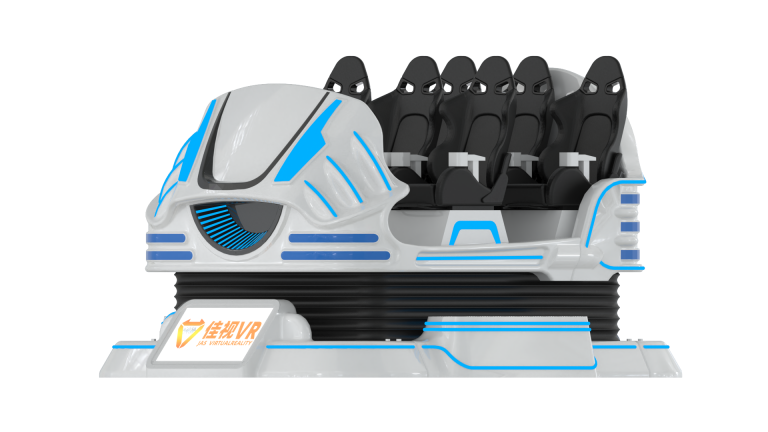
Analysis on the Future Development Trends of Six-Person VR Spaceship Simulators
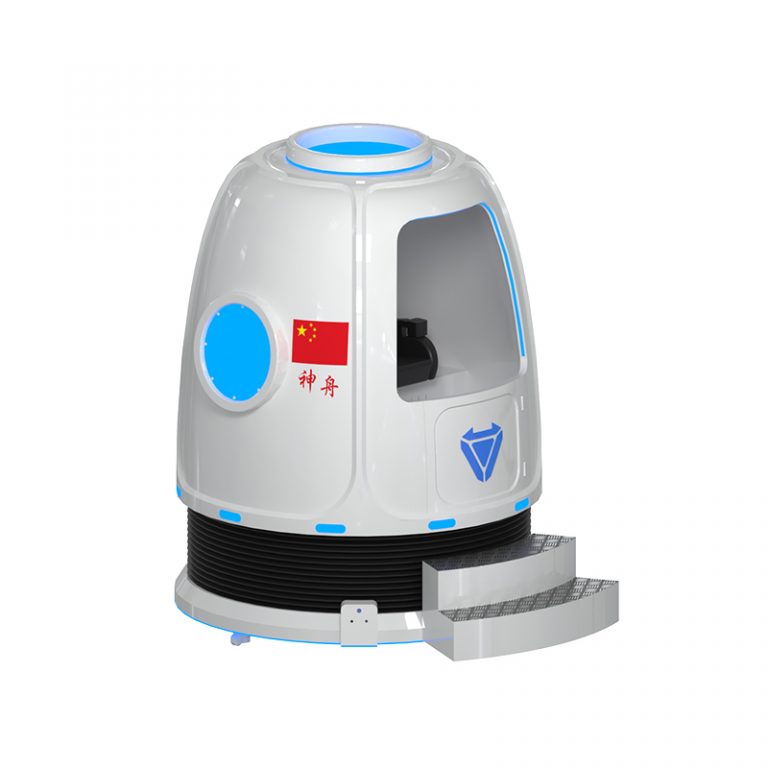
VR Shenzhou Spacecraft Simulator: Innovative Practice and Educational Value of Immersive Aerospace Popular‑Science Education
A New Benchmark for Smart Driving Training — Driving Simulator, Making Learning to Drive More Efficient, Safer and Easier
Design and Implementation Plan of VR Rowing Immersive Sports Application
What is the core of an automobile driving simulator?