Diverse Application Scenarios and Practical Value of VR Skydiving Simulators
Skydiving is known as a “sport for the brave”. The extreme experience of weightlessness at high altitudes and gliding above the clouds appeals to countless people. However, in real-world scenarios, skydiving is restricted by weather, venue, altitude, safety risks and high costs, making it inaccessible to the general public and extremely hazardous for professional practitioners. With the iterative upgrading of virtual reality (VR) technology, VR skydiving simulators have become increasingly mature. Featuring immersive simulation experience, zero safety risks, all-weather availability, low costs and high efficiency, they have broken the scenario limitations of traditional skydiving. Today, such intelligent simulation devices are no longer limited to single training purposes. They are widely applied in military training, cultural tourism and entertainment, popular science education, professional sports training and other fields, covering diverse scenarios including professional operations, public experience and quality-oriented education. They have become a vital bridge connecting professional skydiving training and public extreme sports experience. This paper comprehensively analyzes the applicable scenarios, application advantages and practical value of VR skydiving simulators, and further explores their implementation significance and development prospects in different fields.
A VR skydiving simulator is an intelligent device integrating virtual reality technology, mechanical sensing, dynamic simulation and three-dimensional modeling. Equipped with VR panoramic headsets, dynamic somatosensory platforms, force feedback systems and environmental simulation equipment, it perfectly restores the entire process of real skydiving, including on-board standby, high-altitude exit, free fall, parachute braking, in-air control and precision landing. Meanwhile, it can simulate complex meteorological and terrain environments such as wind and rain, crosswinds, cloud and fog, as well as different altitudes, maximally reproducing the visual, auditory and somatosensory experiences of real skydiving. Compared with real skydiving, VR simulators are not restricted by weather changes, airspace control or venue conditions, allowing repeated high-frequency training and experience. With outstanding safety, economy and practicality, they adapt to the needs of different groups and scenarios, and their application coverage continues to expand.
I. Military and Special Operations Training Scenarios: Core Practical Training Tools for Professional Combat Capabilities
In the military field, skydiving is a core basic subject for airborne troops, special forces and marine corps, as well as a key support for tactical missions such as behind-enemy penetration, airborne raids and emergency delivery. Traditional real jump training involves high safety hazards. Turbulent high-altitude airflows, parachute failures, sudden weather changes and landing errors can easily cause casualties and equipment losses. Moreover, special scenarios such as plateau, cross-sea and complex urban airspace skydiving are difficult to conduct regularly due to practical constraints, resulting in long-standing problems including single training scenarios, insufficient experience in handling emergencies and excessive training costs. The application of VR skydiving simulators has thoroughly solved these difficulties and become core equipment for regular military practical training.
Military training bases serve as the most critical professional application scenario for VR skydiving simulators. Major airborne troops, special forces brigades and marine corps training bases have deployed large numbers of professional VR skydiving simulation systems to build standardized and systematic practical training systems. These systems can accurately restore various transport aircraft models, skydiving airspaces at different altitudes and diverse battlefield environments, supporting simulated training in complex scenarios such as plateaus, cross-sea areas, urban buildings and mountainous jungles, completely breaking geographical and environmental restrictions. In the past, plateau skydiving training could only be carried out in summer; now, VR simulators enable year-round regular training, effectively making up for the shortcomings of parachute training in alpine and high-altitude areas. In cross-sea skydiving training, the equipment can accurately simulate extreme conditions such as level-7 crosswinds and swaying ship decks, greatly improving soldiers’ adaptability to skydiving in complex sea conditions. Relevant training data shows that after VR simulation training, the ship landing success rate of marine corps has increased from 62% to 91%, achieving remarkable training effects.
Beyond basic skill training, VR skydiving simulators support integrated “skill and tactic” drills to meet the requirements of combat-oriented training. The system is embedded with a wealth of tactical mission scenarios, simulating actual combat operations such as covert behind-enemy penetration, urban airborne raids and rapid battlefield delivery. It trains soldiers’ comprehensive capabilities including high-altitude posture control, formation spacing maintenance, covert fixed-point landing and emergency response to sudden dangers. Meanwhile, the equipment’s data collection and analysis system records the whole process of trainees’ exit posture, parachute opening timing, in-air operation and landing accuracy, automatically generating training reports to accurately identify weaknesses, standardize movement correction and realize scientific and precise training. In addition, the multi-user collaborative simulation system supports simultaneous skydiving training for multiple personnel, simulating dense formation parachuting tactics and strengthening team collaborative combat capabilities to lay a solid foundation for actual combat operations.
VR simulation training boasts prominent advantages over traditional real jump training in military scenarios. On the one hand, it ensures zero casualties and zero equipment loss, completely avoiding the safety risks of real jump training. On the other hand, it eliminates the consumption of fuel, parachutes and airspace resources, enabling repeated high-intensity, high-difficulty and high-risk training while significantly reducing training costs. Furthermore, the equipment can simulate various sudden emergencies such as parachute failure, in-air parachute entanglement and strong airflow impact, allowing officers and soldiers to conduct regular emergency response training, accumulate practical experience in handling dangerous situations, and make up for the deficiency that high-risk emergency training is difficult to carry out in traditional training. It comprehensively improves the professionalism and stability of military airborne combat capabilities.
II. Cultural Tourism and Entertainment Scenarios: Immersive Internet-Famous Projects for Public Extreme Sports Experience
For the general public, real skydiving has extremely high thresholds, including high costs, professional qualification training, the need to overcome acrophobia, and dependence on favorable weather conditions, making it an unattainable experience for most people. Featuring small floor space, high safety, realistic experience and strong adaptability, VR skydiving simulators perfectly meet public entertainment needs. As popular immersive experience projects in the cultural tourism and entertainment industry, they are widely deployed in commercial complexes, theme parks, cultural tourism scenic spots and leisure and entertainment venues.
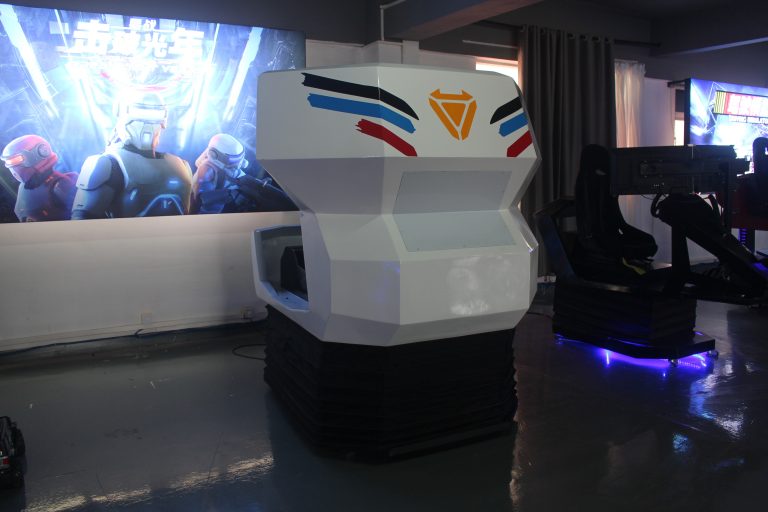
Large commercial shopping centers are the most prevalent application scenario for VR skydiving simulators. Modern shopping malls focus on the upgrading of immersive and experiential consumption, with traditional retail formats gradually transforming into interactive entertainment formats. The VR skydiving project only occupies about 4 square meters, with strong venue adaptability and no need for large-scale venue renovation. It can be flexibly arranged in mall atriums, leisure zones and Internet-famous experience areas. Equipped with a dual rocker dynamic drive system, high-speed lifting somatosensory devices, and special environmental effects including wind sounds, airflow, spray and vibration, the equipment 1:1 restores the weightlessness and gliding sensation of high-altitude free fall. Meanwhile, it integrates diverse aesthetic scenarios such as cloud sea skyline, urban sky views, island blue sea and starry sky, balancing excitement and ornamental value. As a niche high-end extreme sports experience, VR skydiving accurately attracts young consumers, family visitors and Internet-famous check-in crowds, effectively increasing mall passenger flow and visitor stay time, and has become a core traffic-driving and profit-increasing Internet-famous project for commercial venues.
Cultural tourism scenic spots and resort camps are important application scenarios for VR skydiving simulators. As the cultural tourism industry prioritizes immersive and differentiated experiences, traditional sightseeing can no longer meet tourists’ diverse needs. With differentiated experiential value, VR skydiving simulators have become a high-quality choice for scenic spots to upgrade business formats and enrich amusement projects. Mountain scenic spots, high-altitude theme parks, coastal resorts and rural cultural tourism bases can combine their natural landscape advantages with virtual VR scenarios to create a dual experience of “real scenery + virtual skydiving”. Tourists can experience the ultimate fun of overlooking mountains and rivers or gliding over the sea from the clouds without taking real high-altitude risks, realizing safe experience suitable for all age groups. In addition, this project fills the gap of high-altitude extreme sports in most scenic spots, enriches the cultural tourism product system, enhances core competitiveness, and becomes a new landmark for cultural tourism check-ins.
In addition, indoor theme parks, trampoline parks, parent-child entertainment venues and high-end resort hotels widely introduce VR skydiving simulators. Such leisure venues focus on diversified one-stop entertainment experiences. Different from traditional video games and amusement facilities, VR skydiving combines excitement and fun. It is suitable for young people seeking challenges and can also adjust difficulty levels for teenagers, effectively enriching venue business formats. Meanwhile, the equipment features simple operation, high safety and convenient maintenance, requiring no full-time on-duty staff. It can operate stably for a long time, bringing continuous passenger flow and profits to entertainment venues, making it a highly cost-effective immersive amusement device.
III. Popular Science Education Scenarios: Immersive Teaching Tools for National Defense and Aeronautical Science Popularization
Against the backdrop of quality-oriented education and national science popularization, interactive and immersive popular science has become a mainstream teaching mode. Relying on professional simulation technology and systematic aeronautical and skydiving knowledge, VR skydiving simulators serve as important teaching equipment for national defense education, aeronautical popular science and youth quality development. They are widely applied in science and technology museums, popular science education bases, national defense education exhibition halls, primary and secondary school research and study bases, and youth activity centers, realizing integrated teaching of “fun experience + knowledge popularization + quality cultivation”.
Science and technology museums and popular science exhibition halls are the core popular science scenarios for VR skydiving simulators. Traditional aeronautical and aerospace popular science mainly relies on graphic display boards, model exhibitions and video explanations, which are single in form and weak in interaction, failing to arouse the learning interest of the public, especially teenagers. VR skydiving simulators break the limitations of static popular science. Through immersive practical experience, visitors can intuitively understand skydiving principles, high-altitude airflow knowledge, parachute structure and functions, and aviation safety common sense. During the experience, users can directly perceive the impact of high-altitude air pressure changes and airflow movement on landing posture, and master professional knowledge such as parachute opening timing, in-air balance and precision landing. It transforms abstract aerophysical knowledge and safety protection knowledge into intuitive practical experience, greatly improving the fun and effectiveness of popular science education.
National defense education bases and research and study bases mainly rely on VR skydiving simulators to carry out national defense quality education. As an important part of airborne operations and national defense preparedness, skydiving is a core content of national defense popular science. For primary and secondary school students and adolescent research and study groups, VR skydiving simulators support lightweight and safe national defense experience teaching. They allow teenagers to get close to military parachute knowledge, understand the operational missions and daily training of airborne troops, and perceive the fearless and challenging spirit of soldiers, thereby cultivating their patriotism and national defense awareness. Meanwhile, the experience helps teenagers exercise psychological quality, strain capacity and concentration, overcome fears and break through self-limitations, which conforms to the core goals of quality-oriented education.
Some colleges, universities and community popular science venues have also gradually introduced VR skydiving equipment for campus aviation community teaching, after-school quality expansion and national community science popularization activities. The equipment can adjust experience difficulty and simplify professional operations according to the age and cognitive level of the audience, adapting to the popular science needs of teenagers and the general public. Compared with traditional classroom teaching, immersive VR experience is more attractive, enabling the public to learn aviation knowledge, understand skydiving culture and master high-altitude safety protection common sense in entertainment, and effectively promoting the normalization and popularization of national aviation and national defense education.
IV. Professional Sports Training Scenarios: Low-Cost Practical Training Platforms for Skydiving Enthusiasts
With the popularization of extreme sports, civilian skydiving has gained increasing popularity, and more enthusiasts aspire to systematically learn skydiving skills and obtain professional qualifications. However, traditional civilian skydiving training has extremely high thresholds, including high costs per real jump and great risks for novice practical operation, making it difficult for beginners to quickly master standard movements and emergency response skills. The emergence of VR skydiving simulators provides a low-cost, high-efficiency and zero-risk practical training platform for civilian skydiving training and enthusiast advancement, which is widely used in skydiving clubs, aviation sports training institutions and flight academies.
Professional skydiving training institutions and aviation sports bases take VR skydiving simulators as core equipment for novice entry training. In traditional training, novices can only conduct a small number of practical operations after extensive theoretical learning, resulting in long learning cycles and slow progress. With VR simulators, zero-basis learners can repeatedly practice basic movements including exit posture, body balance control, parachute operation, in-air direction adjustment and landing buffering, proficiently mastering standardized processes and consolidating practical foundations. At the same time, the equipment can simulate common complex civilian skydiving scenarios such as strong winds, turbulence and parachute deviation, allowing learners to adapt to operation skills in different environments in advance, accumulate practical experience, greatly shorten the training cycle and reduce the error rate of subsequent real jumps.
For certified skydiving enthusiasts and professional athletes, VR skydiving simulators serve as an important tool for advanced improvement and regular training. Professional civilian skydivers need to maintain long-term operational proficiency and continuously challenge high-difficulty subjects such as precision fixed-point landing, freestyle skydiving and complex terrain skydiving. Restricted by weather, airspace and costs, athletes cannot conduct frequent real jump training. In contrast, VR simulators support all-weather unlimited high-frequency training, helping athletes polish movement details and improve control accuracy, while simulating various extreme scenarios to help them break through technical bottlenecks. In addition, the equipment’s data review function enables coaches and athletes to accurately analyze movement problems, formulate targeted optimization plans and improve professional competitive levels.
V. Application Value and Future Development Prospects of VR Skydiving Simulators
Overall, VR skydiving simulators break the scenario constraints of traditional skydiving sports and training, covering four major fields including military training, public entertainment, popular science education and professional sports, and adapting to the core needs of diverse scenarios and groups with high practical and market value. In professional fields, they solve the pain points of high risk, high cost, single scenarios and insufficient emergency training in traditional training, promoting the scientific, efficient and normalized development of military airborne and civilian skydiving training. In public fields, they lower the threshold of extreme sports experience, allowing the general public to feel the charm of skydiving without risks or high expenses, and enriching public leisure and entertainment formats. In education fields, they innovate the model of popular science and national defense education, realizing immersive and interactive teaching and supporting the implementation of quality-oriented education.
With the continuous upgrading of virtual reality, artificial intelligence and big data technologies, the application scenarios of VR skydiving simulators will continue to expand. In the future, the equipment will achieve further intelligent upgrading, optimizing dynamic simulation effects, enriching scenario databases and improving human-computer interaction accuracy. Meanwhile, it will develop towards miniaturization, lightweight and popularization to adapt to more niche scenarios. Beyond existing applications, it can be expanded to emergency rescue training, high-altitude psychological desensitization training, corporate team building expansion and vocational skill assessment. In addition, driven by the integration of cultural tourism and digital economy, VR skydiving simulators will combine metaverse, multi-player online collaboration and real-scene linkage technologies to create more immersive and interactive experience modes and further release scenario value.
In conclusion, with the core advantages of safety, high efficiency, low cost and strong adaptability, VR skydiving simulators realize two-way empowerment of professional training and public experience, covering military, cultural tourism, education and sports fields, and becoming a typical example of digital technology empowering traditional industries. In the era of in-depth integration of technology and real economy, the application value of VR skydiving simulators will be increasingly prominent. They not only promote the standardized and popularized development of the skydiving industry, but also inject new vitality into national defense construction, cultural tourism upgrading, popular science education and sports development, holding broad development prospects and infinite application potential.
RELATED POSTS
The Application of Racing Simulators in Malls: Unlocking a New Track for Commercial Entertainment
Application Scenarios and Value Analysis of VR Unattended All-in-One Machine
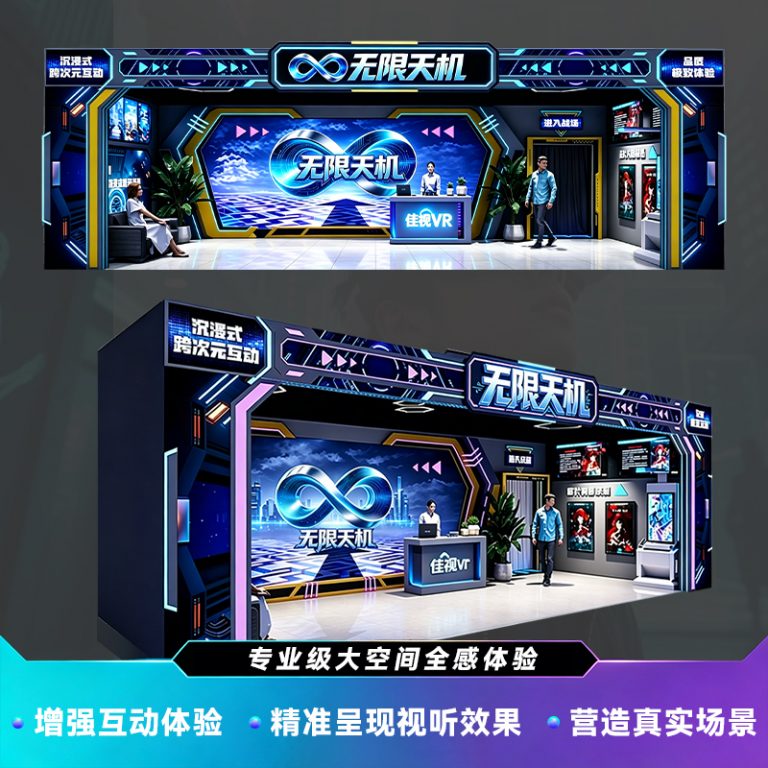
How Visual Immersion Is Achieved in VR/XR Full‑Sensory Large‑Space Theaters
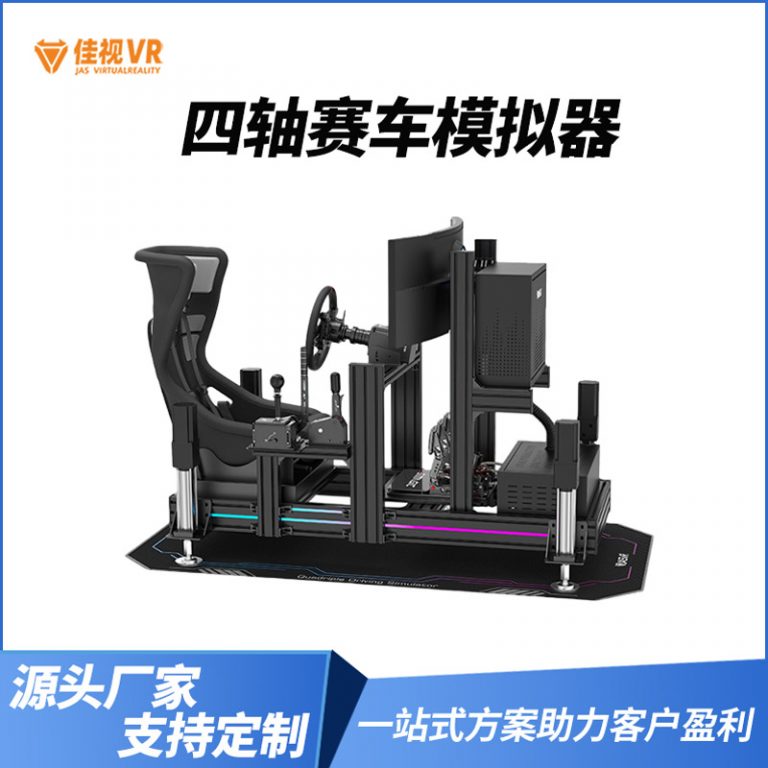
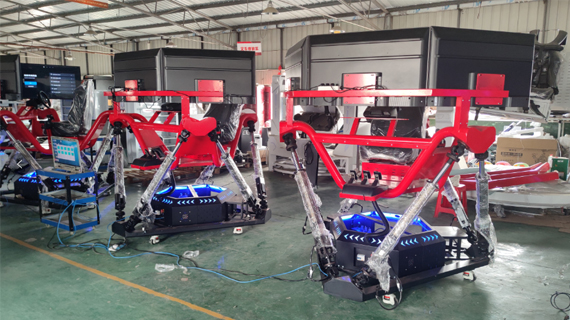
How Six-Axis Racing Simulators Are Entering Homes