The Applications of Racing Simulators: A Comprehensive Analysis
From Virtual Tracks to Industrial Empowerment
As a high-end intelligent device integrating mechanical engineering, computer simulation, virtual reality, and automatic control technology, racing simulators have long transcended the single label of “video game entertainment”. From training grounds for professional racing drivers to R&D laboratories of automobile manufacturers, from offline entertainment venues to traffic safety education bases, from professional esports events to university classrooms, their application boundaries continue to expand, becoming a core carrier connecting the virtual and the real and empowering the development of multiple industries.
This paper deeply analyzes the full-scenario applications of racing simulators from five dimensions: professional competition, industrial R&D, commercial entertainment, education and training, and special fields, demonstrating their core strength in reshaping industrial forms and conveying the value of driving.
I. Professional Motorsport: Risk-Free Track Training and Talent Development
Professional motorsport is a high-risk, high-cost, and high-threshold field. The emergence of racing simulators has completely changed the training and preparation mode of professional racing, making them standard equipment for top teams at home and abroad, such as F1, WTCC, GT3, and CRC. Their core value lies in safe, efficient, and low-cost skill refinement and talent cultivation.
1.1 Event Preparation and Refined Technical Training
Racing simulators occupy a core position in the training system of professional drivers. Before official events, drivers can use simulators to repeatedly practice racing lines, braking points, and overtaking opportunities on unfamiliar tracks. Through thousands of virtual driving sessions, they optimize details such as cornering speed, throttle control, and braking force, and master track data thoroughly.
For example, F1 teams import 3D data of real tracks, road friction coefficients, and slope changes into simulators, allowing drivers to adapt to every corner and straight section of the track in advance. They can even simulate changes in tire grip under extreme conditions such as wet races, high temperatures, and slippery roads, improving emergency response capabilities and tactical execution efficiency.
Compared with real-car training, simulator training does not incur costs such as vehicle wear, fuel consumption, and venue rental, and is not restricted by weather, time, or venue. The cost of one day of track practice on a simulator is only 1/50 of that of real-car training, but it can achieve the same or even longer training duration and practice times.
At the same time, simulators can collect real-time data such as steering wheel angle, throttle pedal depth, braking force, and vehicle attitude. Coaching teams can accurately identify drivers’ technical weaknesses through data analysis and carry out targeted intensive training, shifting technical refinement from “experience-driven” to “data-driven”.
1.2 Youth Training System and Novice Enlightenment
Motorsport has a long and costly talent development cycle, and simulators have become key tools for lowering entry barriers and building youth training systems. Major racing clubs and event organizers use simulators to select new talents, allowing young people with racing dreams to master basic driving logic, track rules, and vehicle control skills without touching real cars.
For young drivers, simulators help them quickly consolidate basics: practicing basic operations such as clutch semi-linkage, shifting timing, and throttle control during linear acceleration, avoiding vehicle damage and safety risks caused by operational errors in real-car training.
At the same time, simulators support simulated training with multiple tracks and vehicle models, allowing newcomers to familiarize themselves with the handling characteristics of different models in a short time, laying a solid foundation for subsequent real-car training. At present, many racing clubs in China have incorporated simulators into youth training courses, making them an important part of racing talent reserves.
1.3 Event Data Review and Tactical Analysis
Victory and defeat in racing events often depend on tactics and operations within milliseconds, and simulators have become core tools for event teams to conduct data reviews.
After an event, the team can import the driver’s real driving data and vehicle dynamics data into the simulator to restore the race process 1:1, analyze operational errors at each corner and tactical choices at each overtaking point frame by frame, and even simulate race results under different driving strategies, providing data support for tactical formulation in the next event.
This closed-loop training mode of “review-optimization-verification” has greatly improved the competitive strength of professional racing teams.
II. Automotive Industry R&D: Cost Reduction, Efficiency Improvement, and Innovation in Virtual Proving Grounds
In the automotive R&D field, racing simulators serve as core virtual proving grounds for vehicle testing, performance verification, and design optimization, especially suitable for the R&D process of performance cars, new energy vehicles, and smart vehicles. They effectively solve the pain points of high cost, long cycle, and high risk in real-car testing.
According to industry data, using simulators to assist R&D can shorten the entire vehicle R&D cycle by more than 30% and reduce testing costs by more than 40%.
2.1 Vehicle Dynamics Calibration and Performance Optimization
The handling, comfort, and stability of a vehicle depend on the matching of core components such as chassis, suspension, brakes, steering, and powertrain. Racing simulators can realize thousands of parameter combination tests in a virtual environment, replacing a large number of real-car road tests.
For performance car R&D, engineers can adjust parameters such as suspension stiffness, damping stroke, steering ratio, and braking force through simulators, test the vehicle’s cornering stability, acceleration response, and braking distance in real time, and find the optimal calibration scheme.
For new energy and smart vehicles, the application value of simulators is even more prominent. The battery and motor layout of new energy vehicles affect the vehicle’s center of gravity and handling. Engineers can test vehicle dynamics under different layouts through simulators and optimize body structure design.
Advanced Driver Assistance Systems (ADAS) and autonomous driving functions need to verify reliability in massive complex scenarios. Simulators can simulate extreme scenarios such as heavy rain, ice and snow, tunnels, and urban congestion, completing millions of kilometers of virtual testing, avoiding possible safety accidents in real-car testing, and greatly improving testing efficiency.
2.2 Ergonomic Design and Cockpit Experience Optimization
Racing simulators are not only tools for vehicle performance testing but also important platforms for cockpit ergonomic design.
Automakers can use simulators to test parameters such as steering wheel size, seat wrapping, pedal stroke, gear lever position, and instrument display angle, optimizing the driving experience and riding comfort of drivers and passengers.
For example, for drivers of different heights and body types, simulators can simulate the convenience of operation under different sitting positions to determine the most reasonable cockpit layout; test the steering wheel feel with different force feedback intensities to find the optimal parameters balancing daily driving and sports control; simulate cockpit noise and vibration under different road conditions to optimize sound insulation and shock absorption designs.
All these tests are completed in a virtual environment without manufacturing multiple real vehicle prototypes, greatly reducing the cost and cycle of design iteration.
2.3 Autonomous Driving Algorithm Verification and Safety Testing
With the development of autonomous driving technology, racing simulators have become core equipment for verifying intelligent driving algorithms.
Automakers and technology companies can build high-precision traffic scene models in simulators, simulate complex working conditions such as pedestrians crossing, vehicle lane changes, sudden obstacles, and extreme weather, and test the decision-making, planning, and control capabilities of autonomous driving algorithms.
For example, testing the response effect of the Automatic Emergency Braking (AEB) system at different vehicle speeds and obstacle types, verifying the stability of the Lane Keeping Assist (LKA) system in curves and ramps, and even simulating emergency avoidance strategies for autonomous vehicles to ensure the safety and reliability of algorithms under extreme working conditions.
At present, many leading automakers and technology companies around the world have incorporated simulators into the R&D system of intelligent driving algorithms, becoming important supports for promoting the implementation of autonomous driving technology.
III. Commercial Entertainment and Esports: Industrial Upgrading and Traffic Empowerment Through Immersive Experience
With the rise of racing esports and the development of the offline entertainment industry, racing simulators have become popular projects in the commercial entertainment field by virtue of their extreme immersion and interactivity, breaking the barriers between professional competitions and public entertainment and giving birth to new consumption scenarios and industrial models.
3.1 Core Experience Projects in Offline Entertainment Venues
Racing simulators are standard entertainment equipment in shopping malls, esports halls, automobile theme parks, and cultural tourism scenic spots. Their core appeal lies in immersive driving experience and strong interactivity. Consumers can drive classic racing cars, supercars, and formula cars in simulators, experiencing track racing, drifting, off-roading, and other gameplay, breaking away from the dullness of traditional screen racing.
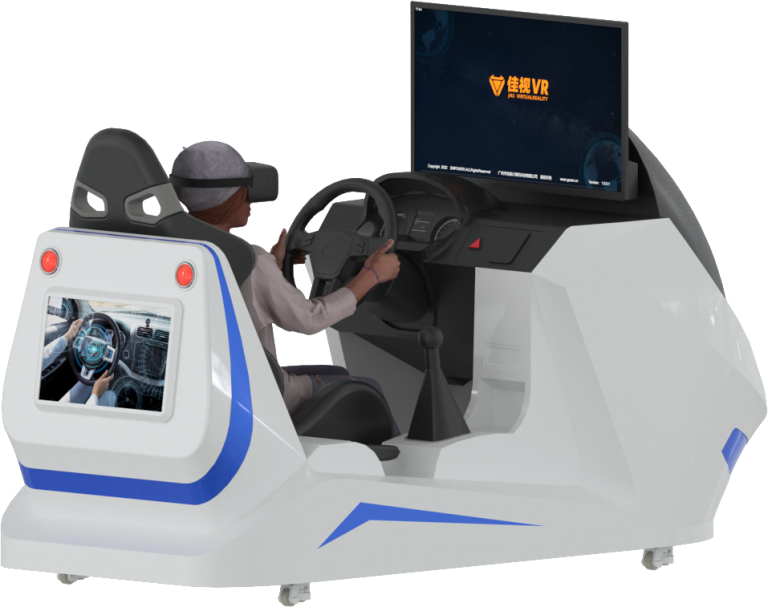
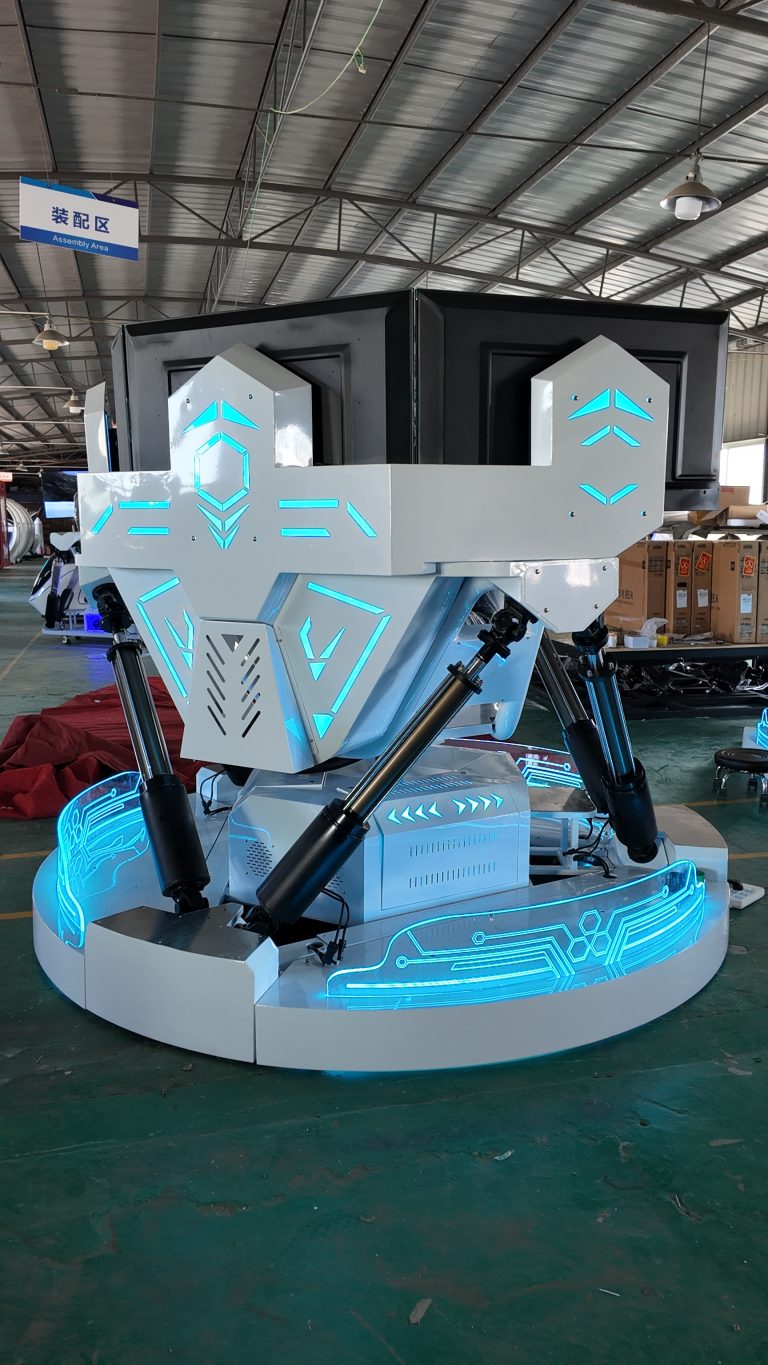
To enhance the experience effect, commercial racing simulators are usually equipped with three-screen/curved-screen displays, VR panoramic vision, force feedback steering wheels, hydraulic pedals, and surround sound systems. Combined with a 6-DOF motion platform, they simulate real body sensations such as acceleration, braking, cornering, and bumps, making consumers feel as if they are on a real track.
At present, after introducing racing simulators, many commercial complexes in China have become Internet-famous check-in spots, effectively improving passenger flow and consumption conversion rates. Automobile brand 4S stores and auto shows also often place commercial simulators as carriers for product display and interactive experience, allowing consumers to intuitively experience the handling performance of models and help brand marketing.
3.2 Professional Development of Racing Esports Events
Racing esports is an important branch of the esports industry, and racing simulators are the core hardware promoting its professional and standardized development.
In recent years, events such as the F1 Esports Series, WTCR Esports, and the Chinese Touring Car Championship Esports Edition have been held successively, adopting professional racing simulators as unified competition equipment, building a complete esports ecosystem of “virtual events-professional player training-commercial sponsorship”.
Different from traditional esports (keyboard and mouse operation), racing simulator-based esports events test players’ real driving skills, vehicle tuning abilities, and track strategy formulation, greatly improving the viewing and competitiveness of the events.
At the same time, simulators support multi-device online battles, realizing an online-offline linked esports event model, breaking geographical restrictions and attracting more racing enthusiasts to participate. At present, many esports clubs in China have established racing simulator esports teams to participate in domestic and foreign events, promoting the large-scale development of the racing esports industry.
3.3 Private High-End Customization and Collection Market
With the rise of automobile culture in China, racing simulators have become privately customized products for high-end automobile enthusiasts.
Many enthusiasts build exclusive racing simulator cockpits in their villas and garages, equipped with customized seats, steering wheels, vision systems, and audio equipment to achieve an immersive home racing experience.
Privately customized racing simulators are not only entertainment equipment but also a reflection of automobile culture and personal taste. Some collectors also collect limited-edition racing simulators, matched with classic racing models and event souvenirs, forming a personalized automobile cultural space.
At present, many professional manufacturers in China have launched private customization services, customizing integrated racing simulator cockpits according to users’ space size, budget, and preferences, promoting the extension of racing simulators from “professional equipment” to “high-end consumer goods”.
IV. Education, Training and Safety Popularization: Skill Inheritance and Safety Awareness Cultivation
Racing simulators have both practical operability and safety, making them important tools for driving skill training, traffic safety popularization, and university professional teaching, playing an irreplaceable role in the education field.
4.1 Driving Skill Training and Teaching Reform
Driving schools and automotive driving majors in vocational colleges are important application scenarios for racing simulators.
Traditional driving teaching has the problems of “more theory, less practice”, “high risk, and high cost”, and simulators can effectively solve these pain points.
In driving school teaching, novices can first practice basic operations through simulators, familiarize themselves with traffic rules and driving logic, and then enter real-car training, greatly reducing the difficulty and risk of real-car training and shortening the teaching cycle.
In practical training courses of automotive application, maintenance, and vehicle engineering majors in vocational colleges, simulators can be used to carry out track driving, vehicle control, and vehicle fault diagnosis, allowing students to master professional driving skills and vehicle knowledge and cultivate interdisciplinary talents.
4.2 Traffic Safety Popularization and Risk Warning
Traffic safety is an important topic of social concern, and racing simulators have become innovative carriers for traffic safety popularization.
Traffic police departments and traffic management units can use simulators to simulate dangerous driving scenarios such as speeding, drunk driving, fatigued driving, running red lights, and emergency avoidance, allowing experiencers to intuitively feel the consequences of dangerous driving.
This “immersive experiential popularization” is more impactful and persuasive than traditional publicity and education, and can effectively improve the public’s awareness of safe driving. At present, traffic police detachments and traffic education bases in many parts of China have introduced racing simulators as core equipment for traffic safety popularization.
4.3 University Professional Teaching and Scientific Research Innovation
In university majors such as vehicle engineering, mechanical engineering, computer science, and esports, racing simulators are important teaching and research platforms.
For vehicle engineering majors, simulators can be used to teach vehicle dynamics, automotive design, autonomous driving and other courses, allowing students to understand vehicle structure and motion principles through practical operations and participate in simulation testing of vehicle models.
For mechanical engineering majors, they can be used to study mechanical motion control, servo system debugging, parallel mechanism design, etc., assisting students’ scientific research projects and graduation designs.
For esports majors, simulators can be used to study event operation, player training, and data analysis of racing esports, promoting the professional talent training of the esports industry.
At the same time, universities can carry out interdisciplinary research with the help of simulators, such as combining artificial intelligence algorithms to develop intelligent driving simulation systems and driving behavior analysis systems, providing technical support for the integrated development of the automobile industry and the artificial intelligence industry.
V. Special Fields: Special Scene Simulation and Industry Customized Applications
In addition to the above mainstream fields, racing simulators also show unique value in special scene simulation and industry customized applications, becoming important tools to solve special needs.
5.1 Special Vehicle Driving Training
Driving training for special vehicles (such as fire engines, ambulances, police cars, engineering vehicles, and military vehicles) is highly difficult and risky, and simulators can effectively ensure training safety and improve training effects.
For example, fire engine drivers need to drive quickly in narrow streets and complex road conditions, simulating emergency rescue scenes at fire sites; ambulance drivers need to drive smoothly on bumpy and congested roads to ensure the safety of the injured; military vehicle drivers need to perform tasks in extreme terrains such as deserts, jungles, and mountains.
Through simulators, the handling characteristics and special scenes of these special vehicles can be simulated, allowing drivers to repeatedly practice emergency operations and complex road coping skills, reducing the risks and costs of real-car training. At present, many fire brigades, armed police forces, and special vehicle operating enterprises in China have introduced special vehicle simulators to improve their training systems.
5.2 Film, Television and Game Development: Scene and Physical Effect Restoration
Racing simulators have also penetrated into film and television production and game development, becoming important tools for content creation.
In film and television production, crews can use simulators to restore shooting materials for racing chases, collisions, drifts and other scenes, replacing the high cost and risk of real-scene shooting, while improving the realism of the picture.
In game development, racing simulators can be used to collect vehicle physics data, driving feel data, and track environment data, providing real physical engine and driving logic support for racing games and improving the realism of the game. At present, many well-known racing games have cooperated with professional simulator manufacturers to optimize game experience with real simulator data.
5.3 Auxiliary Training in Military and Aviation Fields
In the military field, the technical principles of racing simulators can be extended to the training simulation of military vehicles and aircraft.
For example, driving training for military off-road vehicles and armored vehicles can use similar parallel motion platform simulators to simulate driving scenes in battlefield environments; some basic control technologies of aviation simulators are also compatible with racing simulators and can be used for pilots’ basic control training and emergency disposal simulation.
VI. Conclusion and Prospect
The continuous expansion of racing simulators’ application scenarios lies in their core characteristics of high fidelity, controllable cost, safety and flexibility. They are not only entertainment equipment but also multi-value carriers empowering professional competitions, industrial R&D, education and popularization, and commercial entertainment.
From the technical refinement of professional racing drivers to the R&D innovation of automobile manufacturers, from the traffic driver of offline entertainment to the popularization tool of traffic safety, racing simulators take technology as the core and demand as the guide, becoming an important bridge connecting the virtual and the real.
In the future, with the continuous breakthrough of artificial intelligence, virtual reality, digital twin, 5G and other technologies, the application boundaries of racing simulators will be further expanded:
The integration of AI algorithms will realize intelligent calibration and personalized experience of simulators; digital twin technology will promote the in-depth linkage between simulators and real tracks and vehicles; 5G technology will support remote online battles of multiple simulators and build a global virtual event ecosystem;
the miniaturization and lightweight development of household simulators will further lower the popularization threshold and allow racing simulators to enter more ordinary families.
It can be predicted that driven by technology, racing simulators will no longer be limited to “tracks” and “R&D”, but will become intelligent terminals penetrating into many fields such as life, industry, education, and military, continuously releasing their technical and social values and injecting new vitality into the development of all walks of life.
RELATED POSTS
New Immersive Media: Diverse Application Scenarios and Industrial Value of Track Cinemas
A New Benchmark in Immersive Racing: Versatile Functions and Application Values of Three-Screen Six-Axis Racing Simulator
Technology Empowers Driving Training Innovation——In-depth Application and Development of Driving Simulators in Driving Schools
VR Large-Space Full-Sensory Cinema: Breaking the Boundaries of Virtual and Reality, Reshaping a New Ecosystem of Immersive Movie Viewing
What Can VR/XR Full‑Sensory Large‑Scale Spaces Achieve?