VR Full-Sensory Large-Space Venue Profitability Plan
Core Thesis: The profitability dilemma of VR full-sensory large-space venues stems not from technology or content itself, but from most operators turning it into a “ticket business.” With average ticket prices continuing to fall and repeat purchase rates below 5%, relying solely on walk-in ticket sales can barely cover rent and depreciation. The core logic of this plan is: reposition the venue from a “screening hall” to a “space operator”—use walk-in ticketing to secure baseline cash flow, use private bookings and group business to drive high margins, use off-site output to monetize idle time slots, and use membership prepayments to lock in high-frequency customers, ultimately achieving a profit structure where non-ticket revenue accounts for no less than 40%.
I. Industry Reality: Why Most VR Large-Space Venues Don’t Make Money
Before laying out the profitability plan, it is necessary to confront the harsh data of the current market. Since 2025, the number of VR large-space stores has risen rapidly—over 1,000 stores opened in the first half of the year alone—but homogenization is severe, and average ticket prices have been driven down from over 200 yuan to 100 yuan or even lower. Taking a standard 100-square-meter store in Shenzhen as an example, monthly rent at 1,000 yuan per square meter amounts to 100,000 yuan, plus content licensing, staffing, and equipment depreciation. Initial investment runs 200,000 to 300,000 yuan. At 100 yuan per capita, more than 2,000 visitors per month are needed just to break even. Yet field visits show that many stores see only two or three walk-in visitors within a three-hour window.
More critically, in 2025 many people misread this business as a “tech business,” when in reality it has slid into the logic of “commercial real estate filler”—shopping malls recruit VR large-space projects primarily to fill vacant space and create a cyber atmosphere. Once the rent-free period ends, projects face pressure to move out. This means the passive operating model that relies solely on a mall’s natural foot traffic no longer works; a diversified revenue structure must be proactively built.
II. Revenue Model: Five Parallel Lines, Breaking Away from Single Ticket Dependence
(1) Walk-in Ticketing: Drive Traffic, Not Profit
Walk-in tickets are the venue’s “water level”—they determine whether the venue has foot traffic, but should not carry the profit burden. On pricing strategy, it is recommended to price weekdays at 88–108 yuan, weekends and holidays at 128–158 yuan, and two-person tickets at about 1.7x the single ticket to create the perception that “two people together is more cost-effective.” Online group-buy prices should maintain a 10–15 yuan gap with in-store prices, gradually channeling platform traffic into private domains. Be wary: industry data shows that cutting the same package from 89.9 yuan to 29.9 yuan produces no significant sales fluctuation, indicating that price cuts don’t generate incremental volume—they only dilute profit. Walk-in tickets should target 50%–55% of total revenue, healthier than the industry-common 65%+.
(2) Private Group Bookings: The Highest-Margin Cash Flow Engine
Private bookings are a severely undervalued profit item for VR large-space venues. A session for 10–20 people—team building, birthday parties, educational activities—quoted at 1,200 yuan on weekdays and 1,800 yuan on weekends works out to only 60–90 yuan per person. For the customer, it’s more cost-effective than walk-in tickets; for the venue, it means doubled revenue in the same time slot with optimal staffing efficiency. The key to group bookings is independent scheduling that doesn’t occupy prime walk-in slots—weekday mornings and early afternoons are the best windows. Target three customer types: nearby corporate team building, primary and secondary school educational trips, and parent-child birthday parties. At three sessions per week, this adds roughly 15,000–20,000 yuan in monthly revenue with margins exceeding 70%.
(3) Membership Prepayments: Lock In High-Frequency Customers, Don’t Drain Walk-Ins
The reality of sub-5% repeat purchase rates means the vast majority of visitors come only once in their lifetime. The goal of a membership system is not to get everyone to sign up, but to filter out the minority willing to experience it repeatedly. Recommended tiers: a 399 yuan monthly card (unlimited visits for the cardholder), an 899 yuan quarterly card, and a 1,000 yuan stored-value card with 200 yuan bonus. The core value of the monthly card is filling idle weekday slots—cardholders tend to come during off-peak hours, precisely absorbing the venue’s most idle capacity. Stored-value cards suit family and friend groups, locking in their spending for the next three to six months. Membership revenue should target 15%–20%, not higher, to avoid draining walk-in customers into low-price buyers prematurely.
(4) Ancillary Retail: The Low-Cost, High-Margin Invisible Profit
Exit-route design determines ancillary revenue. Snapshot videos are the optimal category: a 30-second clip combining headset footage with real-scene compositing, priced at 38 yuan, with near-zero marginal cost. Next are themed photo prints, co-branded beverages, and simple merchandise. Ancillary volume doesn’t need to be large, but every departing guest must be made to linger at the exit for at least 90 seconds. At 40 visitors per day, 30% conversion, and 45 yuan average spend, this adds about 16,000 yuan in monthly revenue with margins exceeding 80%.
(5) Off-Site Output: Turning Idle Time Slots into Incremental Revenue
VR large-space equipment and weekday daytime vacancies are sunk costs; off-site output is the only way to monetize them. Specific forms include: equipment rental to malls for pop-up events, hosting traffic experience zones at small corporate exhibitions, and partnering with nearby schools for science-education outreach. Pricing is per day or per session, at 3,000–5,000 yuan per session. This revenue doesn’t consume store operating energy, targets 5%–10% of revenue, but delivers extremely high marginal contribution.
III. Cost Control: Three Easily Overlooked Profit Leaks
First, content licensing fees are the largest variable cost. The industry-standard practice is for content providers to charge a 100,000 yuan/2-year licensing fee, but many contracts hide “box-office revenue sharing” or “minimum guarantee” clauses. In negotiations, aim for a fixed licensing fee + low-percentage excess revenue sharing structure, and set the revenue-sharing trigger at a high threshold (e.g., monthly revenue above 80,000 yuan) to protect off-season profits. At the same time, prioritize content providers that have obtained “Dragon Label” (film approval) or possess theatrical update capabilities, leaving room for subsequent content iteration.
Second, rent negotiations should pursue a “revenue-sharing percentage” rather than pure fixed rent. Given the current difficulty malls face in leasing, VR large-space venues as “space-filler formats” have some bargaining power. Propose a hybrid “base rent + revenue percentage” model, converting part of fixed costs into variable costs. If only fixed rent can be signed, be sure to secure three to six months of rent-free fit-out period, and tie the rent-free period to equipment commissioning and content launch progress.
Third, adopt a “multi-role per person” staffing model. A 100-square-meter venue needs only two people for daily operations: one for front desk reception and cashiering, one for equipment fitting and on-site guidance. During peak periods (weekends, holidays), use part-time staff paid hourly. The store manager also handles online operations and group booking sales, with performance directly tied to group booking revenue and membership conversion rates—not walk-in ticket volume.
IV. Site Selection and Scenarios: What Determines the Ceiling Is Not Technology, but Foot Traffic Flow
Industry reviews have already pointed out that the core of VR large-space project profitability lies in scenarios and operations—”scenarios guarantee the project’s ceiling, while operations solve the project’s floor.” Site evaluation should focus on three indicators: the number of primary and secondary schools within a three-kilometer radius (foundation for educational and parent-child customers), weekday lunch-hour dining traffic density (corporate team-building leads), and the mall’s own tenant mix (whether cinemas, dining, and children’s education form extended dwell time). Scenic-area stores and mall stores are two different businesses: scenic-area stores can charge 88–168 yuan per ticket with high foot traffic and strong willingness to pay, but are heavily affected by seasonal fluctuations; mall stores depend on repeat consumption from surrounding communities and office workers, making the membership system far more important than for scenic-area stores.
One direction worth noting is combining with existing cinemas. Guangzhou’s “Wangyuanjing” virtual reality cinema offers a referenceable model: nearly 300 square meters of space, theatrical scheduling operations, regular content updates, and post-screening exchange events. The advantage of this model is sharing the cinema’s existing customer trust and membership system, reducing acquisition costs. If a traditional cinema is nearby, explore joint venture or time-share leasing cooperation.
V. Phased Execution Targets
Months 1–3 (Ramp-Up Period): The core task is to establish the walk-in ticketing baseline and complete online platform (Meituan, Douyin, Xiaohongshu) POI listings and review accumulation. Target 15–20 daily visitors and 30,000–40,000 yuan monthly revenue. Simultaneously launch proactive group booking sales, contacting 10 nearby companies and 5 schools, targeting 2 group bookings per month.
Months 4–6 (Stabilization Period): Launch the membership system, focusing on converting guests who had good experiences. Group bookings reach 4+ per month; ancillary retail route renovation completed. Target 60,000–80,000 yuan monthly revenue with non-ticket revenue at 25%.
Months 7–12 (Profitability Period): Off-site output forms stable partnerships; membership renewal rate becomes a core KPI. Complete the first content update (negotiate update discounts or exchange cooperation with content providers). Target stable monthly revenue of 80,000–100,000 yuan, with non-ticket revenue rising to 35%–40%. Based on a 100-square-meter venue with monthly rent controlled at 30,000–50,000 yuan (non-core commercial area), achieve monthly break-even and gradually recover initial investment.
Risk Warning: VR large-space technology iterates rapidly, and equipment depreciation risk cannot be ignored. It is recommended to adopt financial leasing or content-provider revenue-sharing arrangements for equipment procurement, avoiding one-time heavy asset investment. Meanwhile, content homogenization is an industry-wide problem. When selecting content partners, prioritize whether they have sustained production capability rather than the short-term popularity of a single product. The essence of this business is not betting on a hit content piece, but operating a space asset that can continuously absorb foot traffic and generate repeat purchases.
RELATED POSTS
Core Applications and Cutting-Edge Exploration of Automotive Driving Simulators in Autonomous Driving Technology

Technological Empowerment and Scenario Innovation: An Analysis of the Future Development Trends of VR Full-Sense Theaters

The Future is Here: A Deep Dive into the Flying Theater Market and Forecasting Industry Transformation at the Technological Singularity
The specific applications of automobile driving simulators in different fields.
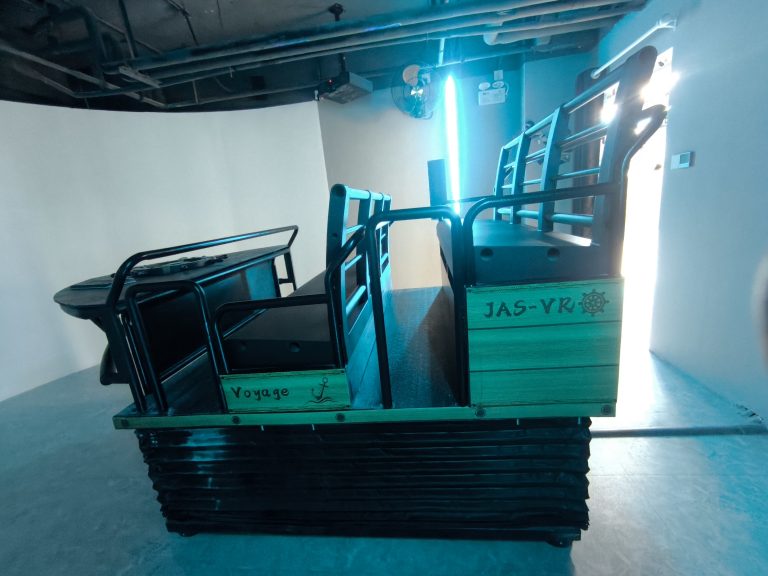
Profitability Pathways for VR Full-Sensory Cinema Large-Space Simulators